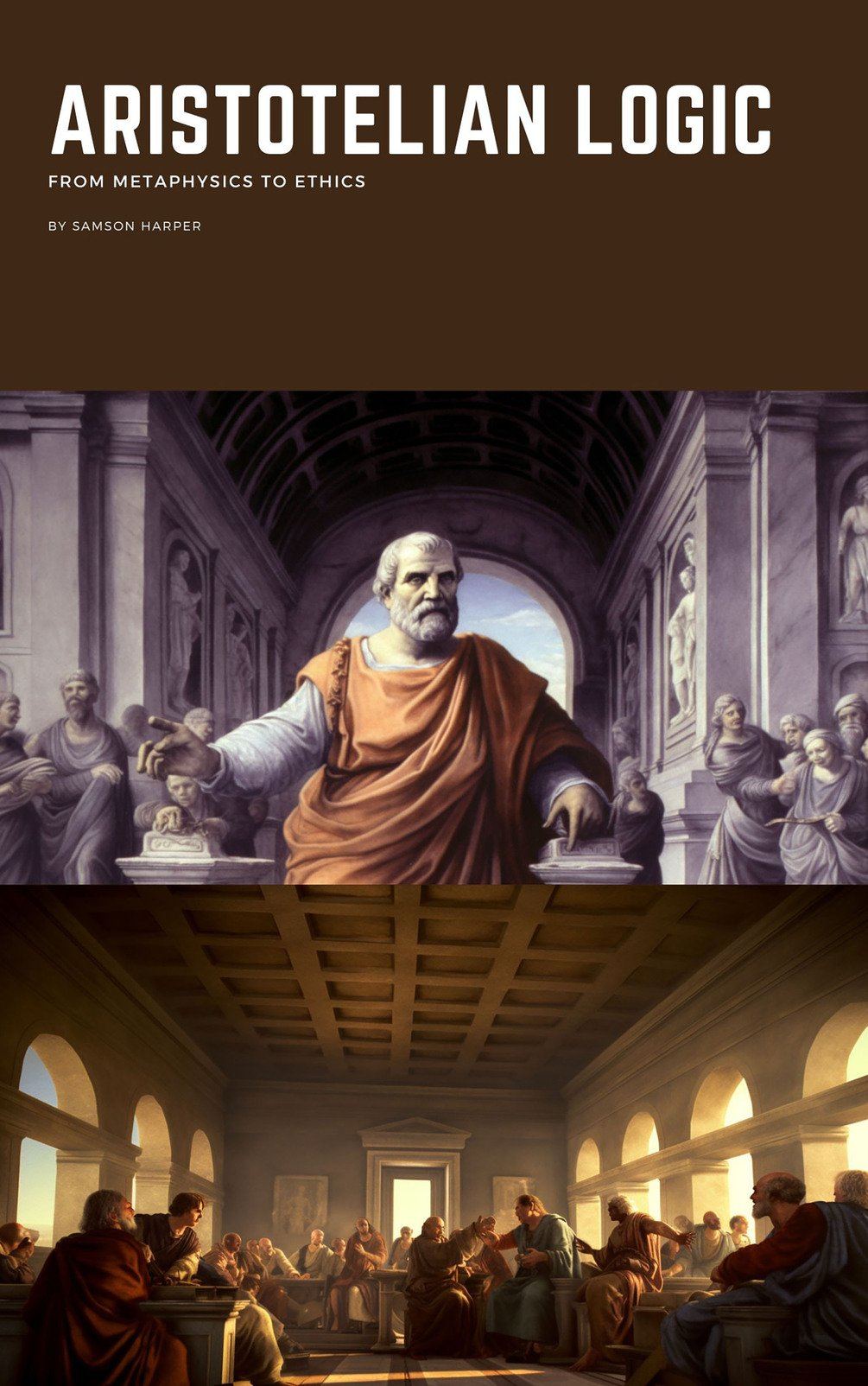
Unlock the Wisdom of Aristotle
Dive deep into Aristotle's philosophy with 'Aristotelian Logic: From Metaphysics to Ethics.' Explore his enduring influence on Western philosophy for just $2.99.
.jpg&w=96&q=100)
📚Introduction to Aristotelian Logic
Welcome to a journey through the profound contributions of Aristotle, one of the most influential philosophers in history. 'Aristotelian Logic: From Metaphysics to Ethics' by Samson Harper offers readers an in-depth exploration of Aristotle's remarkable legacy. This book is perfect for anyone looking to understand the enduring significance of Aristotle's work on Western philosophy. From his pioneering principles of logic and epistemology to his thought-provoking treatises on metaphysics and ethics, this book meticulously dissects key texts such as 'Nicomachean Ethics,' 'Politics,' and his works on science and poetics. Moreover, it addresses the criticisms and controversies that have shaped the discourse around Aristotelian philosophy. Highlighting Aristotle's impact on later thinkers, this book underscores the timeless relevance of his ideas in modern discussions. Available in MOBI, PDF, and EPUB formats, this comprehensive guide spans 140 pages of thought-provoking content. Dive into Aristotle's world today for just $2.99. 📚
🌟Reader Reviews and Endorsements
🎓Exploration of Key Works
The book 'Aristotelian Logic: From Metaphysics to Ethics' makes readers familiar with some of Aristotle's most significant works by dissecting their core elements and the philosophical inquiries they present. 'Nicomachean Ethics' is given notable attention, particularly Aristotle's doctrine of the mean, which posits that virtue lies between deficiency and excess. 'Politics' is examined for its insights into governance and civic responsibility, highlighting Aristotle's view that the state exists for the moral development of its citizens. Additionally, Aristotle's contributions to science are detailed, particularly his studies in biology and physics, which sought to categorize and explain the natural world. 'Poetics' is explored for its foundational views on literary theory and aesthetics. Finally, the text engages with Aristotle's metaphysical inquiries, seeking to understand the first principles and causes of reality. Each work is contextualized within the broader scope of Aristotle's philosophy, showing how his thought forms a cohesive system even when addressing diverse topics. 🎓
🤔Main Arguments of Aristotelian Logic
In 'Aristotelian Logic: From Metaphysics to Ethics,' Samson Harper meticulously presents the core arguments of Aristotle's philosophy, making it accessible to readers of all backgrounds. The book delves into Aristotle's logical framework, exploring how his approach to syllogism and deduction laid the groundwork for subsequent developments in logical theory. It discusses epistemology, emphasizing Aristotle's belief in obtaining knowledge through empirical observation and rational inquiry. The exploration of metaphysics in Aristotle's work reveals his quest to understand existence, reality, and the nature of being. Ethical discussions in the book focus on Aristotle's 'Nicomachean Ethics,' where the concept of virtue ethics and the pursuit of the 'good life' are central. The political theories laid out in 'Politics' address the role of the individual within the state and the idea of achieving a just society. Throughout, Harper provides a balanced examination of both the strengths and criticisms associated with Aristotelian thought, illustrating its enduring relevance in contemporary discourse. 🤔
📚Format and Availability
🌟Aristotle's Influence on Modern Philosophy
Aristotle's philosophy has had an unparalleled impact on the development of Western thought, and 'Aristotelian Logic: From Metaphysics to Ethics' delves into this influence in great detail. The book explores how Aristotle's ideas on logic laid the groundwork for formal reasoning systems used in mathematics and computer science today. His empirical approach to science influenced the scientific method, emphasizing observation, classification, and hypothesis testing. In ethics, Aristotle's concept of virtue ethics remains relevant, providing a framework for contemporary discussions on morality and the 'good life.' The text also covers the lasting legacy of Aristotle's political philosophy, examining its role in shaping modern democratic ideas and civic responsibility. Furthermore, the influence of Aristotelian metaphysics is seen in various philosophical debates about existence, reality, and causation. By highlighting these connections, Harper reinforces the enduring significance of Aristotle’s thoughts in illuminating today's philosophical landscape and societal structures. 🌟
🤔Criticisms and Controversies
No exploration of Aristotelian philosophy would be complete without addressing the various criticisms and controversies it has stirred throughout history. 'Aristotelian Logic: From Metaphysics to Ethics' contextualizes these debates, illustrating the complexity and dynamism of Aristotle's thought. Critics have often questioned Aristotle's empirical methods, arguing that his observations lacked the rigor of modern scientific inquiry. Additionally, Aristotle's political theories have faced scrutiny, particularly his support for certain hierarchical structures within society. Metaphysical detractors argue against some of Aristotle's conclusions on substance and essence, believing they oversimplify the nature of reality. Despite these criticisms, Harper illustrates how many of Aristotle's ideas have been resilient, sparking philosophical advancements and engaging critics in meaningful discourse. By presenting both sides, the book offers a balanced view, showcasing the intellectual richness and enduring provocativeness of Aristotelian logic and philosophy. 🤔