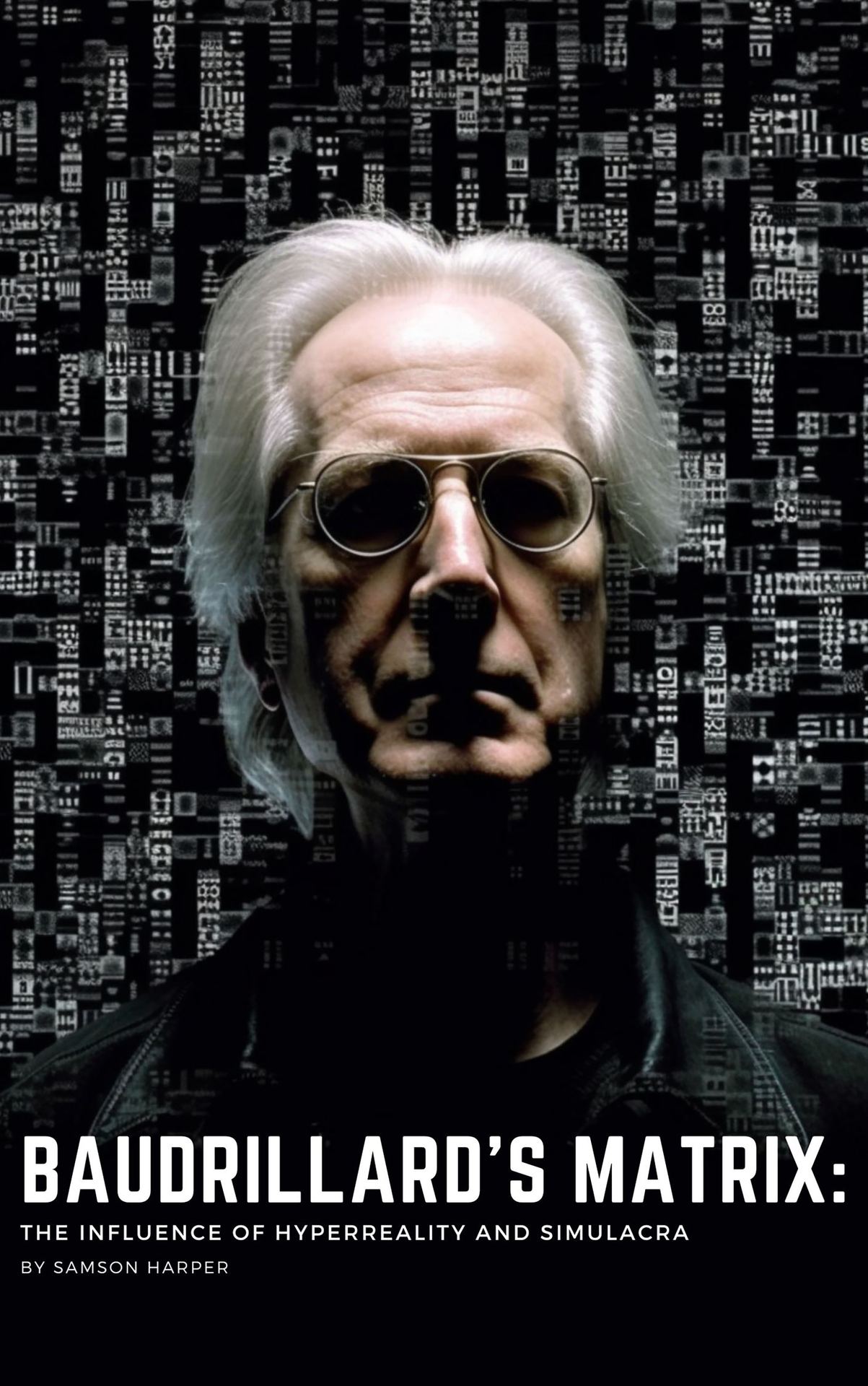

Exploring Baudrillard's Matrix: Hyperreality & Simulacra
Dive into Baudrillard's Matrix by Samson Harper, exploring hyperreality, simulation, and their impact on modern culture and society.
📚Baudrillard's Matrix and Its Cultural Impact
Baudrillard's Matrix: The Influence of Hyperreality and Simulacra, authored by Samson Harper, offers readers an in-depth exploration of the revolutionary ideas put forth by Jean Baudrillard, a leading French sociologist and cultural theorist. The book meticulously dissects Baudrillard's concepts of hyperreality, simulation, and simulacra—critical frameworks for understanding the complexities of modern life. Harper's engaging approach reveals how these theories illustrate the relationships between consumer society, media influence, and individual perception. Through comprehensive analysis, the work highlights the relevance of Baudrillard's insights in today's digital landscape, focusing on phenomena such as the construction of hyperreal environments and the media's undeniable power in shaping political and social realities. This page serves as a gateway to understanding the intricacies of Baudrillard's thought, encouraging readers to reflect on their implications in a hyperconnected world.
🔍Detailed Exploration of Baudrillard's Theories
🌍Influence on Culture and Society
Baudrillard's theories, as articulated in Harper's analysis, extend well beyond mere academic discourse; they resonate with the lived experiences of individuals in a media-saturated age. The pervasive influence of social media exemplifies the hyperreal condition, where carefully curated online personas can overshadow the authenticity of human interaction. In this context, politics also becomes a performance, with public figures utilizing media strategies that blur the lines between fact and fiction. Harper's text encourages a reevaluation of how individuals consume media, urging critical reflection on the narratives they encounter. By understanding these dynamics, readers can begin to navigate their realities more consciously, recognizing the potential pitfalls of a hyperreal existence where symbols and representations dominate. The call to awareness serves as a reminder that while simulacra can be enticing, they can also disconnect individuals from meaningful reality.
💡Deep Dive into Baudrillard's Concepts
In Baudrillard's Matrix, Samson Harper intricately examines the core principles of Jean Baudrillard's theories, emphasizing hyperreality and simulacra as pivotal concepts for understanding contemporary life. Hyperreality refers to a condition in which the distinction between reality and simulation blurs, resulting in an experience where representations and models overshadow the actual. Harper illustrates how shopping malls and theme parks create environments that fabricate leisure and consumption, leading individuals to value the simulation over genuine experiences. Furthermore, the concept of simulacra addresses the proliferation of signs that replace true meaning, showcasing the role of media in perpetuating images that create unreal expectations and narratives. Augmenting this discourse, Harper highlights how the ubiquitous presence of media continues to shape perceptions of reality—politically, socially, and personally—creating a world saturated with spectacle rather than substance. This critique informs readers about the consequences of living in a hyperreal culture where authenticity is increasingly elusive.
📖Baudrillard's Legacy and Continuing Influence
Jean Baudrillard's compelling theories challenge our comprehension of reality, especially in a landscape dominated by technology and globalization. Harper articulates Baudrillard's notion that modern existence is saturated with simulacra—images, signs, and symbols that construct meanings rather than reflect authentic experiences. This saturation alters societal norms, affecting everything from consumer behavior to our expectations of authenticity in culture and relationships. As technology continues to advance, triggering rapid changes in media landscapes, Baudrillard’s insights notably address how reality is increasingly mediated through virtual experiences. With the rise of artificial intelligence and immersive technologies like virtual reality, questions surrounding the very essence of what it means to 'experience' something come to the forefront. Harper's exploration of these themes provides a vital framework for understanding not only the mechanisms at play in contemporary culture but also for grappling with ethical implications and personal identity in a hyperreal world. In this way, Baudrillard's Matrix serves as both a critique and a cautionary tale about the perils of a society detached from true experiences and the significance of remaining grounded in authenticity amidst the alluring simulations.
🖥Relevance in the Digital Era
In today's hyperconnected world, the implications of Baudrillard's theories are more relevant than ever. Harper delivers a compelling narrative that illustrates how technology influences our perceptions and interactions, particularly through social networks, online advertising, and digital entertainment. These platforms often create hyperreal experiences that reinforce consumer behavior while perpetuating a cycle of desire that is difficult to escape. For instance, the frequent use of filters and editing tools in self-representation online can foster unrealistic beauty standards, leading to societal pressures that distort self-image. Harper pushes readers to confront these realities, advocating for a conscious engagement with technology and media. As the boundary between the real and the simulated becomes increasingly blurred, understanding Baudrillard's insights empowers individuals to explore the nature of perception, encouraging a more critical lens through which to analyze their experiences in the digital age.