Building a personal brand is essential in today’s professional world. It helps you stand out, showcase your expertise, and even monetize your skills. Here’s a quick breakdown of how to create and grow your personal brand:
Set Your Brand Foundation: Identify your core skills, target audience, and unique value.
Build Your Website: Create a professional, SEO-friendly website as your digital hub.
Show Your Expertise: Share valuable content, engage on social media, and start a newsletter.
Monetize Your Brand: Offer products, services, or memberships to generate income.
Track and Improve: Use analytics to measure success, gather feedback, and refine your strategy.
Your personal brand reflects your skills, values, and identity. Start by defining your strengths, knowing your audience, and crafting a clear message. Then, build an online presence through a website and consistent content creation. Finally, track your progress and adapt to maximize your impact.
The Ultimate Guide to Building an Unstoppable Personal Brand
Step 1: Set Your Brand Foundation
Establishing a strong personal brand begins with defining who you are and what you bring to the table. Here’s how to lay the groundwork for your brand identity.
Identify Your Core Skills
Pinpoint your professional strengths by focusing on three key areas:
Emotional Impact
Reflect on how your actions and presence influence others in professional settings. Ask for feedback from colleagues, clients, or mentors to uncover the traits that define your work style.
Professional Expertise
Outline your areas of expertise and the industry you focus on. Be specific about:
Your main field (e.g., healthcare technology, educational leadership)
Technical abilities you’ve mastered
Soft skills that make you stand out
Core Role
Summarize your professional identity in a concise statement - aim for five words or fewer.
Understand Your Audience
Knowing your audience is key to crafting messages that resonate. A study shows 94% of marketers saw better sales with personalized messaging [1]. Use these methods to get to know your audience:
Audience Research Method | Purpose | Key Outcome |
|---|---|---|
Analytics Deep Dive | Learn about demographics and behavior | Spot conversion trends |
Customer Reviews | Gather qualitative insights | Identify pain points |
Industry Trends | Monitor market changes | Adjust messaging |
Focus Groups | Collect direct feedback | Improve positioning |
"When you truly know your audience, you can create effective campaigns that speak to (or solve) their challenges, goals, and pain points. This is a superpower for your marketing efforts." - Kayla Schilthuis-Ihrig [1]
Craft Your Brand Message
Your brand message should clearly express your value. Use this framework to shape it:
Mission Statement
Answer the question: "We exist to _______." Highlight the transformation or value you deliver to your audience.
Value Proposition
Use this template to define your positioning:
"For [your audience], [your brand] is the [your market] that best delivers on [your brand promise]." [2]What Sets You Apart
Identify the factors that make you stand out in your field, such as:
Niche expertise
Distinct approach
Proven results
Client success stories
Keep in mind, 82% of shoppers prefer to buy from brands with values that align with theirs [1]. With your brand foundation solidified, it’s time to focus on building your website.
Step 2: Build Your Website
Your website serves as the centerpiece of your personal brand. Here’s how to create a professional online presence that draws in and engages your audience effectively.
Set Up Your Muse Website
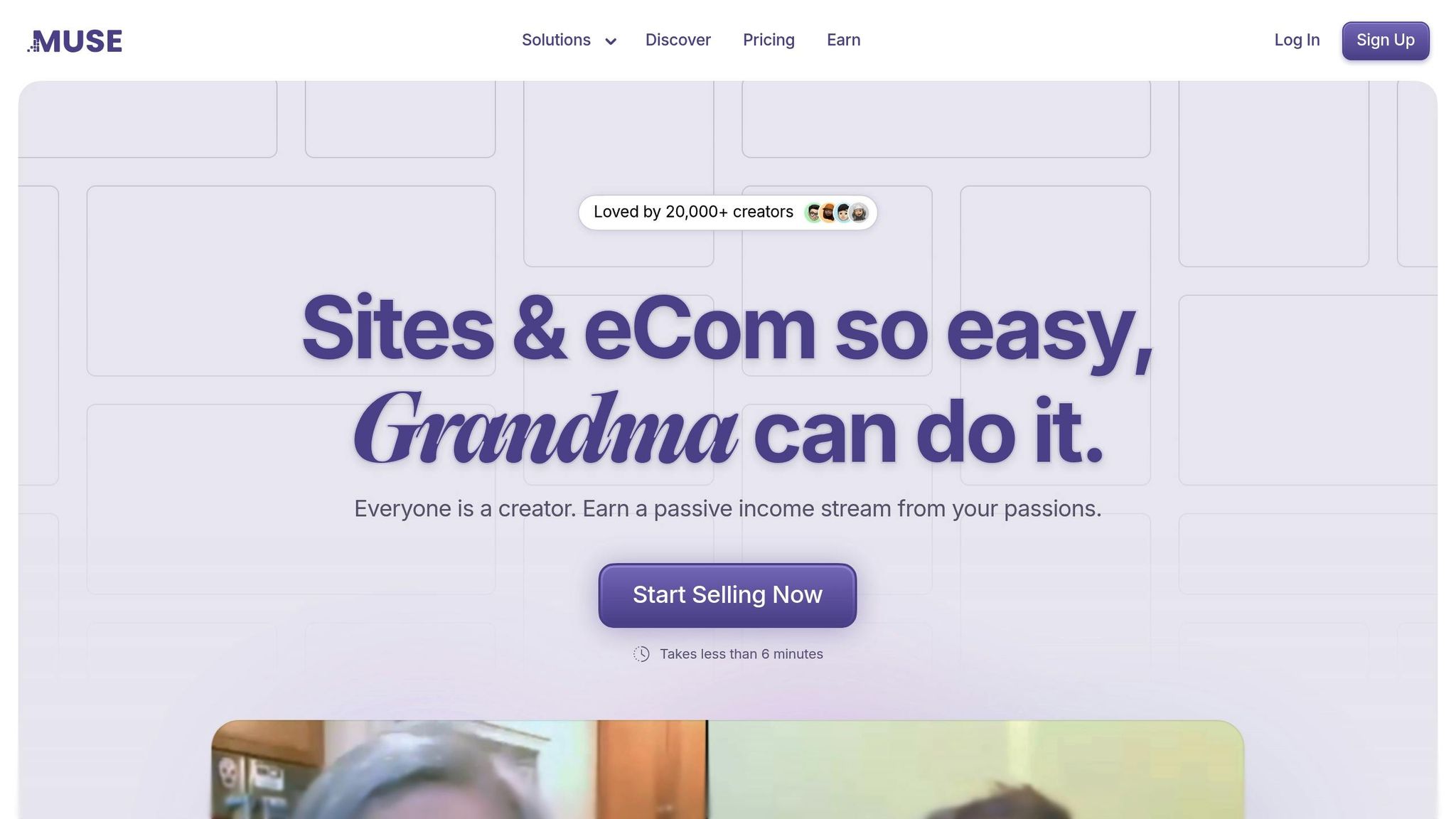
Muse is a great platform for building your professional website. It offers three plans to suit different needs:
Plan | Storage | Key Features | Transaction Fee |
|---|---|---|---|
Basic | 1GB | Unlimited Pages, Chat Support | 9% |
Premium | 10GB | Custom Domains, Advanced Analytics | 4% |
Pro | 100GB | Premium Themes, Pro Support | 1% |
Choose a plan that aligns with your goals. For instance, the Premium plan, priced at $6/month (billed annually), includes valuable features like custom domains and advanced analytics.
Once you’ve picked a plan, focus on optimizing your site to attract search engine traffic.
Make Your Site Search-Friendly
To improve your website’s visibility in search results, follow these SEO-focused tips:
Optimize Metadata
Every page should have unique metadata, including:
A clear, descriptive title that matches the page content
A compelling meta description (150-160 characters)
Relevant keywords used naturally
Organize Content with Clear Structure
Use proper heading styles to create a logical content hierarchy. Assign headings to the correct HTML tags (H1, H2, H3) to help search engines understand your site’s structure.
Optimize Images
Use descriptive file names and alt text for images. Compress image files to improve loading speeds without compromising quality.
When your site is search-friendly, you’re ready to plan content that keeps your audience engaged.
Plan Your Content Calendar
A consistent content schedule helps you showcase your expertise and stay connected with your audience. Here’s a suggested posting frequency for different content types:
Content Type | Posting Frequency | Purpose |
|---|---|---|
Blog Posts | 2-4 times monthly | Share detailed insights |
Social Updates | 3-7 times weekly | Build brand awareness |
Email Newsletter | 2-4 times monthly | Maintain audience connection |
Video Content | Monthly | Highlight your expertise |
Plan your content at least one quarter in advance. Include a mix of:
Educational content that addresses your audience’s challenges
Personal stories to build a relatable connection
Promotional content to encourage specific actions
Regularly review your engagement metrics to see what resonates most with your audience. By analyzing this data, you can fine-tune your content strategy and strengthen your online presence.
Step 3: Show Your Expertise
Now that your website is ready, it’s time to highlight what makes you an expert in your field.
Create Content That Demonstrates Your Knowledge
Consistently share insights that show you know your stuff. Publishing well-researched blog posts on your Muse website can help establish your authority. Long-form content that dives deep into industry topics is especially effective - studies show it helps build credibility [4].
"Becoming an expert means taking on a level of responsibility to support others with your knowledge." - Debbie Allen [3]
Expand your content strategy with white papers and videos to further reinforce your expertise.
Leverage Social Media Effectively
A strong social media presence can amplify your reputation. For instance, micro-influencers see an average engagement rate of 3.86%, compared to 1.21% for mega-influencers [5]. Focus on two or three platforms where your audience spends the most time.
"A once-weekly X post or monthly Instagram photo are not going to accomplish much, if anything. For this reason, it's best to focus on two or three carefully chosen social networks and try to be active on them, rather than posting sporadically to a half-dozen." [5]
Share industry insights and engage with your followers in meaningful ways. This builds trust and solidifies your position as an expert. Once you’ve established a connection, use email to deepen these relationships.
Launch an Email Newsletter
Newsletters give you direct access to your audience and help foster long-term connections. Take Chenell Basillio, for example - her newsletter, "Growth in Reverse", gained nearly 15,000 subscribers in less than a year by providing detailed analyses of newsletter growth strategies [6].
Here’s how to start your own newsletter:
Define Your Focus
Clearly explain what makes your newsletter stand out. Use a framework like this: "This is a newsletter about [your topic]. Unlike other newsletters about [your topic], only we [Unique Proposition]." [6]Stick to a Schedule
Whether it’s weekly or monthly, a consistent publishing schedule builds trust and keeps your audience engaged.
Offer Exclusive Content
Share insights and behind-the-scenes stories that your audience can’t find elsewhere. Combining professional expertise with personal anecdotes can help you connect on a deeper level.
Step 4: Make Money From Your Brand
Once you've built authority and a solid online presence, it's time to turn your efforts into income. Here are some effective ways to monetize your brand.
Sell Products and Services
Use Muse's e-commerce tools to sell a variety of products and services directly to your audience. Some ideas include:
Digital downloads like templates, guides, or workbooks
Online courses that share your knowledge and expertise
One-on-one coaching sessions tailored to your audience's needs
Branded merchandise to promote your identity
Muse offers different plans to help you reduce fees: Basic (9%), Premium (4%), and Pro (1%). To expand your revenue streams, consider pairing product sales with affiliate marketing.
Start Affiliate Marketing
Affiliate marketing can be a lucrative option. On average, successful affiliate marketers earn around $8,000 per month [7]. To succeed, you'll need a clear strategy.
Here's how some major brands structure their affiliate programs:
Company | Commission Structure | Support Provided |
|---|---|---|
33% recurring or $100 per sign-up | Free marketing materials, detailed statistics | |
Tier-based with performance bonuses | Dedicated manager, 400+ marketing assets | |
50% of hotel booking partner commissions | Pay-per-click model, no booking required |
Approximately 35% of successful affiliate marketers rely on social media platforms to promote products [7]. Another great way to generate income is by creating a membership site.
Launch a Membership Site
Membership sites are a fantastic way to build a loyal community while earning recurring income. With Muse's member areas feature, you can:
Provide exclusive content for subscribers
Offer tiered membership levels to cater to different audiences
Create private community spaces for members
Host member-only events or workshops
Here’s an example of how you could structure your membership tiers:
Tier | Monthly Price | Benefits |
|---|---|---|
Basic | $9.99 | Monthly newsletter, community access |
Plus | $29.99 | Includes Basic benefits, weekly live Q&As, and a resource library |
Premium | $99.99 | Everything in Plus, plus monthly one-on-one coaching and exclusive workshops |
Use Muse's advanced analytics to monitor your performance. By understanding which offerings your audience values most, you can refine your approach and maximize your earnings.
Step 5: Track and Improve Results
Check Your Numbers
Use tools like Muse's analytics and Google Analytics to monitor your brand's performance. Pay attention to these key metrics:
Metric Category | Metric | Why It Matters |
|---|---|---|
Traffic | Bounce rate, session duration, page views | Shows how well your content engages visitors |
Growth | Audience size, email subscribers | Indicates how far your brand is reaching |
Engagement | Comments, shares, saves | Highlights the value of your content |
Revenue | Sales, conversion rates | Tracks how well you're monetizing your efforts |
Review these metrics at least once a month. For example, Issa Mars checks analytics every two weeks to spot growth opportunities. By keeping an eye on cart abandonment rates, her team identified ways to adjust pricing and improve conversions [9].
Ask for Customer Input
Steven Bartlett, host of The Diary of a CEO podcast, frequently reviews listener feedback to fine-tune his content. This approach has helped him land major speaking gigs and partnerships [8].
Here are some ways to gather customer insights:
Use tools like Typeform to create surveys for structured feedback
Run social media polls to test new ideas
Conduct one-on-one interviews with key clients every quarter
Analyze website behavior to see which content resonates most and how users navigate your site
"Measuring the success of your personal brand is about more than numbers - it's about understanding the story they tell. These insights give you the power to make informed decisions, refine your strategy, and amplify your impact." - Vicky Harrison, Personal Branding Strategist [8]
Combining regular feedback with consistent updates ensures your brand stays relevant and effective.
Keep Your Brand Current
Stay ahead by regularly updating your online presence. For example, Spotify introduced new verification processes and cleaned up their subscriber database in March 2023. This reduced bounce rates from 12.3% to 2.1% and boosted revenue by $2.3 million [Mailchimp Case Studies, 2023].
Here are steps to keep your brand fresh:
Audit your content every quarter to remove outdated material
Set up Google Alerts to stay informed about industry trends
Highlight new certifications or skills to showcase your growth
Muse's analytics dashboard can help you pinpoint content that needs updates. Monthly content audits are a great way to ensure your brand stays competitive and up to date.
Next Steps: Begin Your Brand Journey
"It's like a pointillism painting - you don't just do it overnight. It takes all of these little tiny impressions that add up over time." - Tony Howell, Business Coach and Digital Designer [10]
Building a brand takes time and consistent effort, much like creating a masterpiece. Here's how you can get started:
1. Define Your Foundation
Start by documenting the essentials of your brand:
Highlight 3–5 core skills that make you stand out.
Identify your ideal audience's demographics and needs.
Pinpoint the key problems you solve for your audience.
Craft a clear value proposition that communicates what you bring to the table.
2. Launch Your Website
"A lot of people make the mistake of trying to show up everywhere all at once, and then they burn out and never really get anywhere. Having a website and using one social media platform to start is a really great thing to do because it allows you to focus your time on one place." - Karen Happel, Personal Branding Expert [10]
Your website acts as the centerpiece of your brand. Make sure it includes:
A professional "About Me" section that tells your story.
A portfolio or showcase of your work and experience.
Clear contact details so people can easily reach you.
A breakdown of the services or solutions you offer.
With these elements in place, your website becomes a powerful platform to showcase your expertise.
3. Establish Your Online Presence
Strengthen your brand visibility by making your website the cornerstone of your online presence:
Add your website URL to your email signature.
Update your LinkedIn profile to reflect your brand message.
Focus your efforts on one primary social media platform.
Use professional photos across your website and social channels for a polished look.
You can track your progress using Muse's analytics tools. Start building your Muse website today and let your brand shine.
Related posts
How to Price Digital Products: A Guide for Beginners
Online Store Setup Checklist: 15 Steps to Launch
Starting an Online Coaching Business: Complete Guide
Best Tools for Creating Digital Products in 2025