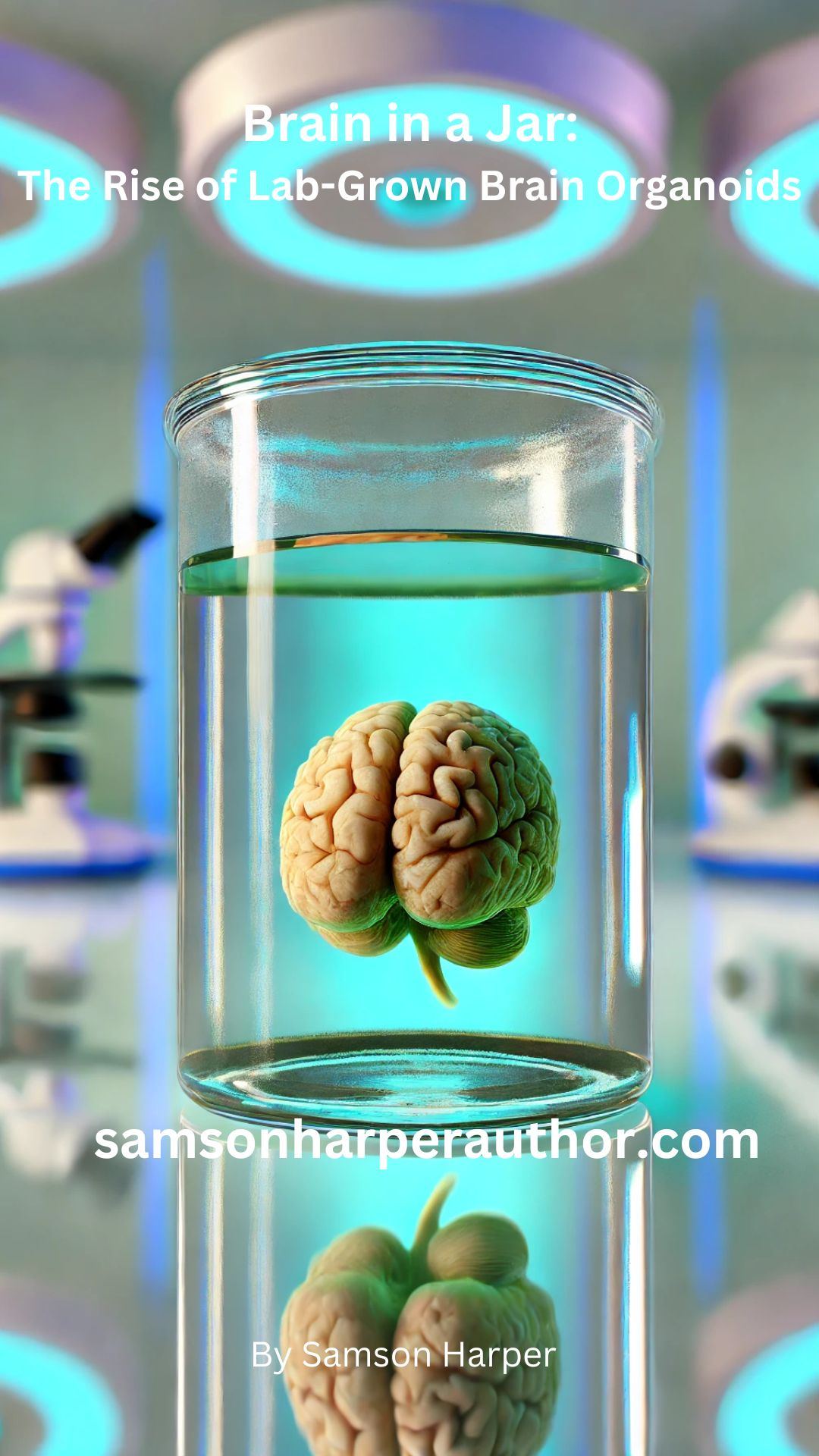

Brain in a Jar: Exploring Lab-Grown Brain Organoids
Dive into the world of lab-grown brain organoids—exploring their impact on science, AI, and our understanding of consciousness.
🧠Introduction to Lab-Grown Brain Organoids
Welcome to the fascinating realm of brain organoids, a groundbreaking development at the intersection of biology and artificial intelligence. "Brain in a Jar: The Rise of Lab-Grown Brain Organoids" explores how scientists have made monumental strides in creating miniature versions of the human brain in controlled lab environments. These brain organoids, which are essentially clusters of neurons developing within petri dishes, serve as vital tools in neuroscience, allowing researchers to study complex neural processes that were once thought to be exclusive to full-sized brains. As we venture further into this subject, we will examine the intricate nature of these tiny brain-like structures, their potential applications in understanding neurodegenerative diseases, and the ethical dilemmas they present. Join us as we unravel the secrets within a jar, exploring both the scientific advancements and the profound philosophical questions this technology raises about the nature of consciousness and the essence of being.
🧪The Significance of Brain Organoids in Modern Science
The emergence of lab-grown brain organoids marks a revolutionary milestone in both neuroscience and bioengineering. Crafted from human stem cells, these brain organoids replicate critical aspects of human brain development, providing a unique model for understanding how our brains function both in health and disease. Studying these organoids offers numerous advantages:
Disease Modeling: Brain organoids can mimic specific brain regions affected by neurodegenerative diseases like Alzheimer's and Parkinson's. Researchers utilize these models to observe disease progression and test potential therapies in ways that were previously unattainable, leading to more effective treatment strategies.
Personalized Medicine: As these organoids can be derived from individual patients' cells, they hold the key to developing personalized medical treatments. By modeling a patient's specific neurobiological conditions, scientists can evaluate drug responses and tailor interventions accordingly.
Ethical Exploration: The existence of brain organoids also elicits significant ethical questions about their use and study. Given that they contain neurons and exhibit basic brain-like activities, discussions surrounding their potential for consciousness, rights, and the implications of creating brain-like entities are increasingly vital in scientific discourse.
Artificial Intelligence Advancements: Another exciting aspect of brain organoids is their potential use in advancing artificial intelligence. By studying how neural connections develop and function in these organoids, researchers can gain insights into creating more sophisticated AI systems that mimic human cognition.
In summary, brain organoids are not merely a feat of biological craftsmanship; they are an intricate tool reshaping our approach to understanding the brain. The intersection of technology, medicine, and philosophy set against the development of brain organoids sparks an exciting conversation about the future of neuroscience and human understanding.
📈Advancing the Science of Brain Organoids
🔍Advancements and Future Directions in Brain Organoid Research
The journey of brain organoid research is relatively new but rapidly advancing, bringing with it an array of intricate scientific and ethical considerations. Several noteworthy advancements have propelled this field forward:
Improved Culturing Techniques: Researchers are continually refining methods for growing brain organoids, making them more life-like with enhanced structure and function. Recent advancements in three-dimensional culturing techniques have led to the development of organoids with complex features, including layered cortical structures that more accurately represent the human brain.
Integration with Technology: Scientists are now exploring how to connect brain organoids with artificial intelligence systems to study brain-computer interfaces. This could allow for groundbreaking experiments that deepen our understanding of neural networks and potentially pave the way for innovative therapies in brain injuries and mental health disorders.
Diverse Applications: Besides the study of neurodegenerative diseases, brain organoids are being employed in drug testing, toxicology assessments, and investigating brain development disorders. Their use in pharmacological studies can significantly reduce the reliance on animal models, aligning with growing ethical concerns in research.
Ethical Frameworks: As brain organoid capabilities grow, so do the ethical questions surrounding their research and application. Scientists are actively engaged in drafting ethical guidelines and policies to address questions of consciousness, potential applications in enhancement or modification of human capabilities, and the overall implications of manipulating life-like systems.
Looking ahead, the potential for brain organoids to transform not only neuroscience but also the landscape of ethics in science is enormous. Their ability to simulate human brain processes provides a gateway for discovering new avenues for treatment, enhancing our understanding of cognition, and grappling with the ethical dimensions of such technology.
⚖Ongoing Research and Ethical Considerations
As brain organoid research flourishes, it is vital to recognize the ongoing studies that explore their extended capabilities. Researchers are delving into understanding cognitive functions and responses to stimuli in organoids, aiming to elucidate how neural circuits develop and how they represent learning mechanisms. Additionally, the diverse applications of organoids in studying complex brain disorders are becoming more apparent:
Mechanisms of Brain Disorders: Continued research focuses on how brain organoids can model psychiatric disorders such as autism and schizophrenia, potentially leading to breakthroughs in treatment modalities.
Therapeutic Discovery: By employing organoids to screen potential drug candidates, scientists can expedite the drug development process, seeking cures for elusive neurodegenerative diseases.
Public Policy Development: Scientists, ethicists, and policymakers are collaborating to define proper regulations and practices surrounding the use and implications of brain organoids, ensuring ethical scientific progress.
Each of these avenues showcases the dual-edged sword of progress; while there are promising advancements in understanding the human brain, the potential for misuse raises moral and ethical questions that must be addressed.