Unveil the Story of Hypatia: A Trailblazer in Ancient Alexandria
Journey through the life, work, and legacy of Hypatia, the renowned female philosopher, mathematician, and astronomer who defied conventions in a tumultuous era.
.jpg&w=96&q=100)
🔍Introducing Hypatia of Alexandria
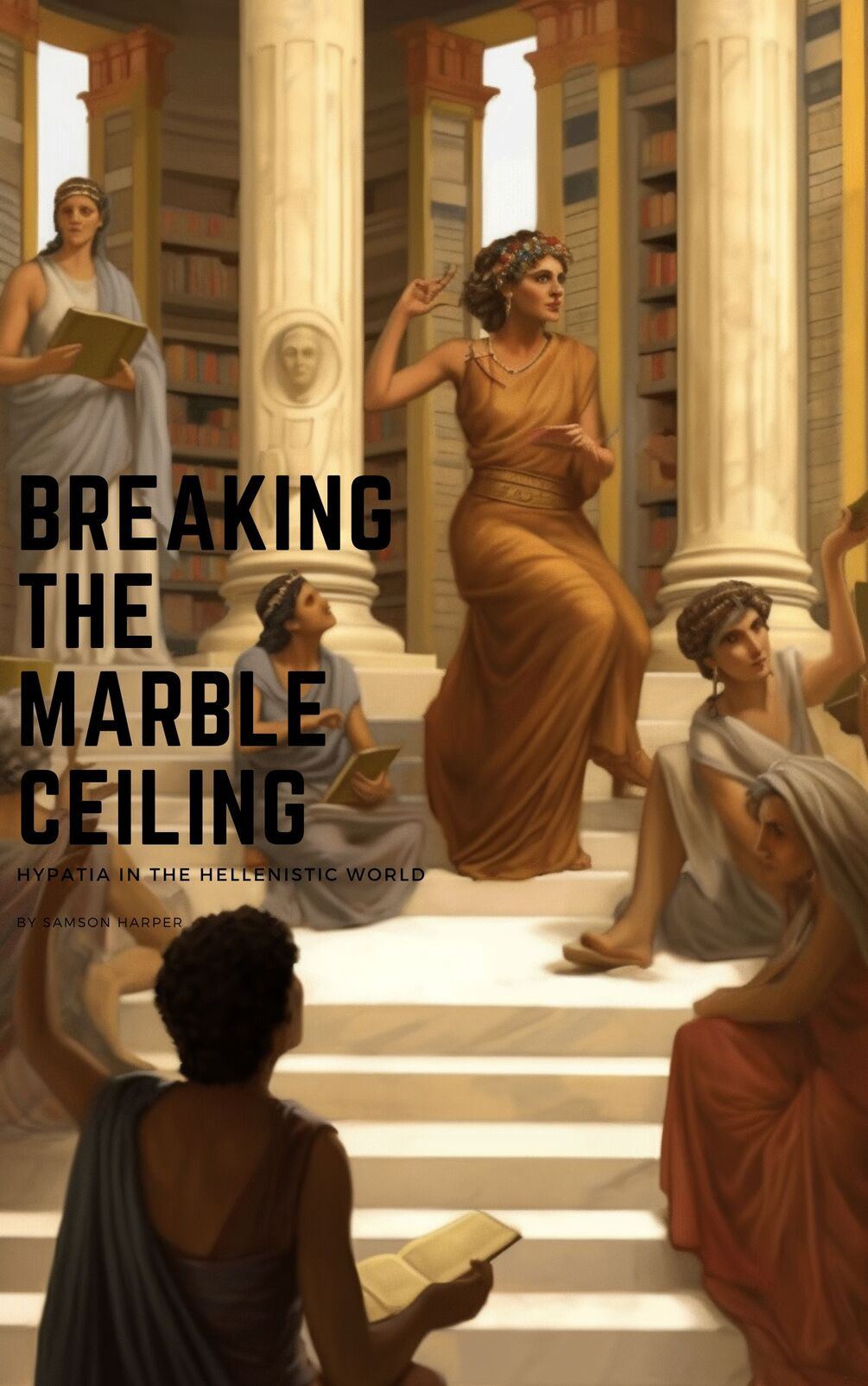
Step into the extraordinary world of Hypatia, the brilliant female philosopher, mathematician, and astronomer who lived in ancient Alexandria. In 'Breaking the Marble Ceiling: Hypatia in the Hellenistic World,' author Samson Harper provides an in-depth exploration of Hypatia's life, delving into her scientific contributions, influential role in Neoplatonism, and remarkable impact on Alexandria's political landscape. This book captures the essence of a woman who defied societal norms and transformed intellectual history. Whether you're a student of ancient history, a gender studies enthusiast, or simply curious about the intersections of science and philosophy, this book is a must-read. Don't miss out on this compelling journey. Order your copy today!
🌟Hypatia’s Scientific and Philosophical Prowess
📜Discovering Hypatia's Legacy
In 'Breaking the Marble Ceiling: Hypatia in the Hellenistic World,' readers are taken on a riveting journey through the life of an extraordinary woman. Hypatia’s contributions to mathematics, philosophy, and astronomy were groundbreaking and far ahead of her time. Samson Harper meticulously examines her advancements in algebra and geometry, which laid the foundations for future mathematicians. The book also delves into her profound influence on Neoplatonism, highlighting how her philosophical teachings shaped the intellectual currents of her era.
In addition, Harper explores Hypatia's unique role in Alexandria's political landscape. As a highly esteemed teacher and public figure, Hypatia bridged the gap between different intellectual and cultural communities, fostering a rich environment of knowledge and debate. Her tragic martyrdom amidst rising tensions between religious factions underscores the volatile nature of her times. Through a blend of historical facts and thoughtful analysis, this book reveals the lasting impact of Hypatia's work and the enduring relevance of her story.
⚖Hypatia’s Multidimensional Influence
'Breaking the Marble Ceiling: Hypatia in the Hellenistic World' doesn't just recount Hypatia's achievements; it contextualizes them within the broader framework of her time. Harper paints a vivid picture of a society in flux, grappling with intellectual, religious, and political upheaval. Hypatia's work in mathematics, particularly her refinements in algebra and her commentaries on Diophantus, and her extensive knowledge of astronomy, were not isolated pursuits. They were deeply integrated into the Neoplatonic school of philosophy, which sought to unite rational thought with the spiritual dimensions of human experience.
Moreover, Harper details Hypatia's role as a revered figure in Alexandria's complex political scene. As an advisor to key political figures, her blend of rationality and philosophical wisdom was instrumental in navigating the city's governance during tumultuous periods. The author argues that Hypatia's tragic death was a significant turning point, marking the end of the classical era's enlightenment and ushering in a period of greater religious intolerance and intellectual repression. Harper's comprehensive analysis underscores the multidimensional influence of Hypatia and her enduring legacy as a beacon of knowledge and resilience.
👩Hypatia's Enduring Impact and Feminist Legacy
Hypatia's story is not just a historical account; it's a legacy that continues to inspire contemporary movements for gender equality and intellectual freedom. 'Breaking the Marble Ceiling: Hypatia in the Hellenistic World' positions Hypatia as an early feminist icon whose life and work defied the gender norms of her era. Beyond her scientific and philosophical achievements, Hypatia's existence in a male-dominated society symbolizes the relentless pursuit of knowledge and the courage to challenge societal constraints.
Samson Harper emphasizes Hypatia's role in uplifting the status of women in academic and intellectual spheres. Her legacy serves as a testament to the capabilities and contributions of women in science and philosophy, paving the way for future generations. The book further discusses how modern feminist scholars and historians view Hypatia's life as a source of inspiration, drawing parallels between her struggles and those faced by women today. By delving into Hypatia's multifaceted life, Harper not only honors her memory but also galvanizes readers to reflect on the ongoing fight for gender equality and intellectual inclusivity.
🌍Cultural Significance and Interpretation
The influence of Hypatia extends beyond academia into the realms of culture and collective consciousness. In 'Breaking the Marble Ceiling: Hypatia in the Hellenistic World,' Samson Harper examines how different cultures and eras have interpreted and reimagined Hypatia’s life. From ancient texts to modern literature and media, Hypatia's story has been adapted to reflect contemporary values and struggles. Harper delves into the various representations of Hypatia, exploring how each portrayal both honors and reshapes her legacy.
By understanding these interpretations, readers can appreciate the cultural significance of Hypatia's life story. Her narrative has become a symbol of resistance against oppression and a beacon for intellectual freedom. As Harper discusses, these varied portrayals also bring to light the complexities of Hypatia's character, making her a relatable and inspiring figure for people across different backgrounds and time periods. This section encourages readers to see beyond the historical facts, grasping the broader cultural impact of Hypatia's life and legacy.