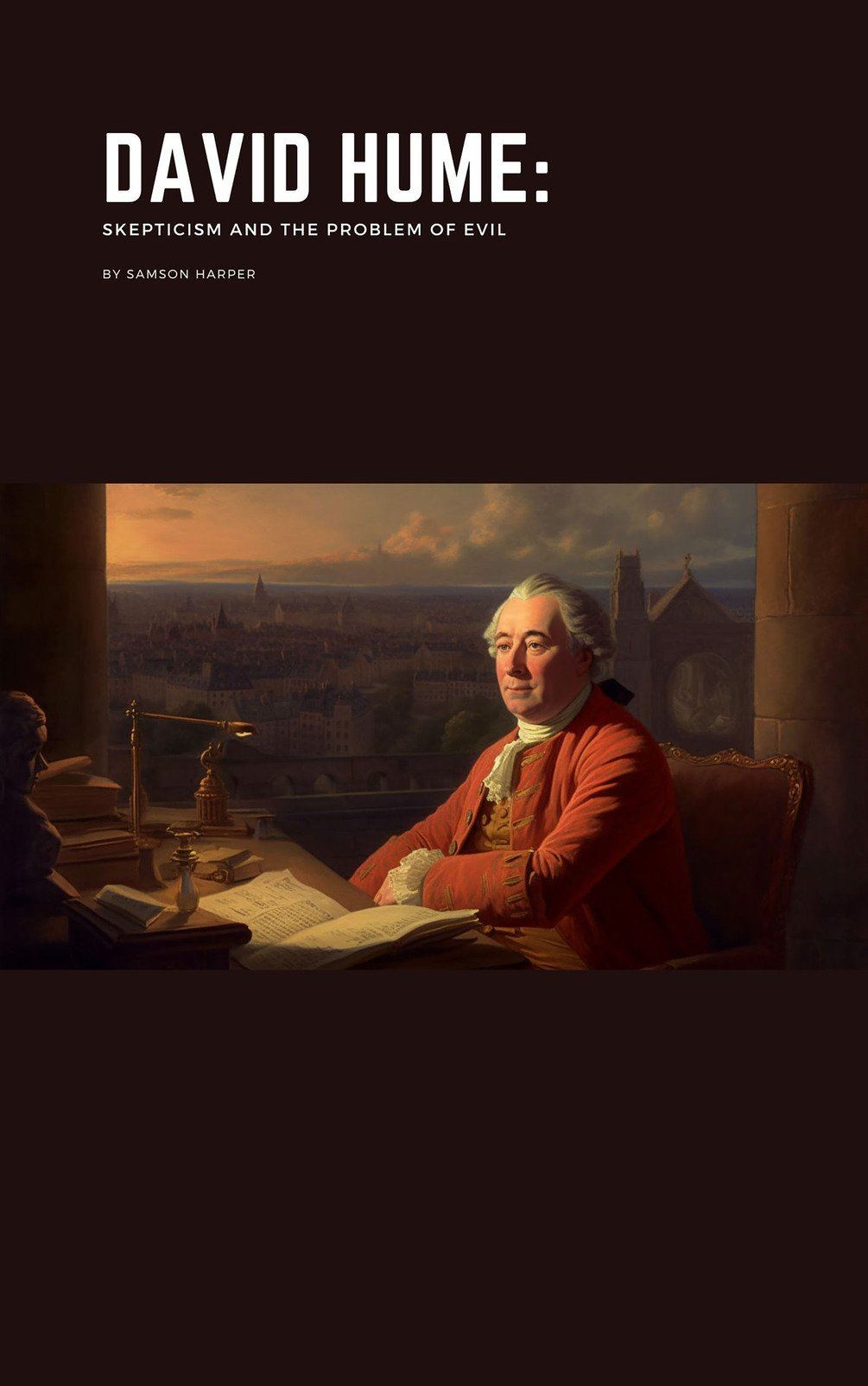

David Hume: Skepticism and the Problem of Evil - A Comprehensive Guide
Explore David Hume's philosophies on skepticism and the problem of evil. This in-depth book examines his influential works and their relevance today.
📘Introduction and Overview
Welcome to the splash page for "David Hume: Skepticism and the Problem of Evil" by Samson Harper! This thought-provoking book offers an in-depth examination of the renowned Scottish Enlightenment philosopher David Hume and his complex philosophical stances. We invite you on a journey through Hume's life and works, exploring his empiricism, philosophy of mind, moral philosophy, philosophy of religion, and his views on politics and economics. You'll gain insight into Hume's influence on later philosophers and engage with the criticisms and controversies surrounding his ideas. This book also places Hume's thoughts in a modern context, showcasing their relevance in contemporary philosophical debates. Whether you're a seasoned philosopher or a curious reader, this comprehensive guide is an invaluable resource for understanding Hume's enduring legacy. Explore, learn, and delve deep into the mind of one of history's greatest thinkers.
🧠Hume's Groundbreaking Philosophies
📖Exploring David Hume's Philosophical Arguments
"David Hume: Skepticism and the Problem of Evil" dives deep into the core of Hume's philosophical inquiries. Hume, a prominent figure of the Scottish Enlightenment, is best known for his pioneering work in empiricism – the belief that all knowledge is derived from sensory experience. His philosophy of mind breaks new ground by rejecting the notion of inherent meaning and knowledge and instead proposing that human cognition is a result of habitual patterns. Hume's moral philosophy, outlined in his seminal works, suggests that ethical principles are not objective truths but rather sentiments shaped by human emotions and societal context. This perspective was groundbreaking and notoriously controversial, stirring intense debate among his contemporaries and future philosophers alike. Hume's views on religion, particularly his skepticism of religious dogma and the argument against miracles, highlight his commitment to reason above tradition. His insights into politics and economics further reveal his belief in the complexities of human nature and the necessity for pragmatic governance. Engaging with Hume's ideas reveals a thinker who consistently challenged conventional wisdom, urging for a worldview anchored in critical inquiry and empirical evidence. This book serves as a gateway to understanding the intricate and influential philosophies of David Hume."
🌟Hume's Influence and Modern Relevance
Hume's influence extends far beyond his own time, reaching into modern philosophical debates and disciplines. His ideas about empiricism laid the groundwork for later philosophers like Immanuel Kant, who remarked that Hume awakened him from his 'dogmatic slumber.' Hume's philosophical inquiries resonate with contemporary issues in cognitive science, psychology, and even artificial intelligence, offering insights into human cognition and behavior. His skepticism toward religious doctrines paved the way for secular approaches to ethics and policymaking, emphasizing reason and empirical evidence over faith or tradition. Moreover, Hume's economic and political thoughts presaged many concepts central to modern economics and political theory, such as the importance of free markets and the complexities of human decision-making. By questioning the foundation of human knowledge and understanding, Hume invites modern readers to apply critical thinking to the issues of their own time. This book not only explores Hume's foundational ideas but also situates them in today's context, making his work accessible and relevant to contemporary readers. Whether you're a historian, a philosopher, or simply curious about human thought, Hume's work offers invaluable lessons and perpetual relevance.