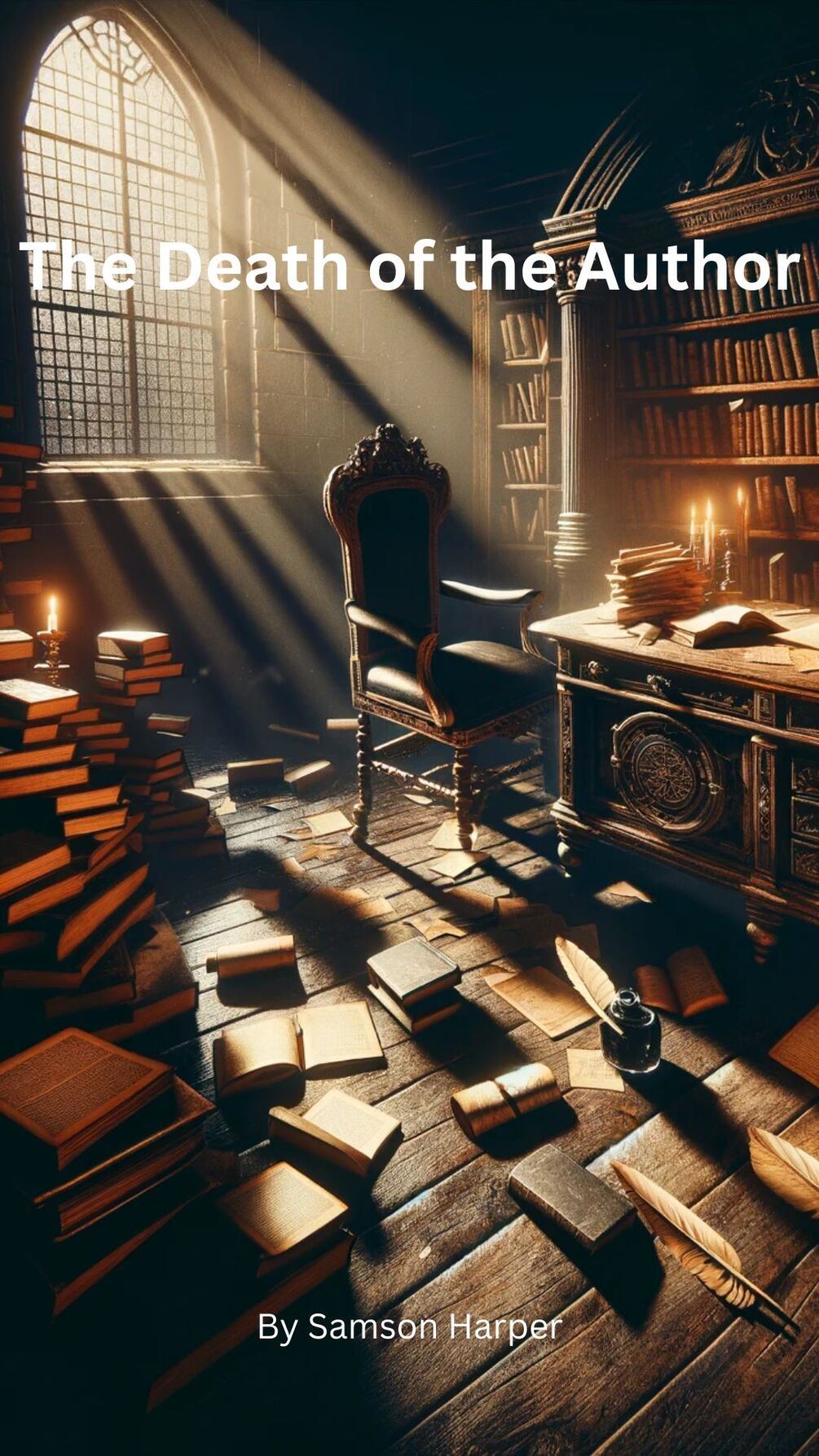

Death of the Author by Samson Harper - A Daring Exploration into AI and Creativity
Explore the transformative impact of AI on writing in 'Death of the Author' by Samson Harper. Challenge traditional notions of authorship and discover a new literary landscape shaped by technology.
📘Introduction to 'Death of the Author'
Welcome to the official splash page for 'Death of the Author' by Samson Harper. In this compelling book, Harper delves into the transformative effect that artificial intelligence is having on the world of writing and creativity. Inspired by Samanth Subramanian's insightful article in The New Republic, Harper takes the conversation further, exploring the intersection of technology and human imagination. The book questions traditional conceptions of authorship and suggests a future where AI and human creativity come together to reshape literary expression. If you are fascinated by the potential of AI or are keen to understand the evolving landscape of literature, this book is a must-read. Join us as we navigate through a complex interplay of technology and art in 'Death of the Author.'
📚What You’ll Discover in 'Death of the Author'
📖The AI Transformation in Writing
In 'Death of the Author,' Samson Harper tackles the intriguing and complex role of artificial intelligence in the realm of writing and literature. As we stand on the cusp of a technological revolution, AI is no longer just a tool—it's an active participant in the creative process. Harper delves deep into how AI technologies are being used to compose, analyze, and even critique literary works. He examines the broader implications of these advancements, questioning who gets to be called an 'author' in this new age. The book argues that as AI systems become more sophisticated, they are not only assisting writers but are also beginning to show signs of genuine creativity and originality.
One of the key arguments that Harper presents is the inevitability of AI-human collaboration in the creative field. He discusses how AI can augment human capabilities, offering new perspectives and avenues for creative expression that were previously unimaginable. Rather than viewing AI as a threat to human authorship, Harper suggests a future where both can coexist, pushing the boundaries of what storytelling and literary art can achieve.
💡AI's Impact on Creativity and Authorship
Harper moves beyond the practical applications of AI in writing to address the more philosophical questions surrounding creativity and authorship. What does it mean to be an author when a machine can produce text that is indistinguishable from that crafted by a human? This book explores the notion of 'death of the author' in the age of AI, where the lines between human and machine-generated creativity blur. Harper posits that ownership and authorship will become shared experiences between humans and machines, urging readers to think differently about intellectual property and literary merit.
By pushing these boundaries, Harper invites readers to imagine a collaborative future where AI and human creativity intermingle, enriching the literary world with unique narratives and unprecedented forms of expression. This paradigm shift will not only impact writers and readers but also publishers, critics, and the literary community at large. In doing so, 'Death of the Author' offers a thought-provoking examination of the redefined roles in the literary ecosystem.
🤖Conclusion: The Merging of Man and Machine
🚀The Future of Literary Expression
In 'Death of the Author,' Harper sets the stage for a future where artificial intelligence and human creative forces collaborate seamlessly. This revolutionary approach to storytelling opens up new dimensions for literary expression. Imagine narratives that are enriched by the analytical power of AI, allowing for multi-layered stories that can adapt to the reader's preferences in real-time. Harper envisions a dynamic literary world where interactive and immersive experiences redefine what it means to engage with a book. By leveraging AI, authors can experiment with styles and plots that were previously inconceivable, ushering in an era of unparalleled innovation in literature.
The book emphasizes that this futuristic concept does not diminish human creativity but instead amplifies it, providing novel tools and opportunities for expression. In this coexistence, AI serves as both a muse and a collaborator, challenging the limits of human imagination while preserving the essence of creative thought. 'Death of the Author' is not just a theoretical exploration but a practical guide to understanding and navigating the confluence of technology and art.
🧠Expanding on AI's Literary Potential
As you delve deeper into 'Death of the Author,' you'll encounter a rich tapestry of ideas that challenge conventional wisdom about authorship and creativity. Samson Harper meticulously analyzes various AI-driven writing tools and their impact on the modern literary scene. You'll learn about pioneering AI applications that generate poetry, prose, and even complex narratives, often indistinguishable from human-created content. Harper also highlights the ethical considerations surrounding these advancements, addressing concerns such as plagiarism, intellectual property, and the moral rights of an author.
The book further explores how AI can democratize the literary field by breaking down barriers to entry for aspiring writers. With AI's assistance, anyone with a story to tell can overcome traditional roadblocks like writer's block, limited vocabulary, and lack of training. Harper envisions a more inclusive literary world where diverse voices and stories get their due recognition, thanks to the powerful capabilities of AI. Furthermore, he demonstrates how AI can be a valuable tool for seasoned writers, offering fresh perspectives and enhancing creativity by providing unforeseen angles and ideas.