Unlock the Secrets of the Mind
Explore neuroscience, consciousness, and the ethics of free will. Journey through neural networks, decision-making, and the forefront of AI technology.
_auto_x2.jpg&w=96&q=100)
🧠Introduction to Decoding the Mind
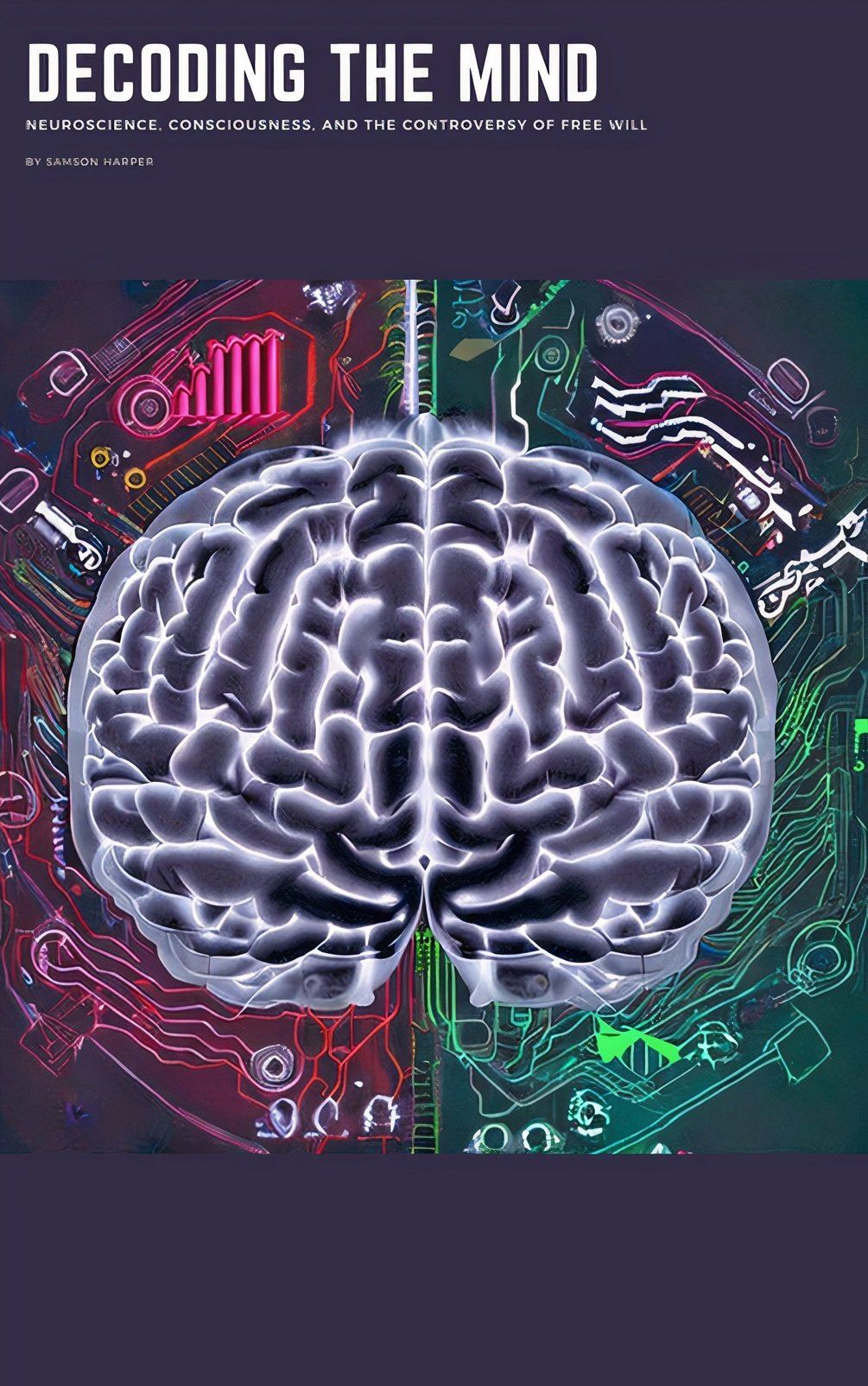
Welcome to an intellectual journey through the enigmatic realms of the human mind. Samson Harper's groundbreaking book, "Decoding the Mind: Neuroscience, Consciousness, and the Controversy of Free Will," invites you to explore the complex intersections between neuroscience, philosophy, and artificial intelligence. This book delves deep into the fundamentals of the nervous system, neural networks, brain development, sensory processing, memories, and emotions. Harper confronts the challenging concept of consciousness and scrutinizes its relationship with notions of self and free will. The neurobiological basis of decision-making and its implications on our understanding of free will are meticulously examined. Additionally, advancements in brain-computer interfaces and AI are discussed, raising critical ethical considerations. Concluding with a forward-thinking outlook, Harper envisions the future of neuroscience and its potential societal impact.

🔍Decision-Making and Free Will
🧩Exploring the Depths of the Human Mind
In 'Decoding the Mind: Neuroscience, Consciousness, and the Controversy of Free Will,' Samson Harper embarks on a profound exploration of what makes us who we are. The book begins by breaking down the fundamentals of the nervous system, offering a scientific yet accessible introduction to neural networks and brain development. You'll quickly find yourself immersed in how the brain processes information from our senses, how memories are formed and retrieved, and how emotions are generated and experienced.
Harper doesn't shy away from complex questions. Instead, he delves into the thick of them, scrutinizing the elusive concept of consciousness itself. What does it mean to be conscious? How does our understanding of the 'self' shape our perception of free will? The book rigorously examines these questions, backed by scientific evidence and philosophical inquiry.
Not stopping there, Harper inspects the neurobiological basis of decision-making processes. How do our brains make choices, big and small? What does this mean for the age-old debate about free will? As advancements in brain-computer interfaces and AI continue to develop, the ethical considerations surrounding these technologies are becoming increasingly critical. Harper thoughtfully addresses these issues, discussing possible future implications and the importance of responsible innovation.
🔬Fundamentals of Neuroscience
Understanding the basics of the nervous system is crucial for delving deeper into the study of the mind. In this book, Harper begins by exploring neural networks and the development of the brain. Readers will learn how the brain processes sensory information, from external stimuli to internal responses. The complexity of neural pathways and synaptic connections are demystified, making advanced neuroscience accessible to all.
🤔Consciousness and Self
A significant portion of 'Decoding the Mind' is dedicated to the concept of consciousness and its intricate links to the notion of self. Harper navigates the reader through philosophical and neurological perspectives to understand what it means to be conscious. The book scrutinizes how our sense of self affects our perception of free will, supported by various scientific inquiries and thought experiments. This section aims to bridge the gap between abstract philosophy and concrete neuroscience, offering readers a comprehensive view of the self.
🚀Implications for the Future
⚖Ethical Considerations in Neuroscience and AI
The rapid advancements in neuroscience and AI carry significant ethical considerations that must not be overlooked. Harper devotes a critical examination of these issues in 'Decoding the Mind.' From the implications of brain-computer interfaces on personal autonomy to the far-reaching consequences of AI in decision-making processes, the book offers a detailed exploration of the ethical landscape.
One key area of concern is privacy. As brain-computer interfaces become more sophisticated, the ability to access and manipulate thoughts and memories poses unprecedented risks. Harper discusses scenarios where such technology might be misused, stressing the importance of stringent ethical guidelines.
Moreover, the integration of AI in everyday decision-making could blur the lines between human and machine cognition. This raises questions about accountability and the essence of what it means to be human. Can we hold AI accountable for decisions that mirror human thinking? Harper's book challenges readers to think critically about these dilemmas, advocating for responsible innovation and ethical governance in the face of technological advancements.
💡Advancements in Neuroscience and AI
In recent years, advancements in neuroscience and artificial intelligence have sparked considerable excitement and controversy. Harper dedicates a portion of his book to investigating these cutting-edge technologies. Brain-computer interfaces, for instance, have the potential to revolutionize how we interact with digital systems and even augment human capabilities. However, this also raises ethical dilemmas regarding privacy, autonomy, and the nature of being human.
Artificial intelligence, particularly in the context of neural networks, presents both opportunities and risks. Advanced AI systems are becoming better at mimicking human decision-making processes, but what does this mean for our understanding of consciousness and free will? Harper delves into these questions, providing a balanced view of the potential benefits and challenges that come with integrating AI into our lives.
The book serves as a cautionary tale and a hopeful roadmap, urging readers to consider the responsible development and use of these powerful technologies. With vivid examples and thought-provoking scenarios, Harper illustrates the future possibilities that neuroscience and AI hold for humanity.