
Water Fountain Redesign
Redesigned public, outdoor drinking fountains with an associated app to specifically accommodate children through our "Methods for Human Factors Engineering" final project.
Skills
Usability testing
Questionnaire design
CAD modeling (SolidWorks)
Anthropometric analysis
Sketching
Task analysis
Mobile app development and wire-framing (Figma)
Market research
Timeframe
Spring 2023
Role
Group member (1 of 2)
Summary
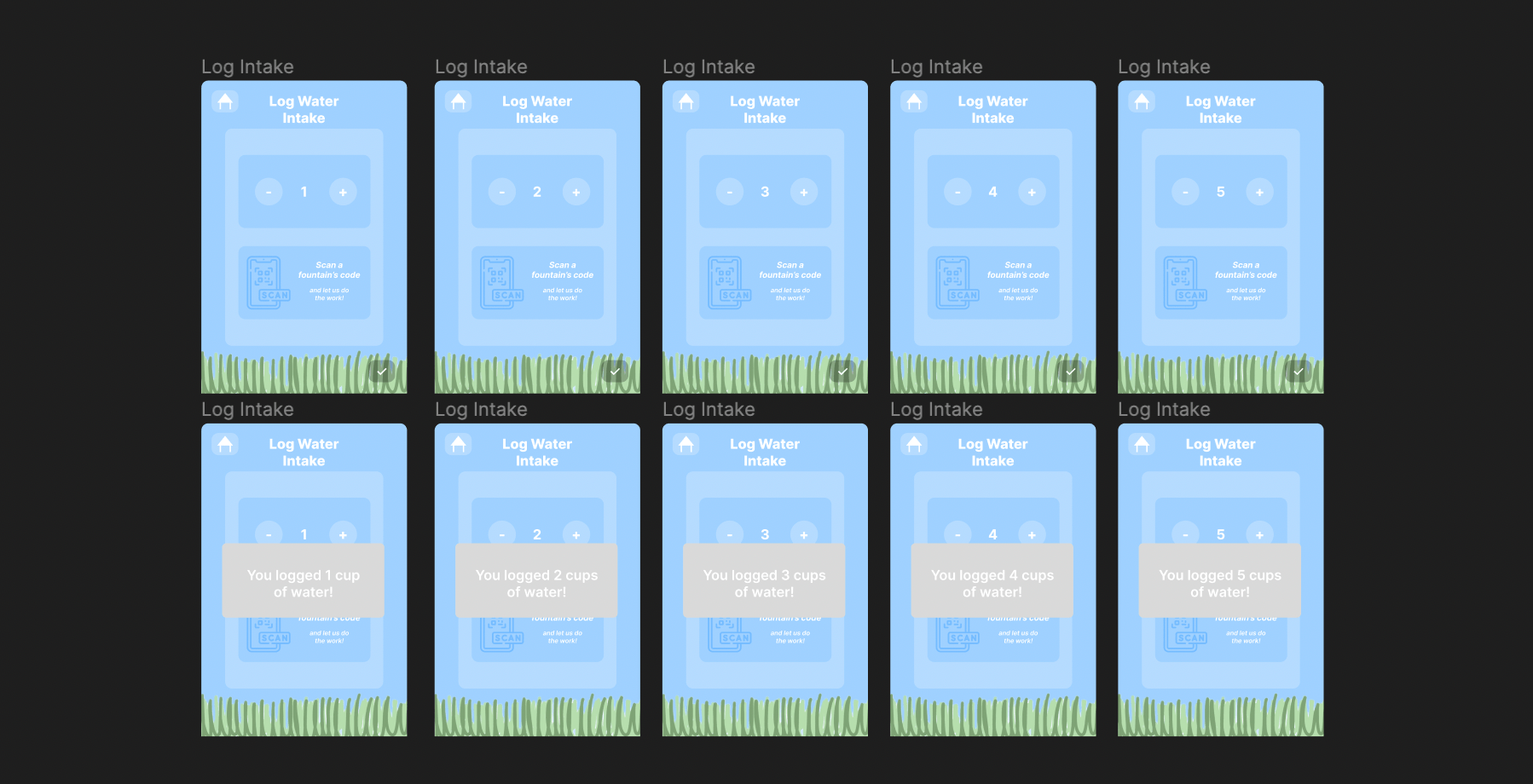
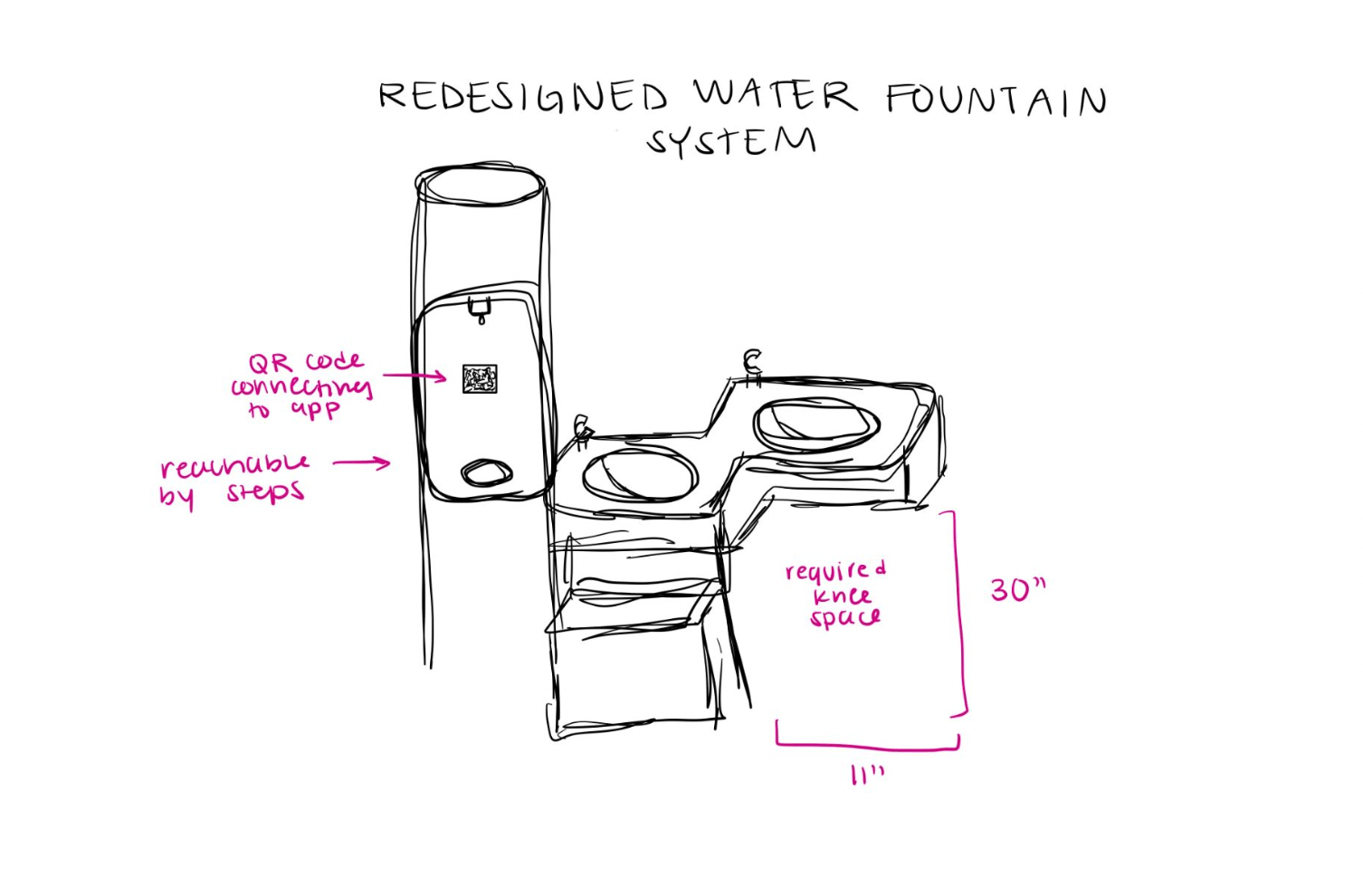
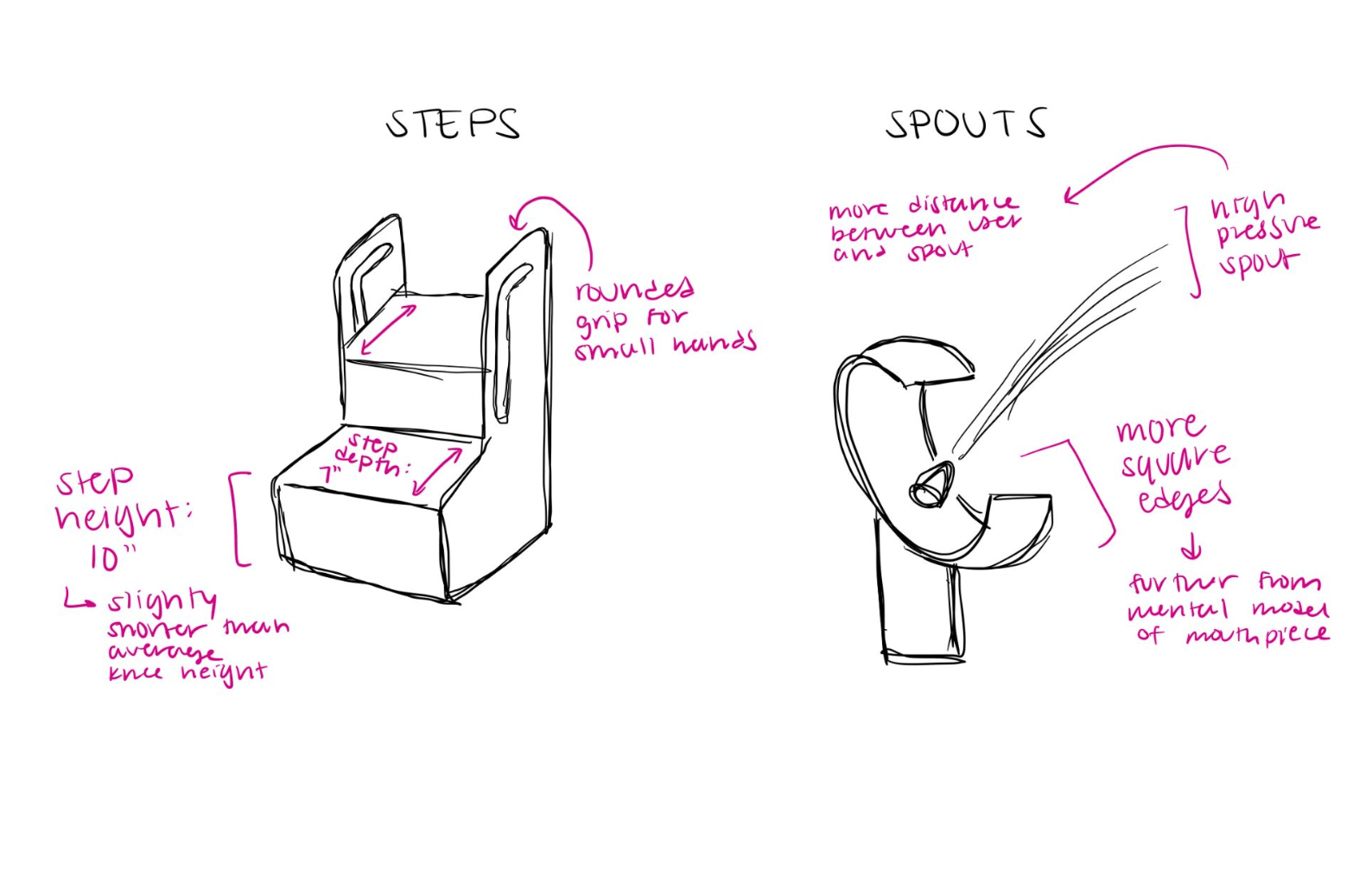
Our goal is to redesign public, outdoor drinking fountains. The current design is outdated and fails to accommodate for small children (ages 3-7 years old) and their parents. The product will feature a step ladder under the fountain so children of all heights can easily reach the drinking spout. Our design will also consider parents and taller individuals who may have to hunch over to drink from a water fountain. An adjustable tipping spout will allow the water stream to reach greater heights, eliminating the need to bend over. It will also have a water bottle filling station. Along with the physical product, we will design an app that maps all the closest water fountains and tracks water intake.
Design Considerations - Cleanliness
Although illness and disease outbreak have been associated with public drinking fountains, most cleanliness problems are correlated with poor cleaning and maintenance. Our project would include replacing old, neglected infrastructure with our redesigned water fountains that are regularly serviced and maintained.
However, bacteria also spreads when the user touches their mouth to the water spouts. Current designs feature mouth guards that prevent the user from making contact with the spout. Children often think the mouth guard is a mouthpiece, like that of a water bottle. To combat this issue, we will design a mouth guard that strays further from that mental model. Additionally, our water stream will have a much higher arc to create more distance between the user and the spout.
Engineering Requirements
Outdoor water fountains must be…
Durable for various extreme weather conditions
Freeze resistant for cold temperatures
Made from a material that does not require much maintenance
Compliant with ADA (Americans with Disabilities Act) standards for accessible design
Our design solutions:
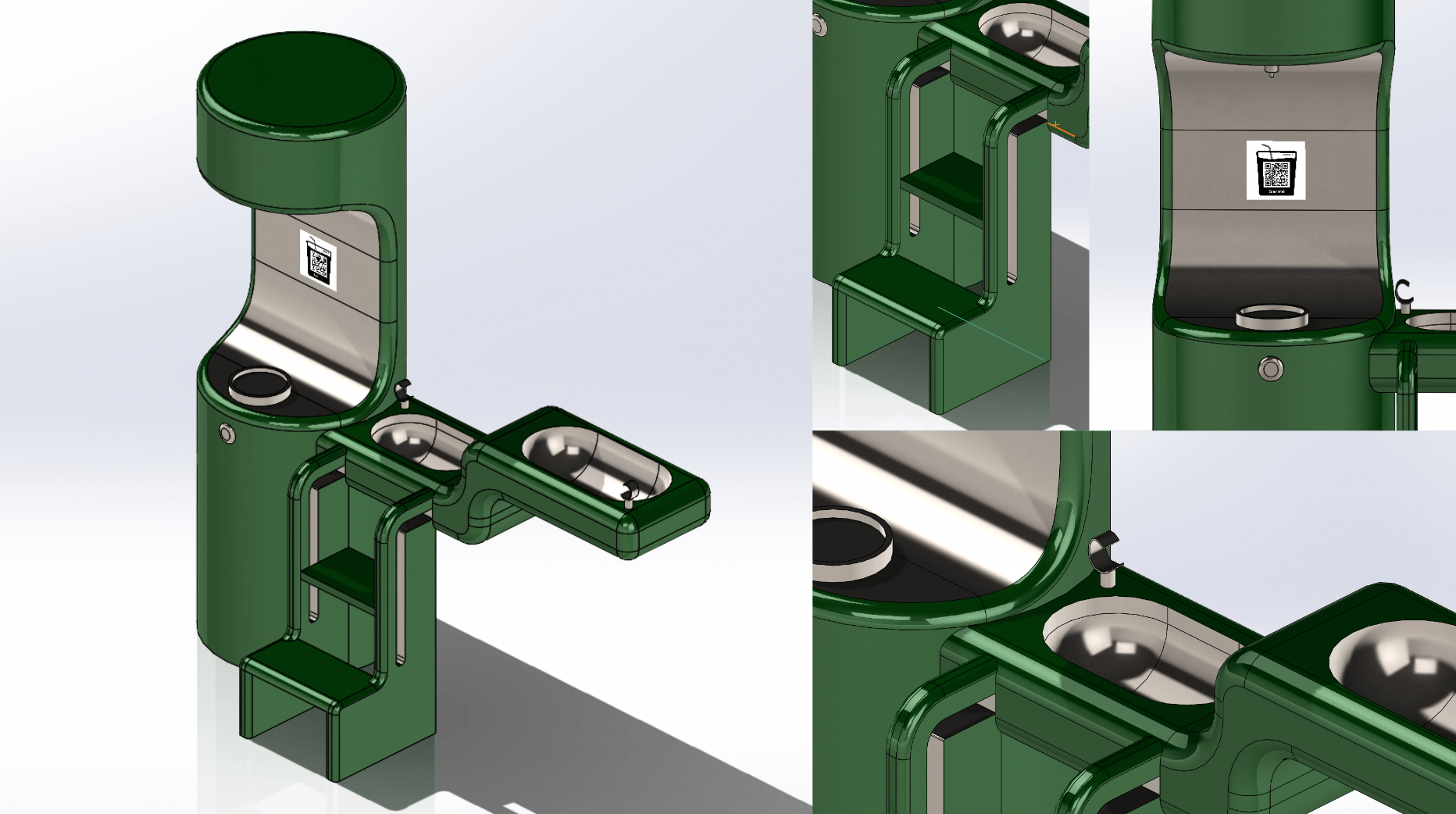
Heavy duty stainless steel for the base of the fountain, coated in a corrosion and scratch resistant finish
304 stainless steel bowls
Wide, insulated base to prevent freezing
Proper knee and toe space to comply with ADA standards


Takeaways
Throughout this project, we learned about the design process and how important it is to consider the user when figuring out interfaces both physically and digitally.
This project has proven to be immensely beneficial for both of us, as it has provided a valuable opportunity to enhance your CAD and Figma skills while simultaneously reinforcing the user-centered design process you learned in your class. By incorporating essential methodologies such as observing, conducting questionnaires, performing anthropometric studies, and engaging in market research we have explored and deepened our view of the importance in understanding user needs.
Engaging in the process of designing a product and its accompanying app has provided us with a unique opportunity to explore and refine the delicate balance between aesthetics and functionality. Throughout this project, we have discovered how to navigate the intricate relationship between these two essential aspects of design, finding ways to harmonize them to create a compelling user experience.
Designing a CAD model of a water fountain with improved accessibility for children provided a practical opportunity to balance aesthetics and functionality. By incorporating child-friendly modifications and considering their specific needs, such as adding steps and lowering water spout and dish height, the fountain became visually appealing and engaging. Simultaneously, optimizing functionality with child-friendly controls and intuitive interaction mechanisms ensured a safe and enjoyable user experience. Through user-centered design, observations, and user testing, the design choices were refined, resulting in a visually appealing and accessible water fountain that met the unique requirements of children.
Designing the accompanying app further pushed us to create balance between aesthetics and functionality. We tried to focus on creating a visually appealing design, with vibrant colors and interactive illustrations (specifically the metaphoric icons) to captivate children’s attention while offering features such as tracking water intake, locating water fountains, and educating about water health. Alongside of this, we tried to emphasize an intuitive user interface and user-centered design to ensure easy navigation for children. With iterative design cycles and user testing, we refined its aesthetics and functionality.