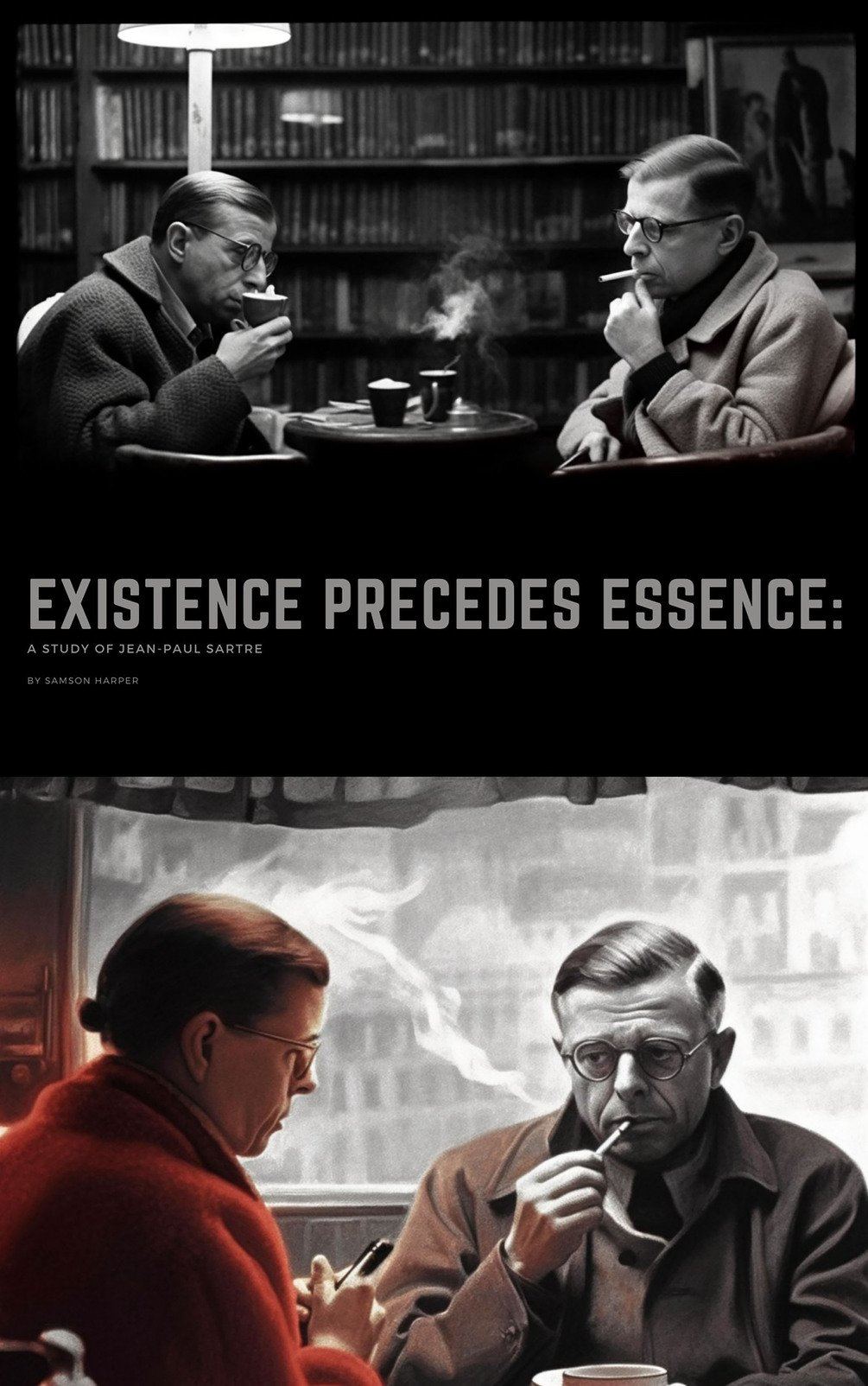
Existence Precedes Essence: A Study of Jean-Paul Sartre - Book by Samson Harper
Explore Jean-Paul Sartre's life, works, and impact on existentialism and contemporary thought. A must-read book for philosophy enthusiasts, by Samson Harper.
📚Introduction to the Book
"Existence Precedes Essence: A Study of Jean-Paul Sartre" is a detailed and comprehensive look at the life, work, and legacy of the renowned French philosopher, Jean-Paul Sartre. Authored by Samson Harper, this book serves as an essential guide for those interested in understanding Sartre's contributions to existentialism, literature, and socio-political thought. It dissects his key philosophical themes such as freedom, authenticity, and bad faith, and explores his attempts to bridge Marxism with existentialism. Harper's study also delves into Sartre's ethical philosophy, analyzing its implications for contemporary moral debates. Concluding with an assessment of Sartre's lasting influence across various fields, this book is invaluable for anyone looking to comprehend Sartre's relevance in today's world.
🔍In-Depth Analysis and Critical Engagement
🧐Critical Engagement with Sartre
Harper’s exploration into Jean-Paul Sartre’s works goes beyond surface-level analysis to engage critically with the philosopher’s comprehensive body of work. Harper examines the key philosophical constructs that Sartre developed, such as his concept of authenticity, urging individuals to live truthfully according to their own beliefs rather than societal expectations.
A fascinating portion of the book is dedicated to Sartre’s reconciliation project between existentialism and Marxism. Harper investigates Sartre’s argument that existentialism can provide a moral foundation for Marxism, offering a critical perspective on how this combination influences socio-political discourse. Sartre's belief in the transformative power of literature and theatre is also scrutinized, providing readers an understanding of how these mediums serve as vehicles for his existentialist ideas.
Moreover, Harper dissects Sartre's notion of freedom, a cornerstone of his philosophy that impacts discussions on law, ethics, and politics. The analysis is threaded with critical viewpoints and counterarguments, ensuring a balanced and nuanced perspective. Each chapter invites readers to ponder Sartre’s enduring relevance and his impact on contemporary thought.
🧠Main Arguments and Themes
Samson Harper's "Existence Precedes Essence: A Study of Jean-Paul Sartre" delves deeply into the core arguments and themes that define Sartre's philosophy. The book meticulously examines the fundamental principles of existentialism, a philosophical movement that emphasizes individual freedom, choice, and responsibility. Harper elucidates Sartre's famous assertion that "existence precedes essence," which postulates that individuals are not born with a predetermined purpose but must forge their own identities through actions and decisions.
One of the prominent themes explored is the concept of bad faith, a form of self-deception where individuals deceive themselves to escape the anxiety and responsibility that comes with true freedom. Harper also provides a comprehensive analysis of Sartre's attempts to reconcile his existentialist ideas with Marxism, investigating the complexities and contradictions inherent in this synthesis.
Furthermore, the book addresses Sartre's significant contributions to literature and theatre, highlighting how his narrative techniques and characters reflect existentialist themes. Readers will find an in-depth discussion on Sartre's ethical philosophy, offering insights into how his ideas challenge conventional moral frameworks and propose new ways of thinking about human existence.
🌐Sartre's Broader Influence and Ethical Philosophy
⚖Ethical Philosophy and Moral Debates
A significant portion of "Existence Precedes Essence: A Study of Jean-Paul Sartre" is dedicated to exploring Sartre's ethical philosophy and its lasting effects on contemporary moral debates. Harper meticulously analyzes Sartre's perspective on moral autonomy, arguing that true ethical living requires individuals to take full responsibility for their actions without reliance on predefined moral codes.
This radical approach challenges conventional morality, pushing readers to reconsider principles of right and wrong in a world devoid of intrinsic values. Harper discusses how Sartre’s ideas intersect with current ethical issues, such as human rights, social justice, and individual freedom, highlighting the philosopher's staunch belief in the capacity for change and personal growth.
Sartre's concept of authenticity emerges as a cornerstone for understanding modern ethical dilemmas. By advocating for a life lived in accordance with one's true self, Sartre shifts the moral focus from societal conformity to personal integrity. This notion has invigorated debates around identity, normative ethics, and the role of individual agency in moral decision-making.
Harper's examination offers a thorough understanding of how Sartre's ethical framework continues to influence and inspire contemporary discussions on morality and human behavior.
🌍Sartre's Influence in Contemporary Thought
"Existence Precedes Essence: A Study of Jean-Paul Sartre" brings to light the immense influence Sartre has had on contemporary thought, extending well beyond the confines of philosophy. Harper details how Sartre's ideas permeate fields such as psychology, literature, political theory, and even popular culture.
In psychology, Sartre's existential psychoanalysis has contributed to understanding human behavior through the lens of freedom, choice, and responsibility. His influence on literature is marked by his experimental writing style and his development of characters who embody existential crises, profoundly impacting narrative techniques and thematic exploration.
Sartre's socio-political impact is perhaps most riveting, with his attempts to blend existentialism with Marxism offering new perspectives on freedom and oppression. This synthesis has inspired socio-political movements seeking to address injustice and champion human rights.
Finally, Harper examines how Sartre's concepts of authenticity and bad faith have been woven into popular culture, influencing everything from films to self-help literature, thus underscoring Sartre’s relevance in the modern era. This book is essential for anyone aiming to grasp the far-reaching implications of Sartre's work in 21st-century discourse.