The Economics of Exploitation:
A History of Usury in America
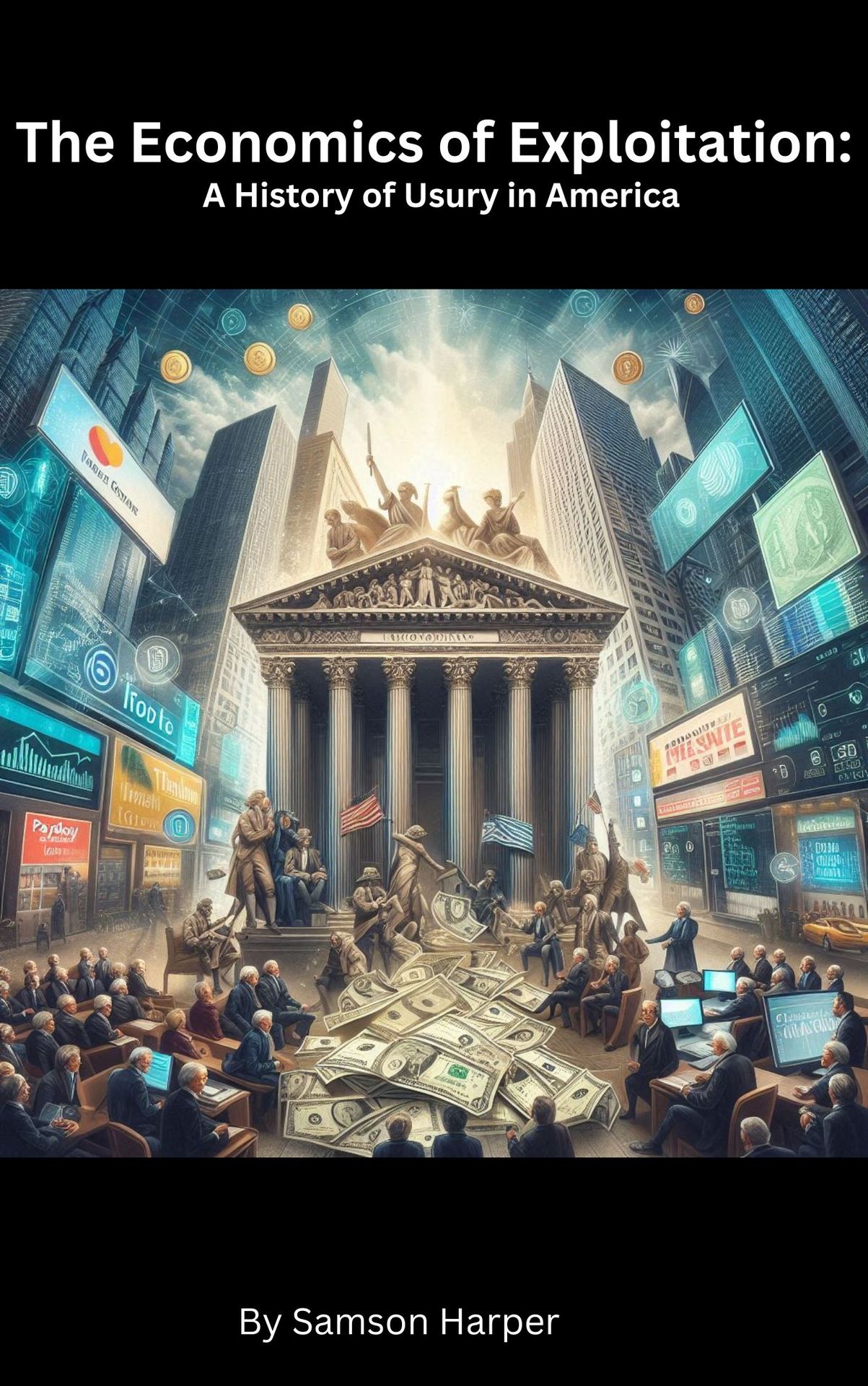

📚Exploring Usury in America
The Economics of Exploitation: A History of Usury in America examines the long and contentious history of usury, where the practice of charging exorbitant interest has evolved from a condemned act to a cornerstone of the U.S. financial landscape. This exploration delves into significant historical events, from the collapse of America’s early national banks to the covert establishment of the Federal Reserve, unveiling a narrative that intertwines moral dilemmas with financial strategies.
As our world advances toward new paradigms in finance, such as digital currencies and decentralized finance, the relevance of understanding past usury practices has never been greater. The book traces the implications of high-interest lending on consumers, demonstrating how modern financial products like payday loans, credit cards, and subprime mortgages echo centuries-old practices of exploitation. In doing so, it poses critical questions about the future of our financial institutions: can we reconcile economic growth with fairness?
Offering a comprehensive overview enriched by both historical context and current examples, this text is vital for anyone looking to grasp the complexities surrounding money, ethics, and power in America today. The lessons learned from history provide essential tools to foster a more equitable future, where the access to credit does not bind individuals in financial chains.
💡Examining Usury's Impact and Lessons Learned
🔍The Continuous Evolution of Usury
The Economics of Exploitation intricately details how usury has woven itself into the fabric of American finance over the centuries. It begins with the establishment of America’s first national banks, sweeping through historical events that informed the regulation and perception of interest rates. Usury, once considered a moral failing, gradually transformed into a necessary evil as the economy grew and evolved. Unlike earlier times when excessive interest rates were strictly condemned, modern financial practices grew to not only accept but sometimes even encourage high-interest lending, reflecting a culture that prioritizes profit over ethical considerations.
One of the book’s main arguments is that consumer debt, fueled by a lack of ethical lending practices, creates a vicious cycle of financial exploitation. High-interest loans—rooted in historical precedents—trap individuals and families in debt, limiting their socioeconomic mobility. The narrative of modern financial systems like payday loans, credit cards, and subprime mortgages illustrates just how pervasive these issues have become.
As technology advances toward digital currencies and decentralized finance, the potential for both constructive innovation and continued exploitation hangs in the balance. Can new technologies act as safeguards against usury, or will they simply create new avenues for manipulation? The book posits that without a conscious effort to embed ethical standards into these systems, the economic forces of exploitation may continue to thrive. Ultimately, it challenges readers and policymakers alike to consider the profound implications of our financial choices—past, present, and future.
⚖The Battle: Growth vs. Exploitation
The tension between economic growth and financial exploitation is a recurring theme in American history. The book emphasizes the notion that as the country strives for greater financial innovation and growth, it often finds itself facing moral dilemmas that pit profit against people’s welfare.
In examining historical contexts, it is evident that many financial products designed to facilitate economic freedom have also led to exploitation. For instance, payday loans, which are marketed as convenient solutions for financial emergencies, disproportionately affect marginalized communities and contribute to a cycle of debt. Similarly, credit card debt continues to soar, often leading consumers into financial traps where fees and interest rates become unmanageable.
The historical narrative presented in The Economics of Exploitation brings to light how policy changes and regulatory frameworks have both protected and exploited consumers throughout history. As the book draws parallels with modern financial products, it underlines the necessity of introducing strong regulatory measures to ensure fairness in lending practices. One cannot help but question whether the instruments of finance will lead to true economic empowerment or will perpetuate cycles of exploitation and financial despair.
🌐Navigating the Future: A Call for Ethical Standards
As we stand at the crossroads of innovative financial technologies and evolving lending practices, the urgent need for ethical standards in the financial industry becomes clear. The Economics of Exploitation argues that while digital currencies and decentralized finance promise efficiency and accessibility, they also carry risks of new forms of exploitation, echoing the historical patterns of usury.
It is essential for stakeholders—policymakers, financial leaders, and consumers—to actively engage in discussions about the implications of these technologies. Can they promote inclusivity and accountability, or will they merely replicate existing inequalities? The authors urge us to critically assess our current systems and prioritize transparency, fairness, and ethical practices as we embrace an uncertain financial future.
A more equitable financial system is within reach, but it requires a collective commitment to reshape our approach towards credit, lending, and financial responsibility. By learning from the past and recognizing the continuity of exploitation in various forms, we can forge pathways forward that foster not just financial growth but also persistent equity and justice for all individuals.
🕰The Historical Journey and Societal Impact of Usury
📜A Historical Perspective on Usury
The exploration of usury in America is steeped in a rich historical context that reveals much about the changing landscape of finance and its moral implications. In the early days of American banking, particularly during the establishment of the first national banks, the issues surrounding interest rates were hotly debated. These discussions often brought to light the inherent conflict between capital growth and ethical lending practices.
One critical turning point was the emergence of the Federal Reserve, which gave rise to new regulations surrounding interest rates and lending practices. Critics argue that while the Federal Reserve aimed to stabilize the economy, it also enabled the conditions that allowed usury to persist through more masked forms of exploitation. The expansion of credit during the 20th century, coinciding with economic prosperity, effectively normalized the practice of charging high-interest rates under the guise of progress.
Today's financial landscape is defined by a plethora of lending products: credit cards, payday loans, and subprime mortgages that often trap borrowers in cycles of debt. The legacy of usury’s acceptance speaks to broader societal values that continue to shape both consumer behavior and policy responses. Recognizing these historical patterns is vital as it empowers us with the knowledge to advocate for fair practices in a rapidly shifting financial ecosystem.
📊Impact of Usury on Society
The ramifications of usury extend well beyond simple financial metrics; they resonate deeply within our society, affecting economic equality, access to credit, and overall social mobility. High-interest lending practices disproportionately impact low-income populations and marginalized communities, perpetuating cycles of poverty and economic instability. Research indicates that these communities are more likely to resort to high-cost loans, which further exacerbate their financial struggles.
Moreover, the psychological burden placed on individuals trapped in debt influences their ability to make significant life choices, pursue education, or invest in their futures. The interplay between financial practices and social structures demonstrates the dire need for reform in lending practices to prioritize consumer well-being over mere profit.
As we navigate through future financial innovations, understanding and addressing the impacts of historical usury practices becomes paramount. The collective responsibility lies with financial institutions, regulators, and society as a whole to ensure that future practices promote inclusivity and empower individuals rather than driving them into cycles of relentless debt.
🌱Lessons from History for Future Financial Practices
Reflecting on the history of usury offers critical lessons for shaping the future of financial practices in America. The evolution of lending—marked by both exploitation and growth—underscores the importance of embedding ethics into the financial decision-making process. As we embrace technological advancements in finance, including blockchain and decentralized lending platforms, the necessity for stringent ethical guidelines becomes even clearer.
Historically, efforts to regulate usury have yielded mixed results; on one hand, protections emerged to safeguard consumers, but on the other, loopholes created opportunities for exploitation through predatory lending practices. This duality highlights the need for proactive measures that ensure equitable access to credit, fair interest rates, and transparency in lending disclosures.
Ultimately, the path toward a more just financial system is paved with an acknowledgment of past injustices and a commitment to reforming practices that prioritize human dignity and financial well-being. By learning from the mistakes of the past and fostering an inclusive financial ecosystem, we can pave the way for innovative solutions that empower rather than exploit.