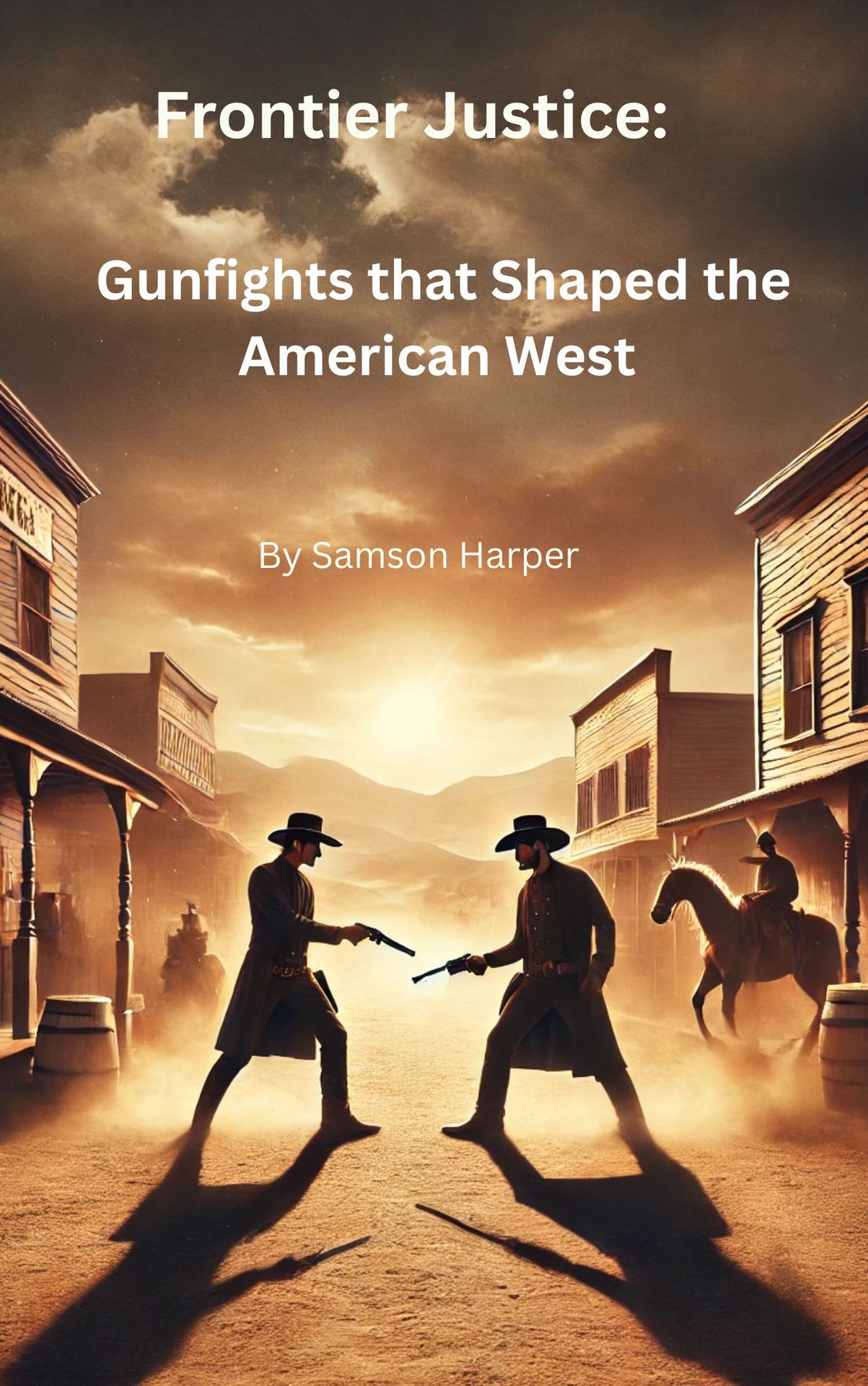
Frontier Justice:
Gunfights that Shaped the American West

🔫Exploring the Gritty Legacy of the Wild West
The American frontier was defined by lawlessness and gunfights, where the harsh realities of survival dictated that disputes were often settled with violence. In our exploration of Frontier Justice: Gunfights that Shaped the American West, we delve into the gripping narratives of legendary shootouts that formed the backbone of American culture. The towns that emerged, like Dodge City and Tombstone, became flashpoints for dramatic encounters between lawmen and outlaws. These narratives are not merely tales of violence, but reflections of a time when individuals took the law into their own hands, navigating a world where morality was complex and choices could lead to life or death. As we traverse the pages of this rich history, we will uncover the stories of characters who shaped the frontier identity, the conflicts that drove them, and the impact of their actions on the broader tapestry of American history. Join us as we piece together the legacy of those turbulent times, where every gunfight marked not just a moment of bloodshed but a defining moment in the collective narrative of the nation.
🌍The Impact of Gunfights on Society
⚔The Role of Gunfights in Shaping Frontier Justice
During the heyday of the American frontier, gunfights were not just spectacles; they were pivotal moments that defined communities and molded the identity of the Old West. As settlers pushed westward, the absence of formal law enforcement mechanisms left a power vacuum that was often filled by those willing to take matters into their own hands. Each altercation over land, cattle, or personal vendetta escalated quickly in a region where conflict was common and justice was frequently upheld by the quickest draw.
Gunfights served as both entertainment and a means of retribution. Saloons became stages for these deadly encounters; a place where men settled scores with a single shot. Characters like Wyatt Earp and Doc Holliday emerged from this environment, becoming legends whose stories were romanticized and mythologized through literature and film. People idolized the gunslinger archetype, a duality of heroism and villainy that both captivated and horrified society.
Moreover, these confrontations symbolized the broader societal struggles of the time, reflecting issues like land ownership, migration, and social justice. The narratives surrounding these gunfights were often complex; they revealed deep-seated animosities, cultural clashes, and the dire consequences of a lawless society. The implications of such violence extended beyond the individuals involved, impacting entire communities and altering the course of history in the American West. These gunfights were, thus, not merely violent outbursts, but crucial turning points in the evolution of frontier justice itself.
🏛From Lawlessness to Governance
⚖The Evolution of Law and Order in the Old West
As the dust settled on the bullet-ridden streets of places like Tombstone and Dodge City, a profound transformation occurred in response to the chaos of gunfights. The lawlessness of the Wild West, characterized by quick-draw shootouts and vigilante justice, prompted the emergence of formal law enforcement systems. These nascent institutions were vital in transitioning these rough-and-tumble towns into burgeoning communities governed by rule of law. Figures such as Wyatt Earp not only gained notoriety as gunslingers but also laid the groundwork for more structured approaches to crime and punishment.
The relentless cycle of violence highlighted the need for accountability and safety, prompting communities to seek unity in law and order. Local governments began to form with elected officials who had the authority to create laws, appoint lawmen, and enforce justice without drawing guns. This development was essential for establishing social norms and stability, fostering an environment where individuals could coexist peacefully, free from the fear of sudden violence. The legacy of these early lawmen, who battled both outlaws and public perception, helps us understand the complexities of crime, justice, and societal growth in the American West.
While the age of the gunslinger became a nostalgic element of American folklore, the challenges and changes that came with taming the frontier remind us that the fight for justice was not won with guns alone, but rather with the establishment of community values and the rule of law that continue to define our society today.
📜Gunfights: More Than Just Violence
The story of gunfights in the Old West extends beyond bullets and bravado; it reflects the intricate web of social, political, and economic realities of the time. These violent confrontations were often driven by deep-seated grievances, personal rivalries, and cultural tensions. The law, as it existed, was frequently defined by the fastest and most ruthless individual rather than a system grounded in fairness and equity.
The consequences of gunfighting reverberated through communities, often leading to long-standing feuds and a culture entrenched in violence. The reputations of those who survived these shootouts would either elevate them to legendary status or cast them as infamous outlaws. Furthermore, the outcomes of these encounters were not isolated incidents; they had ripple effects that shaped local governance and social structure.
As communities transformed from lawless towns into organized settlements, the necessity of rule of law became increasingly apparent. The rise of institutions meant that individuals could no longer rely solely on their firearms to enforce justice, leading to the establishment of sheriffs and marshals who would strive to maintain order. This evolution marked the transition from anarchy to a form of civil governance that our society still recognizes today. Thus, the cultural narratives of gunfights serve as essential historical documents that illuminate the fundamental principles of justice and the American ethos during a pivotal time in history.