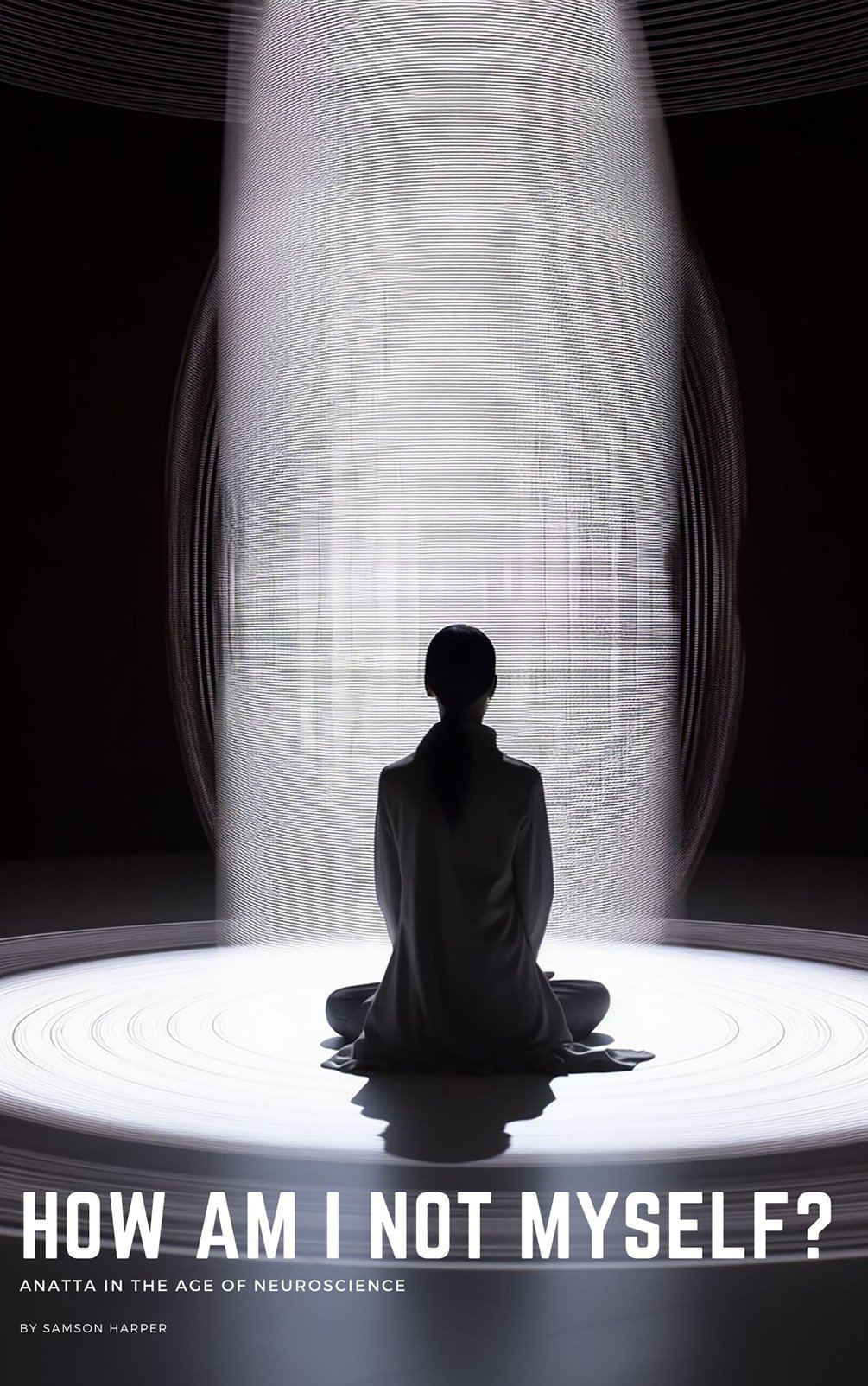

How am I not Myself? Anatta in the Age of Neuroscience - Book
Explore Anatta and self from Buddhism to neuroscience in Samson Harper's new book. Dive into insights from Daniel Dennett, Eckhart Tolle, and modern scientific evidence.
📘Discover How am I not Myself? Anatta in the Age of Neuroscience
Welcome to the official splash page for Samson Harper's intriguing book, "How am I not Myself? Anatta in the Age of Neuroscience." This groundbreaking work delves into the intersection of the Buddhist concept of Anatta, or non-self, with modern neuroscience, offering a profound exploration of what it means to have a self or, more intriguingly, a non-self. By examining both ancient philosophies and cutting-edge scientific insights, Harper bridges the gap between the spiritual and the empirical, providing a comprehensive look at the nature of self from multiple perspectives. Readers will find detailed analyses of the philosophies of Daniel Dennett and Eckhart Tolle, as well as implications for psychotherapy, societal norms, and technology. This book is perfect for anyone interested in philosophy, psychology, neuroscience, or Buddhism. Dive into these pages to uncover the mysteries of the self and non-self and see how they apply to modern life.

🧠Core Philosophies and Scientific Insights
🔍In-depth Exploration of Self and Non-Self
"How am I not Myself? Anatta in the Age of Neuroscience" is not just a book; it's a journey into the depths of human consciousness and identity. At its core, the book tackles the Buddhist concept of Anatta, the idea that the self is an illusion. By intersecting this ancient wisdom with modern neuroscience, Samson Harper makes a compelling case for rethinking our understanding of what it means to be an individual.
Neuroscientific studies provide fascinating insights into how the brain constructs the sense of self. These studies often reveal that what we perceive as a stable 'I' is actually a series of cognitive processes, challenging the notion of a permanent self. This scientific view aligns with the Buddhist teachings of non-self, providing a modern validation of ancient spiritual principles.
The book also dives into the philosophies of Daniel Dennett, a cognitive scientist who argues that the self is a narrative created by the brain, and Eckhart Tolle, a spiritual teacher who emphasizes presence and the dissolution of the ego. By contrasting these perspectives, Harper shows how both science and spirituality converge on the idea that the self is not as concrete as we might think.
The implications extend beyond theory. In psychotherapy, recognizing the fluid nature of the self can lead to more effective treatments. In society, this understanding can foster greater empathy and cooperation by breaking down the barriers erected by rigid self-concepts. In the realm of technology, acknowledging the constructed nature of the self can inform the development of more ethical artificial intelligence.
Ultimately, Harper's book opens up new avenues for thought and practice, urging readers to question their assumptions about identity and explore the liberating possibilities of Anatta.
🌐Implications for Society and Technology
💡Further Insights into Anatta and Psychotherapy
The book "How am I not Myself? Anatta in the Age of Neuroscience" dedicates a significant portion to understanding how the concept of Anatta can transform modern psychotherapy. Traditional psychotherapeutic models often operate under the assumption of a stable self that requires healing. However, the insights from Anatta encourage a different approach. By viewing the self as a fluid and dynamic construct, therapists can help individuals break free from rigid patterns of thought and behavior. This can lead to innovative therapeutic techniques that emphasize mindfulness, presence, and the dissolution of ego-based attachments.
In the realm of societal norms, the idea of a non-self can challenge deeply ingrained notions of identity and belonging. This has profound implications for social cohesion and cooperation. When individuals recognize the illusory nature of their self-concepts, it becomes easier to relate to others on a more fundamental, human level. This can foster greater empathy, understanding, and a sense of interconnectedness, breaking down barriers and reducing conflict.


🤖Technological Implications of Anatta
The book also ventures into how the understanding of Anatta can influence the development and ethical considerations of technology. In an age where artificial intelligence and machine learning are rapidly advancing, the concept of a fluid, non-permanent self can guide the creation of more humane and ethical technologies. By acknowledging that even human identity is a construct, developers can create AI systems that are more aligned with human values and empathy, avoiding the pitfalls of replicating harmful biases or rigid identity constructs. This approach can lead to technology that enhances human well-being and fosters a more inclusive and compassionate digital environment.