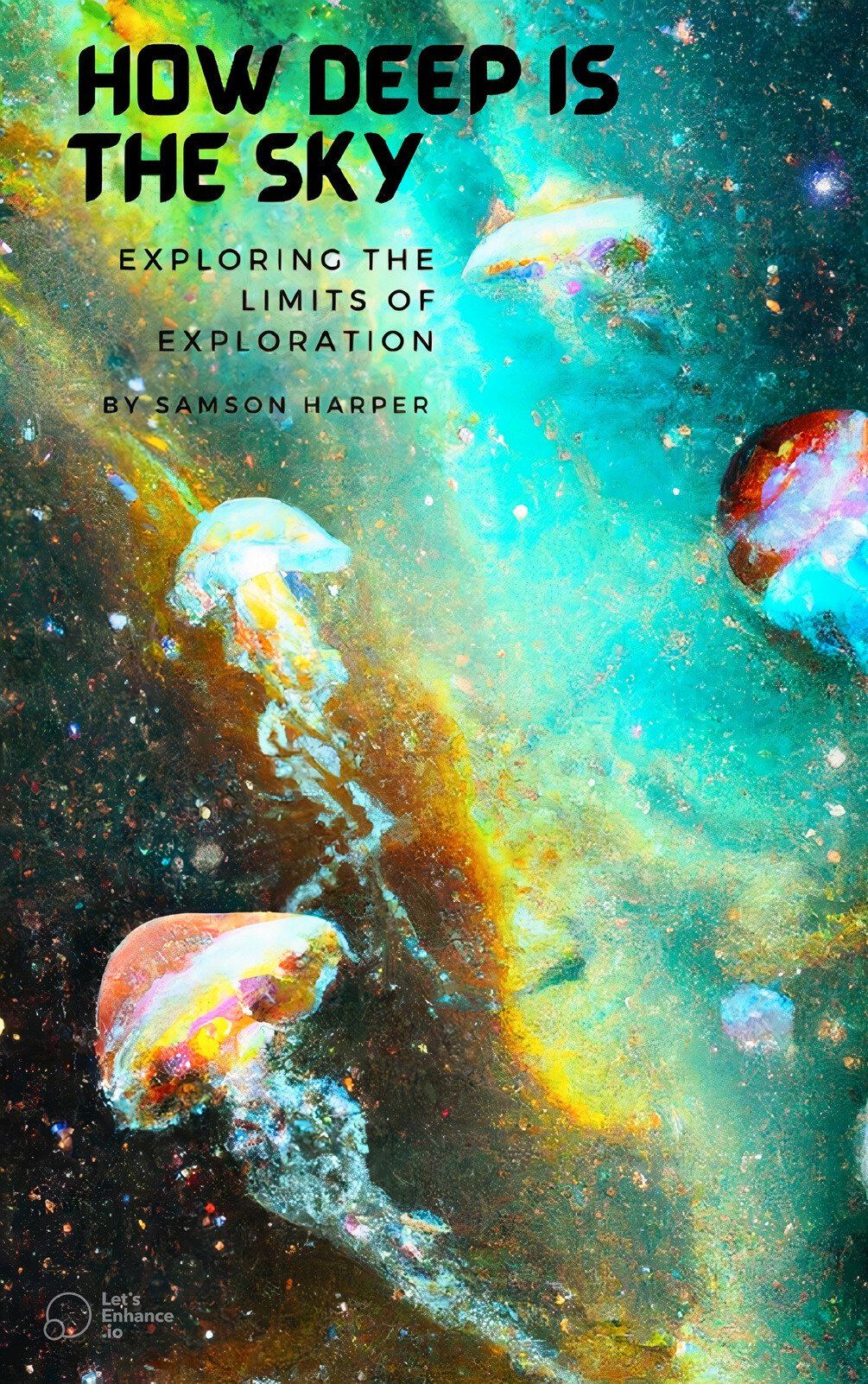

How Deep is the Sky? Exploring the Limits of Exploration by Samson Harper
Discover the mysteries of the deep ocean and the vastness of space. Learn about historical milestones, challenges, and future potential in exploration. A must-read!
🌌Introduction to 'How Deep is the Sky?'
Welcome to the splash page for 'How Deep is the Sky? Exploring the Limits of Exploration' by Samson Harper. This captivating book takes readers on an enlightening journey through the mysteries of the deep ocean and the vastness of space. By examining both realms, Harper guides us through the technological, historical, and philosophical aspects of exploration. Whether you're curious about the peculiar life forms in the abyssal depths or the celestial wonders of the cosmos, this book offers a treasure trove of information that's both educational and thought-provoking. Designed for anyone with an innate curiosity about our world and beyond, 'How Deep is the Sky?' bridges the gap between two seemingly disparate worlds, showcasing their surprising interconnectedness. Continue reading to discover more about the book's contents, its unique perspectives, and why it's a must-read for explorers at heart.
🌊Discovering the Depths and Beyond
🔭Exploring the Depths and Beyond
'How Deep is the Sky? Exploring the Limits of Exploration' by Samson Harper provides an in-depth look at both deep-sea and space exploration. Focusing on the cutting-edge technologies utilized, the book discusses the significance of these innovations in extending the boundaries of human knowledge. It sheds light on the historical milestones achieved in oceanographic and astronomical explorations, underpinning their economic, geopolitical, cultural, and philosophical significance.The book goes beyond mere technicalities, offering detailed descriptions of the unique characteristics of oceanic zones like the abyssal plains, oceanic trenches, and the mesopelagic zone, alongside the structure of our universe, including galaxies, nebulae, and black holes. These descriptions help readers visualize the diverse life forms and celestial bodies inhabiting these realms and grasp their uniqueness.Harper excels in drawing comparisons between the deep oceans and deep space, illustrating their complexities and interconnectedness. The book even speculates on the future of exploration, focusing on the role of international collaboration and ethical considerations involved in discovering uncharted territories. In doing so, it prepares readers to think critically about our pursuit of knowledge and the obligations that come with it.

🌌Beyond Horizons


🤔Beyond the Horizons: Technological Marvels and Ethical Considerations
In 'How Deep is the Sky? Exploring the Limits of Exploration,' Samson Harper not only dives into the depths of the oceans and the expansiveness of space but also provides a rich analysis of the technological marvels that make these explorations possible. The book discusses submersibles and remotely operated vehicles for ocean expeditions, advanced telescopes, and space probes for astronomical studies. It highlights the intricacies involved in designing these technologies to withstand extreme conditions, whether it's the crushing pressures of the deep sea or the vacuum of space.Moreover, Harper delves into the ethical considerations that come with exploration. He questions the responsibilities of nations and private entities in stewarding these frontiers wisely. From the impact on marine ecosystems to the ethics of space colonization, the book raises essential questions that demand thoughtful deliberation. This section of the book serves as a poignant reminder of our duty to explore responsibly and sustainably, ensuring that our quest for knowledge does not come at an unsustainable cost to future generations. By bringing these aspects to light, Harper encourages readers to think not only about what we seek to discover but also about how we choose to explore.
🔧Beyond Horizons
Samson Harper's 'How Deep is the Sky? Exploring the Limits of Exploration' reveals the technological marvels behind deep-sea and space exploration. Submersibles, remotely operated vehicles, advanced telescopes, and space probes are discussed, highlighting their design complexities. The book also tackles ethical considerations, questioning the responsibilities of nations and private entities in these explorations. Issues like the impact on marine ecosystems and space colonization ethics are examined, urging responsible and sustainable exploration.