.jpg&w=96&q=100)
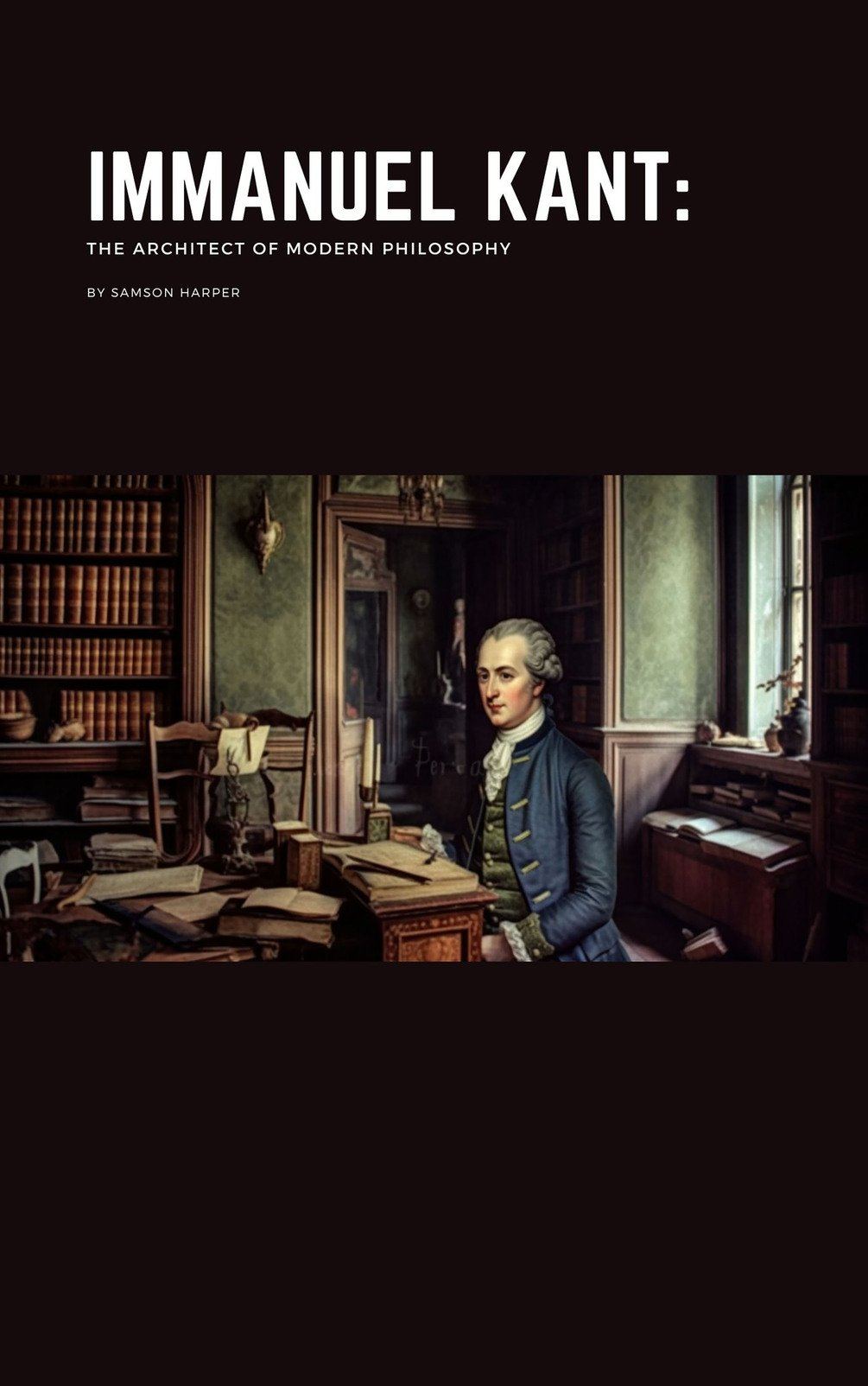
Immanuel Kant: The Architect of Modern Philosophy - Comprehensive Book
Explore the profound impact of Immanuel Kant on Western philosophy. Dive into his epistemology, metaphysics, and more. Available in PDF for just $2.99!
📚Introduction and Summary
Welcome to the official splash page for "Immanuel Kant: The Architect of Modern Philosophy" by Samson Harper. This book is an exhaustive exploration of the life, work, and enduring impact of Immanuel Kant, one of the greatest philosophers in Western history. The text provides a comprehensive analysis of Kant's philosophical contributions, delving into his views on epistemology, metaphysics, moral and political philosophy, aesthetics, and the philosophy of religion. Readers will find in-depth discussions of Kant’s critical works such as 'Critique of Pure Reason' and 'Groundwork of the Metaphysics of Morals,' providing a solid foundation in understanding his thought process and innovations. The book does not shy away from examining criticisms and controversies surrounding Kantian philosophy, offering a nuanced perspective that's both educational and thought-provoking.
Whether you're a student, a seasoned philosopher, or just a curious reader, this book is an invaluable resource for anyone interested in the profound influences of Kant's ideas on modern philosophy. Available in MOBI, EPUB, and PDF formats, this comprehensive guide promises to enhance your understanding and appreciation of Kantian philosophy. And all of this is available for just $2.99! Dive into this exploration of intellectual history and discover the enduring legacy of Immanuel Kant.
📖Kant's Critical Works and Controversies
🌍Relevance in Modern Context
Immanuel Kant’s philosophical theories not only shaped the intellectual landscape of his time but continue to resonate in the modern era. His ethical principles, particularly the categorical imperative, provide a firm foundation for contemporary debates on morality, human rights, and justice. Kant's exploration of autonomy and the moral worth of actions encourages modern ethical discussions on topics ranging from bioethics to artificial intelligence. Moreover, his ideas on the universality of moral laws have influenced global discussions about human rights and equality.
In the realm of political philosophy, Kant’s vision of a cosmopolitan order and perpetual peace has informed modern democratic ideals and international relations. His advocacy for individuals’ rights within a legal framework echoes in contemporary discourses on global governance and the role of supranational organizations like the United Nations.
In education, Kant’s emphasis on critical thinking and reasoning continues to affect modern pedagogical approaches. His belief that education should develop individuals' capacity for autonomy and moral judgment is reflected in contemporary educational theories that prioritize critical inquiry and personal development over rote learning.
Furthermore, Kant’s investigation into aesthetics endures in the fields of art and literature, where his ideas about the nature of beauty and the experience of the sublime continue to inspire artists, critics, and scholars. Ultimately, Kant's ability to interweave his philosophical doctrines with practical concerns makes his work profoundly relevant to the ongoing quest for knowledge, ethical living, and societal progress.
🧠Exploring Kant's Philosophy: Main Arguments
Immanuel Kant's contributions to modern philosophy are monumental, and in this section, we delve into the main arguments that define his work. Kant's epistemology is grounded in his revolutionary idea that our understanding of the world is shaped by the mind's intrinsic structures. In his seminal work, 'Critique of Pure Reason,' Kant argues that while our senses inform us about the phenomenal world, the noumenal world (things as they are in themselves) remains unknowable. This dualism has fundamentally altered subsequent philosophical thought.
Kant's metaphysics explores the conditions that make knowledge possible, emphasizing the role of a priori synthetic judgments—statements that are universally and necessarily true yet informative about the world. His exploration of ethics is equally groundbreaking. In 'Groundwork of the Metaphysics of Morals,' Kant introduces the concept of the categorical imperative, a principle that dictates that actions should be performed only if they can be universally applied. This framework has become a cornerstone of deontological ethics.
Moreover, Kant's contributions to aesthetics and political philosophy carry enduring relevance. His 'Critique of Judgment' analyzes the nature of beauty and the sublime, proposing that aesthetic experience is a form of disinterested pleasure. In political philosophy, Kant advocates for a republican form of government and the principles of perpetual peace, which remain influential in contemporary political theory.
Ultimately, Kant’s philosophy offers a comprehensive system that addresses the most important philosophical questions, reconciling rationalist and empirical approaches, and laying the groundwork for many modern philosophical debates.
🎯Conclusion and Call to Action
🔍Kant's Critical Works and Their Influence
Among Immanuel Kant's extensive body of work, two critical texts stand out for their profound influence: 'Critique of Pure Reason' and 'Groundwork of the Metaphysics of Morals.' In 'Critique of Pure Reason,' Kant embarks on an ambitious project to bridge the gap between rationalist and empiricist traditions. He introduces his theory of transcendental idealism, which posits that while we can never know the world as it truly is (the noumenal world), we can understand the world as it appears to us (the phenomenal world) through the lens of our cognitive faculties. This groundbreaking text has had far-reaching impacts on epistemology, metaphysics, and the very method and scope of philosophical inquiry.
In 'Groundwork of the Metaphysics of Morals,' Kant lays the foundational principles of his moral philosophy. The work introduces the categorical imperative, a universal moral law that asserts that we should act only according to maxims that can be universally applied. This principle has become a cornerstone of deontological ethics and continues to inform contemporary moral theory, providing a robust framework for discussions on duty, rights, and justice.
It's also essential to acknowledge the criticisms and controversies surrounding Kantian philosophy. Some scholars argue that Kant's strict dichotomy between the noumenal and phenomenal realms limits our understanding of reality. Others point out the challenges in applying the categorical imperative to complex moral scenarios. Despite these debates, Kant's works have profoundly shaped the trajectory of modern philosophy, inspiring countless thinkers and continuing to provoke thoughtful discussion and further exploration.
Overall, Kant's critical works invite readers into a nuanced and rigorous examination of the most fundamental aspects of human thought and morality, challenging us to rethink our assumptions and expand our intellectual horizons.