.jpg&w=96&q=100)
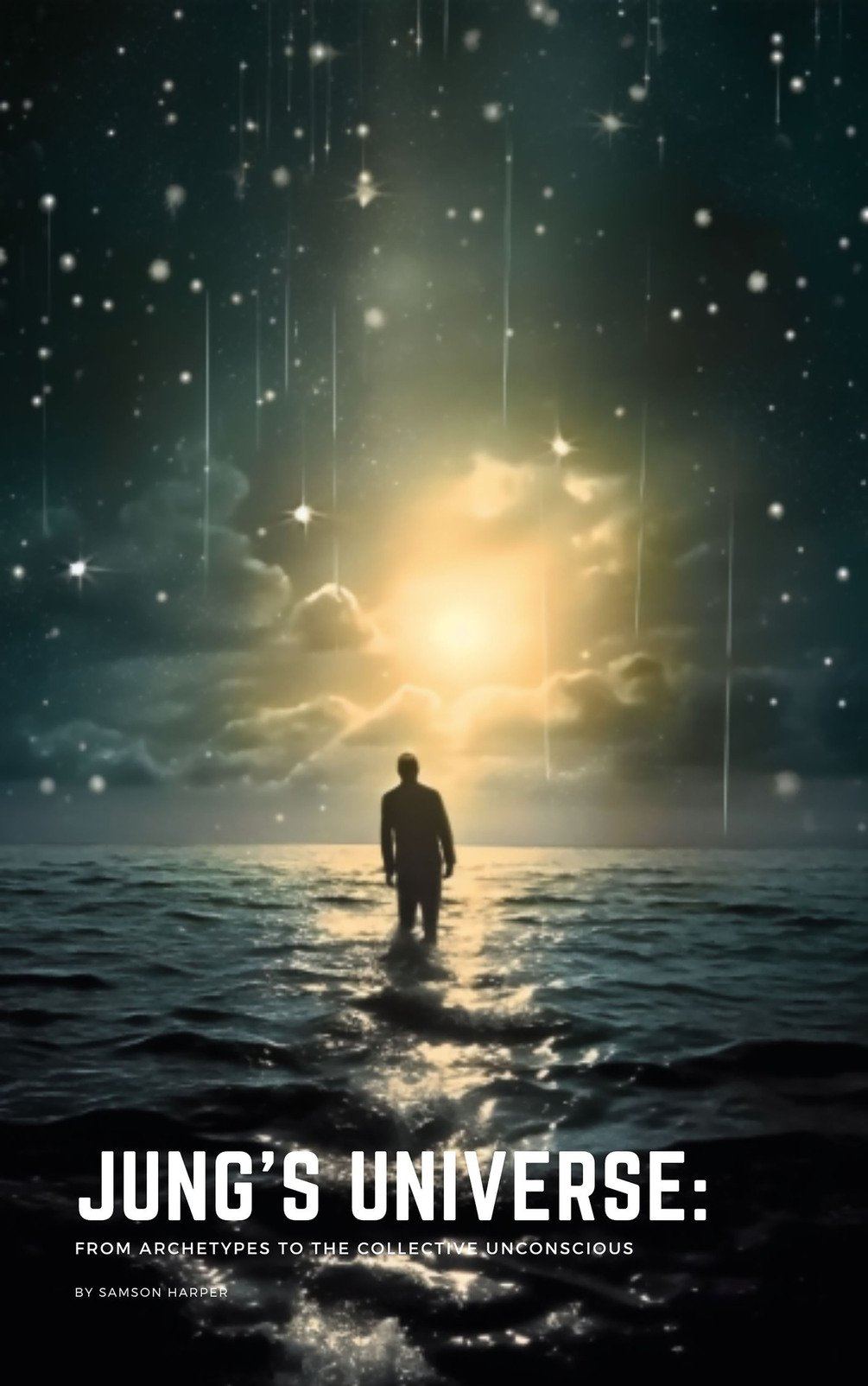
Jung's Universe: From Archetypes to the Collective Unconscious
Explore Carl Jung's revolutionary theories with Samson Harper's book. Delve into archetypes, the collective unconscious, and dream analysis.
📚Introduction and Summarization
Welcome to the exploration of 'Jung's Universe: From Archetypes to the Collective Unconscious.' This comprehensive book by Samson Harper takes you on a journey through the life and groundbreaking theories of Carl Jung, a towering figure in modern psychology. Carl Jung's work, focused on the structure of the psyche, archetypes, the collective unconscious, and individuation, remains profoundly influential. Here, you will find a detailed discussion of Jung's unique approach to dream analysis and its therapeutic significance. The book also examines the application and critique of Jung’s concepts in contemporary settings, offering a rich dialogue on their cultural and societal impacts. Finally, you'll discover the enduring legacy and relevance of Jung's thoughts in the 21st century. Get ready to dive deep into the transformative world of Jungian psychology and enrich your understanding of the mind and its mysteries.
🌌Explore the Depths of Jungian Psychology
🔍Main Arguments and Key Concepts
'Jung's Universe: From Archetypes to the Collective Unconscious' meticulously unpacks the core concepts introduced by Carl Jung. One of the primary ideas is the structure of the psyche, which Jung divided into the conscious, the personal unconscious, and the collective unconscious. Unlike Freud, who focused solely on the personal unconscious, Jung proposed that the collective unconscious is a repository of shared memories and symbols inherited from our ancestors. This forms the basis for his theory of archetypes – universal symbols and patterns that emerge in dreams, religion, art, and mythology across cultures.
The book also delves into Jung’s process of individuation, a journey toward self-realization and psychological wholeness. Dream analysis plays a crucial role in this process, as dreams provide valuable insights into the unconscious mind. Harper examines how Jung applied dream analysis in therapy, offering a rich tapestry of case studies and practical examples. The significance of these ideas is highlighted through their application in modern contexts, demonstrating their timeless relevance and impact on contemporary psychology and society.
Furthermore, the book navigates through the criticisms and debates surrounding Jung’s theories, providing a balanced perspective. From the enthusiastic embrace by New Age thinkers to the rigorous scrutiny by empirical psychologists, 'Jung's Universe' offers an in-depth look at the enduring legacy and evolving interpretations of Jung’s work.
💡Delve Deeper into Jung’s Impact
🔎Extended Insights into Jung's Contributions
Beyond the well-known theories of archetypes and the collective unconscious, Carl Jung's work has contributed significantly to various fields, including psychotherapy, anthropology, literature, and even popular culture. One notable area is his exploration of synchronicity – meaningful coincidences that occur with no apparent causal connection but hold significant meaning for the individual. This idea has intrigued many and has been explored further in both scientific and mystical contexts.
Jung also made pioneering contributions to personality typology through his development of the concepts of introversion and extraversion, concepts widely utilized in personality assessments like the Myers-Briggs Type Indicator (MBTI). His ideas on shadow work – the process of integrating and understanding the darker aspects of the self – have inspired numerous therapeutic approaches aimed at fostering deeper self-awareness and healing.
'Jung's Universe: From Archetypes to the Collective Unconscious' doesn't just recount Jung's theories but shows their application and impact. The book illustrates how Jungian concepts have permeated various disciplines, influencing everything from cinematic storytelling to business leadership practices. Through detailed examples and engaging narratives, readers will discover how Jung's legacy continues to shape our understanding of the human experience.
🌀Applications of Jungian Theory
The application of Carl Jung’s theories extends far beyond clinical psychology into various cultural and social arenas. For instance, Jung's ideas on archetypes have been pivotal in narrative studies, influencing literary analysis and creative writing. Archetypal characters such as the Hero, the Mentor, and the Shadow are concepts frequently utilized in film and literature. Additionally, modern therapeutic practices often incorporate Jungian concepts, including dream analysis and the process of individuation, aiding individuals in achieving a deeper sense of self-awareness and personal growth.
In the corporate world, Jungian personality assessments like the MBTI are employed to enhance team dynamics, leadership development, and human resource strategies. Jung’s theory of synchronicity is explored in art and philosophy, pushing the boundaries of how we understand coincidences and interconnectedness in our lives.
In 'Jung's Universe,' Samson Harper offers a comprehensive view of these applications, bringing to light how Jung's profound insights into the human psyche resonate in contemporary settings. By illustrating the practical use and philosophical depth of Jung’s theories, the book serves as both a scholarly resource and an inspirational guide for harnessing the power of Jungian psychology in everyday life.