.jpg&w=96&q=100)
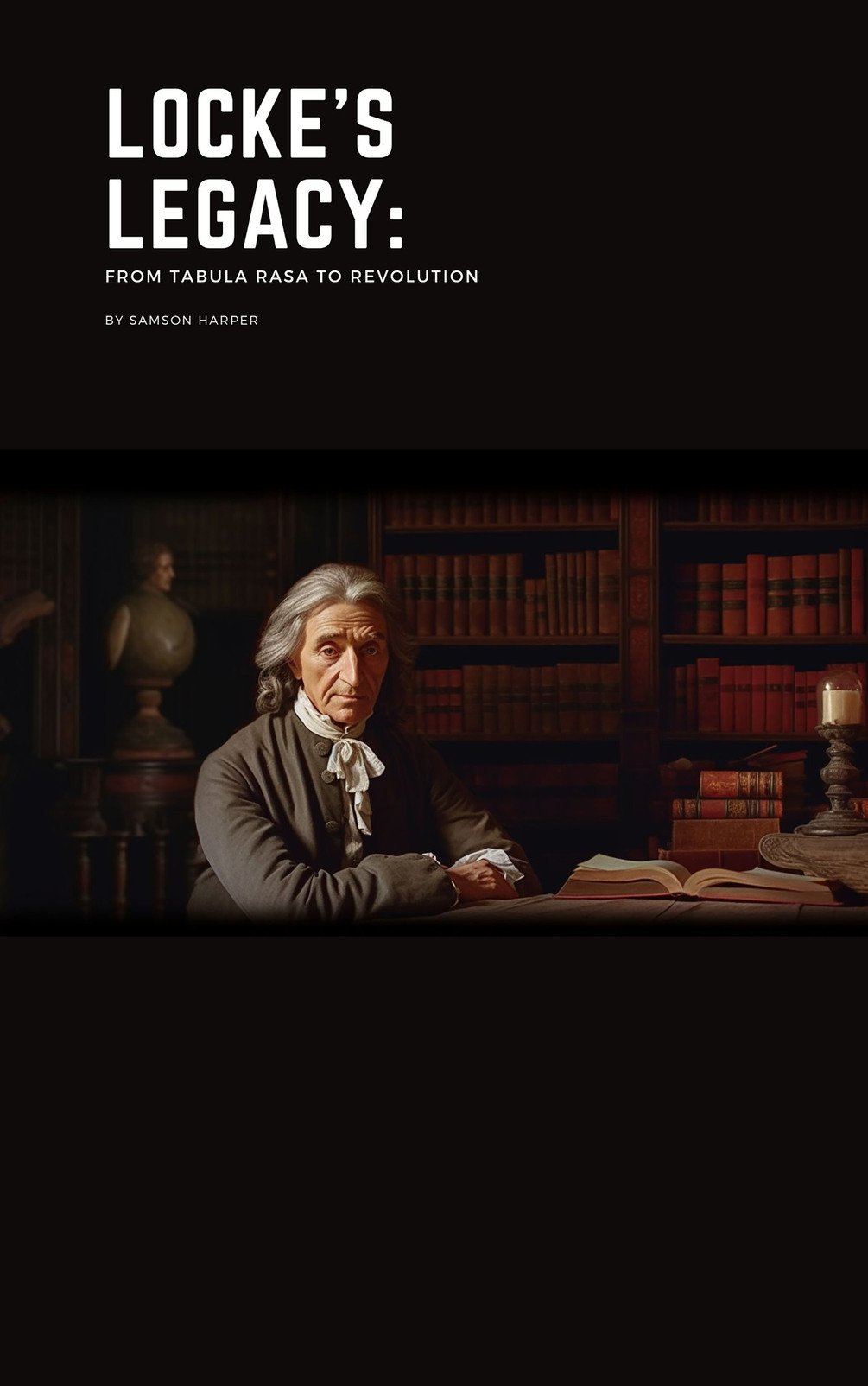
Locke's Legacy: From Tabula Rasa to Revolution - Book by Samson Harper
Explore John Locke's life and philosophy in 'Locke's Legacy: From Tabula Rasa to Revolution' by Samson Harper. Analyze his impact on modern thought.
🌟Introduction to Locke's Legacy
Welcome to the official page for "Locke's Legacy: From Tabula Rasa to Revolution" by Samson Harper. This meticulously researched book delves into the life, philosophy, and far-reaching impact of John Locke, a towering figure in Enlightenment thought. With a keen focus on Locke's revolutionary ideas on knowledge, personal identity, morality, politics, and education, this book offers readers a comprehensive understanding of his contributions. Not only does it juxtapose his theories with other philosophical traditions, but it also critically examines the ongoing debates his ideas continue to spark. Whether you're a student of philosophy, a history buff, or simply someone curious about the foundations of modern democratic thought, this book promises to illuminate the enduring relevance of Locke's philosophy in today's world. 🌟
📚The Life and Philosophy of John Locke
🌍Locke's Impact on Modern Thought
Locke's impact on modern thought is profound and far-reaching. His advocacy for the separation of church and state laid the groundwork for modern secular governance, influencing the formation of constitutions and legal systems around the world. His theory of government as a social contract, where authority is derived from the consent of the governed, inspired the foundation of modern democracies and the principles enshrined in important documents like the United States Declaration of Independence and Constitution. Furthermore, Locke's educational theories, emphasizing the development of reason and critical thinking over rote memorization, have influenced teaching methods and educational philosophies globally. This book also addresses ongoing debates surrounding Locke's ideas, such as the nature versus nurture controversy in psychology, demonstrating their continued relevance. By providing a thorough exploration of Locke's philosophy and its legacy, Samson Harper's "Locke's Legacy: From Tabula Rasa to Revolution" offers readers a comprehensive understanding of one of the most influential thinkers in Western history. 🌍
🔍Exploring Locke's Philosophy
In "Locke's Legacy: From Tabula Rasa to Revolution," Samson Harper presents an in-depth examination of John Locke's groundbreaking ideas. Central to Locke's philosophy is the concept of tabula rasa (blank slate), which suggests that individuals are born without innate ideas, and all knowledge comes from experience. This revolutionary notion contradicted the dominant belief in pre-existing knowledge and had profound implications for education and personal development. Locke's theories on personal identity further explore how consciousness, rather than substance, defines selfhood, challenging traditional metaphysical views. Additionally, Locke's ideas on governance and the social contract underscore his substantial influence on modern democratic thought. He advocated for the separation of powers, individual rights, and the right to revolt against oppressive regimes, all of which have left lasting marks on political philosophy. The book juxtaposes Locke's ideas with those of his contemporaries and analyzes their reception and adaptation in later philosophical traditions, demonstrating the enduring relevance and transformative power of his thought. 🔍
🏛Locke's Influence on Education and Politics
🔔Influence on Education and Politics
John Locke's influence extends significantly into the realms of education and politics. His pioneering work, "Some Thoughts Concerning Education," lays the foundation for modern pedagogical theories. Locke advocated for the upbringing of children through the emphasis on reasoning and critical thinking rather than memorization of facts. His belief in fostering curiosity and learning from experience resonates strongly in today's educational practices, which prioritize emotional intelligence and critical thinking skills. Politically, Locke's writings in "Two Treatises of Government" champion the principles of civil liberties, private property, and the separation of powers. These ideas have deeply influenced liberal political theory and have been pivotal in the development of constitutional democracies worldwide. The emphasis on individual rights and the justification for revolution against tyrannical authorities have not only shaped historical events like the American and French Revolutions but continue to influence contemporary political discourse. Locke's insistence on the social contract and citizens' right to overthrow an unjust government underscores a commitment to human dignity and freedom that remains relevant in today's global political climate. 🔔
🌐Continued Relevance in Modern Debates
Locke's philosophy continues to be a focal point in modern debates across various fields. In psychology, his concept of tabula rasa fuels ongoing discussions about the balance between genetic inheritance and environment in human development—the 'nature versus nurture' debate. Locke's theories on personal identity, which emphasize the continuity of consciousness, are still integral to contemporary discussions in philosophy of mind and cognitive science. In political theory, debates around the legitimacy of government and civil disobedience frequently invoke Locke's arguments for the right of the governed to rebel against unjust rule. The ideas wrapped up in Locke's social contract are perennial points of reference in the analysis of modern legal and political systems. Furthermore, Locke's influence on educational philosophy endures, with modern pedagogical approaches often reflecting his emphasis on experiential learning, critical thinking, and the development of rational capacities. By examining these enduring debates, "Locke's Legacy: From Tabula Rasa to Revolution" not only illuminates the lasting relevance of Locke's work but also provides contextual insights that enrich contemporary scholarly and public discussions. 🌐