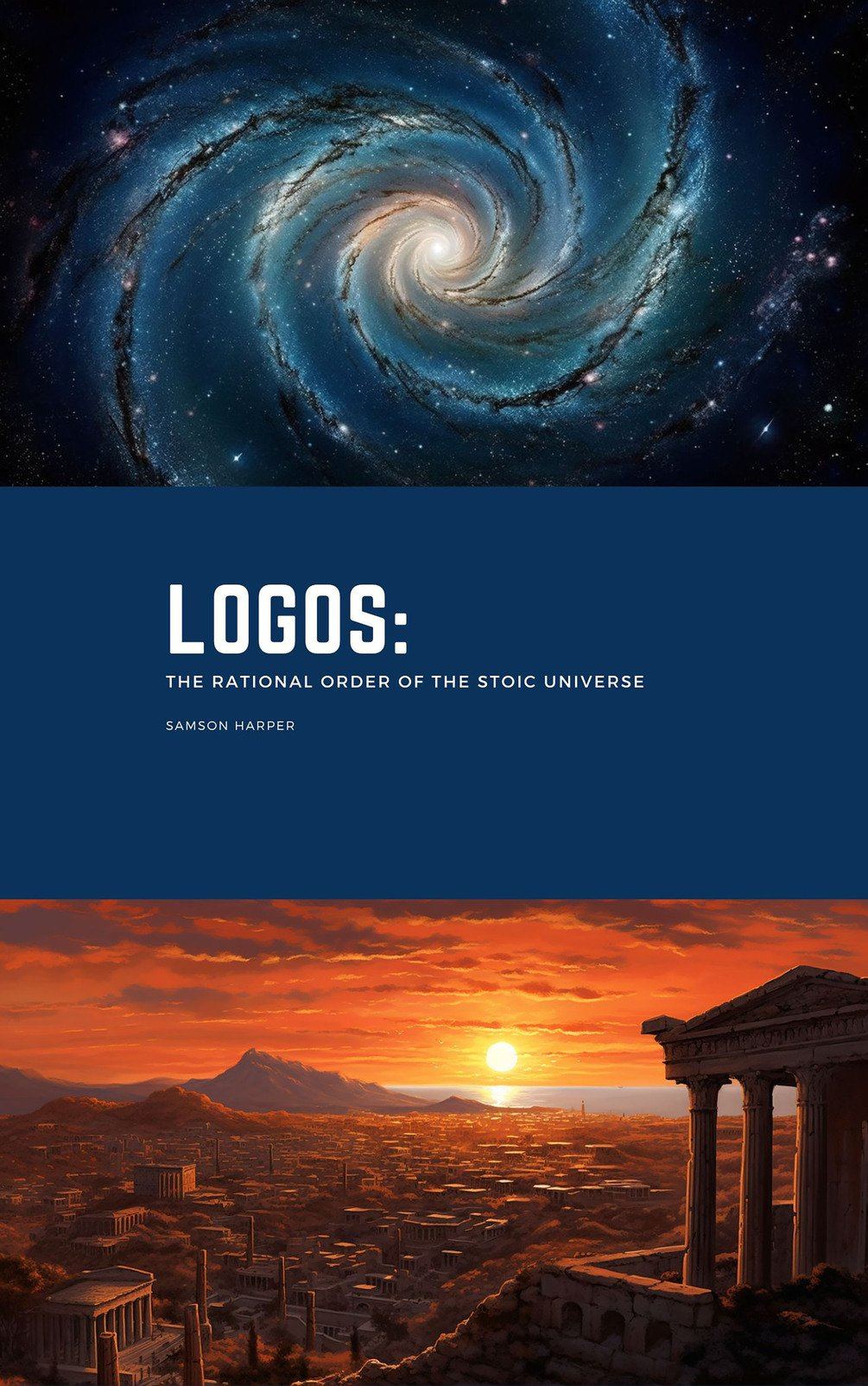
Logos: The Rational Order of the Stoic Universe - Book by Samson Harper
Dive into the Stoic concept of Logos with Samson Harper's 'Logos: The Rational Order of the Stoic Universe.' Explore historical, ethical, and societal insights.
📘Introduction to 'Logos: The Rational Order of the Stoic Universe' by Samson
Welcome to the official web page for 'Logos: The Rational Order of the Stoic Universe,' authored by Samson Harper. This book serves as a comprehensive guide to the profound philosophical concept of Logos within the realm of Stoicism. Delving into historical, ethical, and societal aspects, Harper meticulously dissects how Logos has shaped views on the universe, human nature, personal development, and societal structures. Additionally, the book contrasts Stoic philosophy with other philosophical and religious traditions, showcasing the timeless influence of Logos on modern thought. The engaging case studies and rigorous analysis invite you to explore the relevance of the Stoic Logos in contemporary life. Explore the pages ahead to understand more about this enlightening journey and discover how this concept can help you find your place in the universe.
🧠Main Concepts Explored
📖Understanding the Stoic Logos: Main Arguments in 'Logos: The Rational Order
In 'Logos: The Rational Order of the Stoic Universe,' Samson Harper provides an in-depth exploration of the Stoic concept of Logos. The book outlines several key arguments that highlight the significance and multifaceted nature of Logos in Stoicism. Firstly, Harper delves into the historical roots of Logos, examining its origin and evolution in ancient Greek philosophy. This sets the stage for understanding Logos as an organizing principle that guides the universe's rational structure. Next, the book discusses the ethical implications of Logos in Stoic thought. Here, Logos is shown to influence moral wisdom and virtue, both of which are central tenets of Stoic ethics. Additionally, the societal impact of Logos is analyzed, illustrating how this concept contributed to the development of Stoic ideas on justice, communal relationships, and governance. Harper also provides a comparative study, juxtaposing the Stoic Logos with similar ideas in other philosophical and religious traditions. This helps to underscore its widespread influence and relevance. Finally, the book concludes by reflecting on the modern-day applicability of Stoic Logos, encouraging readers to apply these timeless principles to their own lives for personal and societal betterment.
🛠Practical Applications
📚Deepening the Understanding of Logos in Stoicism
To further delve into the topic, 'Logos: The Rational Order of the Stoic Universe' emphasizes the role of Logos in shaping not only individual ethics, but also broader societal principles. Samson Harper illustrates how the Stoic understanding of Logos fosters a rational and ordered worldview, encouraging individuals to align their lives with the natural order. This alignment is said to bring about a harmonious existence, characterized by wisdom and virtue. A notable section of the book examines how Logos serves as a bridge between human reason and universal rationality. Harper expounds on the idea that by comprehending Logos, individuals can achieve a greater sense of purpose and direction in life. Furthermore, the author explores the transformative potential of embracing Logos-centric principles in personal development and social harmony. Case studies and historical examples enrich the narrative, providing practical insight into how Logos has been applied in various contexts. The book also engages with contemporary discussions, situating ancient Stoic wisdom within the modern philosophical landscape and inviting readers to consider how these ancient insights can contribute to present-day debates on ethics, science, and culture.
🌐The Universal Relevance of Stoic Logos
Samson Harper's 'Logos: The Rational Order of the Stoic Universe' does not merely dwell on historical interpretations but actively engages with the ongoing relevance of Stoic Logos in the modern era. The book dives into multiple case studies that showcase how Stoic principles, grounded in the concept of Logos, have been successfully applied in various domains of life. From personal development to societal advancements, the Stoic Logos offers a framework for navigating the complexities of contemporary existence. Harper expands on how understanding and integrating Stoic Logos can help individuals and societies achieve a balanced and harmonious state. By drawing comparisons with other philosophical and religious traditions, the book also highlights the universality and adaptability of Stoic thought. Readers are invited to explore how these timeless principles can be harnessed to address modern challenges, foster ethical growth, and create a more just and rational society.
🔍Applying Ancient Wisdom to Modern Issues
In addition to its meticulous historical analysis, 'Logos: The Rational Order of the Stoic Universe' by Samson Harper offers readers practical guidance on applying ancient Stoic wisdom to navigate contemporary issues. Harper presents thought-provoking discussions on how the Stoic concept of Logos can illuminate pathways towards resolving modern ethical dilemmas, such as those encountered in technology, environmental concerns, and social justice. The book posits that the rational order of Logos can serve as a grounding principle, allowing individuals to make well-reasoned decisions in an increasingly complex world. With actionable insights and relatable case studies, Harper encourages readers to embrace the timeless wisdom of Stoicism, fostering resilience, and adaptability in the face of modern challenges. By illustrating how a Stoic framework can support ethical and sustainable living, the book makes a strong case for the enduring relevance of ancient philosophies in our contemporary landscape.