
Singapore
Singapore


















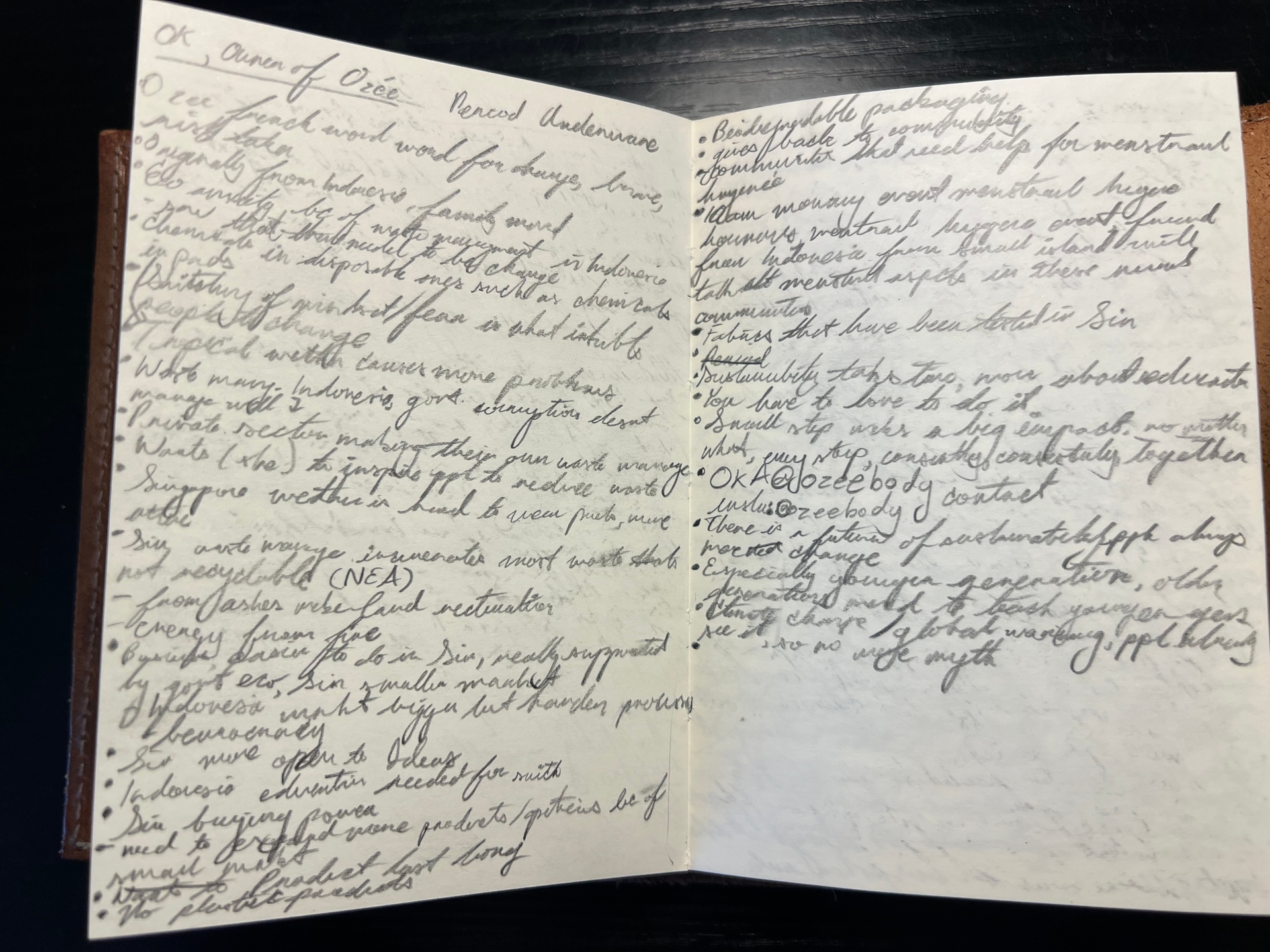

Journals Transcribed
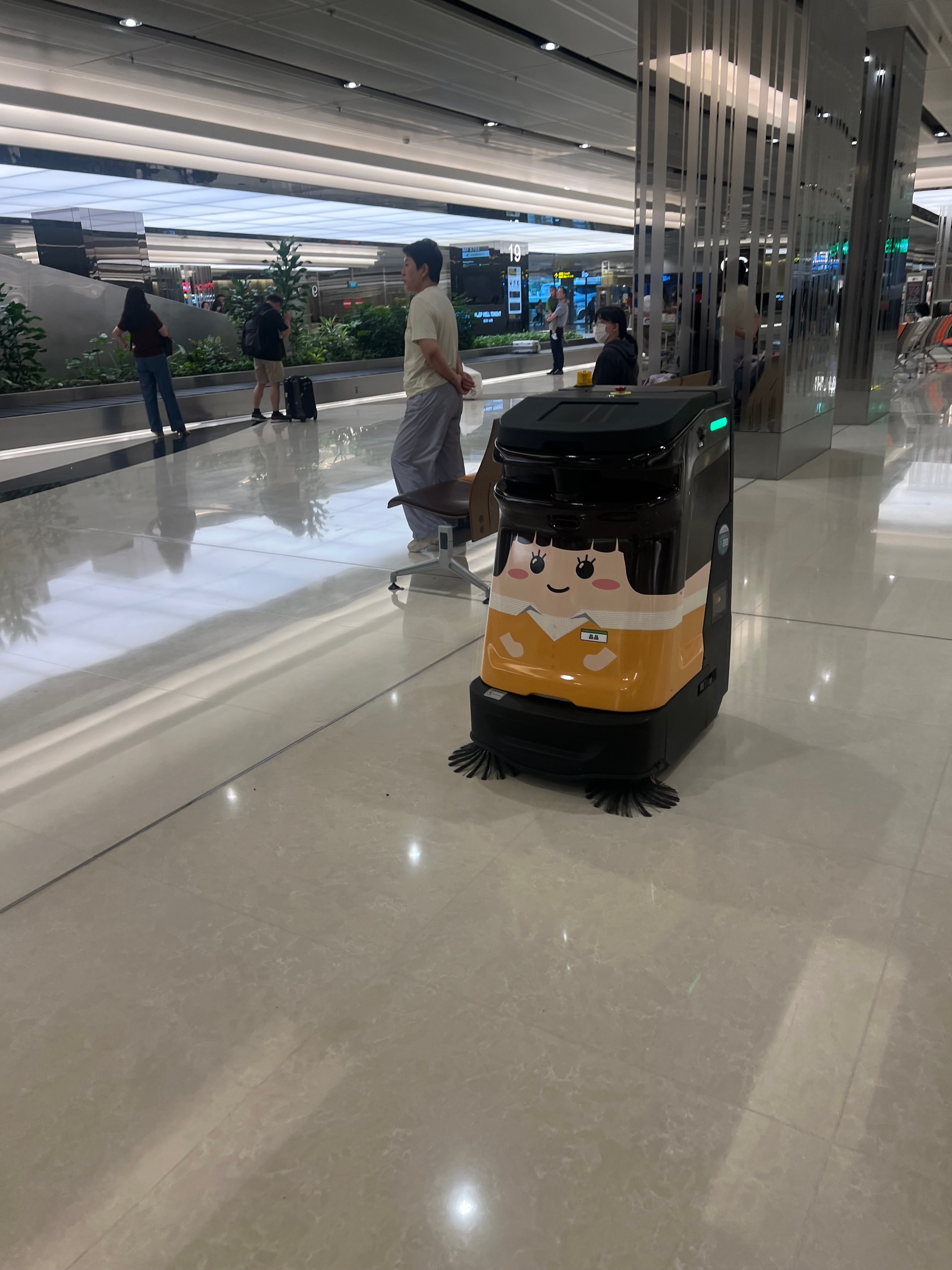
The first thing I saw when entering the Singapore Changi Airport was a floor cleaning robot disguised as a cleaning lady. I am definitely in Singapore now.
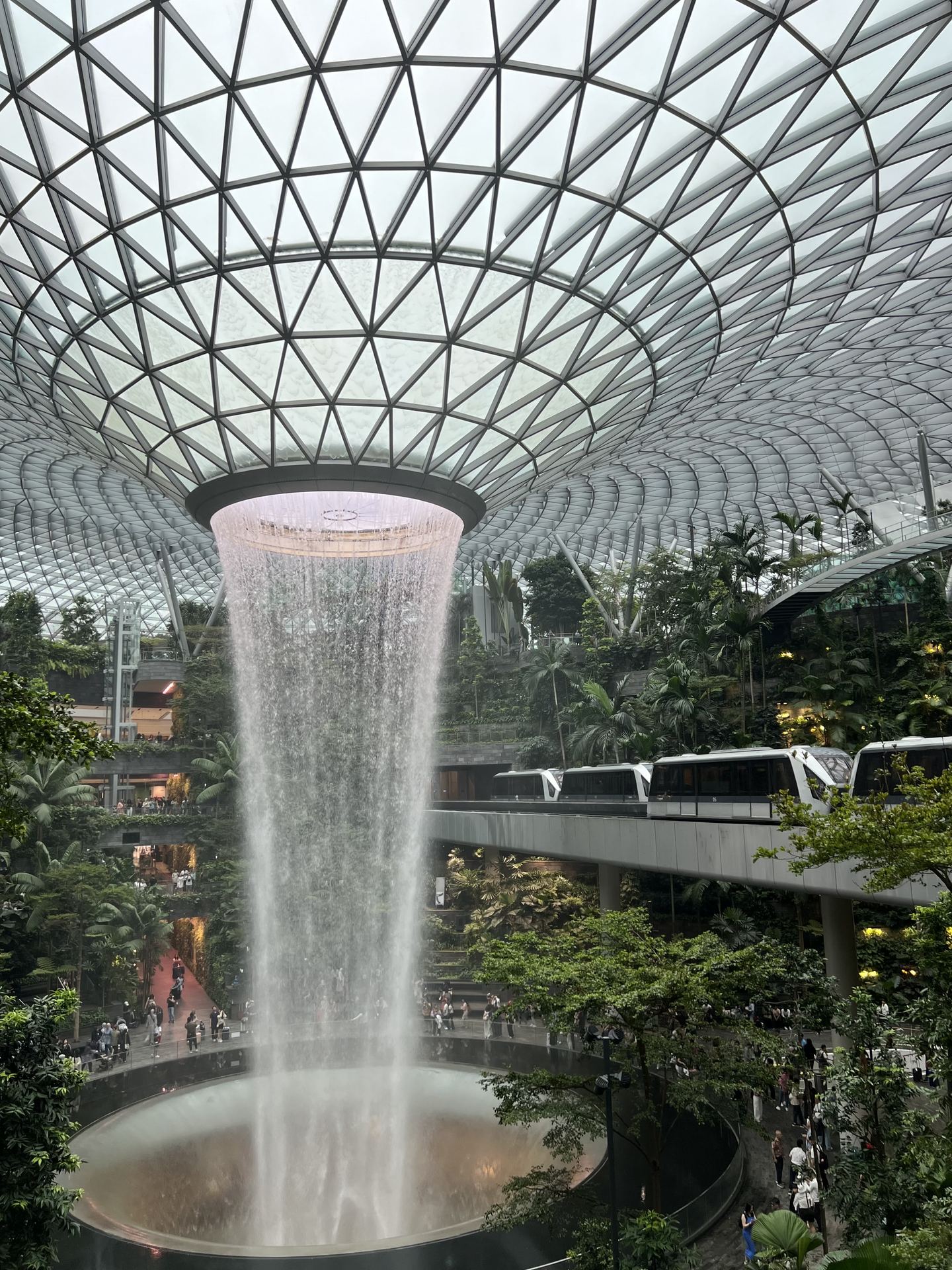
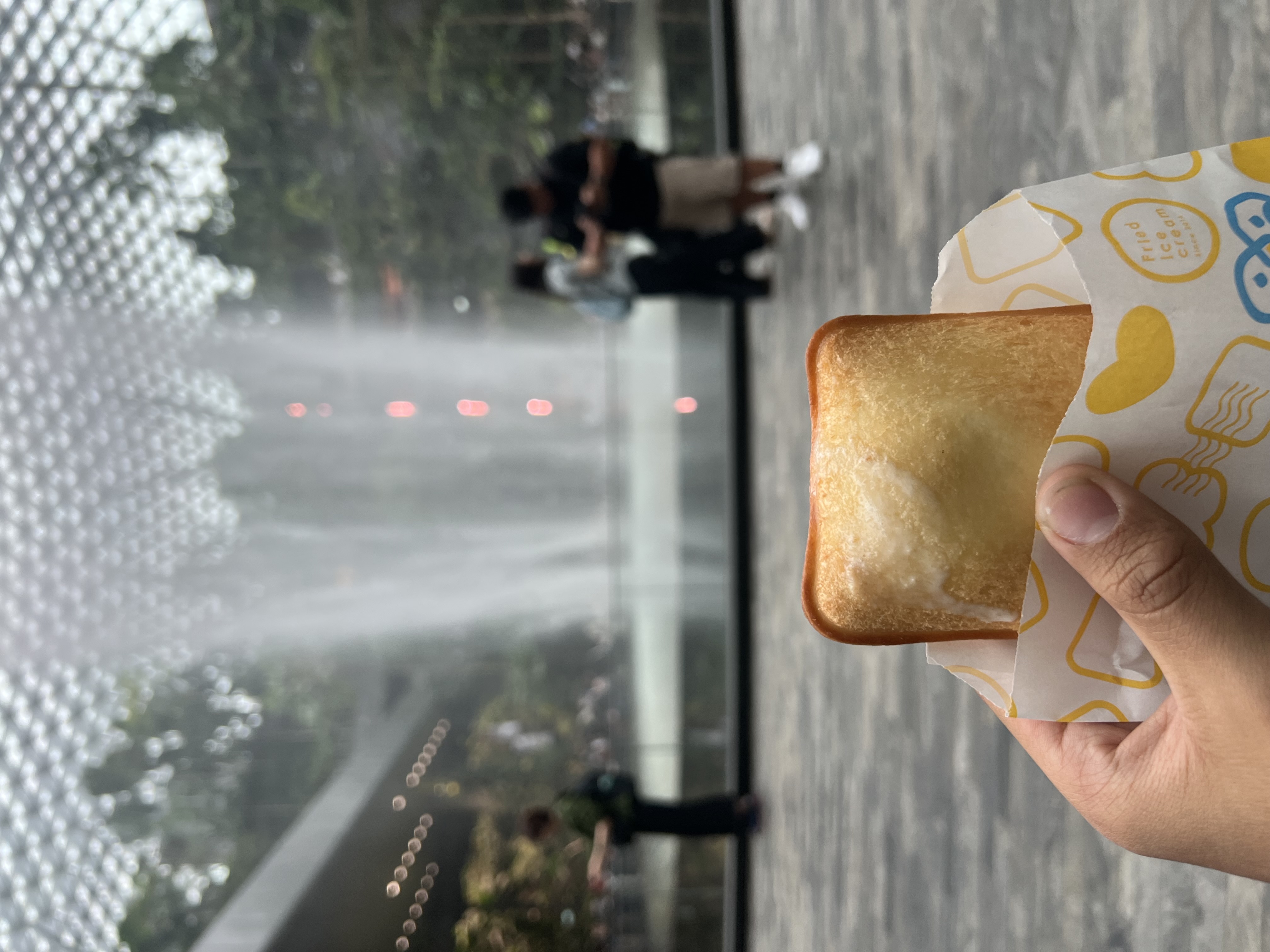
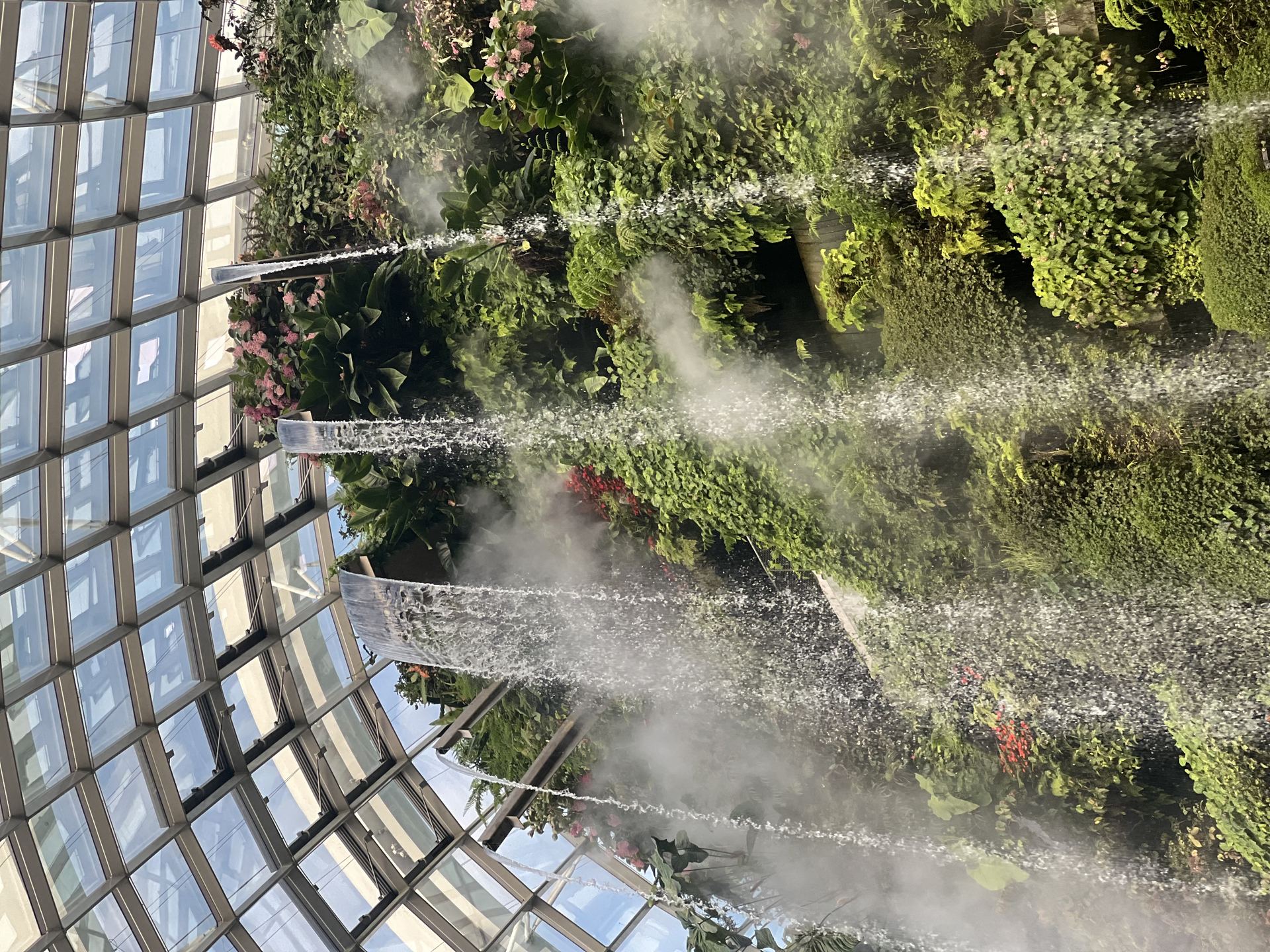
I made my way to the most well known part of the airport, The Jewel. I honestly did not know it was called that, but once I walked through a little passage way from the shopping center that surrounds this, Jewel, the massive glass dome and breathtaking indoor waterfall definitely proved the name suiting.
This unique space is truly one that everyone must visit if they get the chance. It's constant nature all around you, with towering plants, trees, shrubs, and all the green that terraces up to the sky dome. Besides the vast amounts of tourists, the water cascading from the center of the glass dome provides the sound of a relaxing vortex of water. There were stairs leading up and down the terraces and bridges overlooking the many different views of the Jewel. There was also a light rail transport system that moved passengers from different parts of the airport right through the Jewel and next to the water fall.
I would like to emphasize that so far throughout my trip, such pieces of 'wild', 'pristine', and 'clean' looking nature are large attractants of tourists. It seems that people actively seek this type of nature by going on hikes or even traveling far distances for it; but do they actively try and protect it?
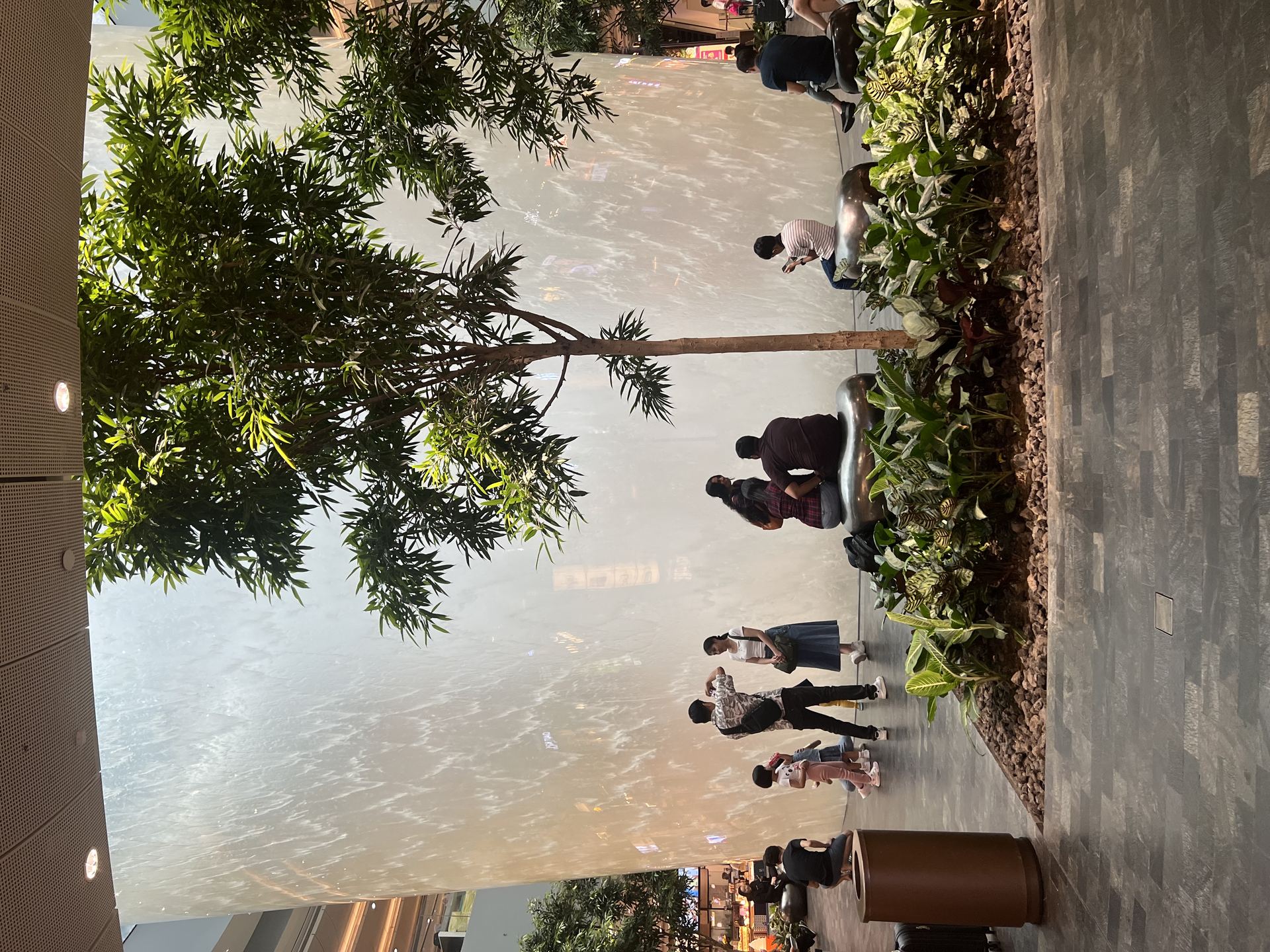
The lower part of the waterfall/vortex of the Jewel is encased by a 30ft tall huge cylinder that you can see the water from above running down its walls. On this lower floor, located below the main part of the Jewel, that is where all the plants and waterfall are, you can find the food court and grab a bite to eat while watching the serenity of the water.
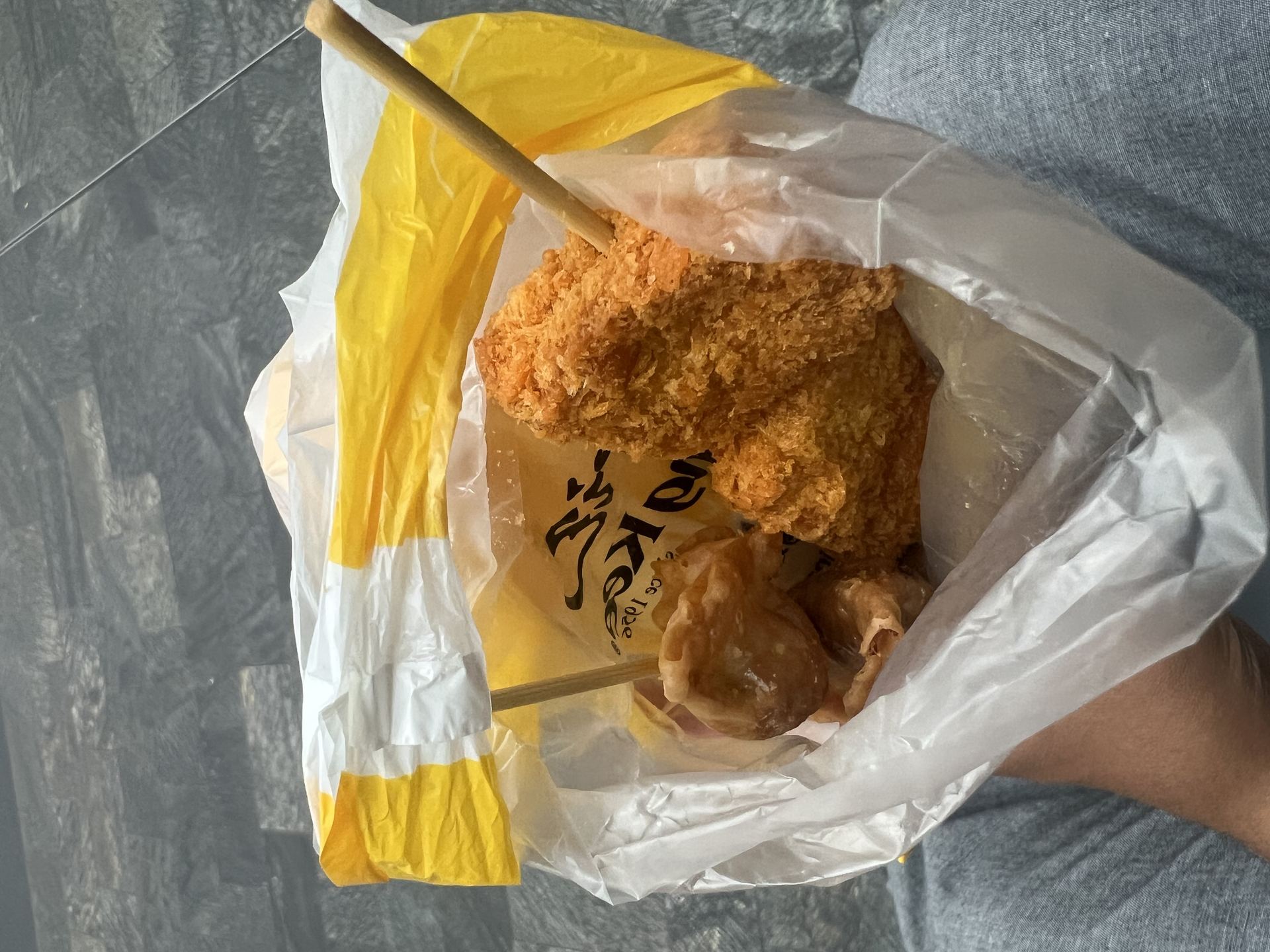
I got out of my flight pretty hungry, I think it was around lunch time for me however my 'meal clock' was all off kilter due to the shift in time zones whenever I was traveling by air. I was trying to conserve my budget and not spend on expensive things, so I found an inexpensive meal from Old Chang Kee, a local fried delicacies chain based in Singapore. This meal was categorized as fast food, it was indeed fast as everything is ready to eat which was a good thing for my hunger at the time. A big thing that I have always commented on with regards to consumer waste is fast food waste. There is SO much of it that I have seen been used and cannot begin to fathom how much waste the fast food industry produces around the globe! This meal came in a plastic bag wrapped in another plastic bag with bamboo skewers down the crab, chicken, and dumplings that I ordered.
Fast food is so easy, I hate it, but I also love it. It is so convenient, relatively inexpensive(however everything seems expensive to me now a days), and is a central part of many peoples diets. Don't get me wrong, I would 100% prefer to cook for myself or eat at a nice healthy restaurant but many factors like convenience and price are why a large amount of people eat fast food, at least in America. I am excited* to dive into the waste that comes from this industry in my research.
I tasted fried ice cream for the first time after my lunch. It was pretty good, an interesting thing to eat though as the ice cream is kind of melted which makes sense, but because of this it leaks out of any nook and cranny it can find. I spilled a bit of ice cream on myself here and there. Anyways, this cam wrapped in a white, printed, paper bag.
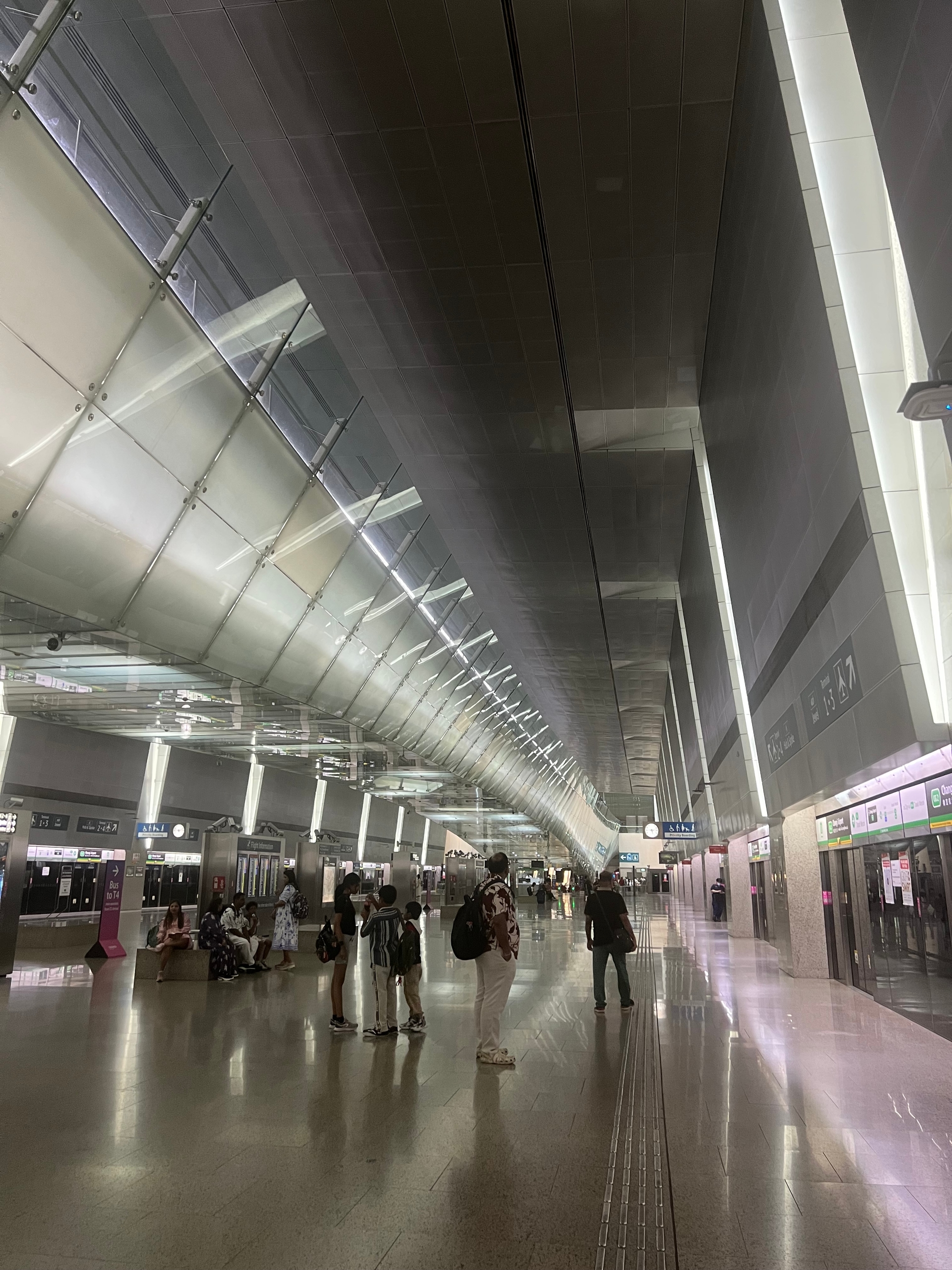
Under the airport and conveniently located, sits the Changi Airport Mass Rapid Transit Station. In my opinion this is how every airport should be, it makes life so much easier but requires expansive rail lines to be located around the city to make it worth it.
In my journals I have also included other sustainability related things like transit, housing, food, and others which I think are also influential in the holistic sustainability of a city, state, or region and also wether that be indirectly or directly contribute to waste in their own ways.
I took the MRT to my hostel, Atelier Hostel, which was located very coincidentally in Chinatown(having just come from China).
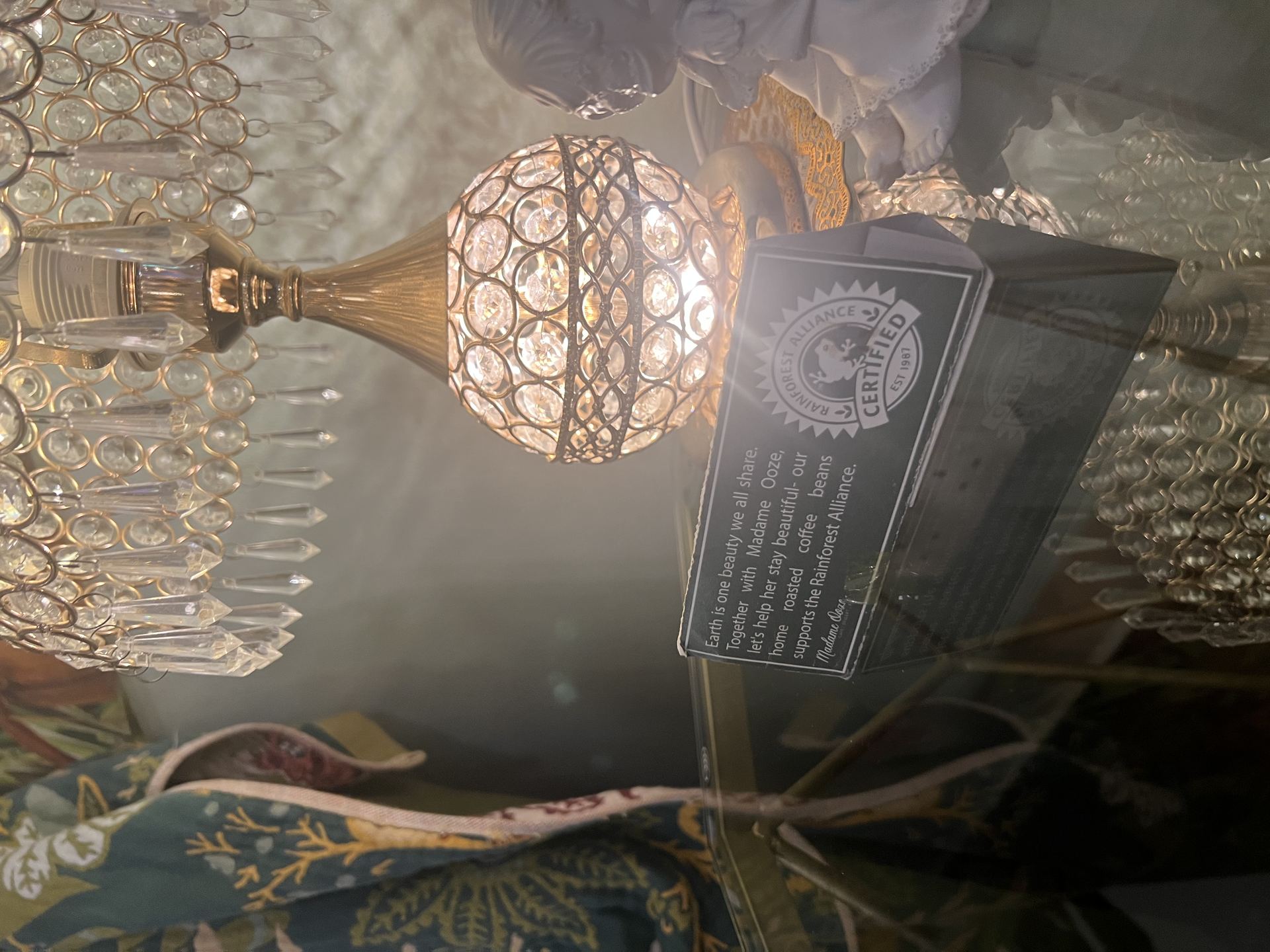
In the lobby I took a quick picture of their sign that showed their Rainforest Alliance Certification.
This shows some sustainability from this hostel
This certification is for their coffee beans
I went to get dinner that night and walked through the center of SG's Chinatown. It was a very bustling place at around dinner time ~7pm.
There were so many shops here, from fruit to paper fans to clothes to paintings, truly a center for shopping. The packaging here was of course all wrapped in plastic for things like paintings or the plastic bags for the purchase of any and all things.
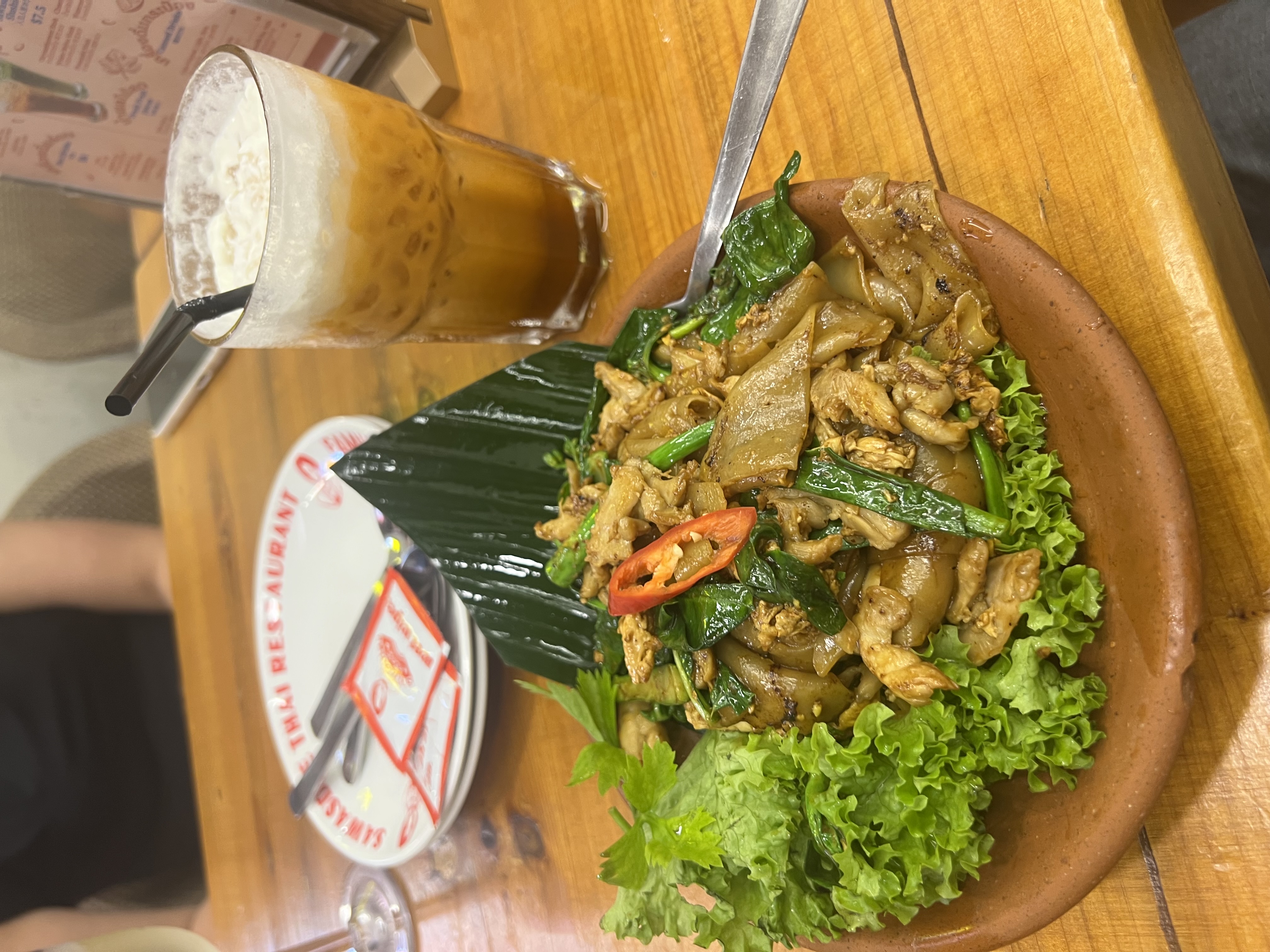
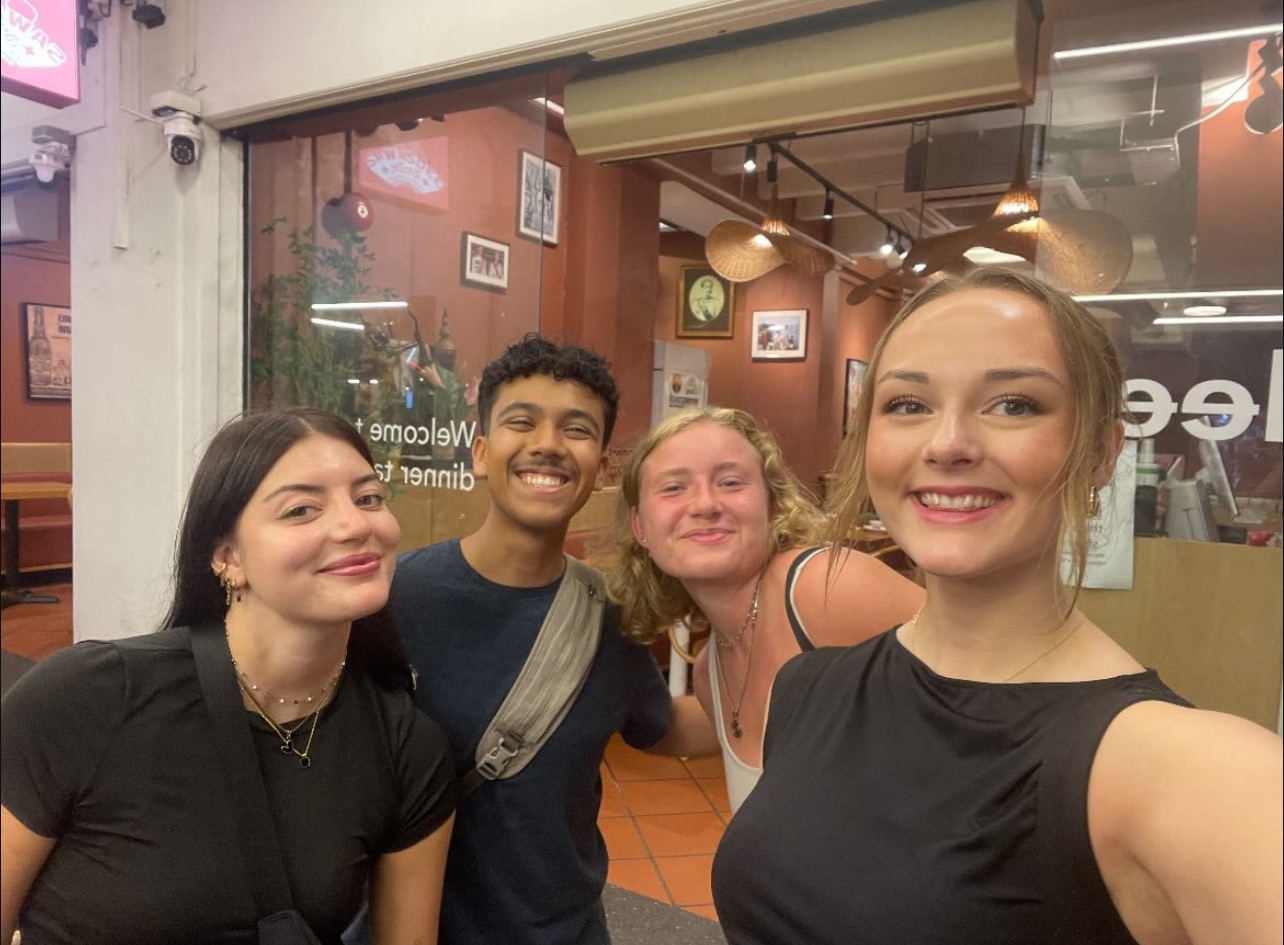
I went to a Thai place for food with some people that I met on the Hostel World App and for my drink they gave me a plastic straw without asking for one. A very common thing even in Los Angeles
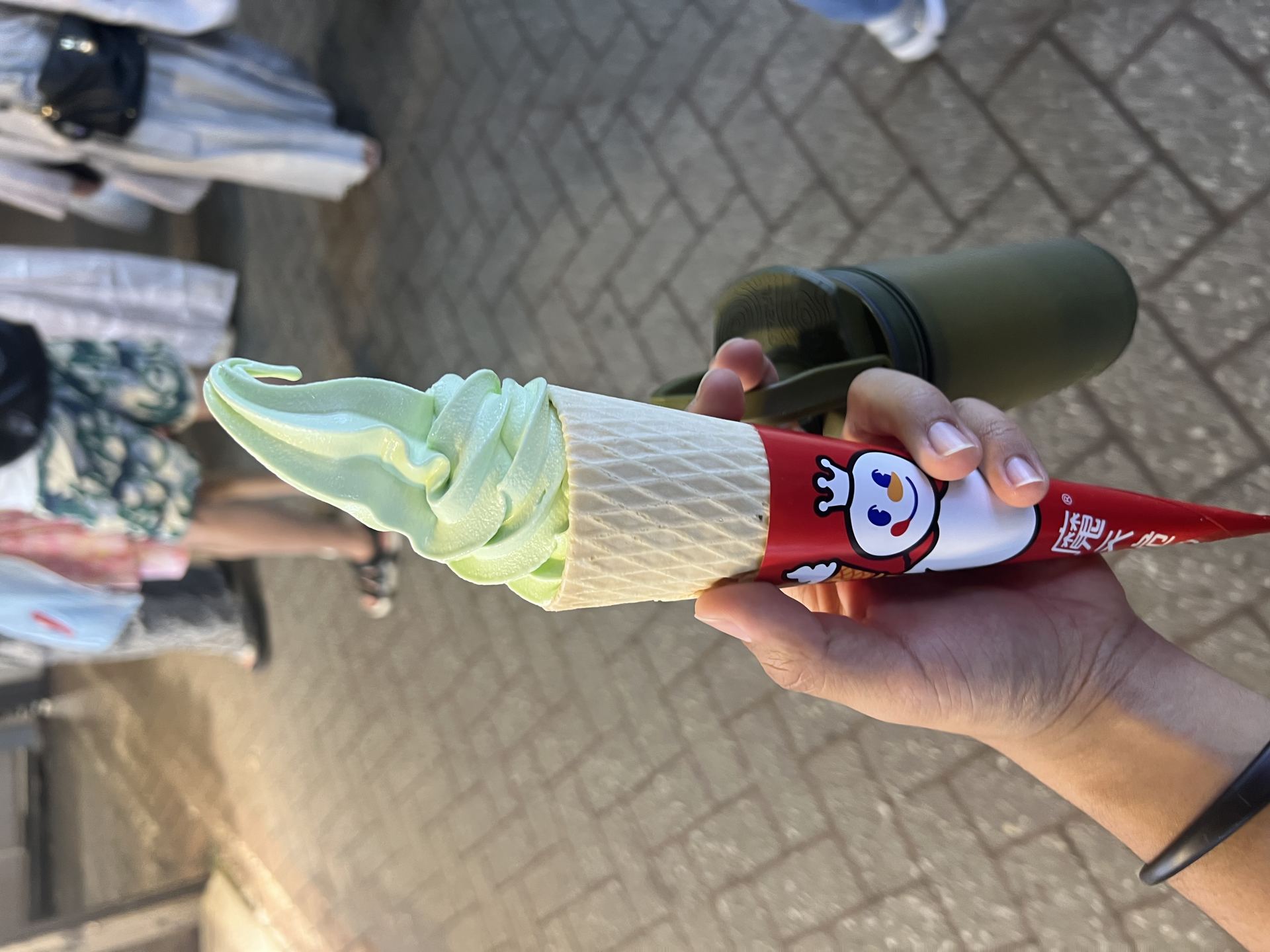
I got dessert in Chinatown as well and my ice cream cone came wrapped in a paper x plastic sheath
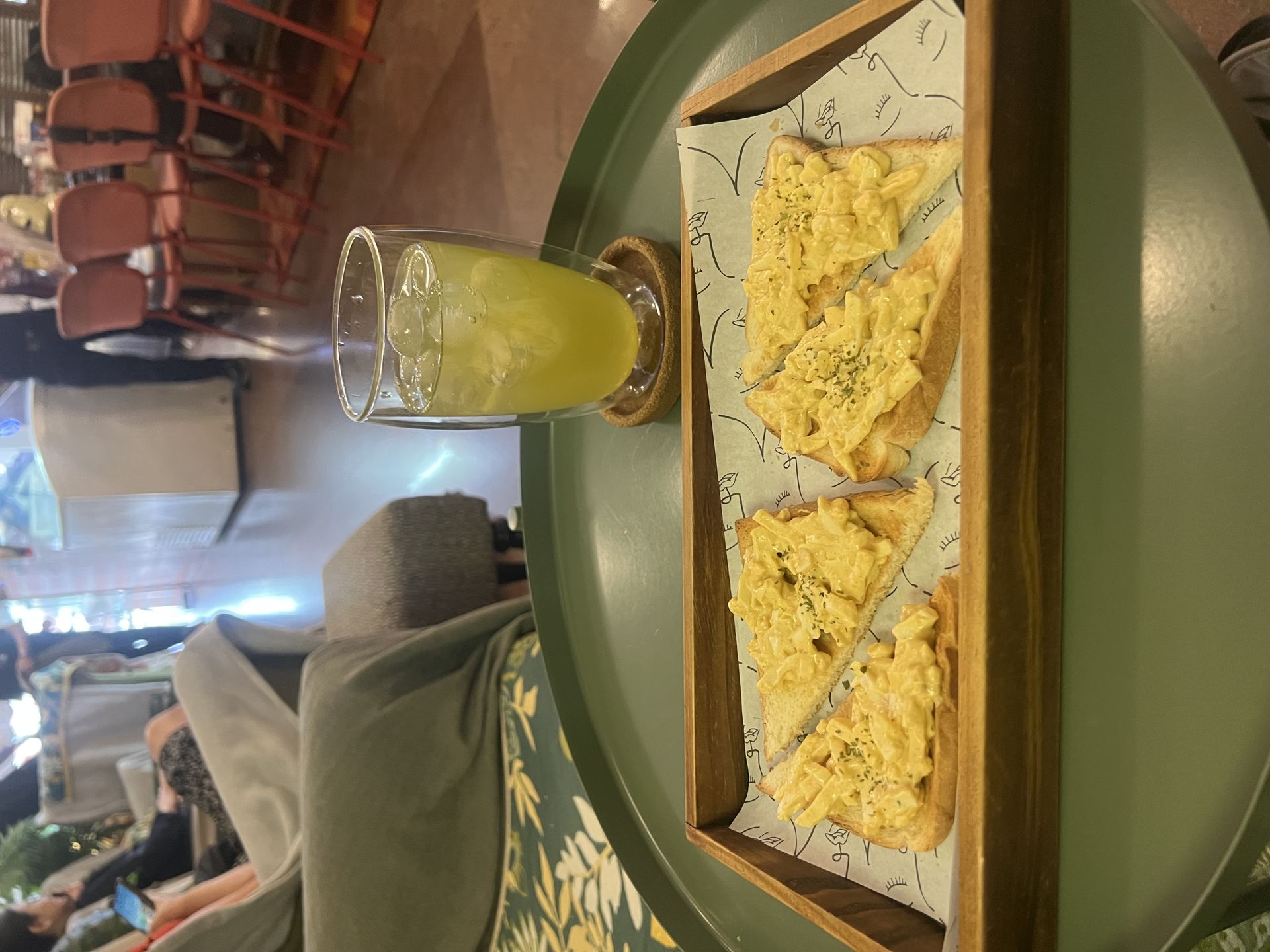
The next morning, I had forgotten that my hostel included breakfast at the cafe that they have downstairs which was a very good breakfast as well as a very convenient one. The only disposable here was the printed-on parchment paper that my egg toast sat on.
I was on my way to my first zero-waste store, The Green Collective, and I saw a hotel of the kind I had never seen before, it was 'very Singapore', in my not researched foreigner mind. The skyscraper, Oasis Hotel, was covered in a metal frame which was blanketed by live vines of some sort. It must have been 80% covered in greenery. None of the large buildings in LA are like this and I think this one might aim to bring in 'nature' or the 'wild' back into a city and/or help cool off the building in a sustainable, aesthetically pleasing, and more natural way.
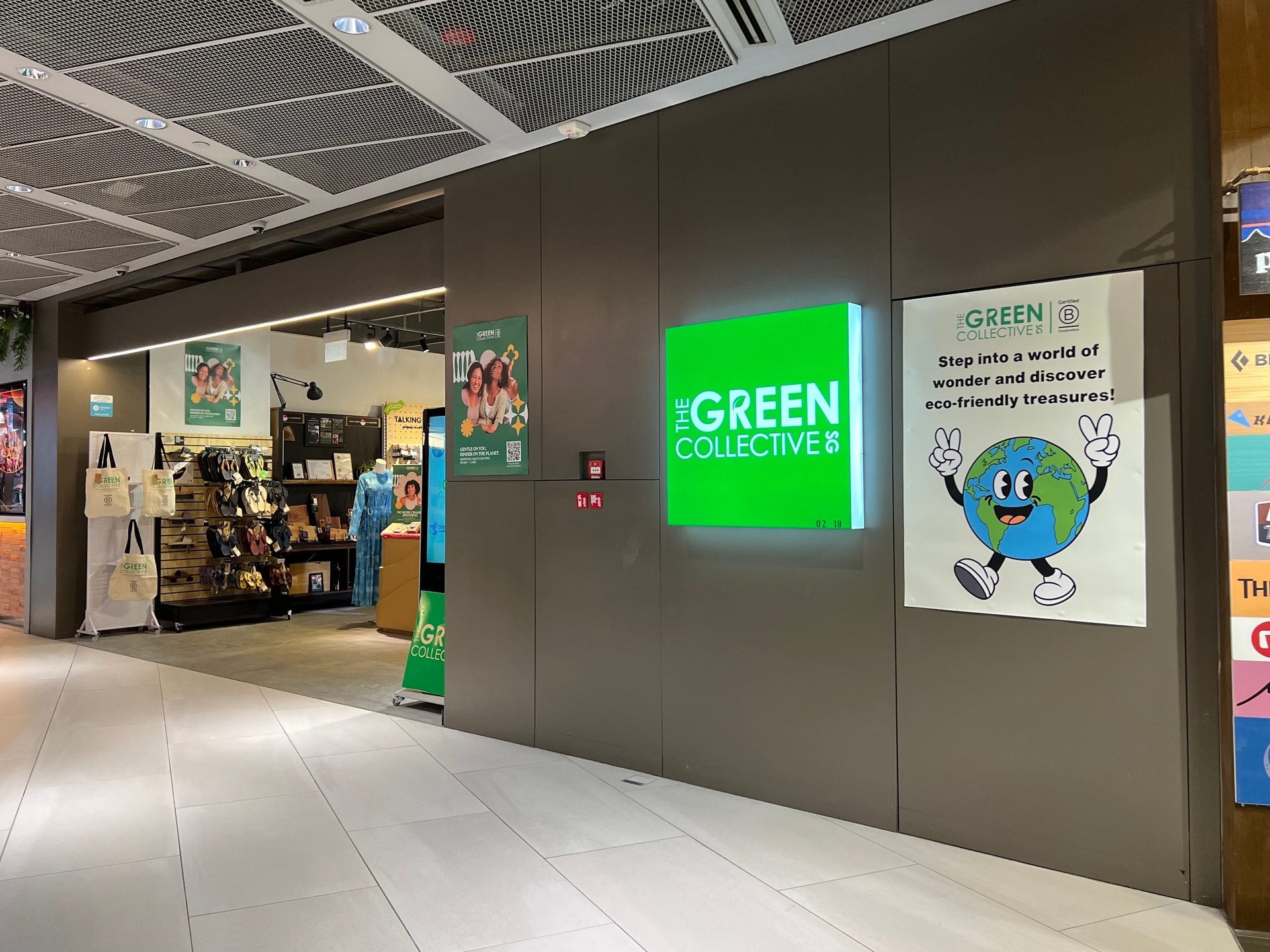
As I have said before, the malls in the Asian cities I have been in so far are HUGE. The Green Collective was, to my surprise, inside a mall and a very, very large one at that: Funan Mall. Which actually makes some sense as it is a metropolitan city and not more of a suburbs feel where the majority of the zero-waste stores that I have been to in Los Angeles are located. I just don't associate zero-waste living with.. malls. As malls are a tribute to consumerism, lots of single-use plastic packaging. I hope that this is the start to something new though, where sustainable options are more readily available for every consumer and not just a select few.
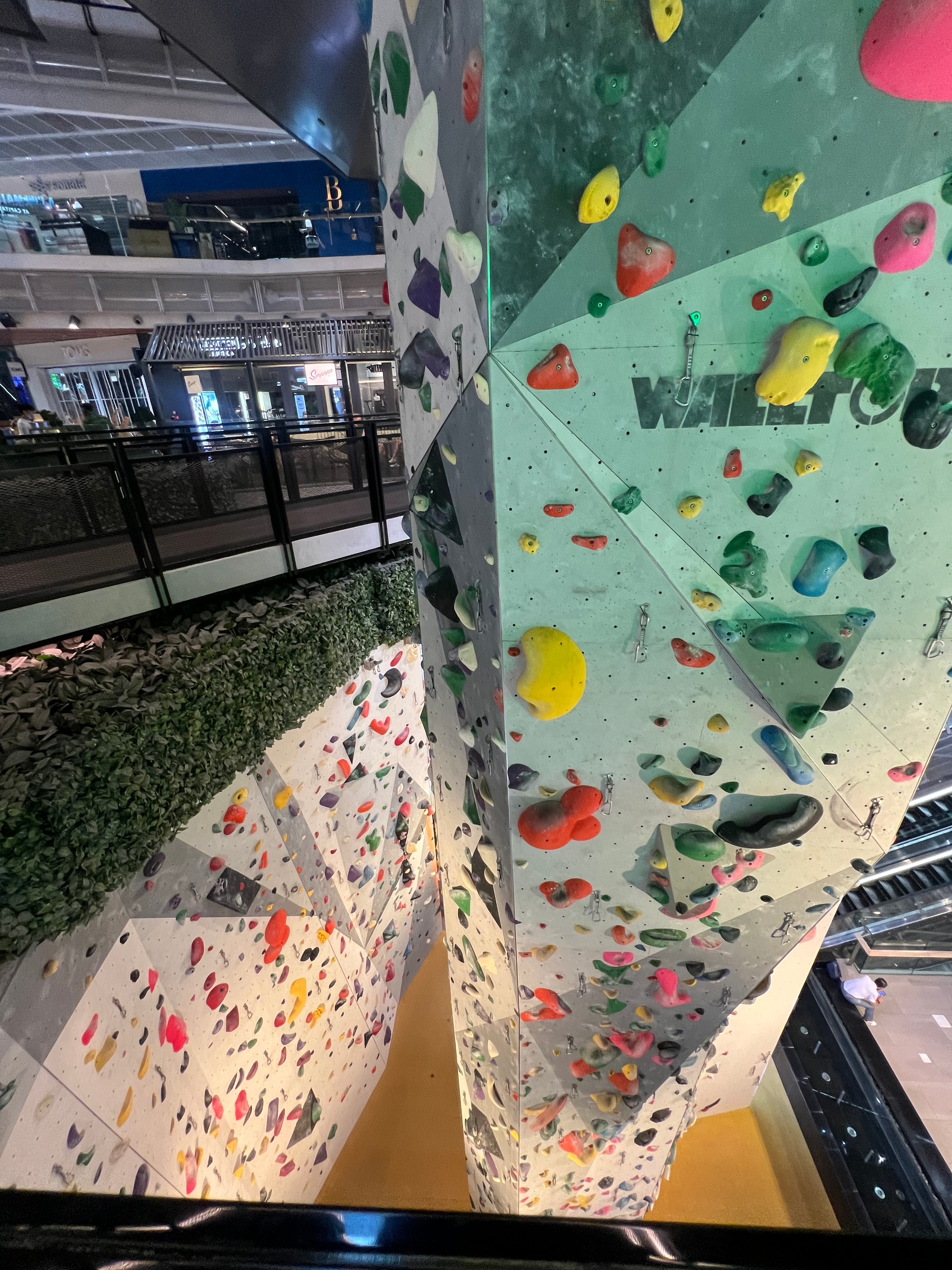
This mall even had an indoor rock climbing gym that ran vertically through several floors of the mall! How cool is that! I have taken a liking to rock climbing recently and find this so amazing as it gets people interested in the 'sport'. I feel that rock climbing is somewhat a sustainable sport as you don't need lots of equipment, or natural resources to maintain the facilities etc. of which most sport require.
As you can probably tell, I love desserts, and I had happened to walk past a cafe in the mall which sold some. I have always wanted to try an affogato as they look cool, and after I ate it, I can confirm it was indeed cool. It was served without any disposables. But, of course, I feel that most dine-in options for food or deserts will be served in/with reusables over disposables as it just makes sense for the customer experience.
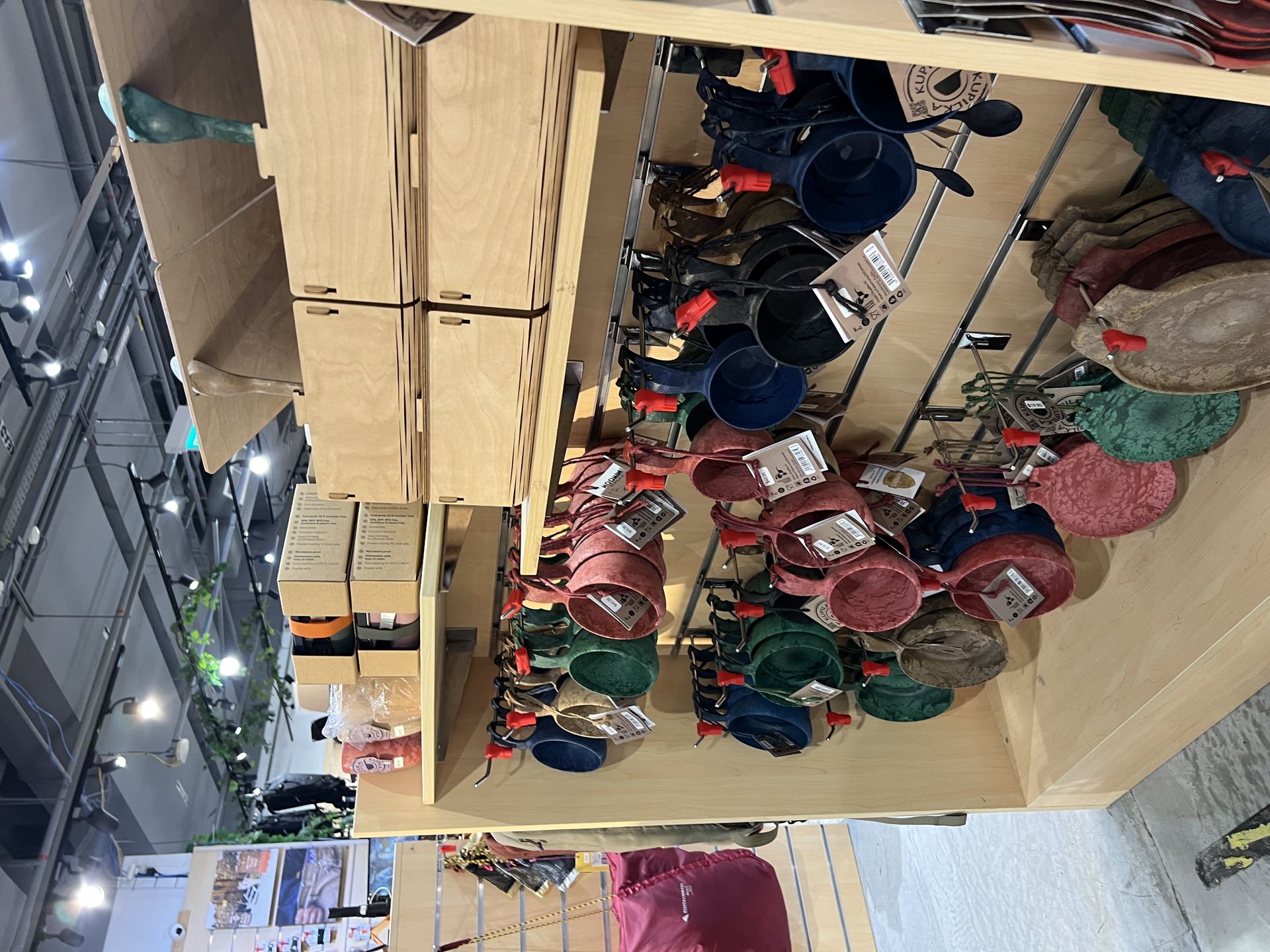
I walked back up to the zero waste store as it was almost time for it to open. I had gotten here an hour early as their shop hours were advertised as open at 10am but when I had gotten there, they were closed so I waited in the mall in the mean time with a great past time of walking around and finding a dessert. Anyways, I wondered into this shop which was the right next to the ZW store called Outdoor Life - Funan, it was similar to an REI(an American retail and outdoor recreation store), at least the only one that I have been to which is located in Rancho Cucamonga, CA. I found lots of cool reusables, which are of course intended for camping and the such, but I found that this is a great way to get your hands on reusables if you don't have a ZW store near you. Camping and outdoor shops must be in many many places in this day and age as these activities have been around forever and are hobbies for many people. Whereas, ZW stores are more niche and relatively new to the consumer market.
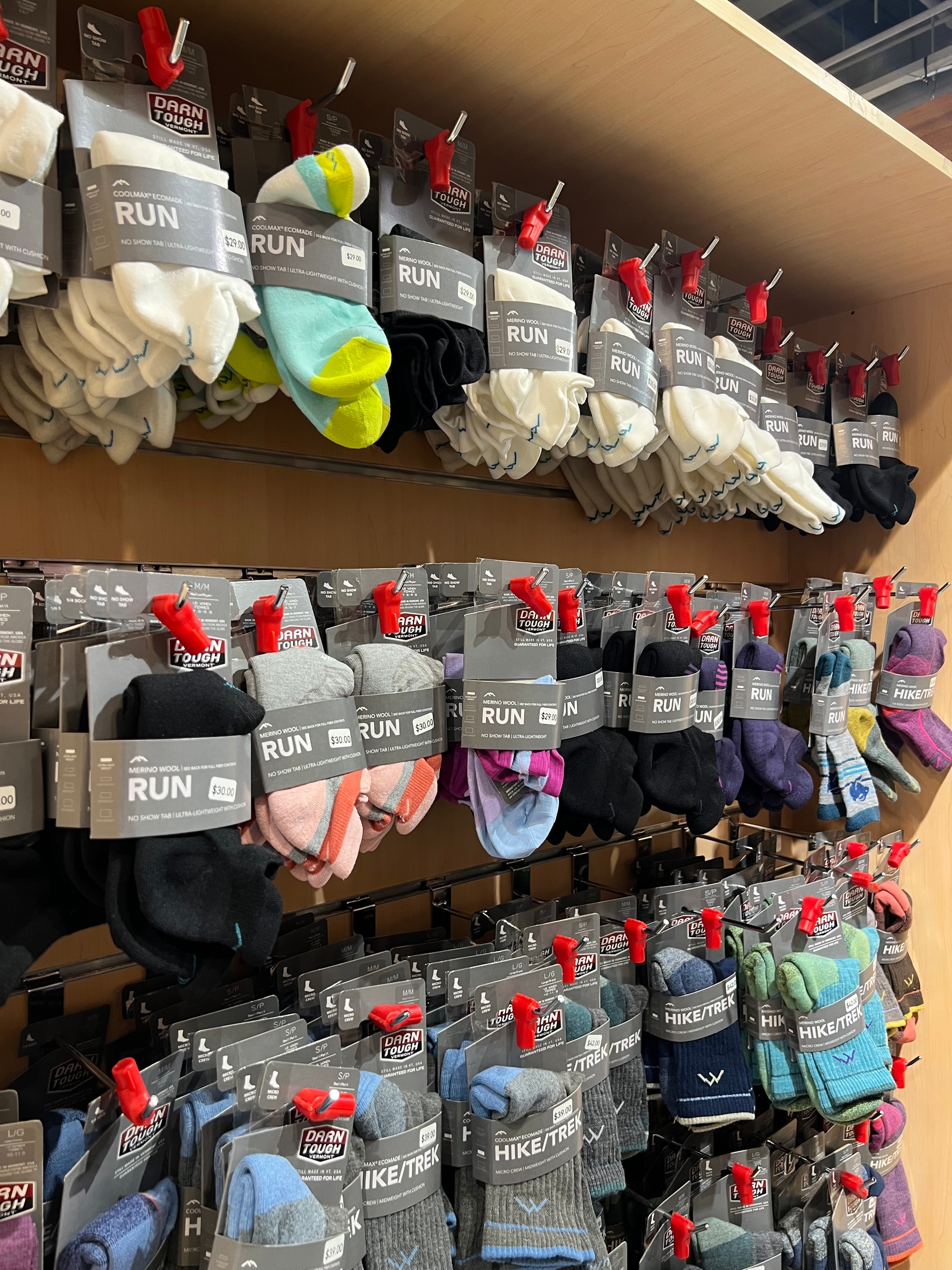
Here I found: reusable magnetic metal chopsticks, reusable metal straws, reusable stainless steel cups and magnetic cutlery, reusable recycled plastic bowls of all shapes and sizes, reusable silicone travel tubes and containers in a plethora of sizes, reusable metal mugs in all sorts of colors, merino wool socks that will get replaces free of charge if/when they wear out or get a hole and the like for free! I purchased some of these when I got back home because the current organic cotton socks that I have started getting holes in them as Ive had them for a while now. I find this sock company, Darn Tough so cool as this is sustainable for the pocket and the environment as merino wool socks are more sustainable than organic cotton socks. I first encountered these socks on my friends feet, shout out Nick. On a side note, if I haven't said this already, I feel that living sustainably (which of course as we can clearly see is sadly exclusive from a socio-economic level) makes living more comfortable, enjoyable, and purposeful at least personally.
The Green Collective finally opened! I went in and did my usual look-around. I saw some normal eco-store things like sustainable products in sustainable packaging, minimally designed and presented, and the advertisement of clean ingredients and processes. However, this store wasn't a 'traditional' zero waste store are most things here are packaged. They are, however, sustainably packaged like with twine, brown paper, and compostable materials. I asked the person at the front counter if she was the owner but sadly she wasn't. She did however, explain to me how the store works: it is a multi-brand eco store featuring over 35 Singaporean brands focused on sustainability, social impact, and environmentally friendly products. It is a curated marketplace , one-stop shop, where sustainable makers can sell their products. They also host workshops and events at the store like soap making, composting, clothing swaps, and more. They are also B Corp certified which is really cool! This means that they meet high standards for environmental performance and transparency, carefully screening brands to avoid greenwashing. Sprouts Farmers Market(one of my favorite stores) is an example of a B Corp.
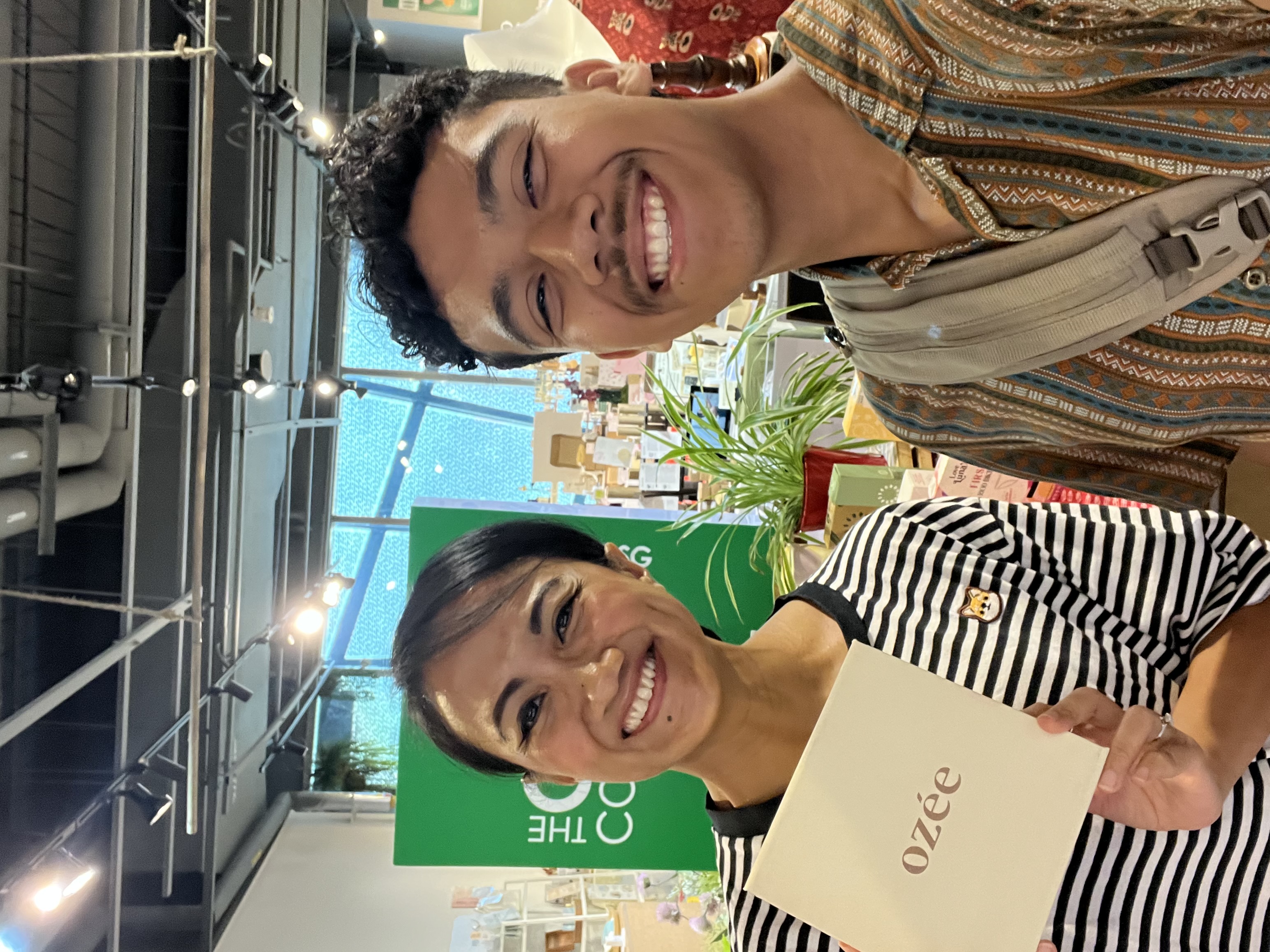
She also introduced me to one of the brand owners that was restocking her section of the store: Oka! I had the pleasure to interview Oka in the store.
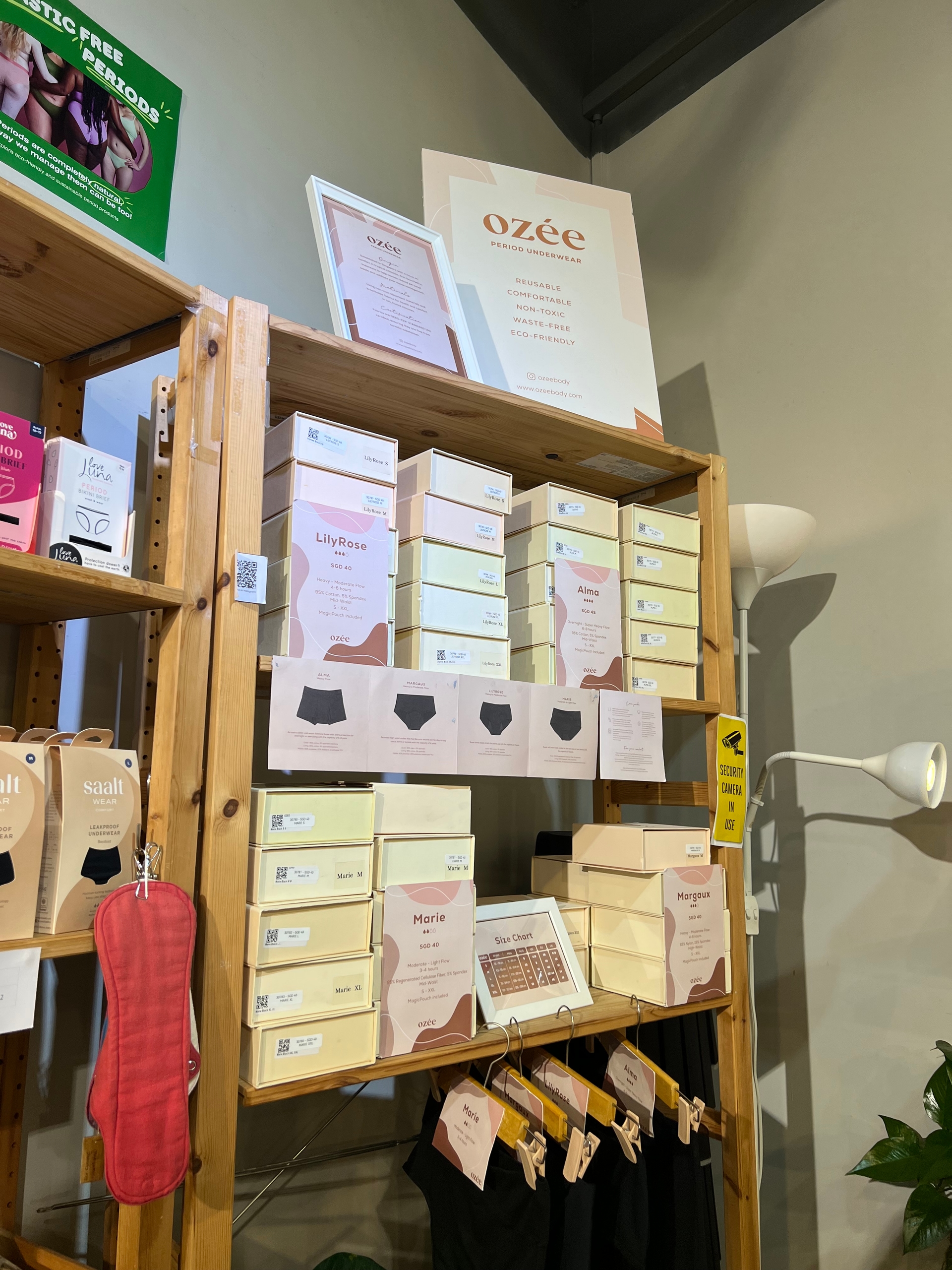
Oka is the owner of Ozée, a sustainable menstrual care brand that makes reusable, comfortable, period underwater designed to replace disposable pads and tampons. I know I'm not her pinnacle target audience, but being raised by my mother and sister, I have gathered some menstrual knowledge in my time and it was cool to hear about how her company tackles the ergonomic and sustainable problems within the menstrual product market.
Ozée comes from the french word osée, which means 'daring' or 'brave'. Ok explained that she chose the name to signify change, confidence, and risk taking. Truly a great message behind the name.
She is originally from Indonesia! What a coincidence because I'm going there next. Her family moved over to SG a couple years back.
She launched the brand in 2020 driven by her eco-anxiety for period care as well as her zero-waste values.
In terms of eco-anxiety, this was fostered by the poor waste management in Indonesia where she saw that there needed to be change.
She began to notice that there are chemicals in disposable menstrual products such as chemicals in pads.
She notes that the switching of mindset/ fear is what inhibits people to change
She also points out that the weather in Indonesia with the hot, often rainy, and humid climate can make traditional disposable menstrual products uncomfortable to use as moisture and heat can cause chaffing and irritation. As a guy, I reckon I would not like to use a pad or tampon as I imagine that they feel weird to just have constantly touching your vulva when on your period. Now, I cant even begin to imagine how that must feel when in a constantly hot, humid, and rainy climate, especially when most women work blue collar jobs, not like in America.
Another reason as to which Oka decided to create her brand is due to the waste problem caused by traditional disposable menstrual products. Having to switch pads and tampons many, many times in each women's life must create an ungodly amount of waste.
She points out that the corruption of the Indonesian government doesn't help things either. This has caused the private sector to create their own waste management companies, which sounds normal to an American but opposite to Singaporeans as the Singaporean government uses one national system with government-owned infrastructure as well as some contracted collectors. Whereas, the US and specifically California, uses hundreds of local systems with mostly private operators and mixed facility ownership.
Oka aims to inspire people to reduce waste. Moving to Singapore, the climate problem didn't change much, SG's comparable climate to Indonesia still makes it hard for women to use menstrual products which causes them to change them more frequently and consequently produce more waste.
Singapore's waste management incinerates most waste that is not recyclable. (NEA(National Environment Agency = the government body under the Ministry of Sustainability and the Environment thats in charge of: waste management, public cleanliness, energy efficiency and climate action programs, food hygiene and public health inspections, and environmental regulations and enforcement)
Singapore's waste management is exquisite. They have great laws, systems in place, and societal norms for waste management by and for Singaporean's and even create energy from this process.
Oka said that business is easier to do in Singapore compared to her time in Indonesia. She feels that her type of business is really supported here by the government. One draw back though that she pointed out is that Singapore is a small market due to it's small 'red dot' size.
She also feels that Singapore and its people are more open to ideas like zero-waste whereas in Indonesia, there would need to be lots of education to inform Indonesian's as to what zero-waste or sustainability is and why it would be beneficial.
She states that Singaporean's have more buying power than Indonesians do, a commonality pointed out between the ZW store owners I have interviewed.
She feels that she needs to expand to have more products and consumers appetites because of the 'small' SG market.
She points out that Ozée has no plastic products, uses biodegradable packaging, uses fabrics that have been lab tested in SG, and that they give back to their community and more.
Oka invited me to an event that she is hosting tomorrow where one of friends which is from a small rural Island in Indonesia will educate event attendees of menstrual care aspects and how the people from this small Island go about their care. I sadly couldn't attend as I had already planned to go to another ZW store for more interviews but I thanked her for the invitation and felt it so cool that she is providing connection to people in her new community in SG with her community form her previous home. Allowing the transfer of perspectives, experiences, and ideas to flow freely and in a welcoming space where positive knowledge and change can occur.
She shares that sustainability takes time to work and that its really about education.
"You have to love to do it."
"Small steps make big impact. No matter what, every step, constantly, consistently, together."
"There is a future of sustainability, people always want change."
She feels that for younger generation's, older generations need to teach younger generations. In regards to climate change and global warming she commented that people already see and feel it, so its no longer a myth or conspiracy.
The Funan Mall had blow dryers in their bathrooms, they also had a whole bike bath with two lanes! That was a first, it was honestly very cool, they were painted in red and both lanes were going the same direction through the mall. They had bikes painted on them with the words slow down as well as speed limit 10 km/h and a no pedestrian sign as well. I wonder if bikers actually use this.
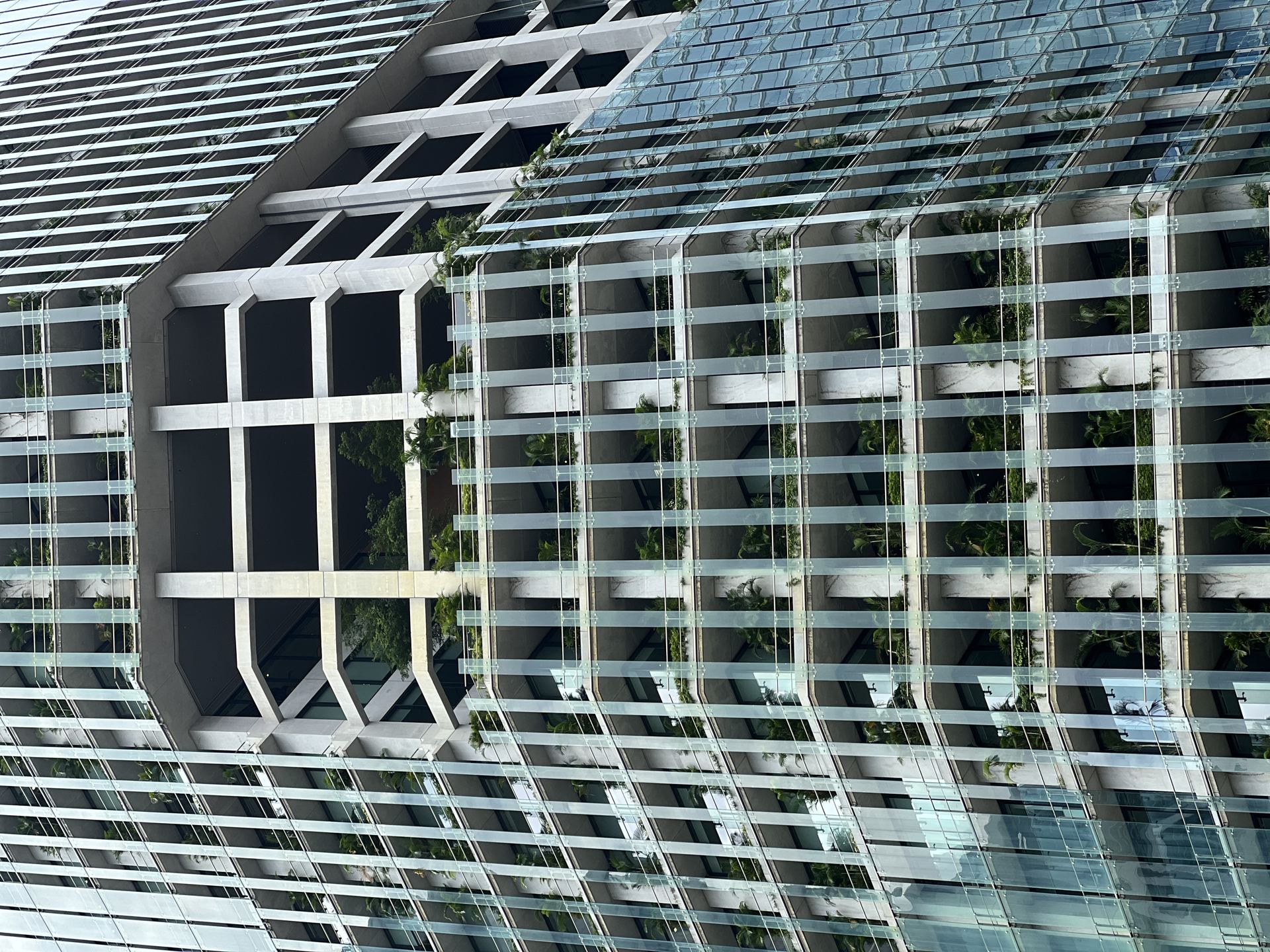
As I was walking to lunch, I passed by a skyscraper in central SG and it was covered in glass of course but this glass, on the facade, was in vertical strips with plants in the middle of each strip, like on the balconies, they also had a large opening in the middle part of the building for large trees to get light. These green buildings are so cool and don't make these metropolitan areas look purely grey and glass.
I had lunch with my CMC Singaporean good friend, Prachet, at Lau Pa Sat, the most famous Hawker Center in SG, even though he later told me that it is just a touristy one and not a real real one like the usual ones where most Singaporeans eat on the daily.
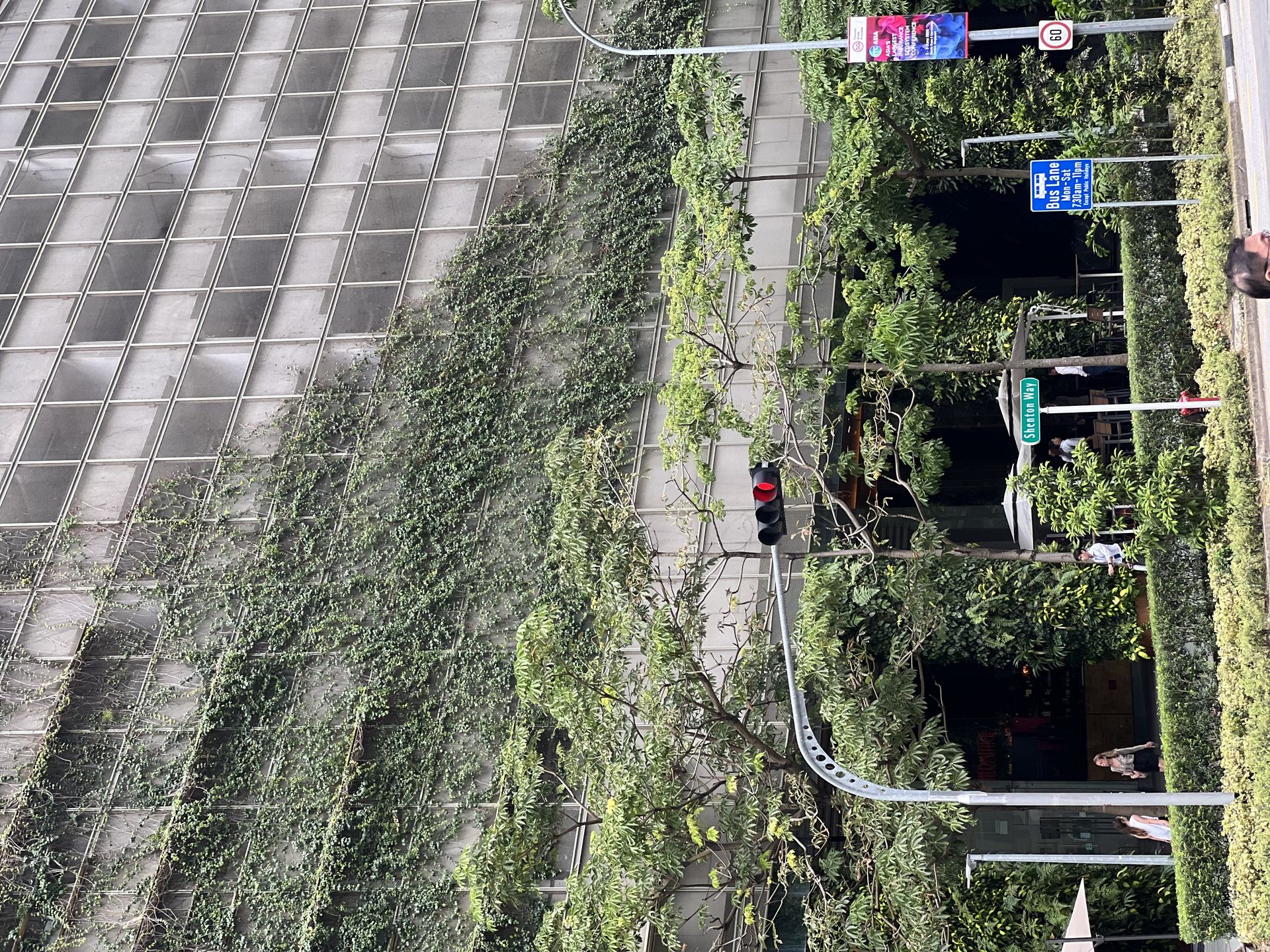
Across from Lau Pa Sat was a street crossing that I took a photo of as it looked very cool, Shenton Way. The building next to it, I think a parking structure was covered in vines and there were trees lining the sidewalks on that same side. I just think LA/California needs more greenery, but of course there is also the deal with native plants and such.
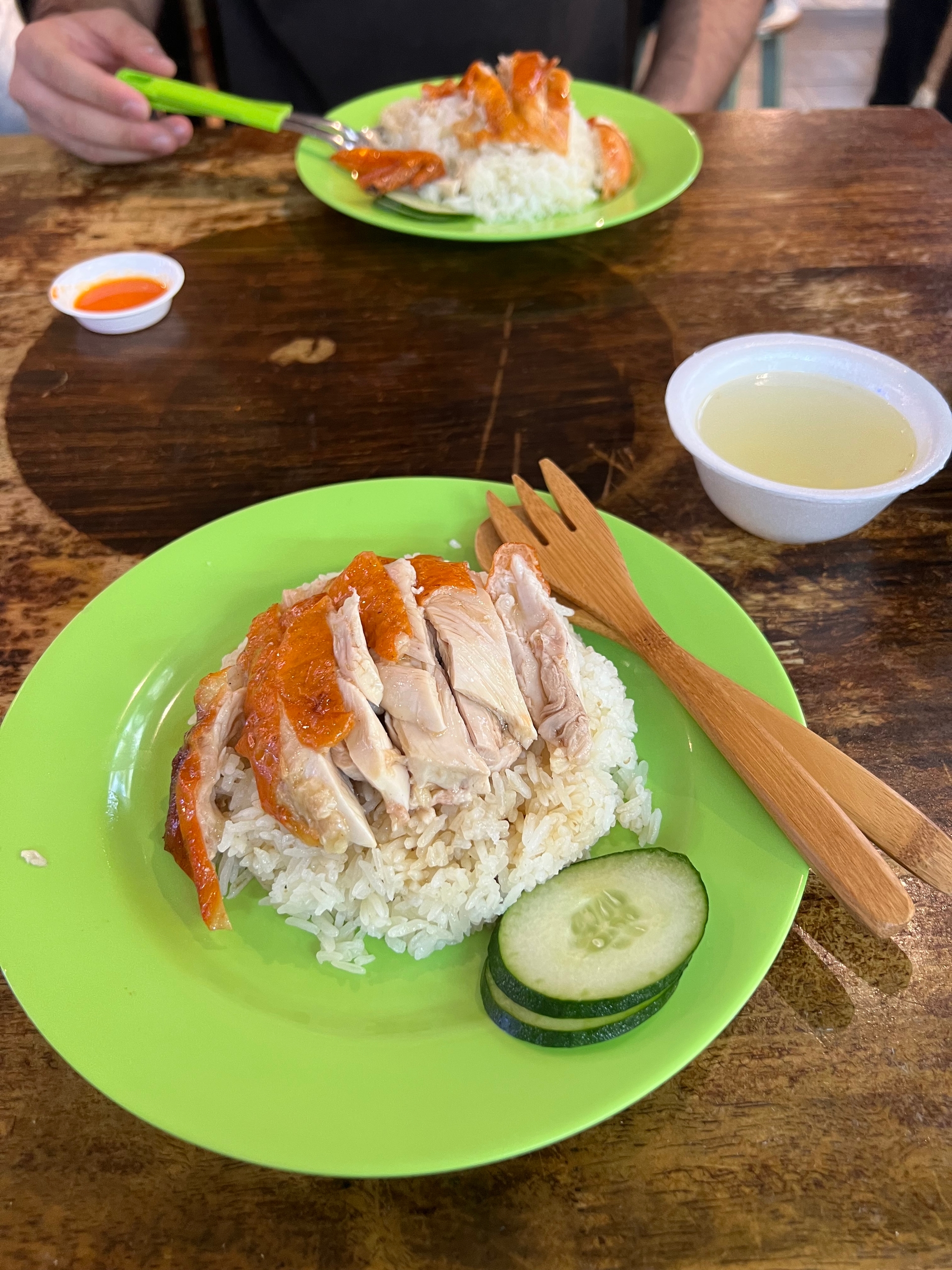
For food, we has chicken over rice with some soup and cucumbers. It was pretty good! It came on a reusable plate which was pretty nice, but they put the soup in a styrofoam cup and had only disposable utensils, thankfully I had brought my own bamboo set.
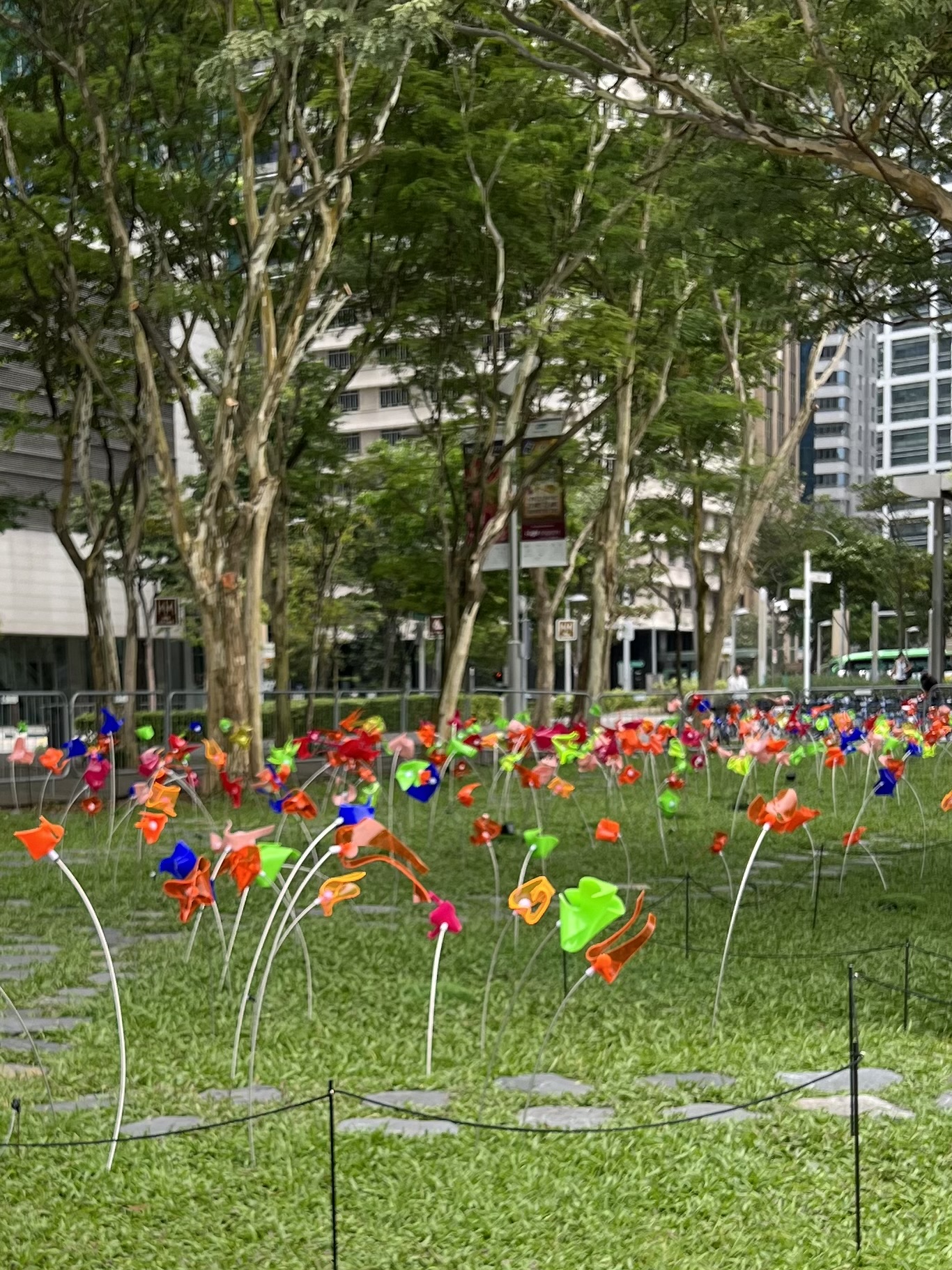
We walked to an art installation that was near Clifford Pier. The installation is called i Light Singapore and is an annual sustainable light art festival held at Marina Bay, featuring art installations by artists from around the world that use energy-efficient lighting and recycled or eco-friendly materials. It's designed to raise awareness about sustainability while creating an interactive, and aesthetically pleasing experience for Marina Bay/SG locals and visitors.
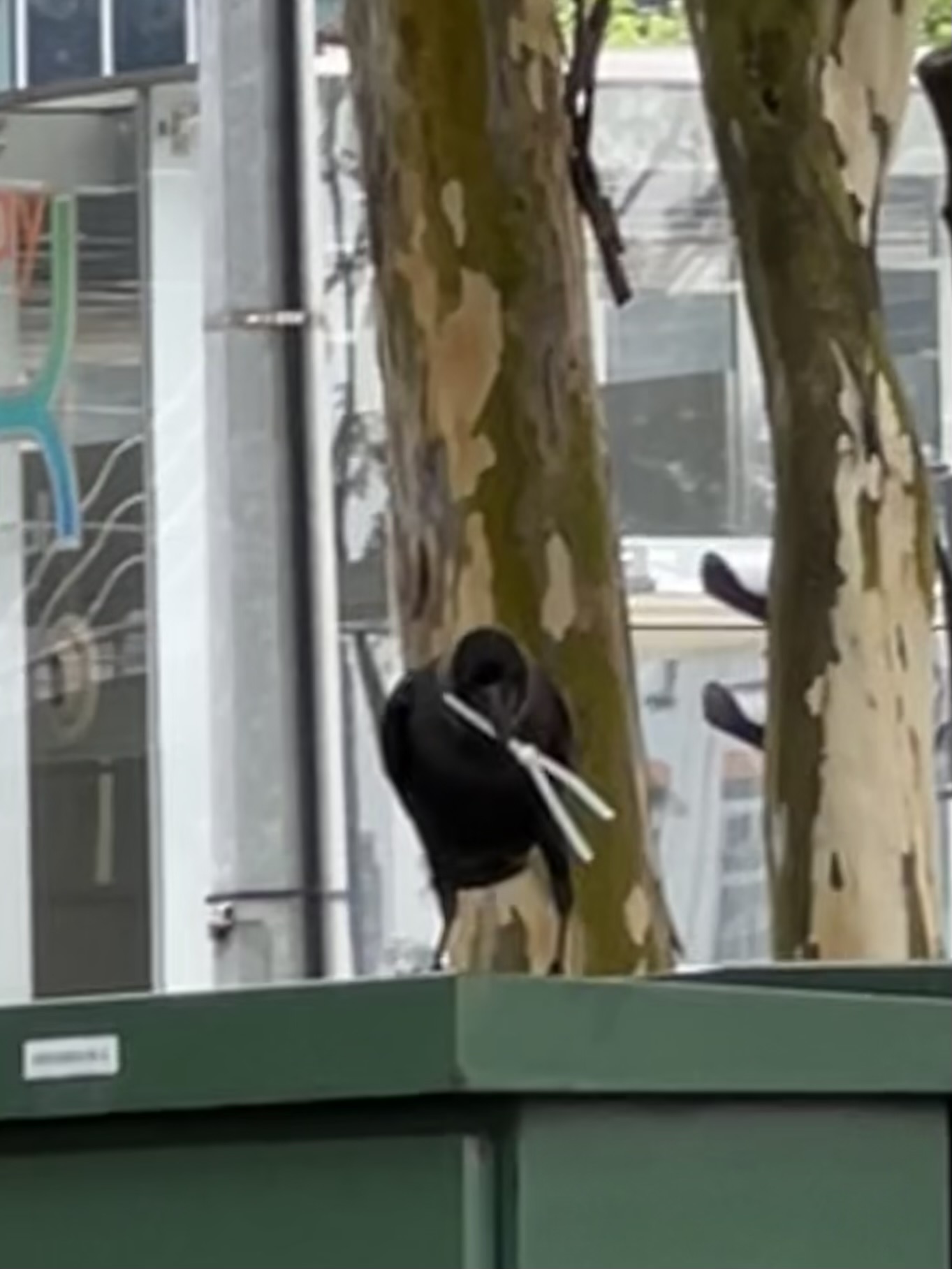
Near here, I snapped a picture of a crow that was perched atop a utility box that was carrying a broken plastic zip-tie in his beak. Even SG has pollution affecting its city wildlife.
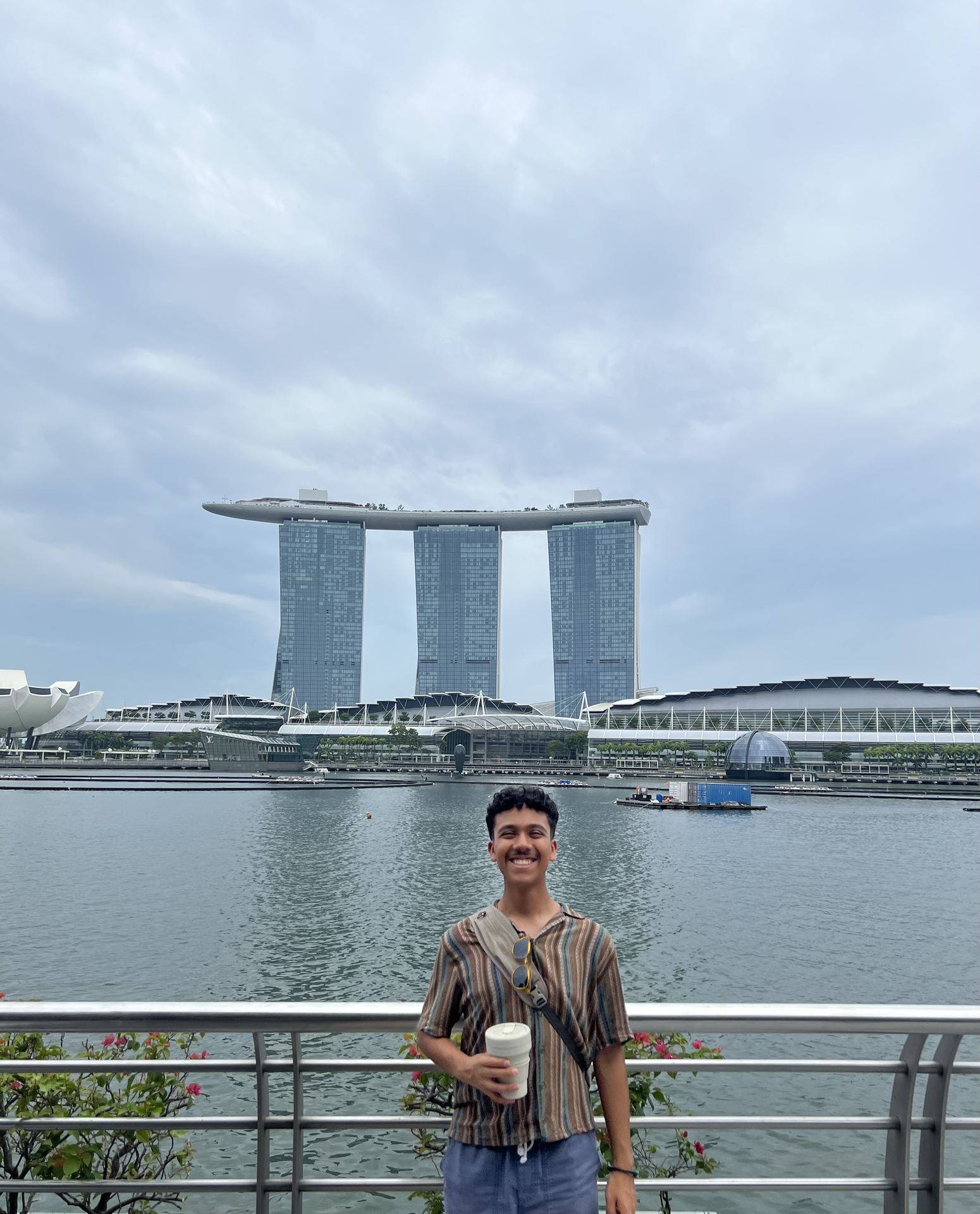
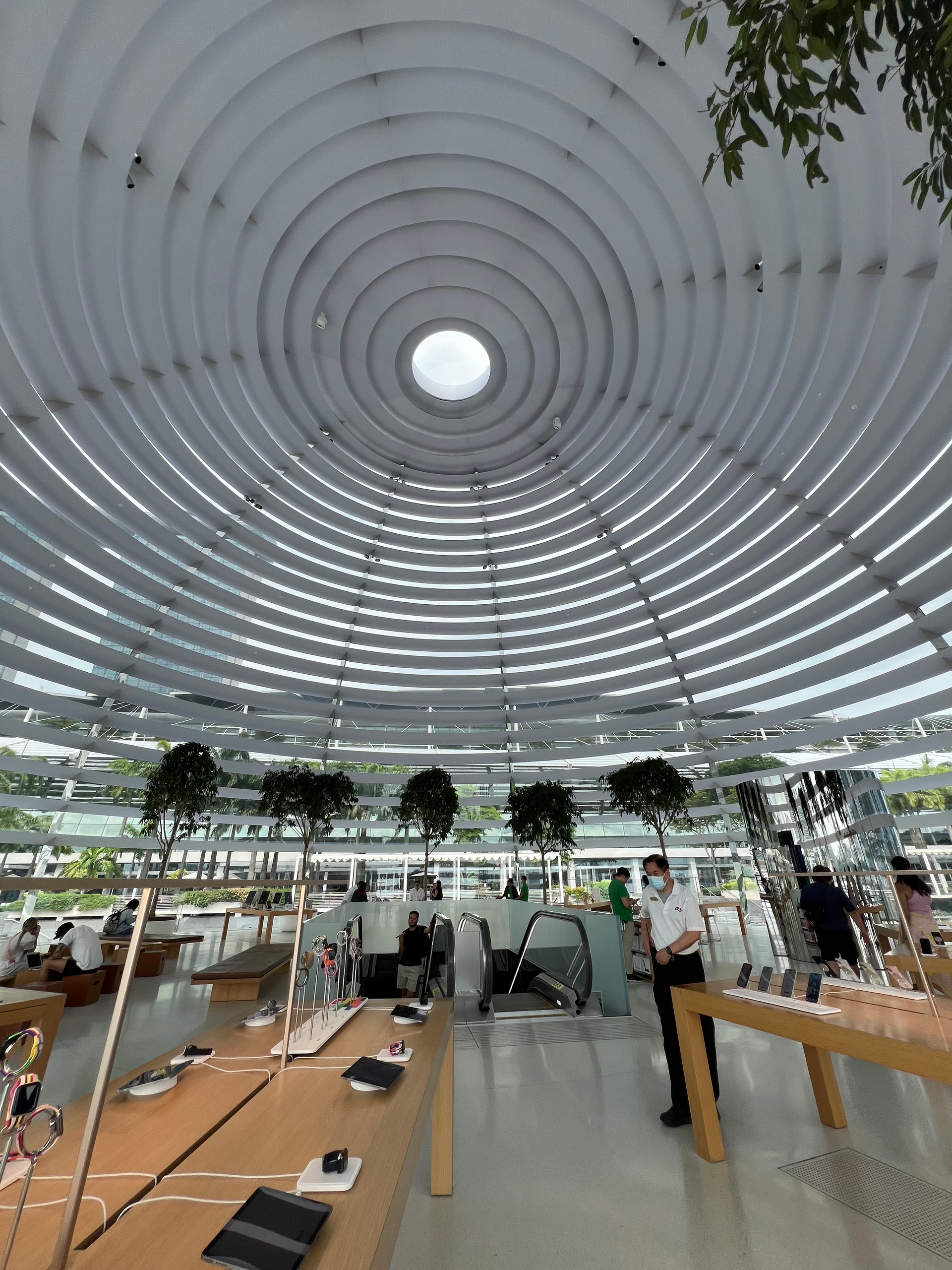
While at Marina Bay, we also visited the Appel store, it was huge, and like its own island off the central path. You had to access it from below Marina Bay Sands. This really shows ultra consumerism, who really needs a new iPhone of laptop every single year?! I know some people who do that and thats just sad for the environment and their wallets. It was a cool looking store though, I will give them that.
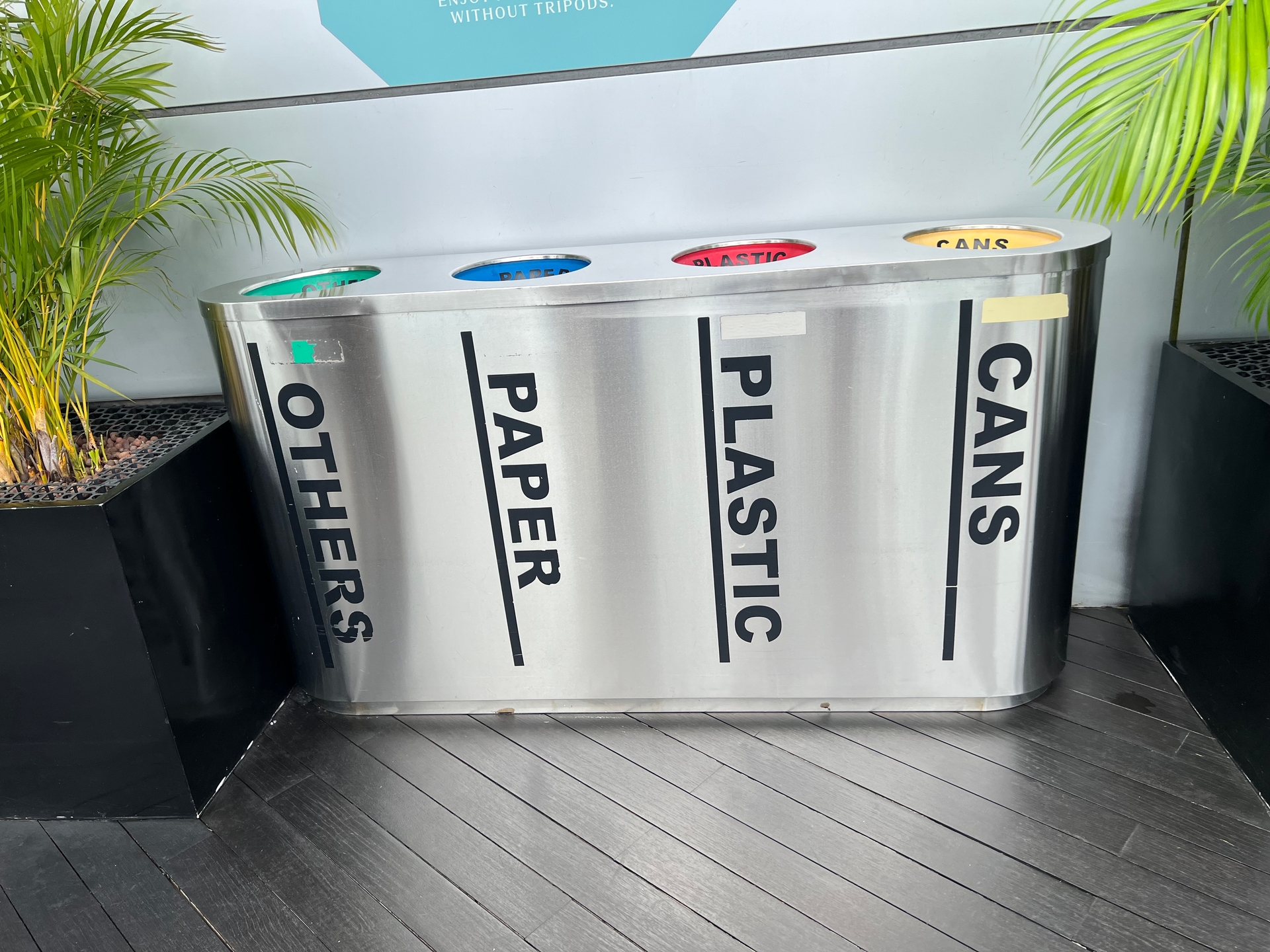
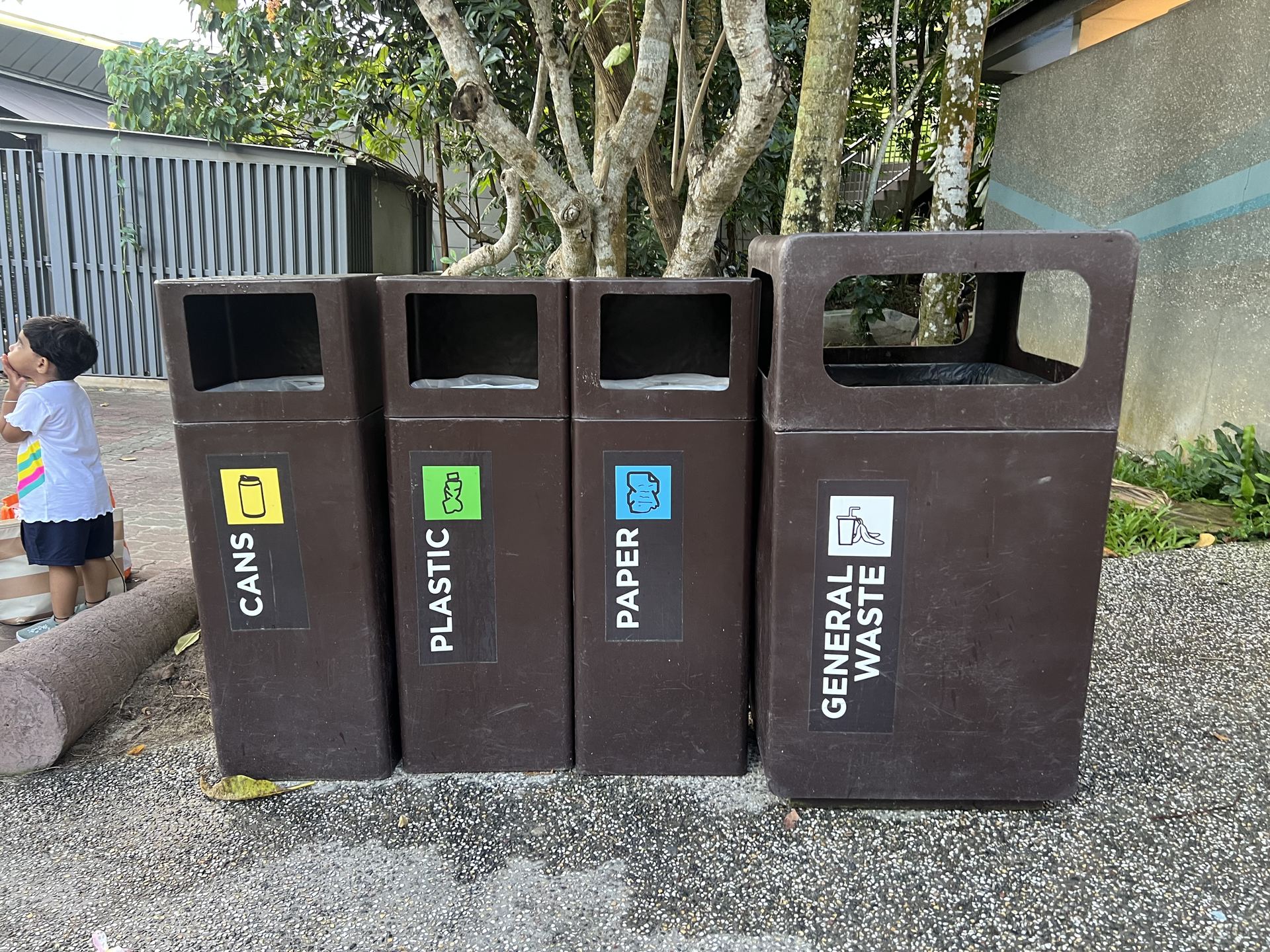
We went up to the the Skypark Observation Deck to check out the view for a bit and I found waste bins up there that were cans, plastic, paper, and other. I've never seen such separation before in LA or CA. Knowing that SG burns most of its waste, this is helpful information as the metal can be separated now, as well as the other things that can be recycled.
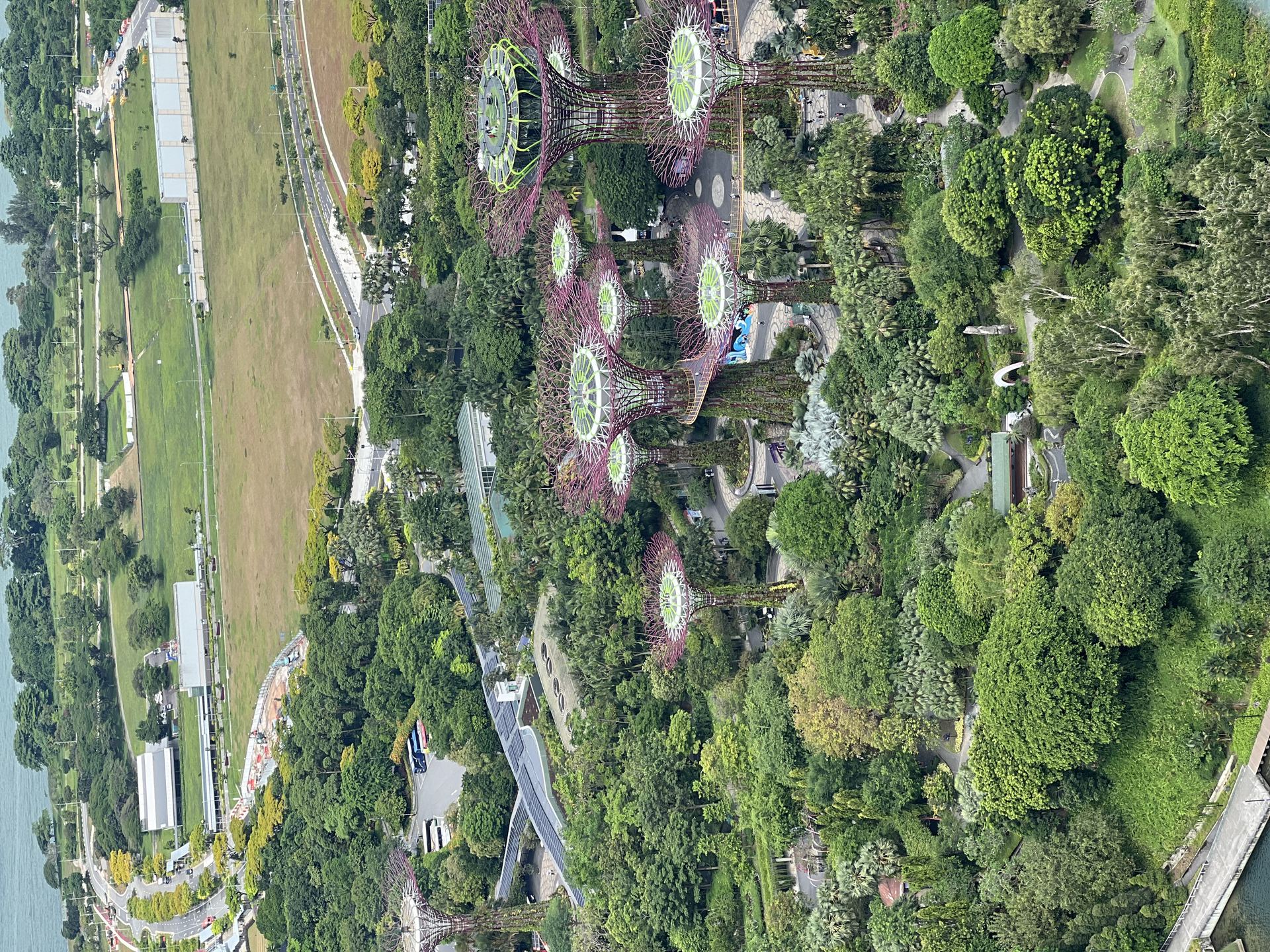
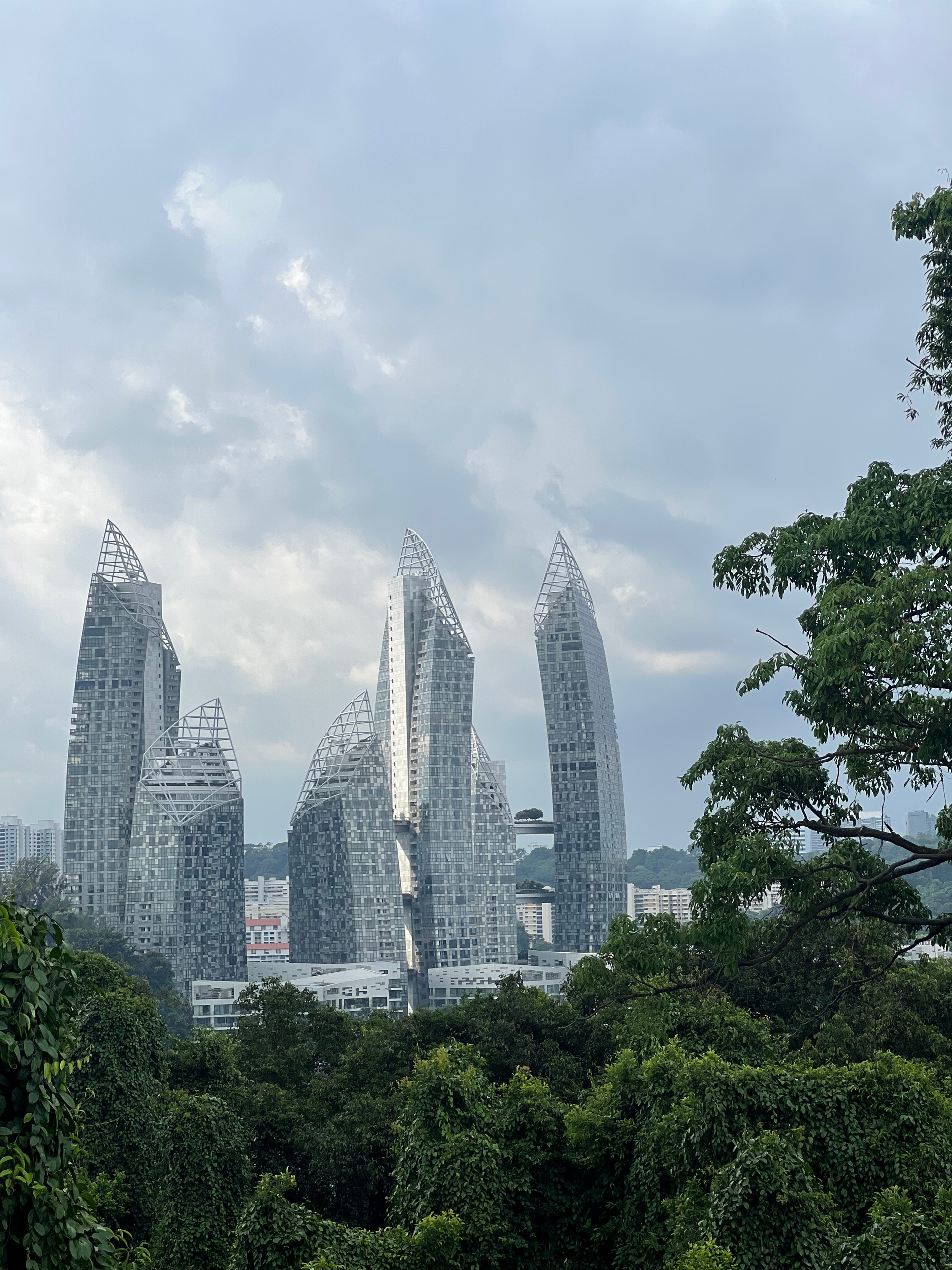
For the tiny island that SG is, it was covered in so much green, it was beautiful. Even though it is a concrete jungle in its central area, there is still just so much greenery everywhere, this also is due to the climate of SG compared to a desert like CA.
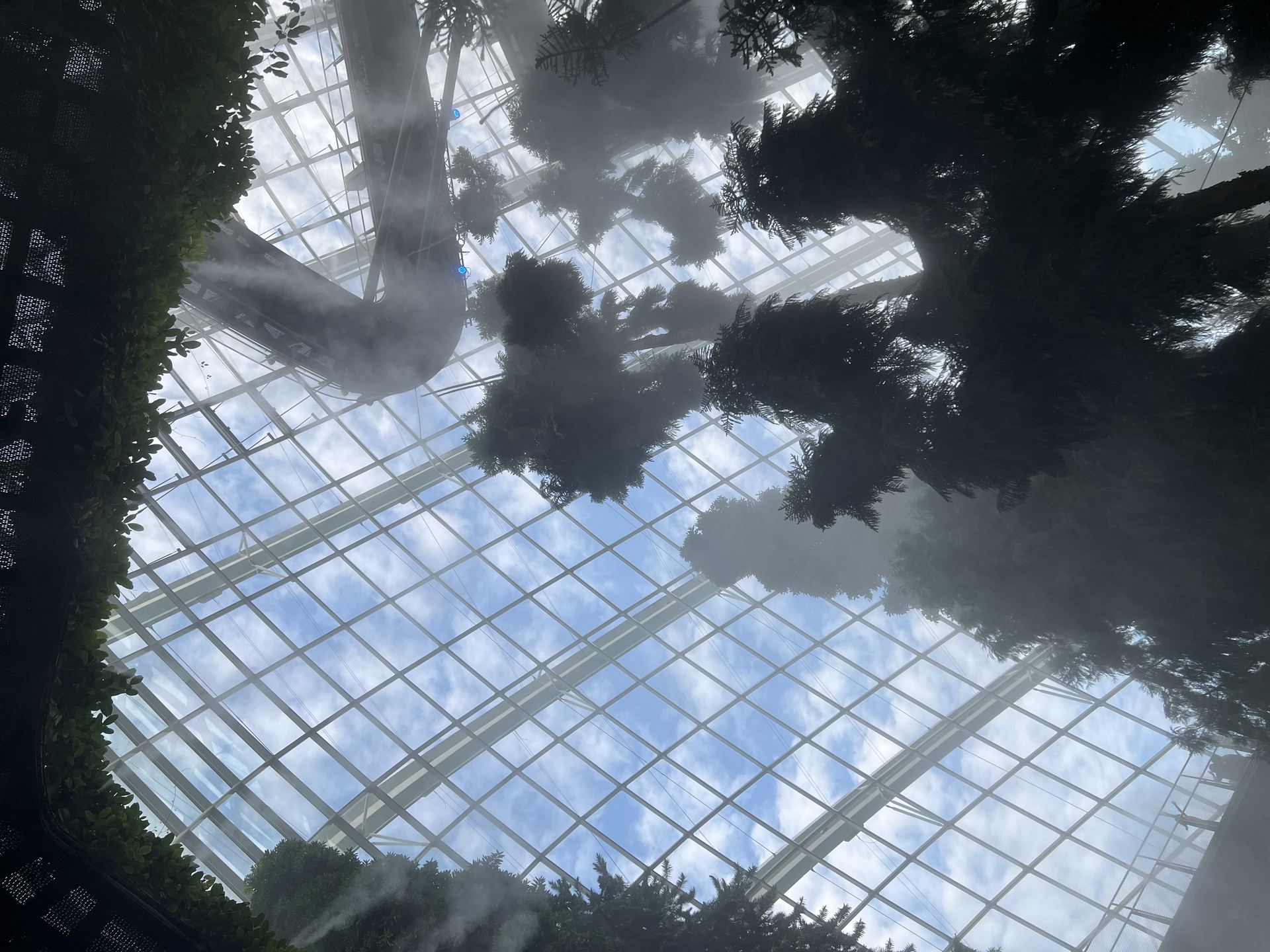
We went to the Flower Dome and Cloud Forest Domes nearby, and they were beautiful. These domes are the worlds largest glass greenhouses! They feature Mediterranean and arid-region plant life, as well as tall indoor waterfalls, lush vegetation, and revolving exhibits on climate change and biodiversity. The air in there was crisp.
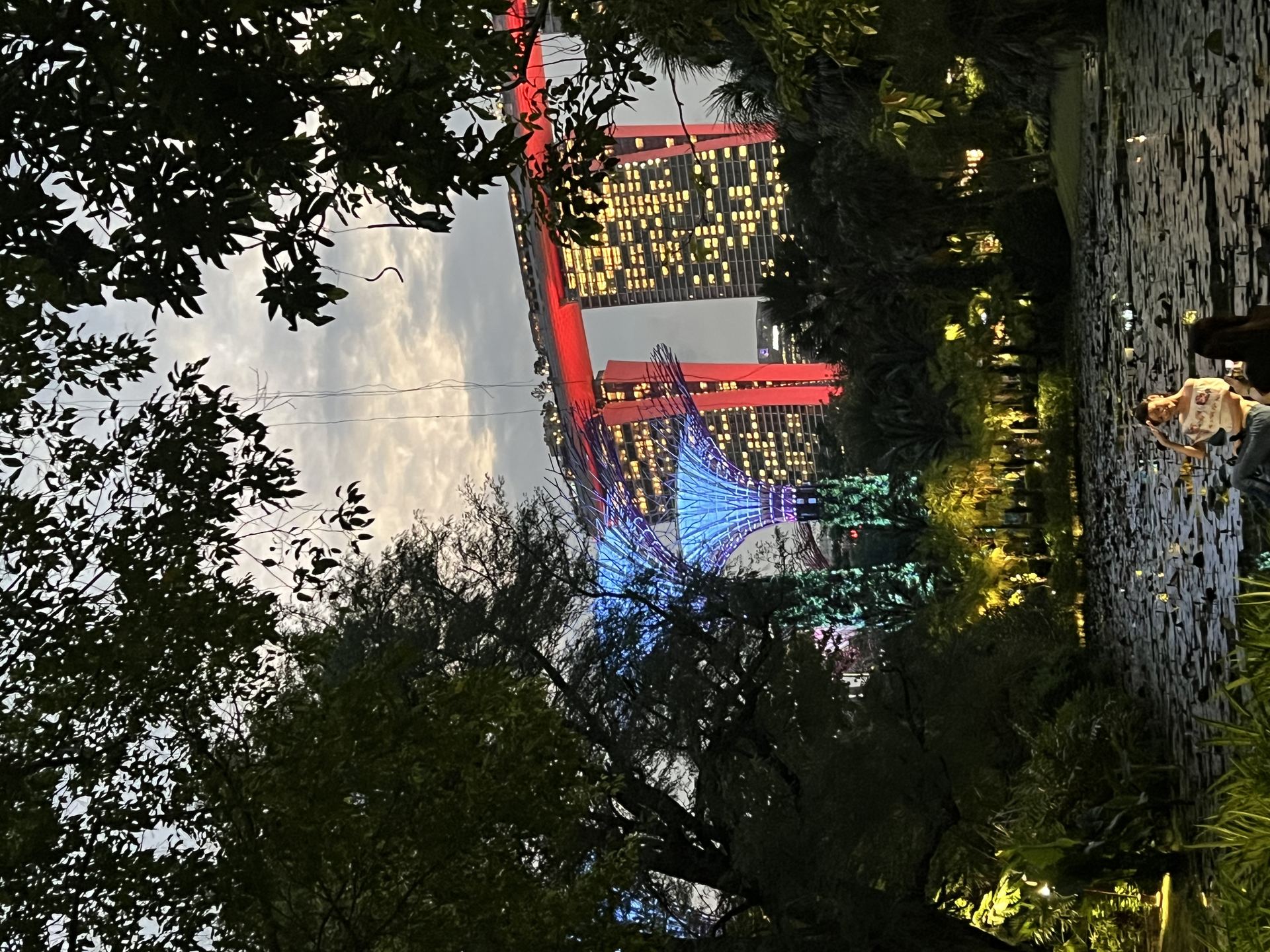
After the domes, we visited the Gardens By The Bay, these were huge and also very beautiful. There were lakes with lilies, palm trees, abundant greenery, and just picturesque views all around.
The connection of nature to humans here is immense, the most I have ever seen, this might cause the rhetoric for sustainability to resonate a lot more with people compared to say somewhere like LA where nature and wildlife aren't as prevalent everywhere they go.
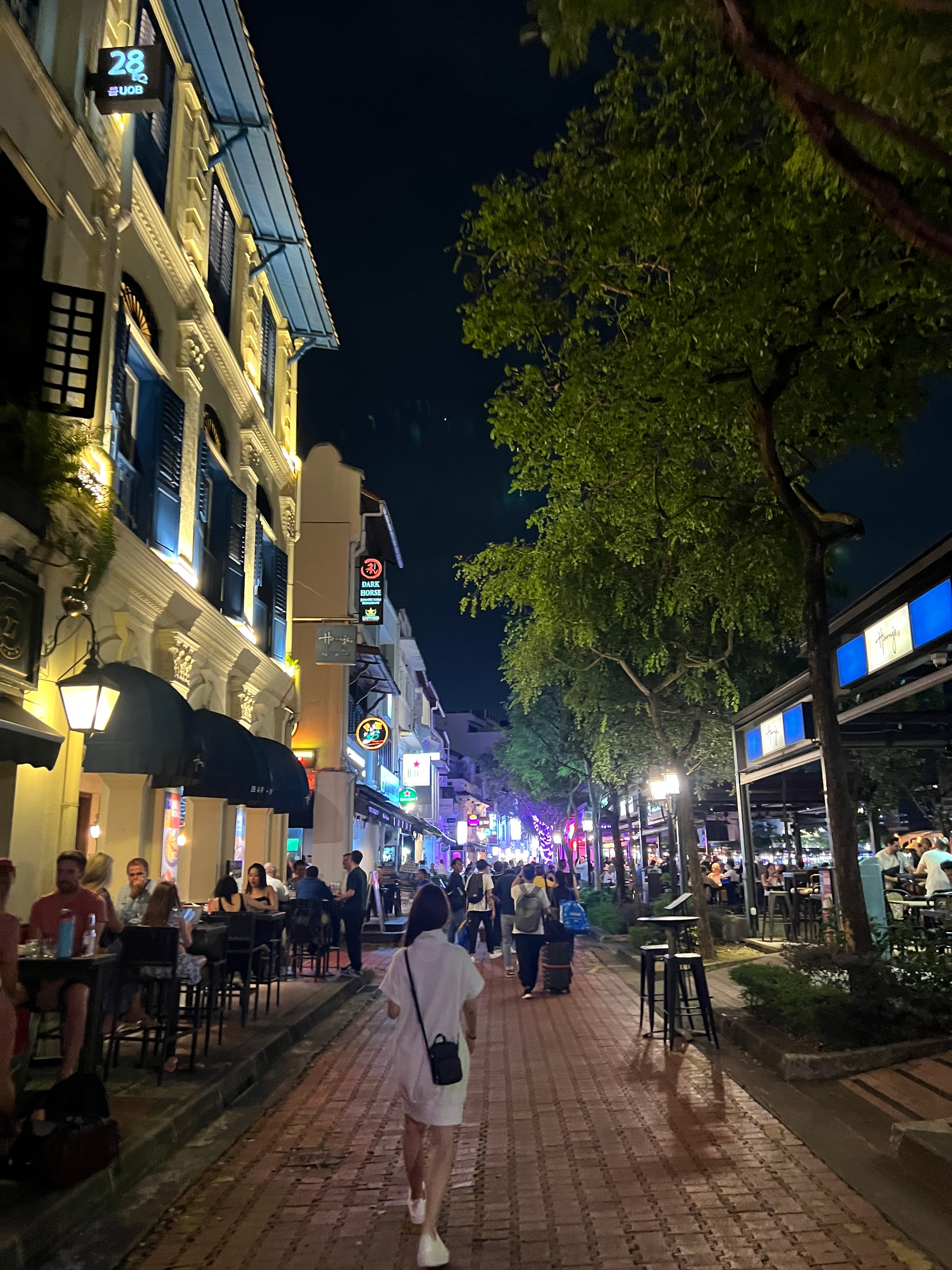
We had dinner at Boat Quay, it was pretty good, they gave us reusables as it was a sit-down restaurant. However, they did include a plastic straw in both Prachet and I's drinks.
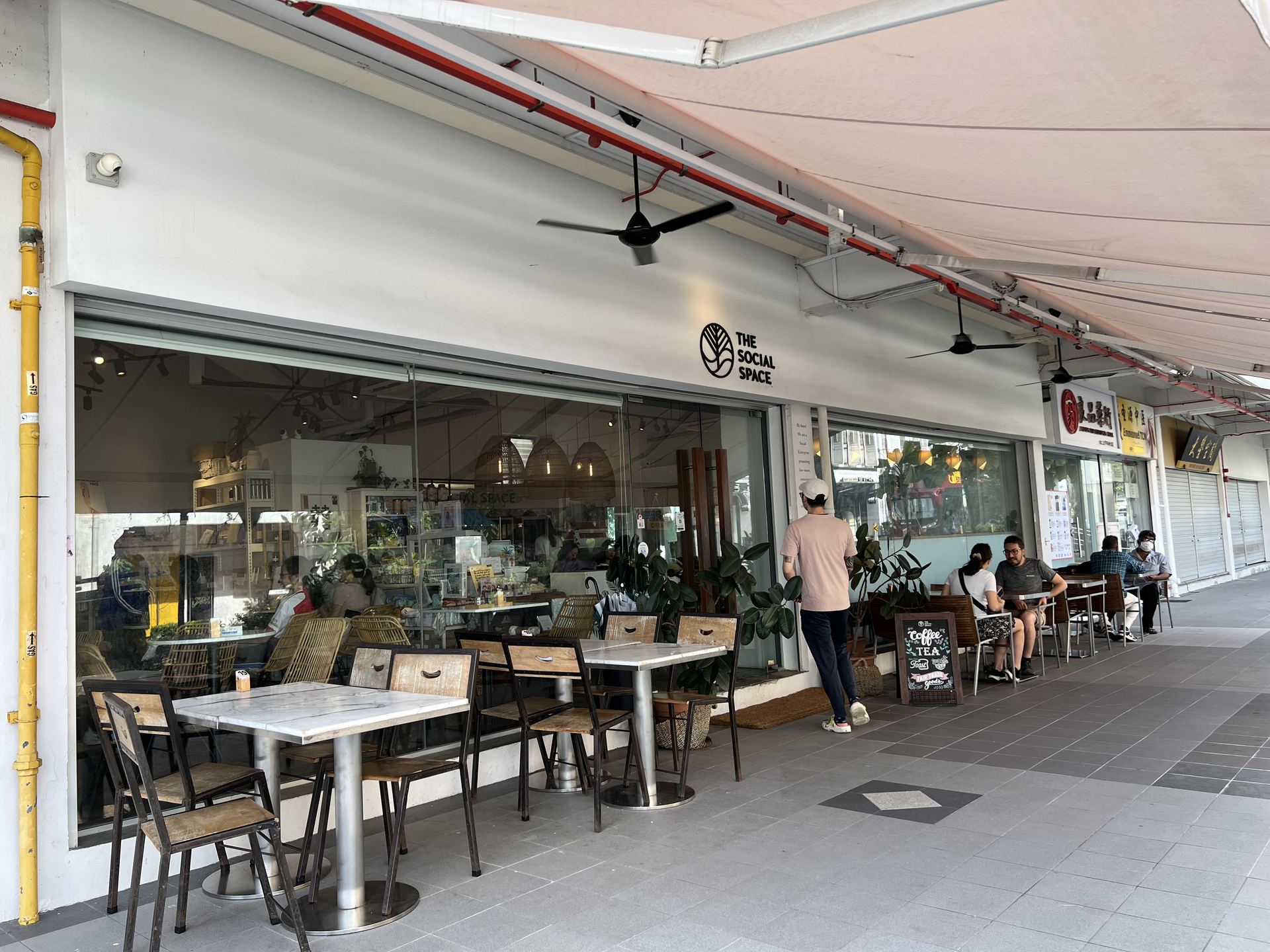
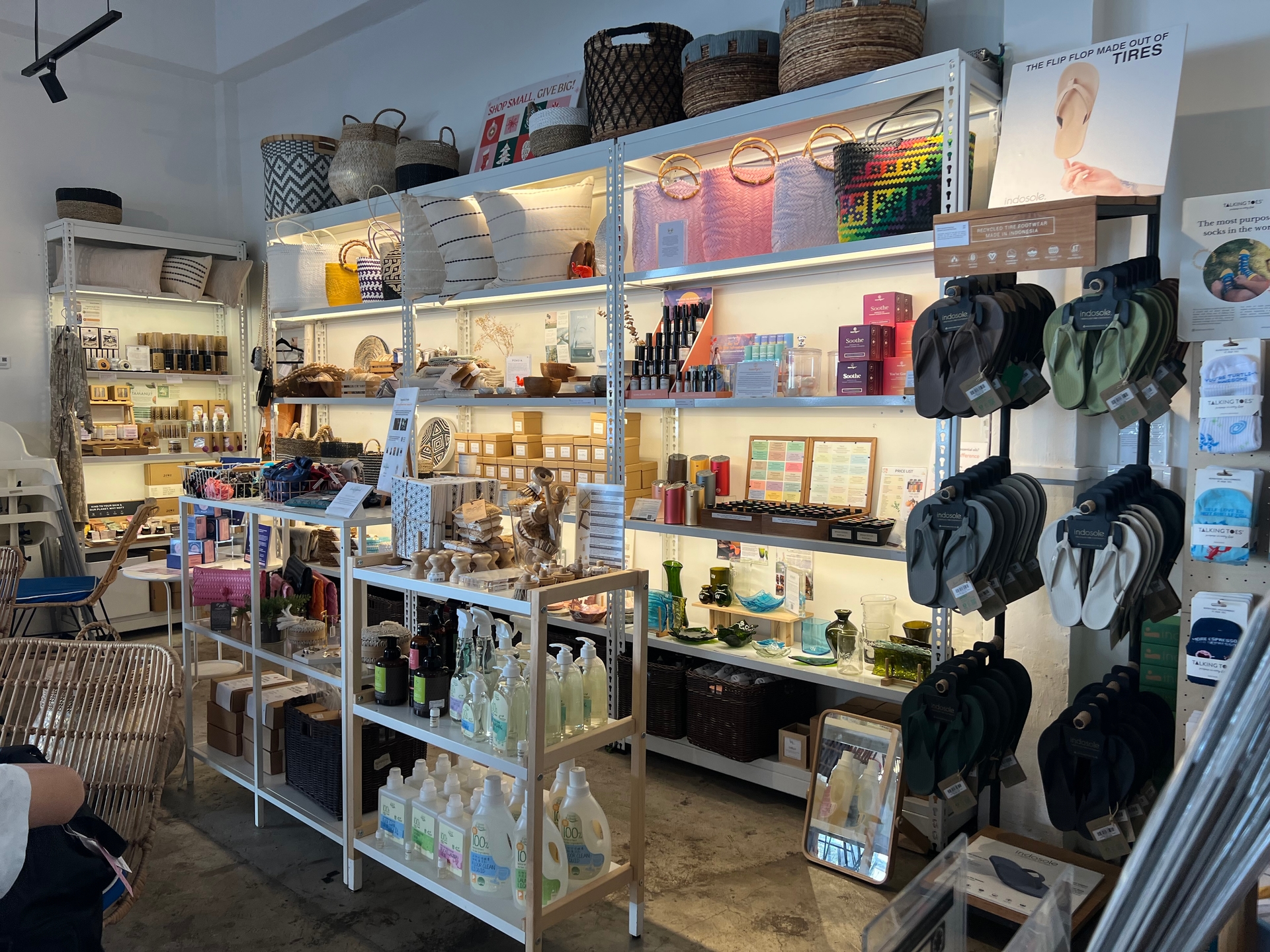
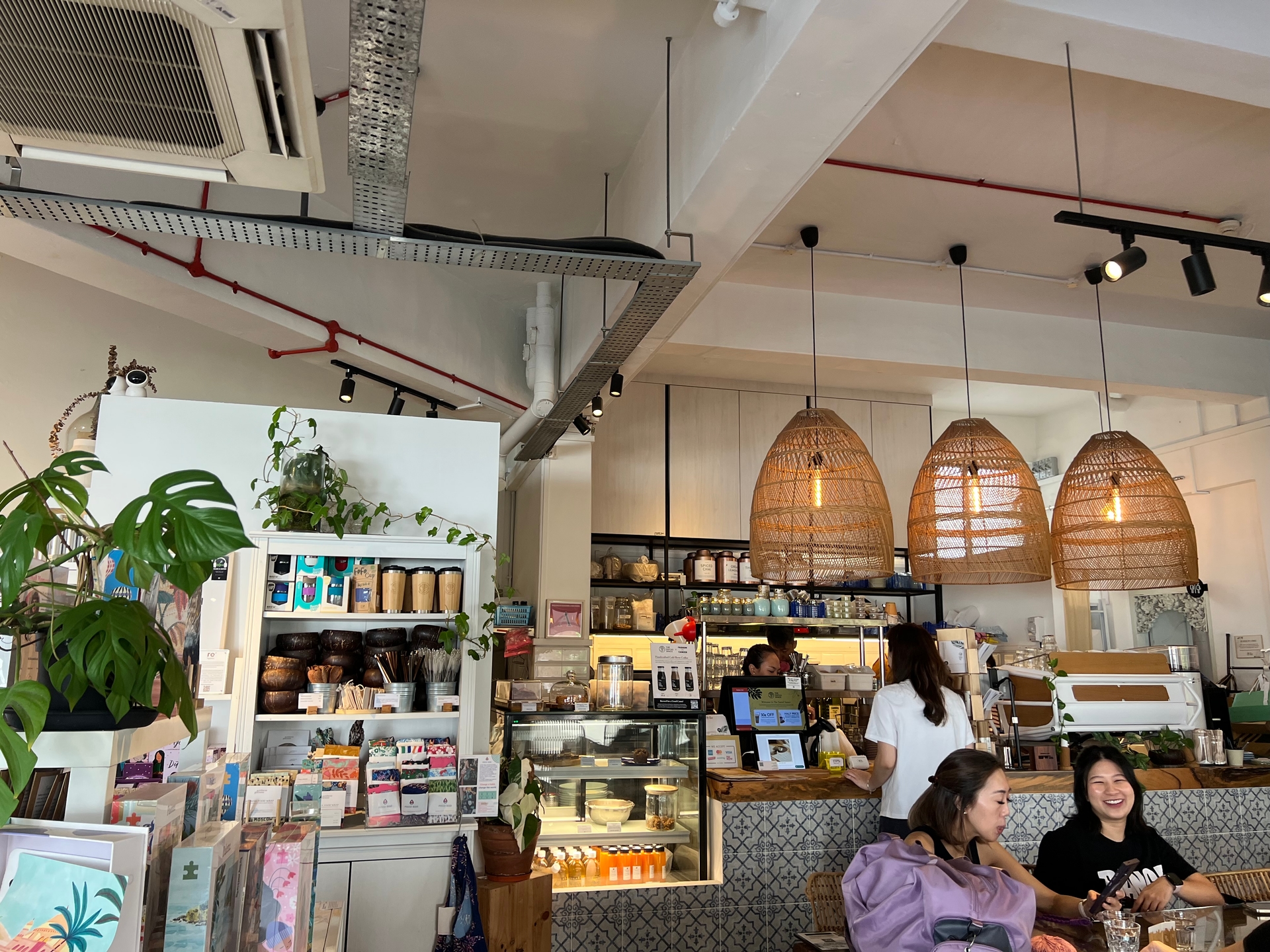
The next day, I went to The Social Space, which wasn't much of a walk from my hostel in Chinatown. I did get lost trying to find it, as I tried going through a 'short cut' that I thought I had found on the maps, but i just ended up at a youth ballet recital... I finally made my way to it and it was a nice little space. It was a café and sustainable store. They sold items like recycled tire flip flops, essential oils, eco cleaning products, candles, reusable cutlery and tableware, reusable cups and straws, recycled glass vases, natural makeup, and other sustainable products for home, beauty, and body.
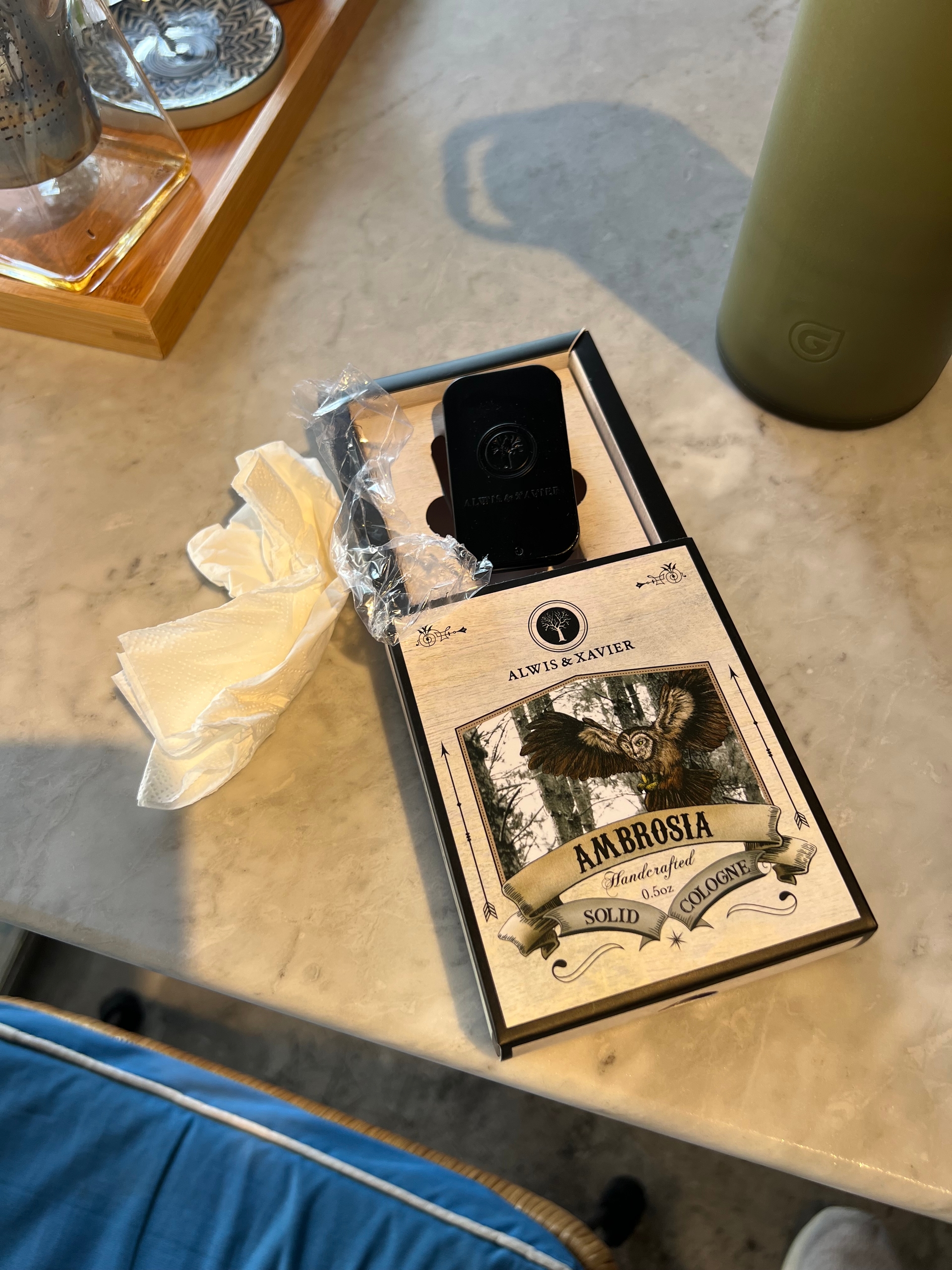
I purchased a cologne because the one I had brought with me, which was from a ZW store here in Claremont leaked in my toiletry bag as it is in a liquid form. It smelled good, honey tobacco, but I guess its not good for transportation. Being from a sustainable shop, I thought it would be more sustainably packaged but it wasn't the best packaging job. It came wrapped in plastic within a printed on, plastic x paper box. The plastic might be for the proper retention of the scent and to make sure it doesn't leak if it melts or something, but maybe paper wrapping might be more eco-friendly, as I carried it around with me outdoors and indoors all day in SG and it never melted.
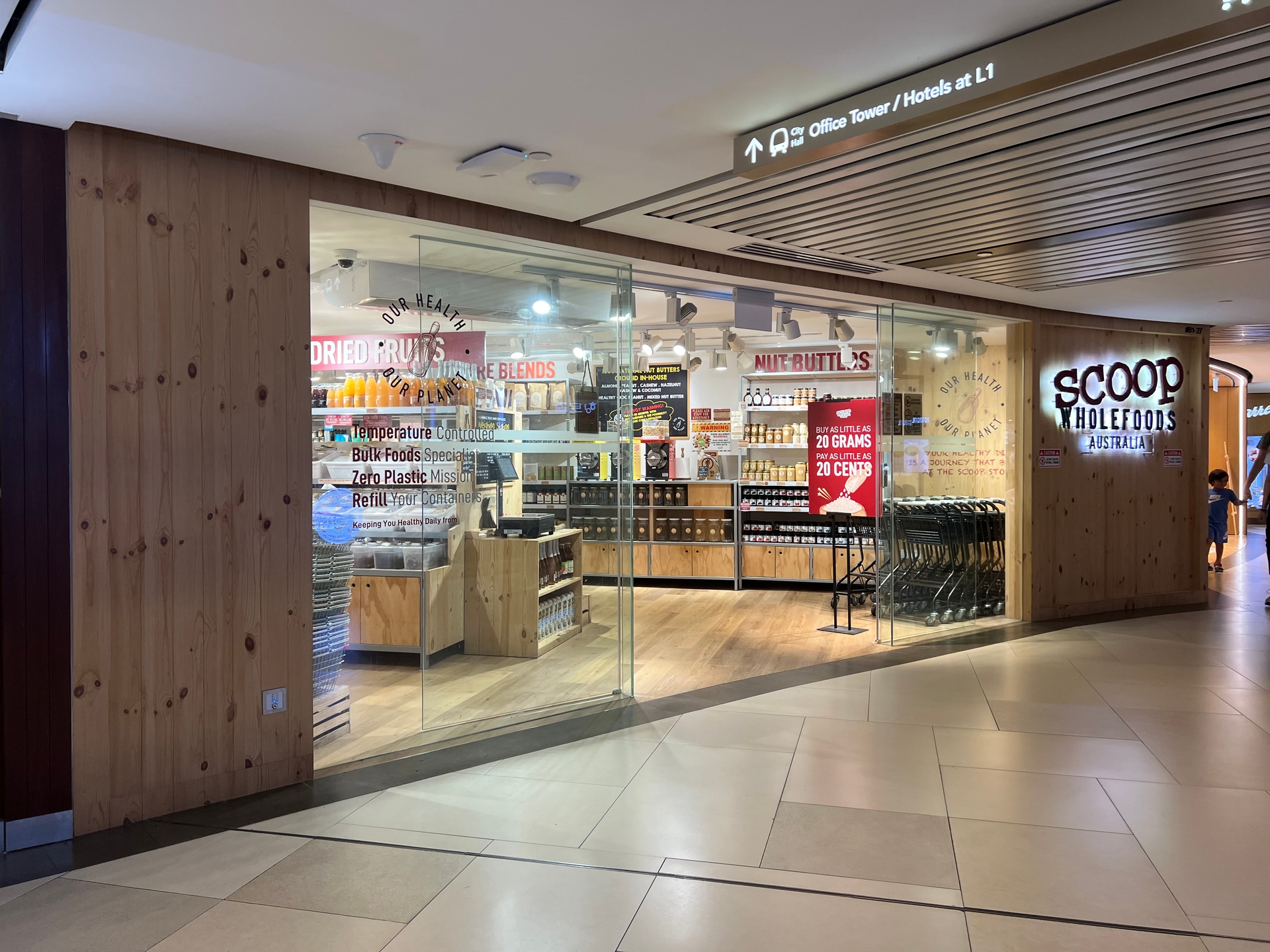
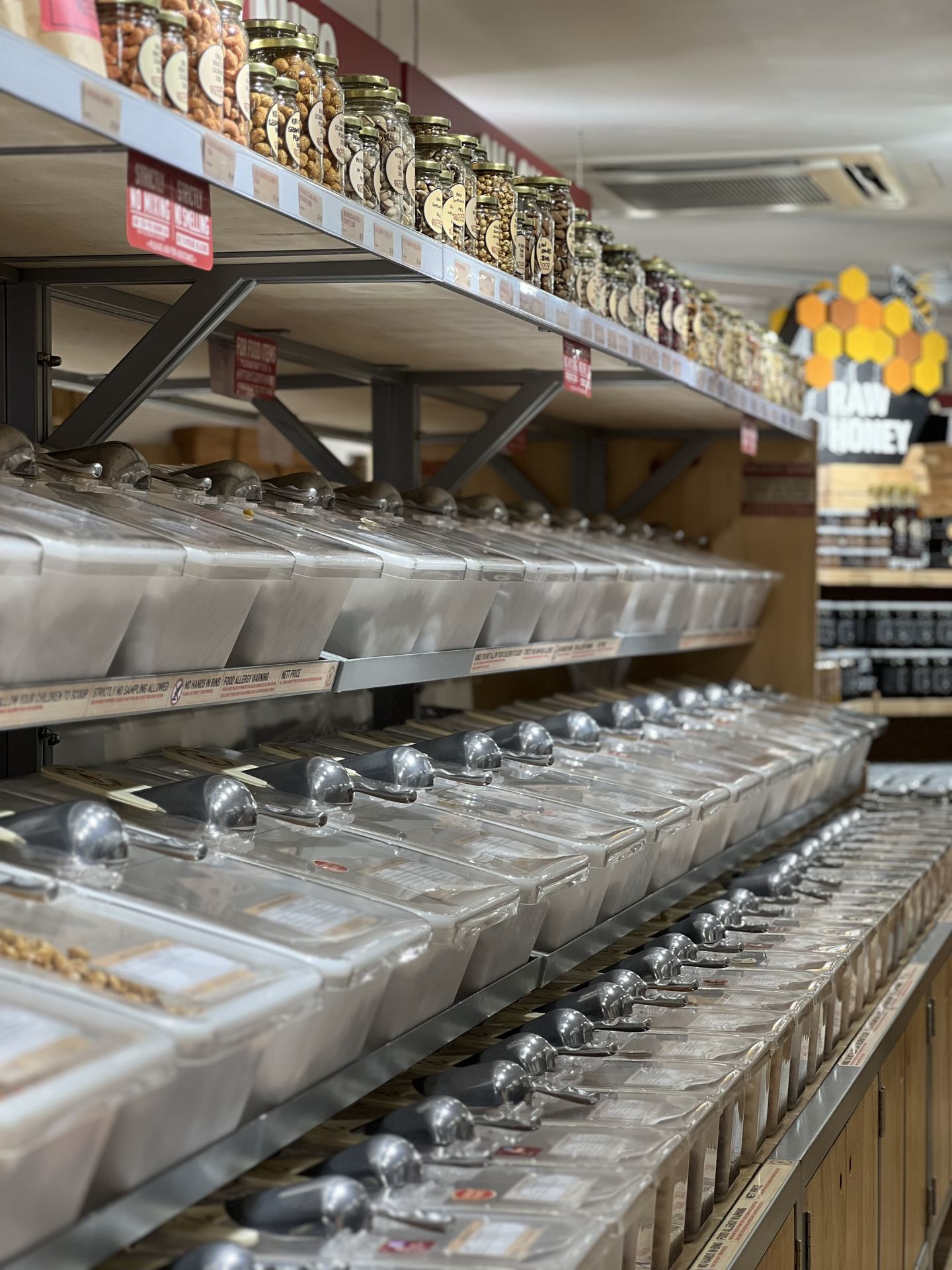
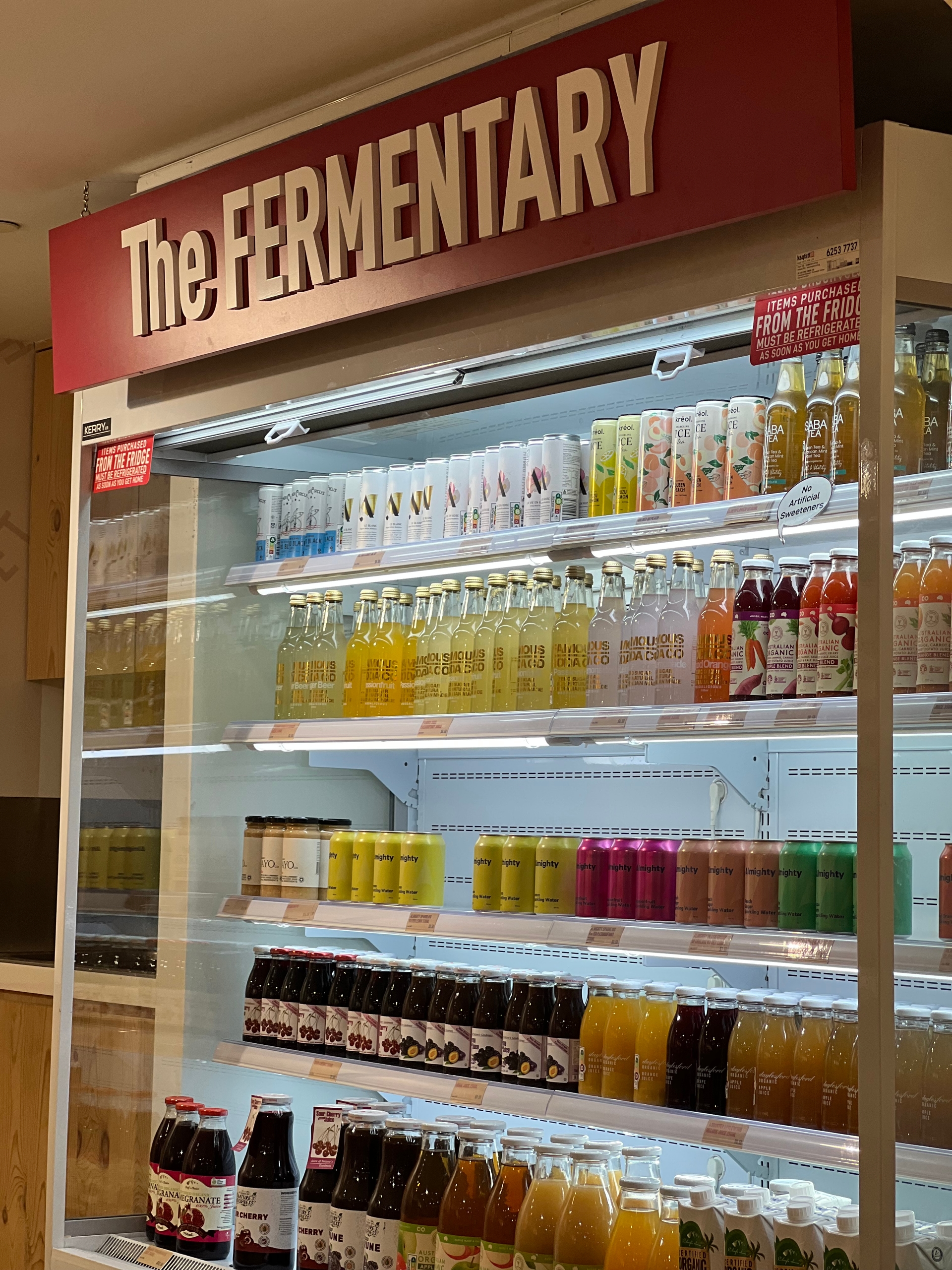
After this, I visited Scoop Wholefoods Raffles City which was located in another mall, I don't think that the ZW stores in malls is the best idea for ZW store in LA/CA as I believe it would be less convenient for the average consumer, but for the land space of SG, this model does make more sense. This store is from Australia and is a ZW organic grocery store offering bulk whole foods(no surprise), like grains, legumes, snacks, fresh nut butters, and pantry staples as well as eco friendly home and personal care products. They also offer island-wide delivery over a minimum spend. It was really a nice ZW store, it was all very well branded, minimalist (sort of), simple and easy to figure out whats going on. They also have a 'fermentary' section with things like kombucha, food products and other fermented goods. These sort of stores really should be everywhere, they would eliminate os much packaging, food waste, and harmful plastics and chemicals from our food and retail consumption habits. Hopefully they would also make other consumers like myself, just feel good and happy whenever we shop at ZW stores.
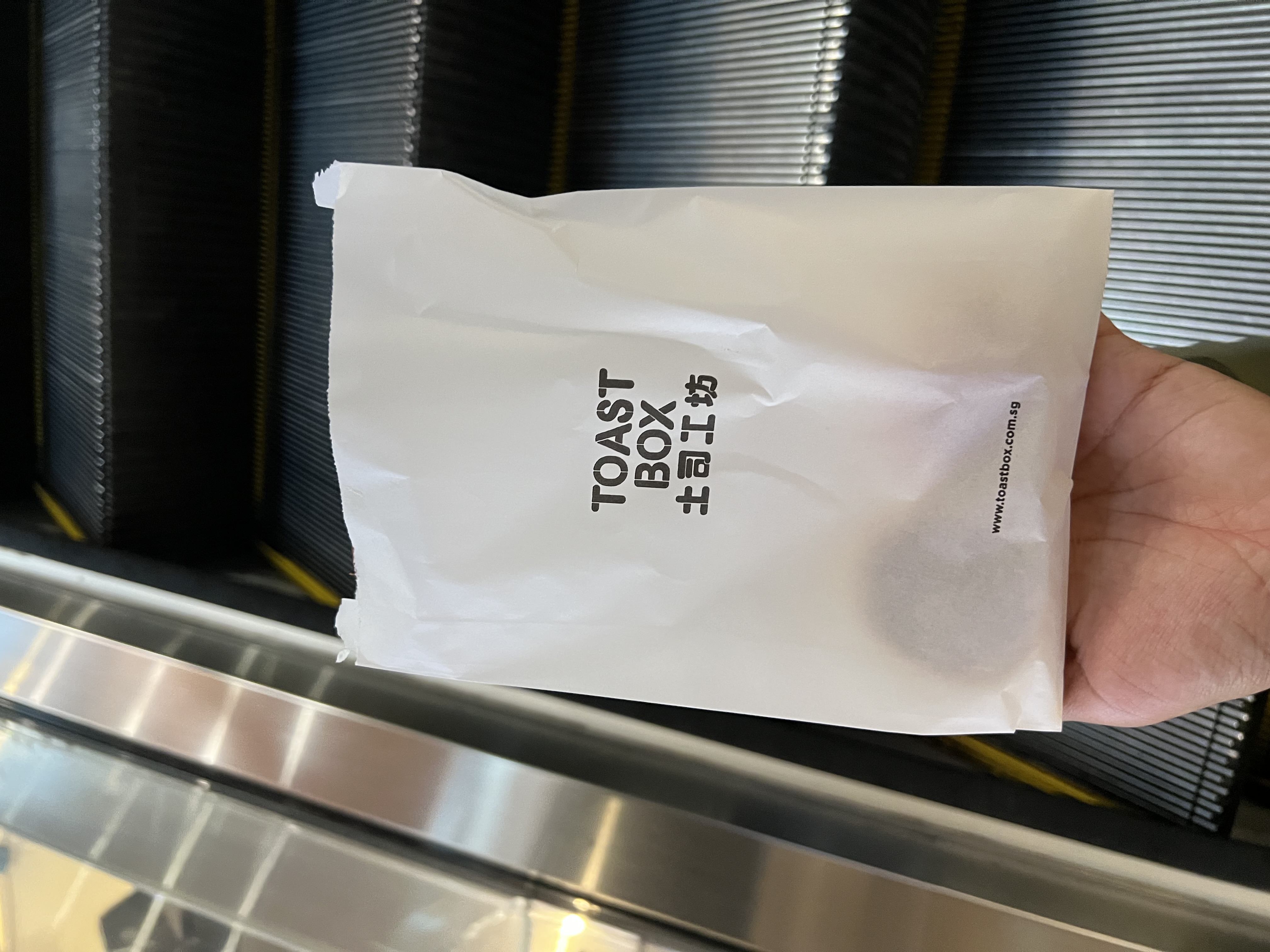
For a snack at this mall, I purchased a small pastry from Toast Box, a very popular chain here in SG, I've seen them everywhere the pastry was good and came in a white paper bag, maybe they can make these compostable so that they can be composted.
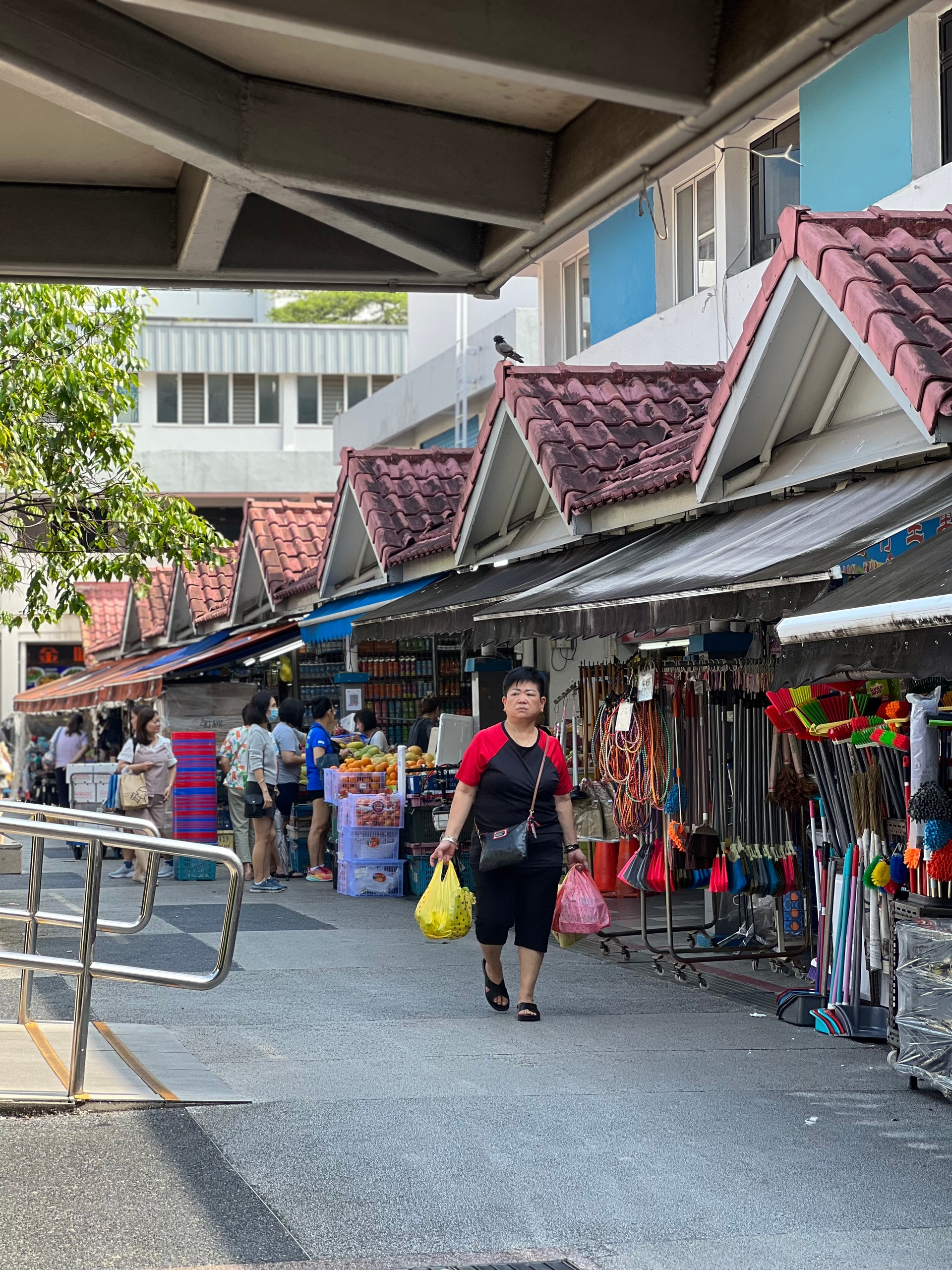
I had forgotten my glasses on my first flight, which was from LAX to Korea. I'm pretty sure that I left them in the seat pocket of the back of the seat from seat in front of me. I would have gone back to get them but I had to catch my next flight which was to Japan so I didn't have the time. I was without my glasses in Japan and China but Prachet said that he could take me to his glasses guy that he goes to, and I definitely took him up on that offer as it was indeed slightly hard to see. We took the metro to an HDB that was around 1.25 hours ride from Marina Bay Sands, the surrounding neighborhoods were a lot of HDBs. The units were in good condition, and the ones that we went to, which Prachet said was normal, is that they have a space on the ground floor which is open for people to hang out and keep in community. Here, I saw lots of plastic bag usage at the little convenience stores that are also located at the feet of the HDBs, which makes shopping for essentials, and honestly most things, but I did see a lot of plastic bag usage for these shops.
We went to his glasses person and I bought some glasses with metal frames, to try and keep on the sustainability train. I picked them out, he gave me an eye exam, and I was ready to go in 30 minutes! That was insane to me, I had never had glasses done that fast. As we were leaving, there was a fruit and veggie stand in this area we were in, and I saw that some fruits came wrapped in plastic, I think this is very sad, I get that its to preserve them, but in the first place, they maybe shouldn't be in this climate to start off with, seasonal shopping for foods is important to mitigate carbon emissions and the farming of non-native crops that can hurt the soil and habitats of where they are being grown. Also, this must be so much plastic usage! I hate to see fruits and veggies at the grocery stores in LA wrapped as well, like at Trader Joes there are cucumbers all individually wrapped, or apples, pears, and others that come in packs of 2 or 4, that are also in plastic boxes! They should just be individual and if they get a slight little bruise, that doesn't change the taste of the apple or pear, I recall doing a project in high school where we found an ungodly amount of food is thrown away by grocery stores just because it doesn't look perfect for consumers... insane.
Prachet graciously provided me with some very helpful information for my project while we made our way to Sentosa Island.
Everyone air drys their clothes, even wealthy families
HDBs (Housing Development Board) are the nicknames of the large groups of public housing buildings where the majority of Singaporeans live (just like the ones I saw in China)
These housing facilities are government owned and provide subsidized rent, they are also income capped but different buildings/units can cost differently based on one's income.
These seem more sustainable than what we have going on in America/California/LA with our suburbs, yards, and large houses due to HDBs usage of land, or the lack thereof.
We pretty much went around all of the central part of SG, so we made our way to Sentosa.
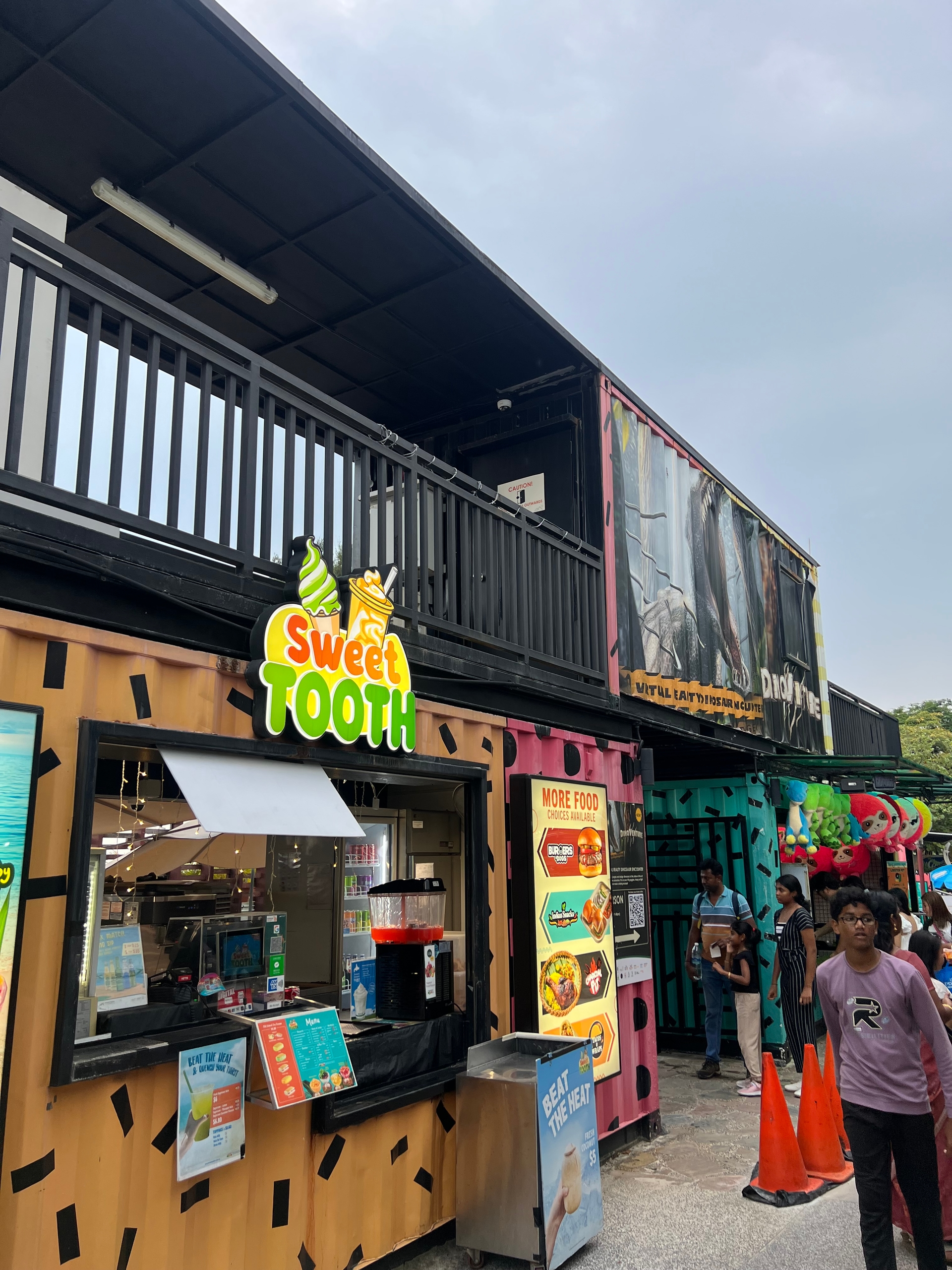
The island was mainly forest, which was awesome, I saw some really cool skyscrapers from here as well as sustainable stores, systems, and up-cycling. As we walked around, there were many stores, however, these stores were made from old shipping containers! This is, I think the first time that I have seen this concept in real life. I had read and watched videos about people flipping shipping containers into entire homes, with bedrooms, living rooms, patios, and everything that a home needs, I have also seen them been turned into tiny homes and little store fronts. Here, they were stacked upon each other and one container was one store, for example an ice cream and desserts stores, and another was a carnival game booth. This is very sustainable design, as its reusing something at it's 'end of life'.
I also saw a plastic bottle plant wall that a café here had. It was cool, I still don't know how they put it together or how it functions exactly with water delivery, but it is darn cool. I feel that this helps people connect more with their waste instead of the usual disconnection that most people have with the items they consume: purchase, use, toss. In this system, and many others in this day and age, the vast majority of consumers/people are blind as to how the item(s) that they are using or consuming are created and dealt with after they throw them away. For example, to make a water bottle, you need to drill for petrol, make plastic pellets, form the bottles, package the bottles, then once disposed, they need to be sorted, cleaned, melted, turned into pellets again, and metled and formed again to be made into something else. This example includes just a fraction of the steps that actually go into making a plastic bottle, and of course there is the use of energy creation of emissions, labor, heat, pollution...
One thing that I have been doing on my trip was taking pictures of the waste bins that are in each place I visit. These have been interesting to note, weather they include compost, recyclables, burnables... as if you just have a trash can, which is most common in the states and LA, this all sadly goes to landfill.
On the island, there was cans, plastic, paper, and general waste, which is pretty good as they primarily use incineration which, so far I have found to be sustainable, but I have to do more research into that. I also saw a reusable container return box! I don't know what is returned into these, but I am so curious to find out what this is used for as it is just in a public area. I have seen these at the Pomona College dinning hall area for their green boxes, which is cool as well.
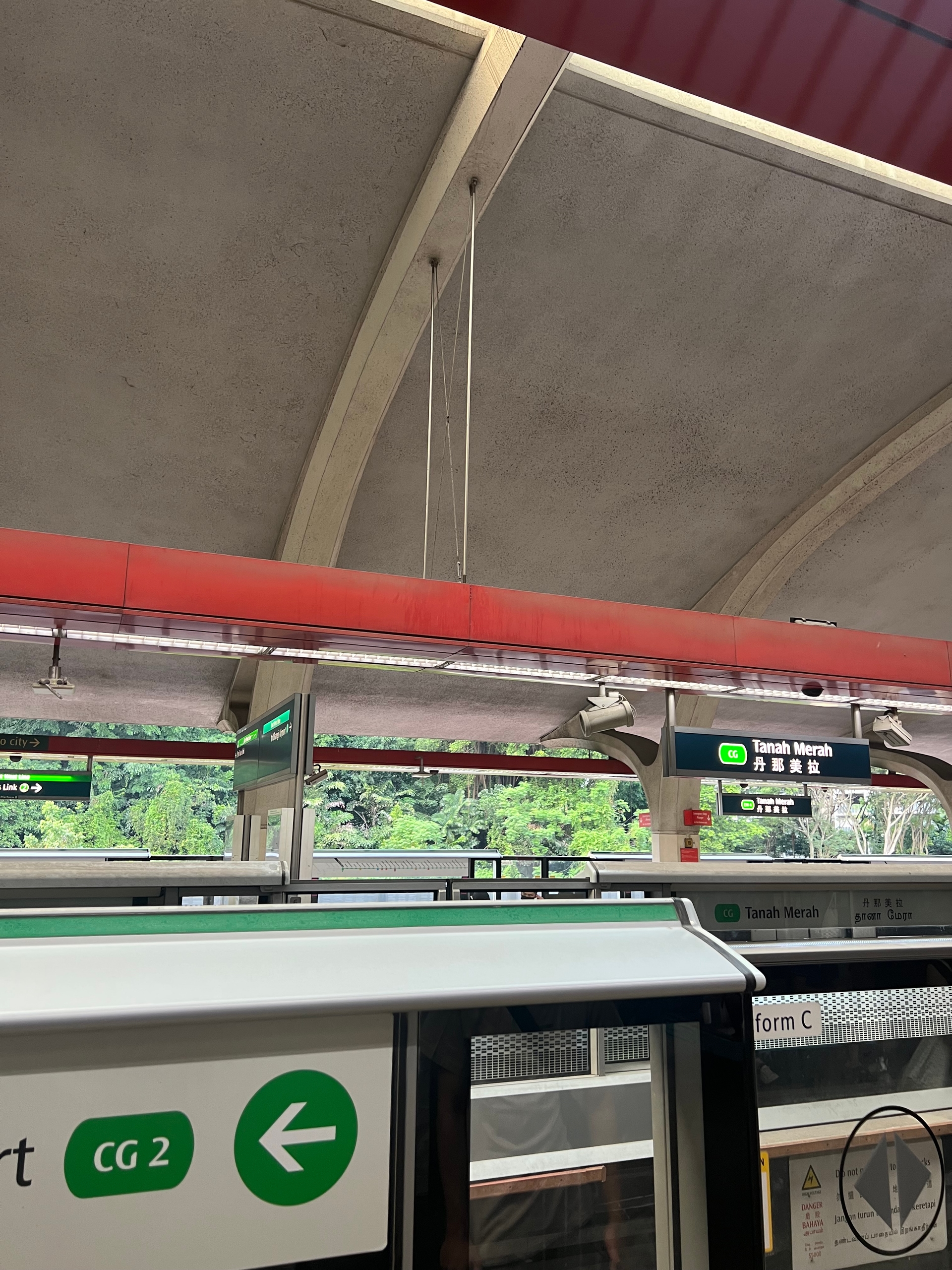
The metro system here in SG is the best one I have been on so far on my trip. There are no tickets needed(which was a beautiful thing, especially after my long days of air travel), you just tap you bank card when you enter a station and then again when you exit a station. You only get charged for the distance that you traveled! This seems like such a smart idea.
Apart from that, the ease of having everything in English, to be specific: British English, was so nice! Which of course is different for the standard language of different countries, and was preferable for me as my primary language is English.
Another great aspect to the SG metro is that they have clearly labeled and unkept floor markings that tell passengers where to stand while waiting to board the metro and how to enter and exit the trains. For example, when waiting for a train you stand on either sides of the sliding doors in lines, with a cleared path in the middle of both lines for passengers that are exiting the trains. Then, when a train comes, the people boarding the trains wait for those who are exiting to exit and then then all go in. I feel that simple things like this are so efficient, as people continue to lose manners and etiquette.
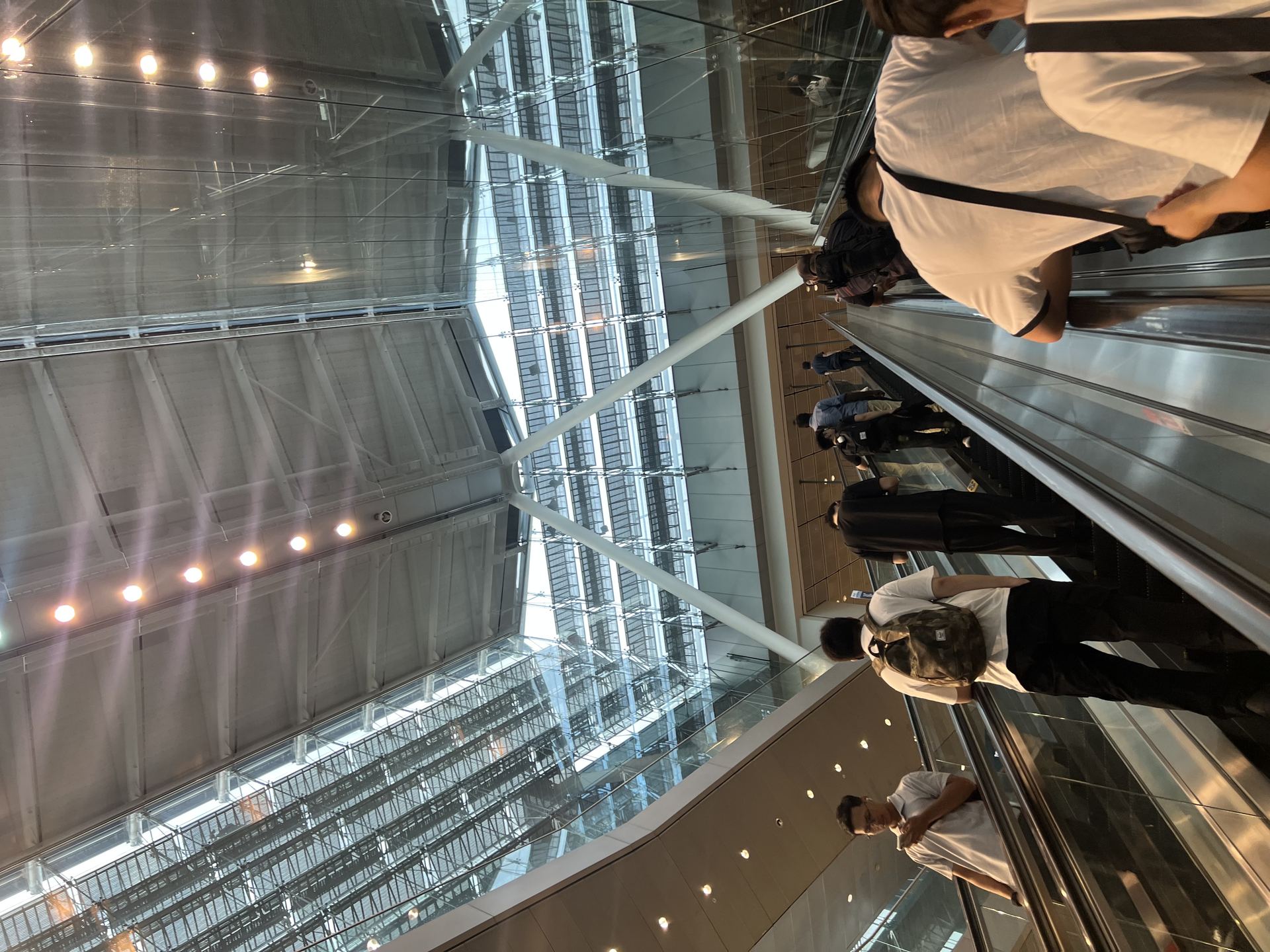
On escalators, there is an unspoken rule where everyone stands on the left of the escalators in single file so that people can pass faster by walking up the escalators on the right is they are in a rush or just feel like it. I love this, and conveniently used the right side a couple of times when I was on a time crunch! This was also something I saw in Japan and is something that the US, CA, and LA should implement asap.
Garuda Indonesian Airlines has been the best airline I have flown on so far. The seats are superb, the attendants are lovely people (unlike some American and even the Chineses airline companies I have traveled with), and the food is good.
All the airplane food that I have had on my travels so far has been delicious. I like the way it feels to eat in this cafeteria-like fashion, I enjoy the separation of it all and the freshness of it.
However, all the airplane food I have had has came in plastic packaging. I completely get the ease of transportation, hygiene. Other disposables that I have seen airplanes carry that are also wrapped in plastic and/or are plastic themselves include: toothbrushes, blankets, slippers, earbuds, hair combs, and headphones. Some people don't even use all these things that are supplied on a plane, like I never used the combs or toothbrushes or earbuds, i did use the headphones once because I had packed them in my other bag which was overhead and I didn't want to make a fuss trying to get it. I reckon that because people have touched these things already as they are given to all passengers, they are most likely classified as spoiled and must be thrown out... so much waste!
The blankets wrapped in plastic seem kind of dumb to me, like they should just wash them and fold them and just place them in a container to keep them clean.
In the city, I saw very very little waste on the streets. But, as makes sense, there was more when we I to the HDB areas but only little things here and there.
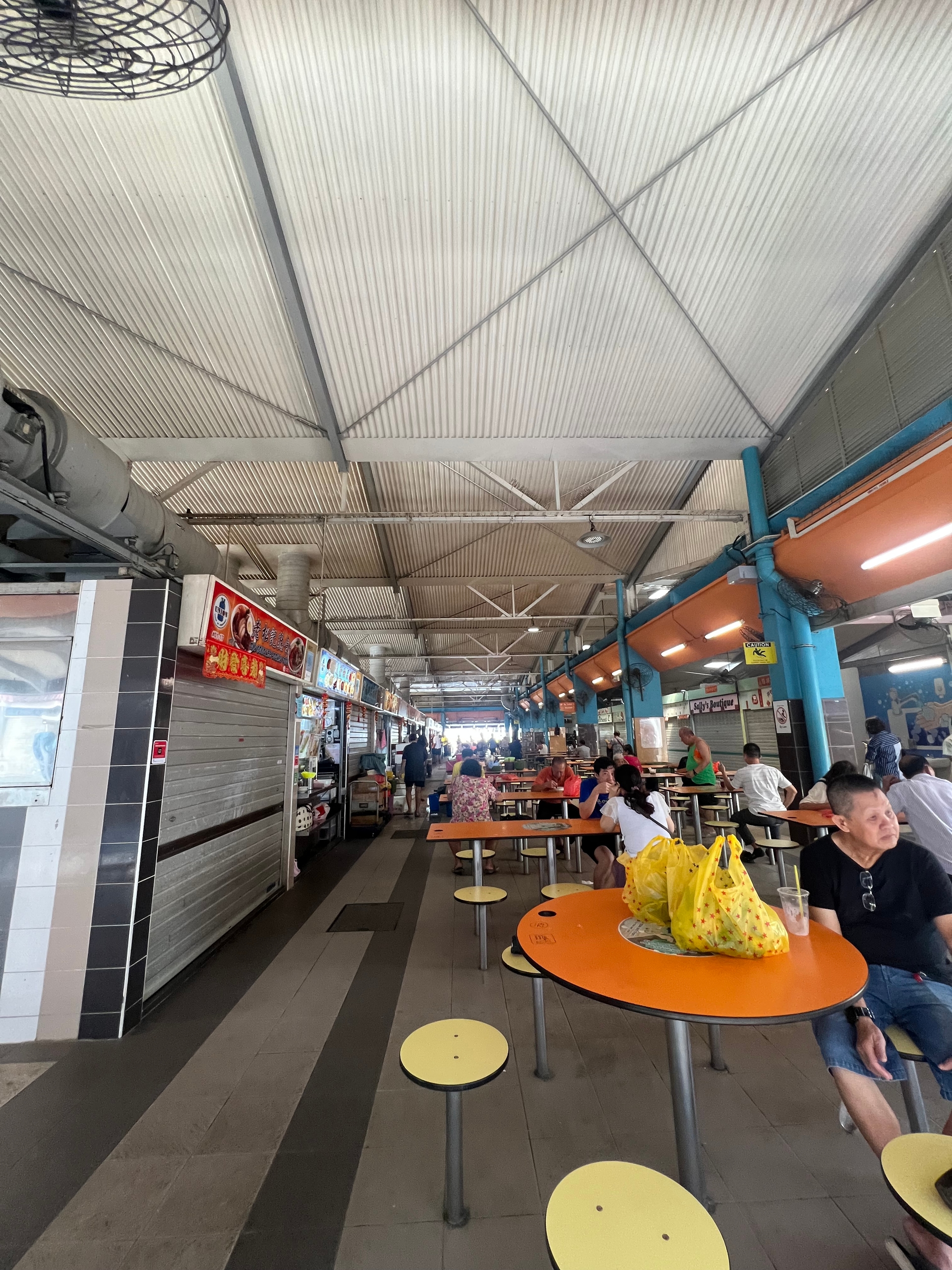
At the real hawker centers, I was surprised that there was so many reusables, well even at Lau Pa Sat they also had reusables but not of course for things like the trendy drinks and stuff. Luckily, tat Lau I brought my Stojo cup with me and the Auntie let me use it for a Sugar Cane Juice, that was my first time having that, Prachet recommended it to me and it was refreshing, especially ice cold in the SG heat. On the subject, I have seen many (mostly Chinese(I think) people carry around small metal bottles which I assume is for their hot water or tea. This was a slight culture shock as I had never seen people do this except for one of my friends at CMC, shoutout Angee. The carrying around of these bottles seems sustainable as you don't use disposables, most likely due to the fact that they wont keep your warm drinks warm, and secondly because its plastic. A common theme I've been noticing everywhere is that sustainability can’t win if it doesn’t match the speed of convenience. To get back on track, the real hawker centers have reusable trays, plats, and cups that I got my food in which was cool! Prachet told me that hawker center food is supposed to be inexpensive, these centers are located at the feet of HDB's and is where most Singaporeans eat, he told me that most SG's don't cook at home but instead families have stands at these centers where they make food and sell it. That is also completely different from America and CA I feel like because I feel that most people in the US cook at home.
The use of reusables is jsut another plus on top of these family businesses! I did see however, lots of plastic bag usage and disposable cutlery of course because those are probably harder to come-by, purchase, implement, and/or reuse for these businesses.
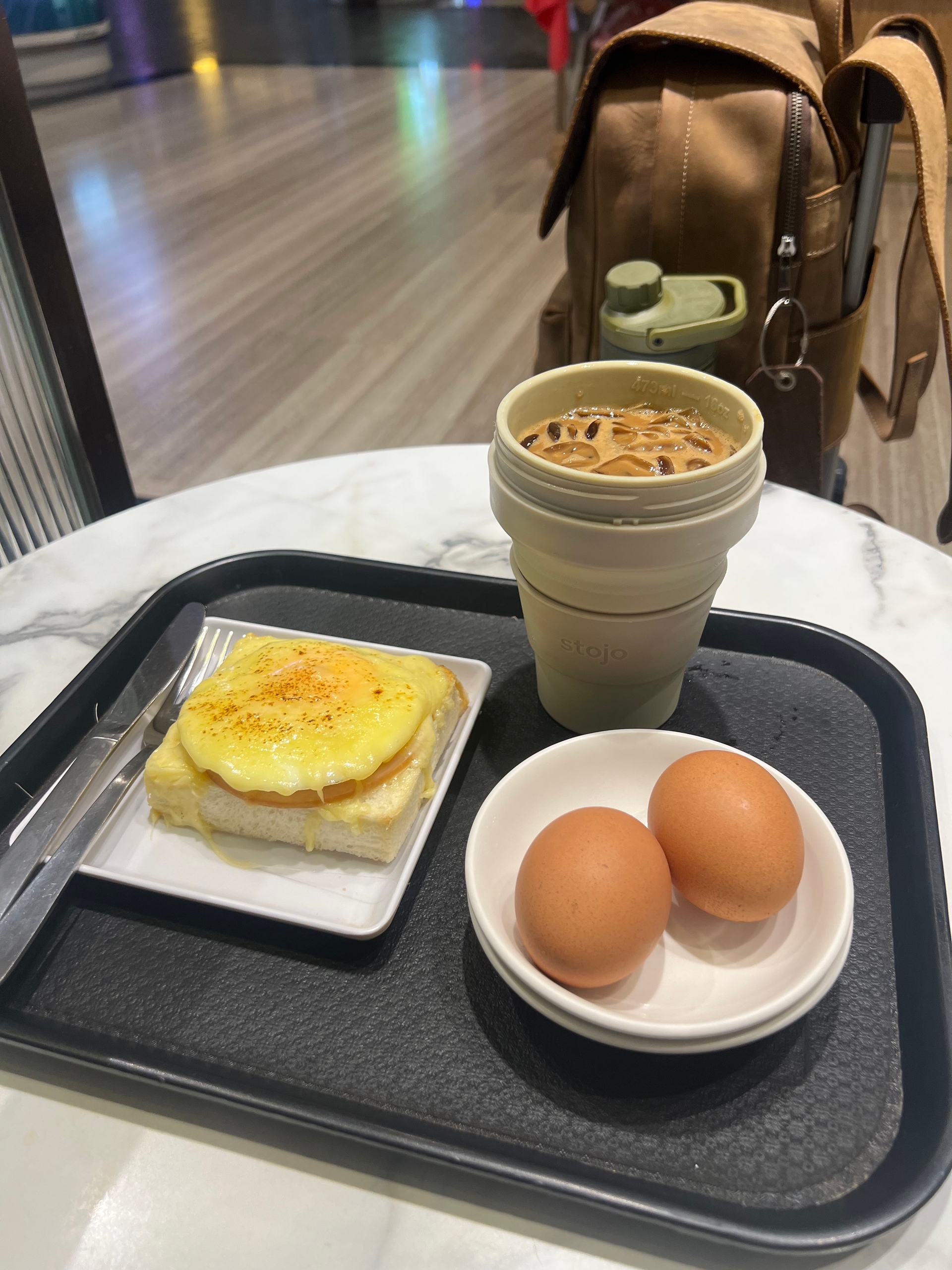
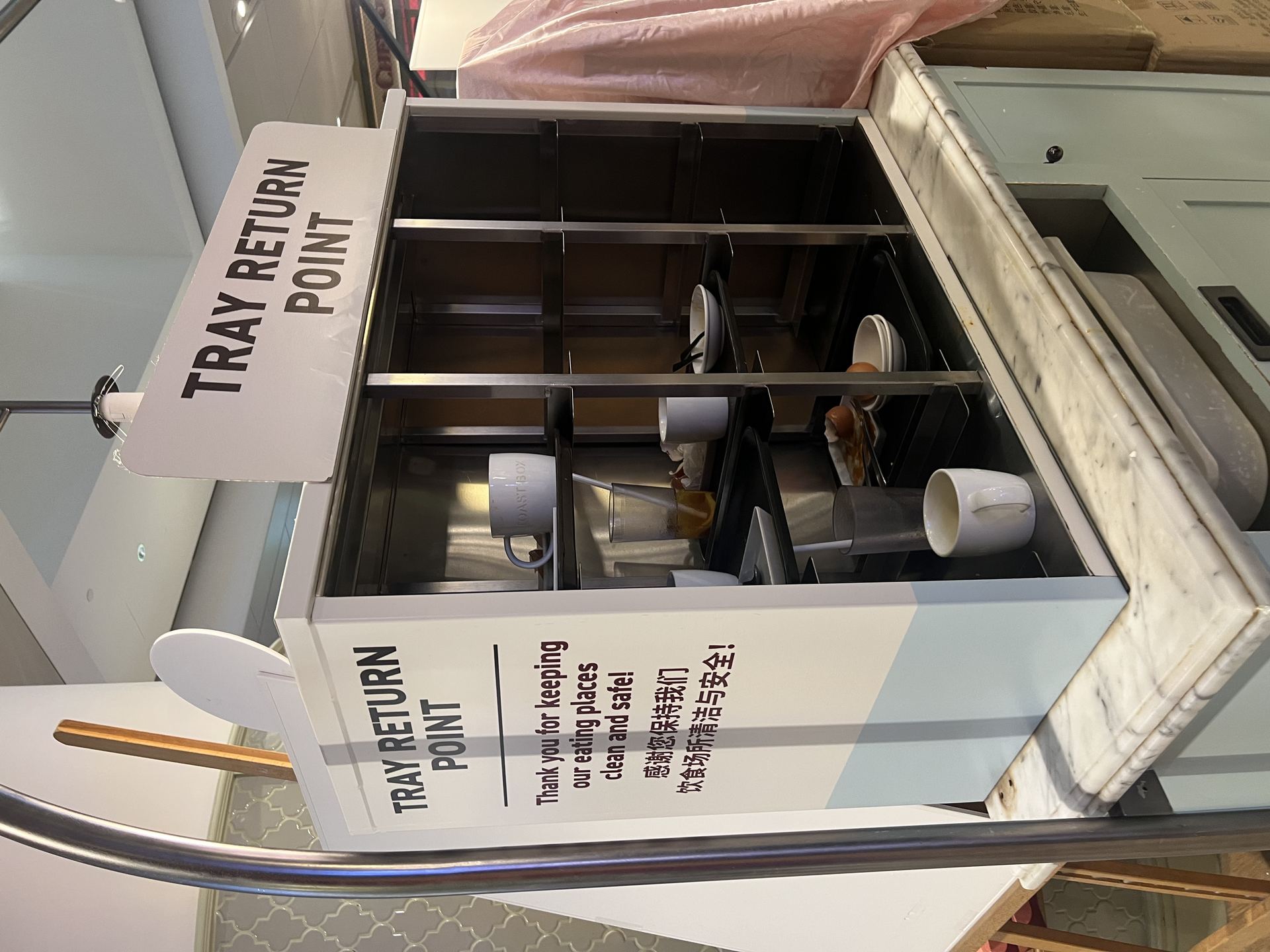
At Toast Box, the regular place for Singaporeans to breakfast, they usually get a kopi (which is a coffee, in many many different types of styles like variations in sugar, milk, coffee, and so much more options), this is paired with a couple of boiled eggs, and toast. In the airport Toast Box, there was a tray return for the plates, utensils, and trays for this.
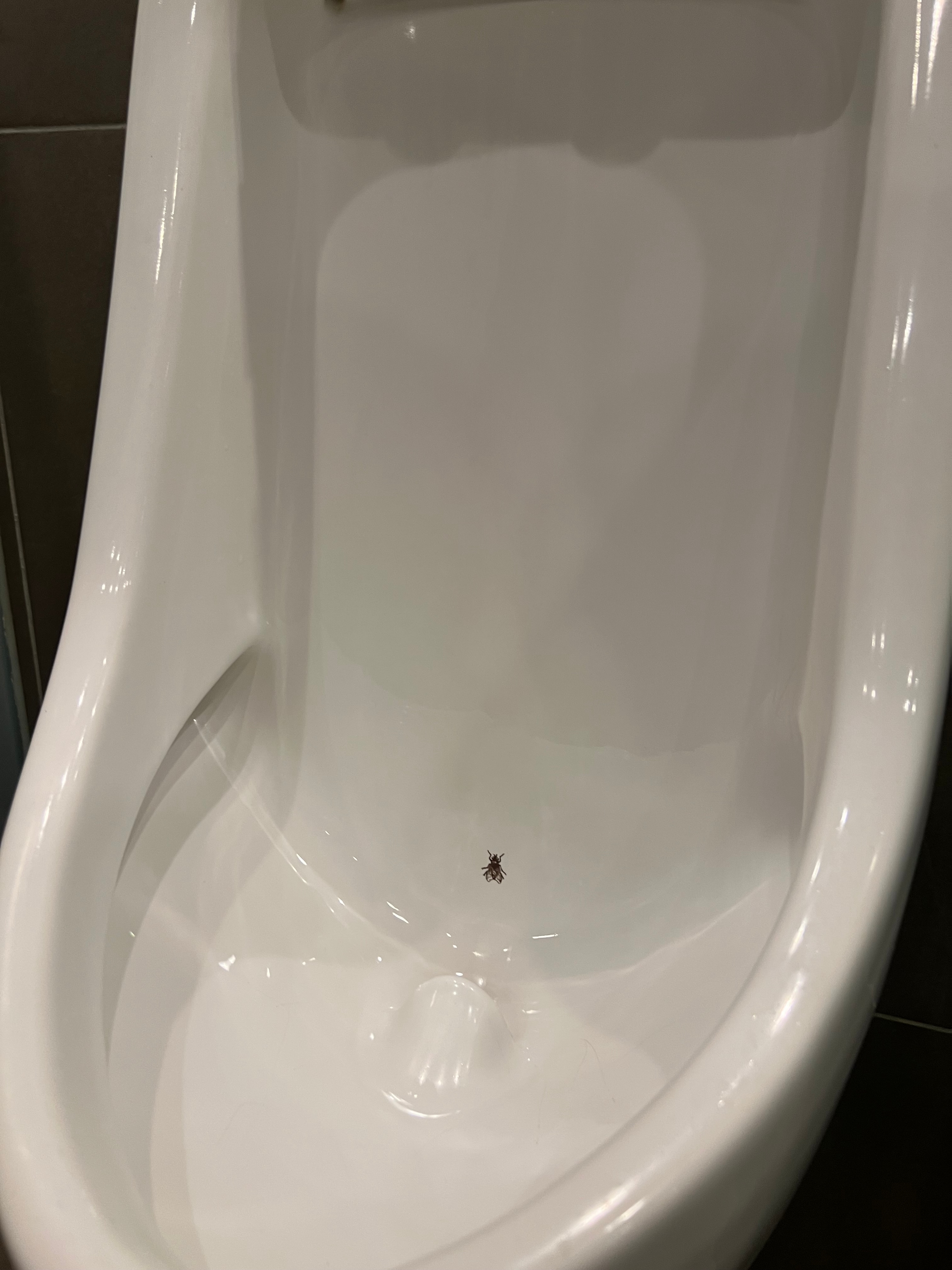
The airport urinal also had a fly sticker in it, I feel like I can find sustainability in this by reducing the need to clean missed bathroom uses by staff.