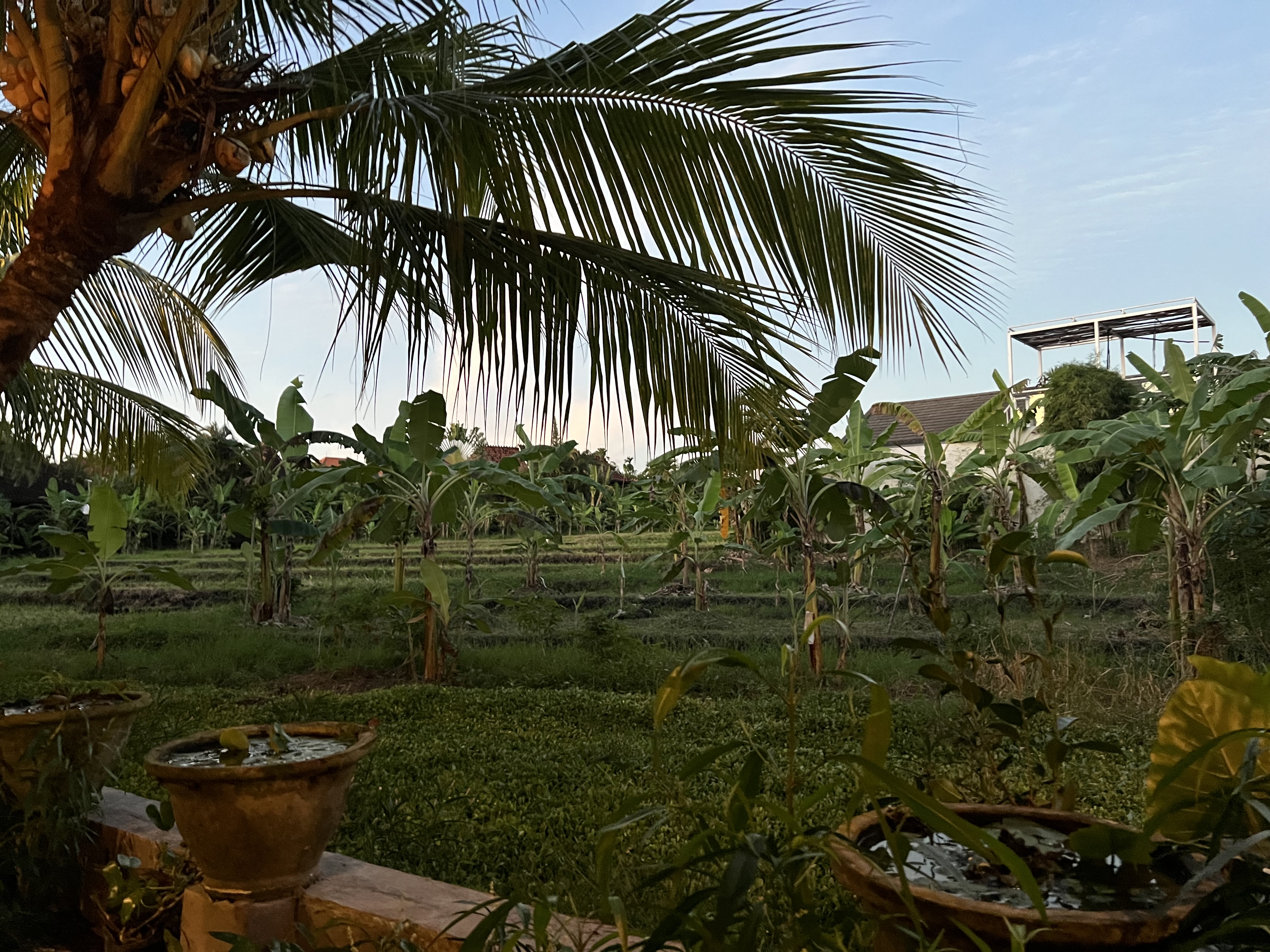

Canggu
Indonesia















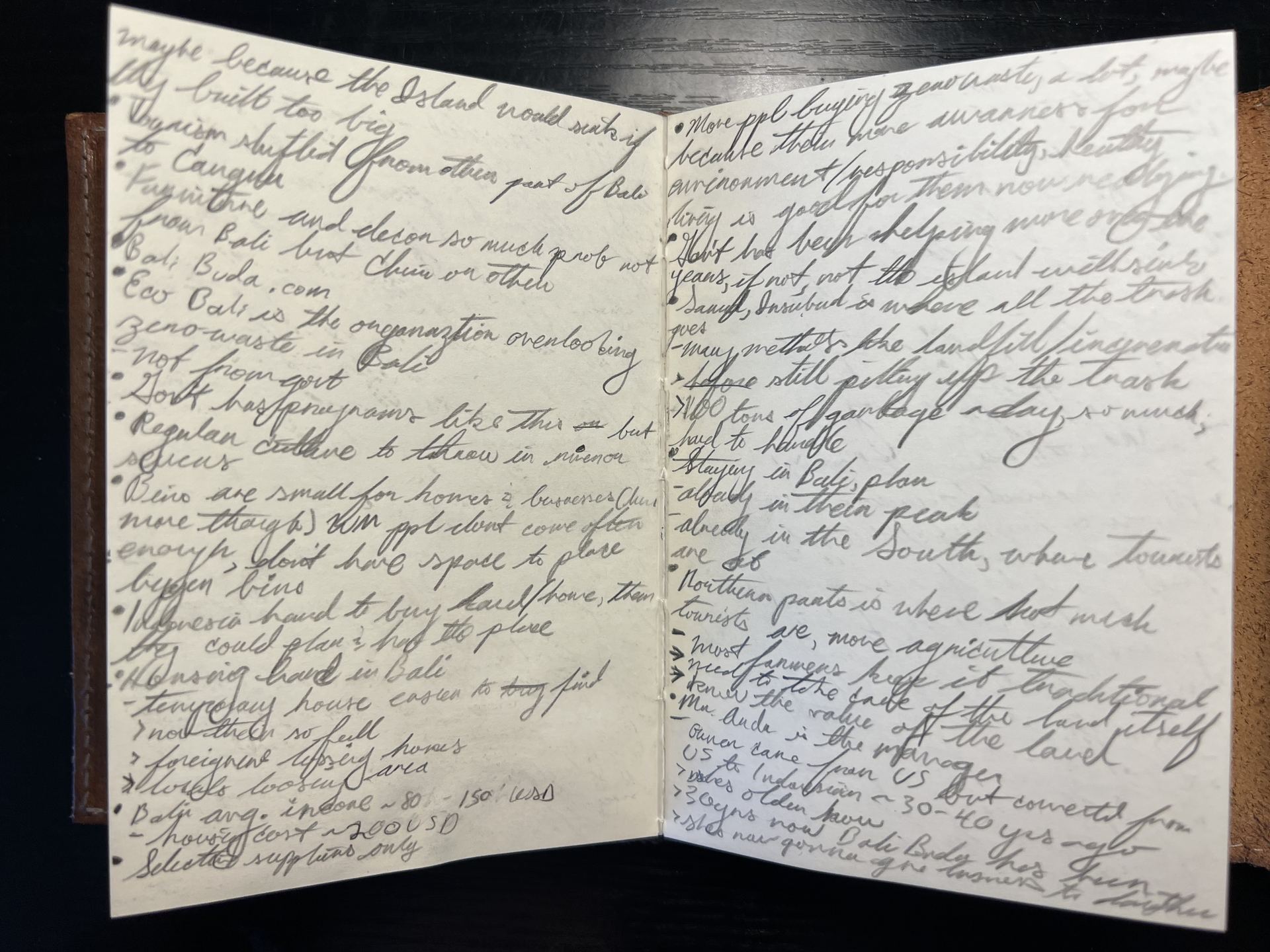
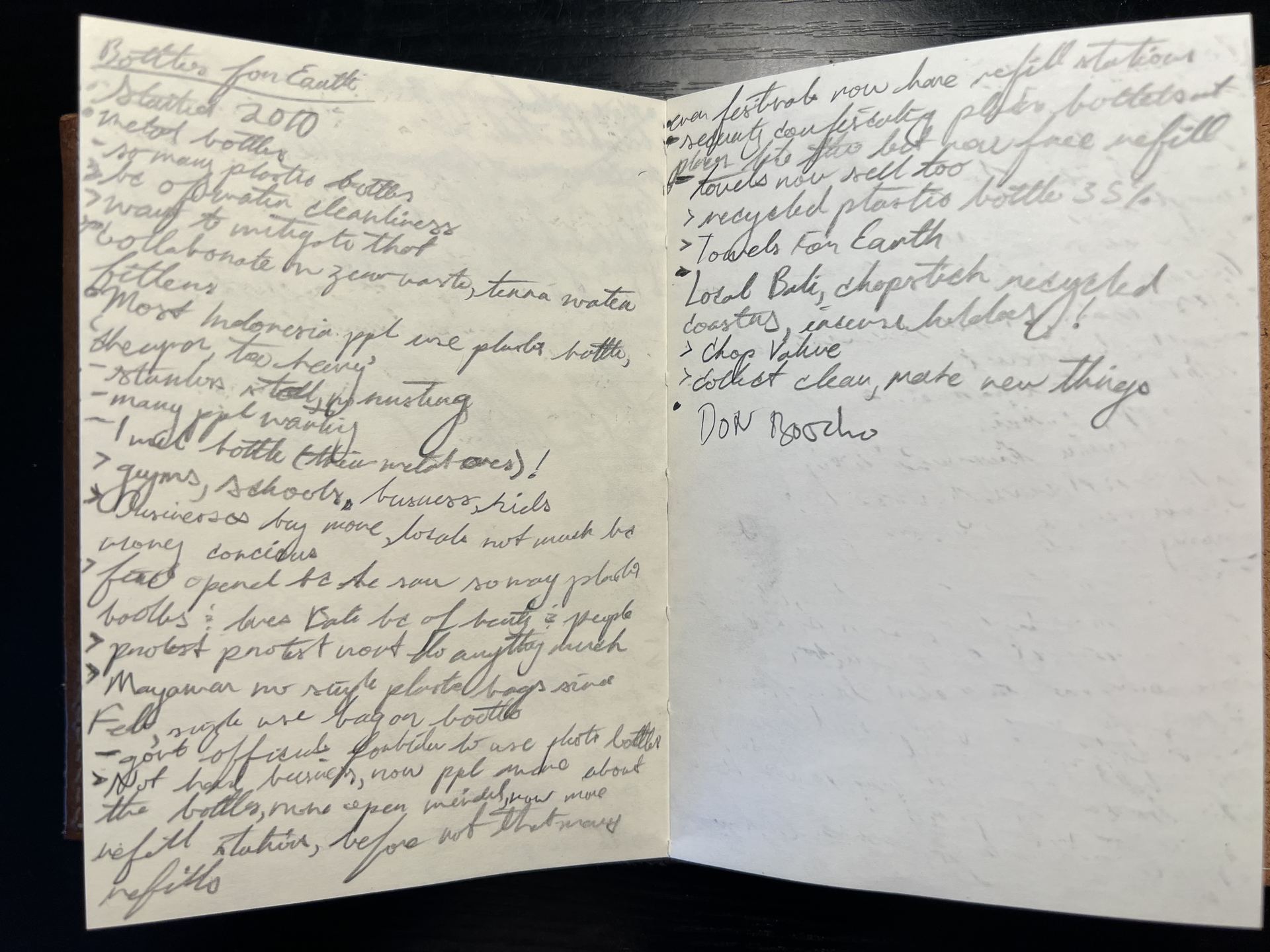

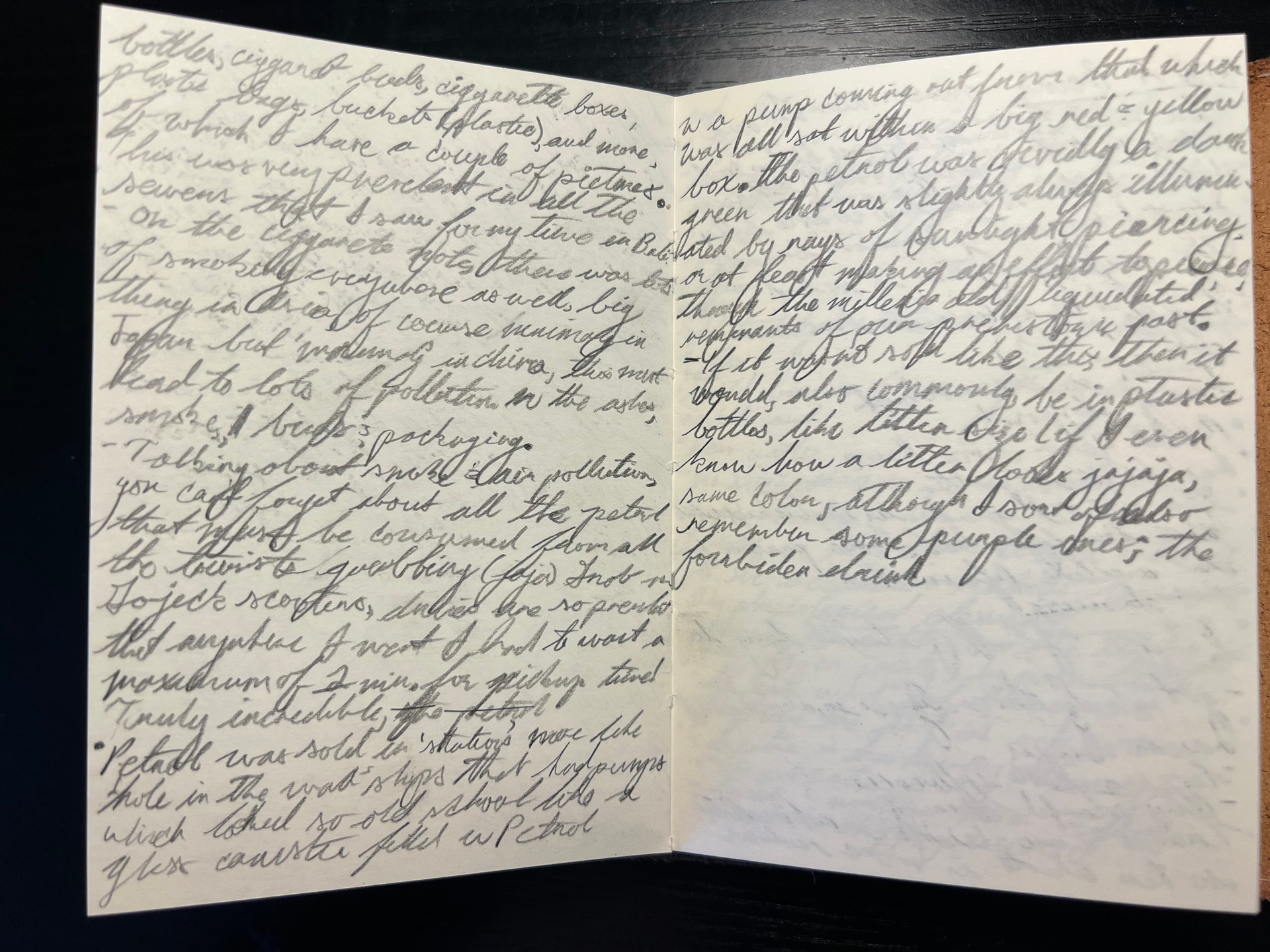
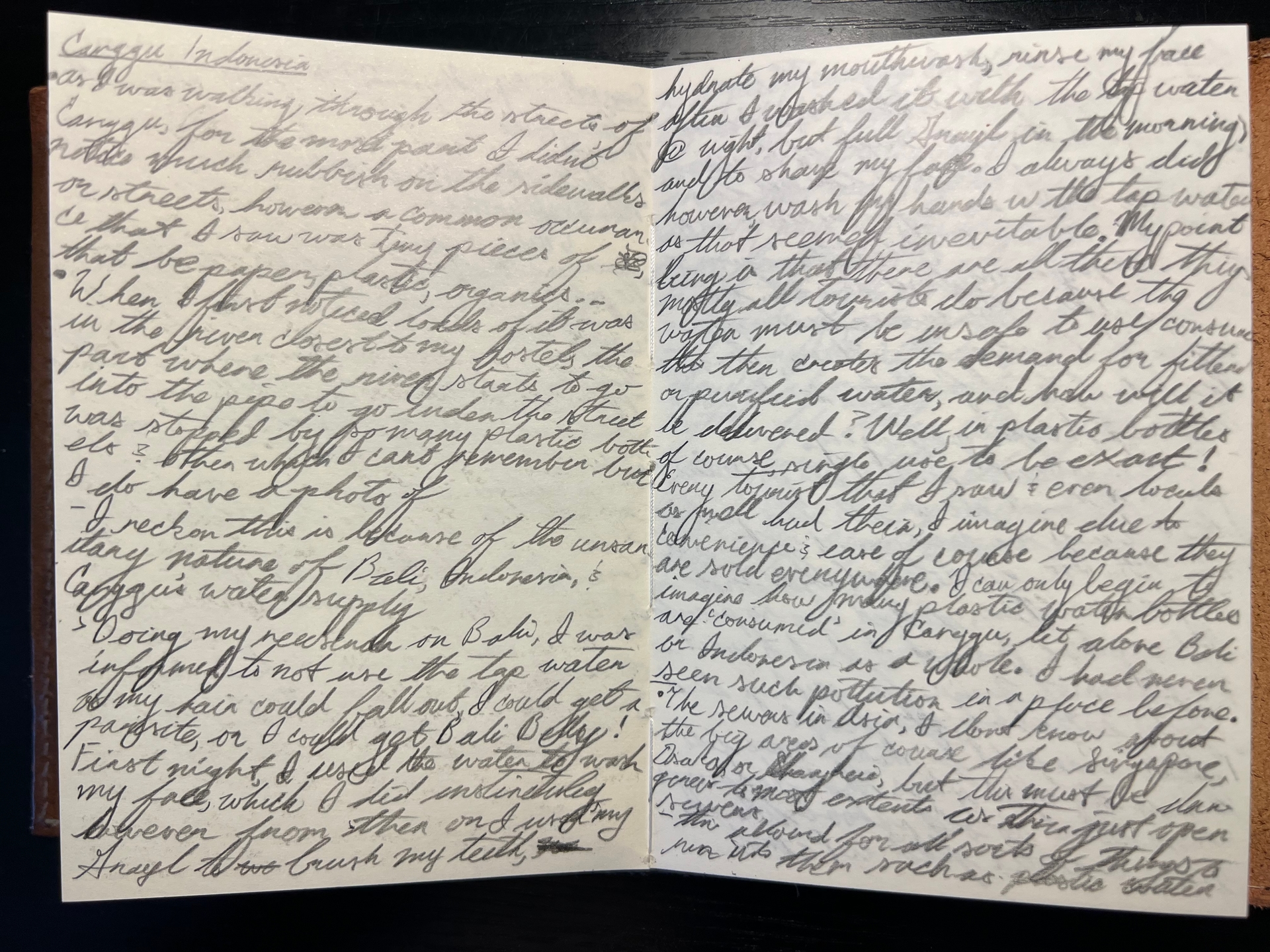
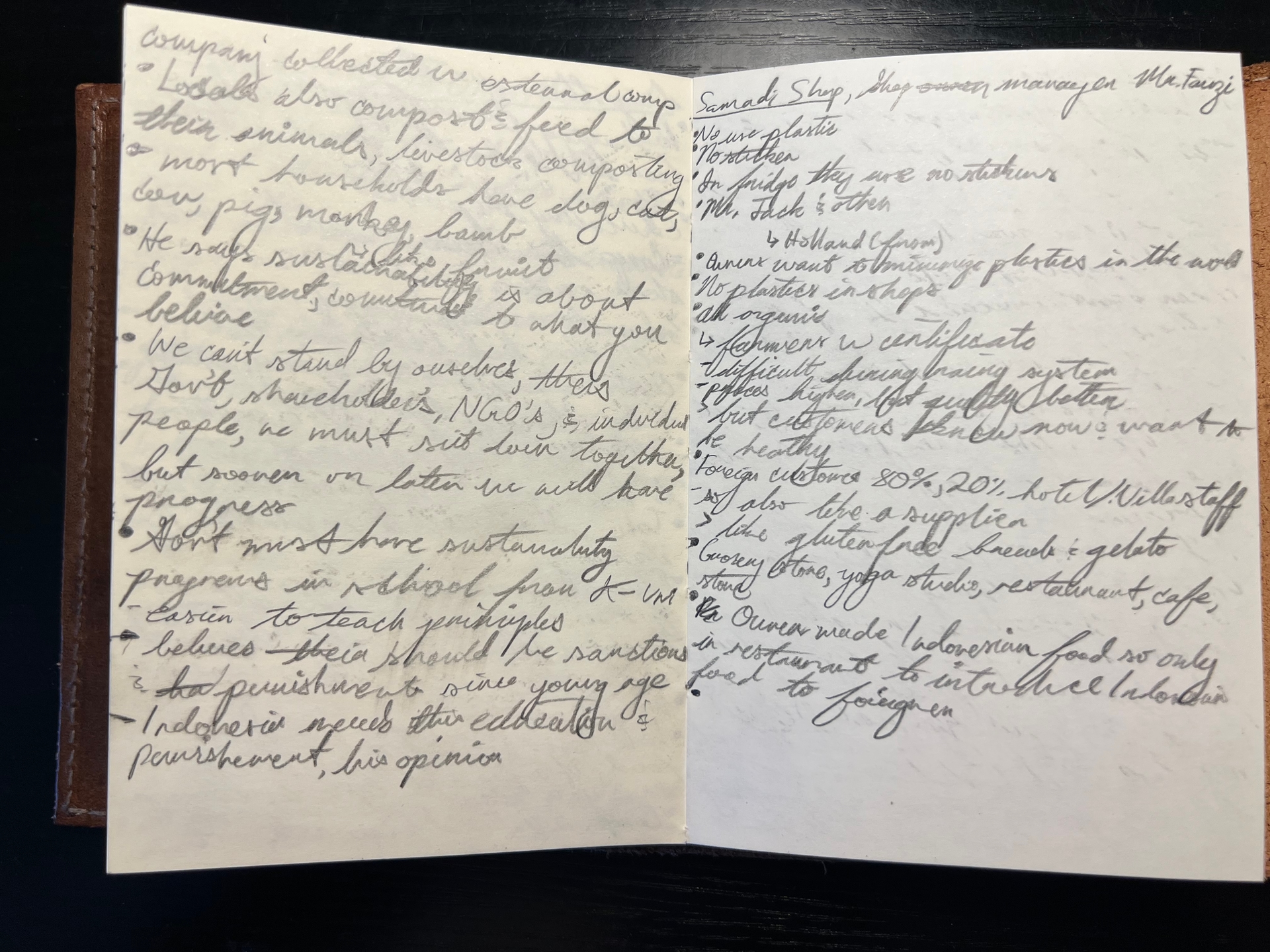
Journals Transcribed
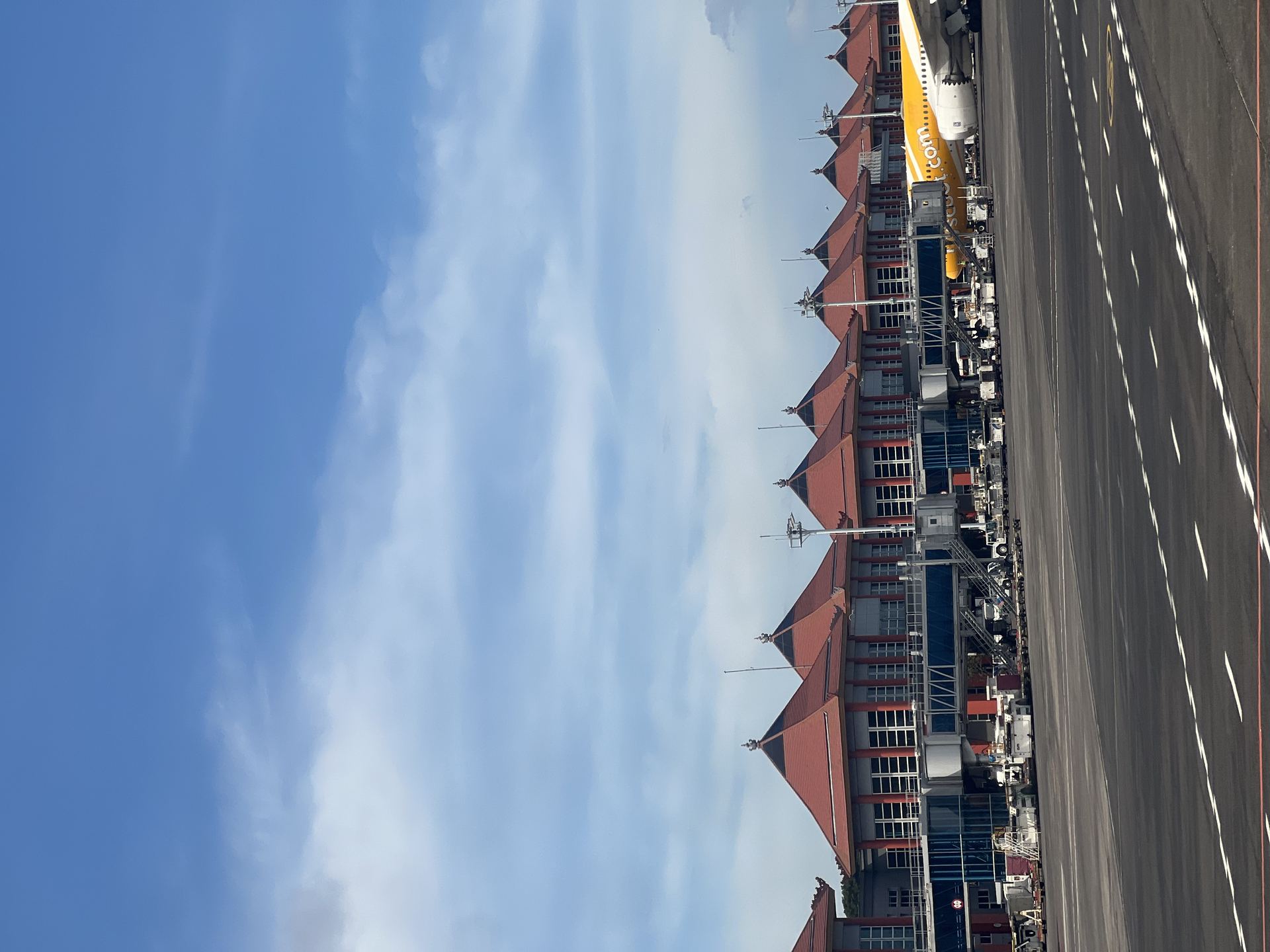
At first arrival at the airport, I saw that the gates are built with traditional materials, they were clay tile and in traditional shape, not anything like LAX. This might be sustainable because of the more traditional building practices that might be more useful than possibly wasteful practices by more 'fancy' looking designs or other.
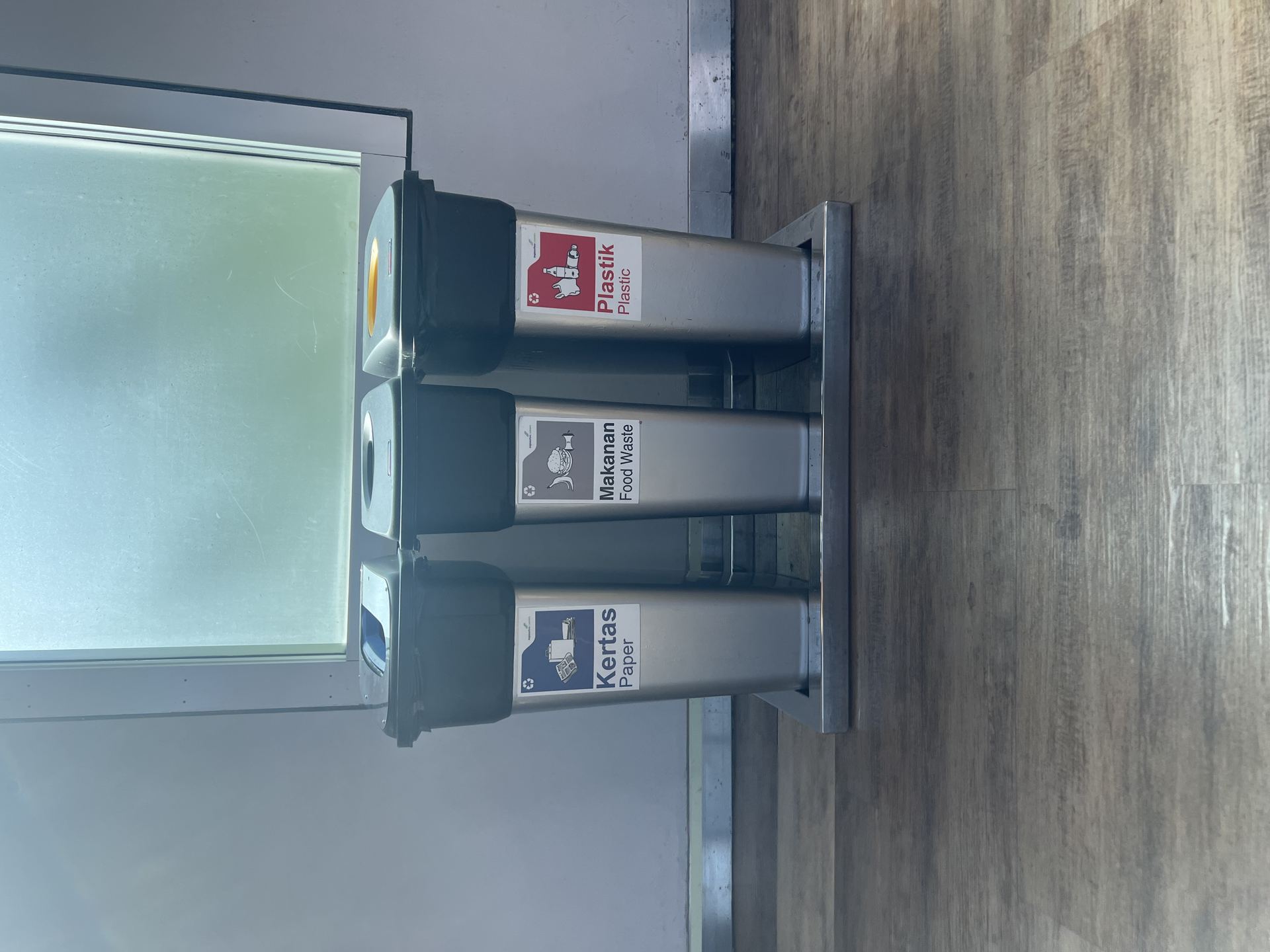
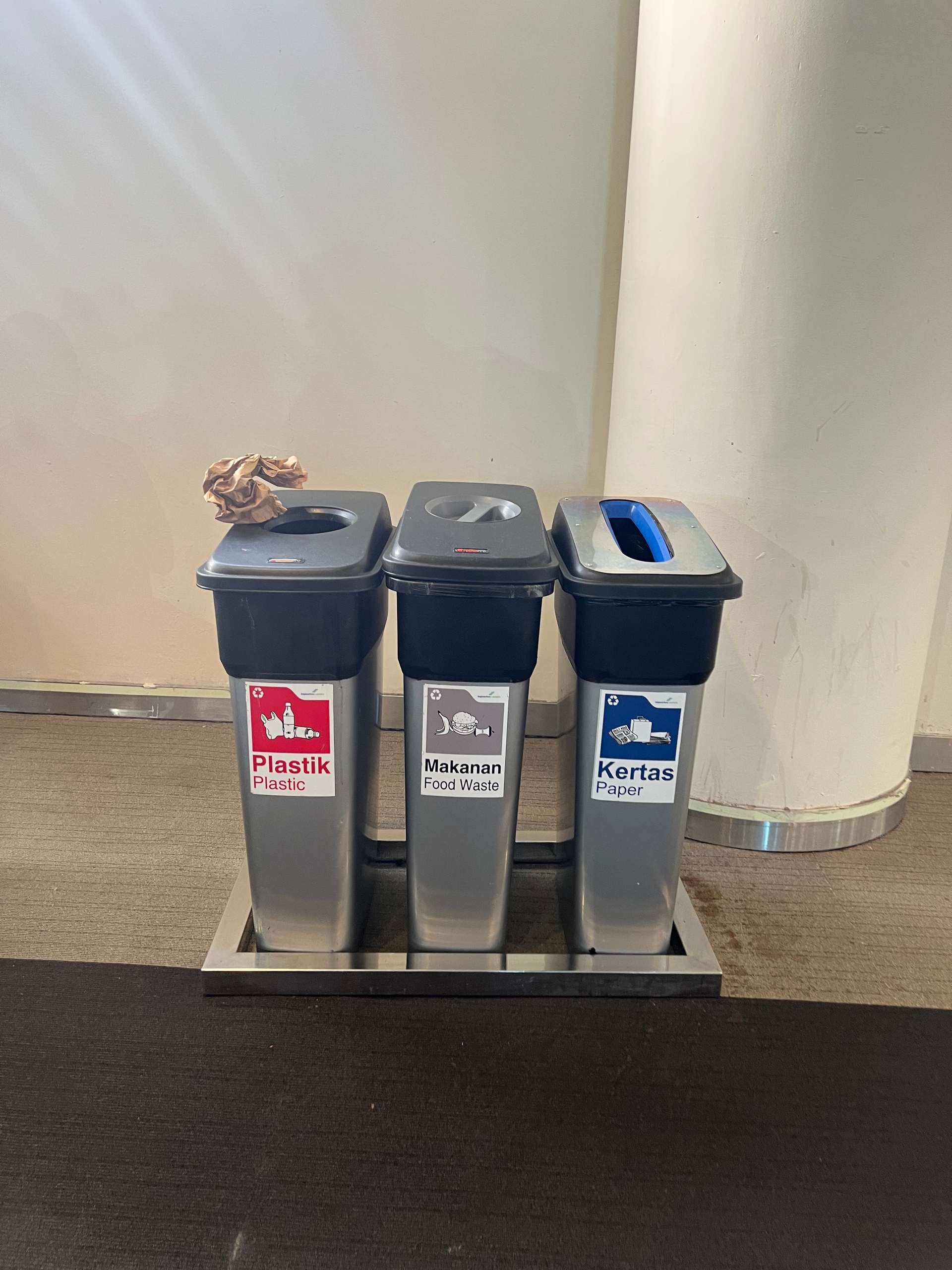
Also at the airport I saw waste bins but they were just paper, food, and plastic, I wonder where the rest goes.
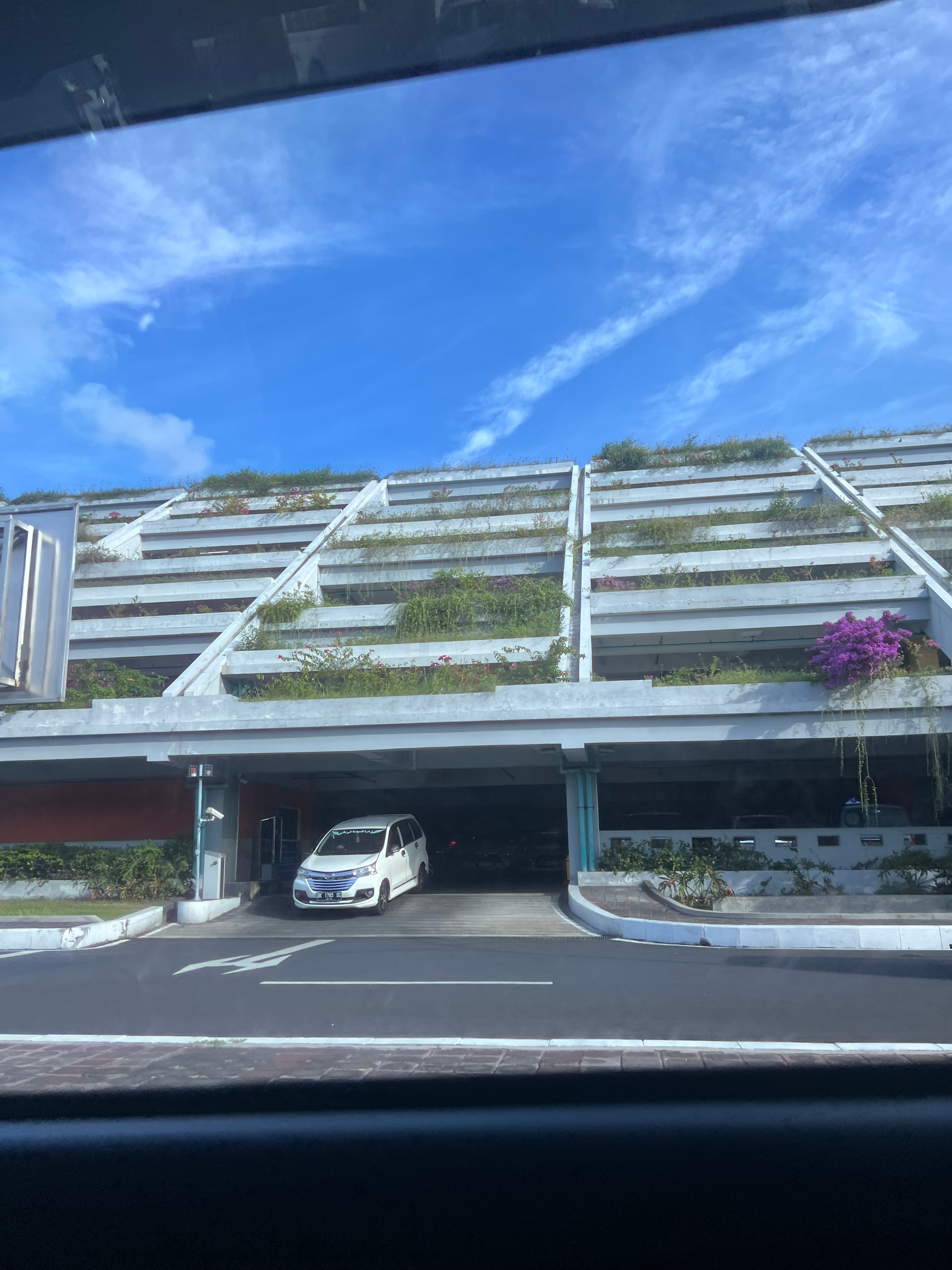
Coming out of the airport I saw a parking structure with a 'green' design, the structure was terraced with greenery planted on each terrace, this allows for flora to still be present in such an urban area like an international airport. I think greenery should be everywhere, allowing for more sustainable design of buildings.
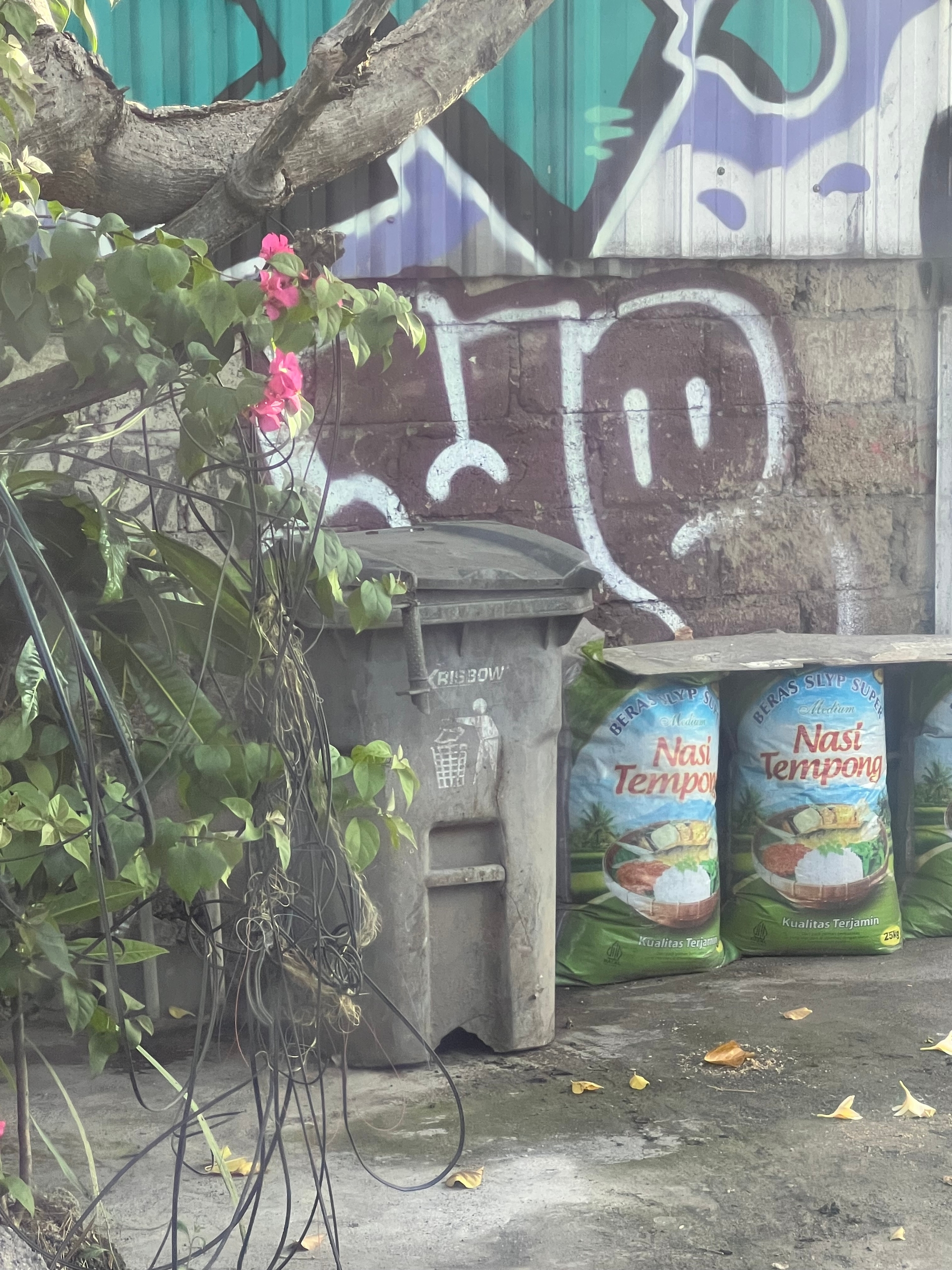
Going from the airport to my hostel, I saw the trashcans in the towns that were there and they were minuscule compared to the ones in the states, again my reference is LA so judging off of that. I wonder how the waste culture is here as there cans are so small, if they produce more than they need, then what will they do with the extra rubbish? Also, if there are recyclables or compost, what do they do with it?!
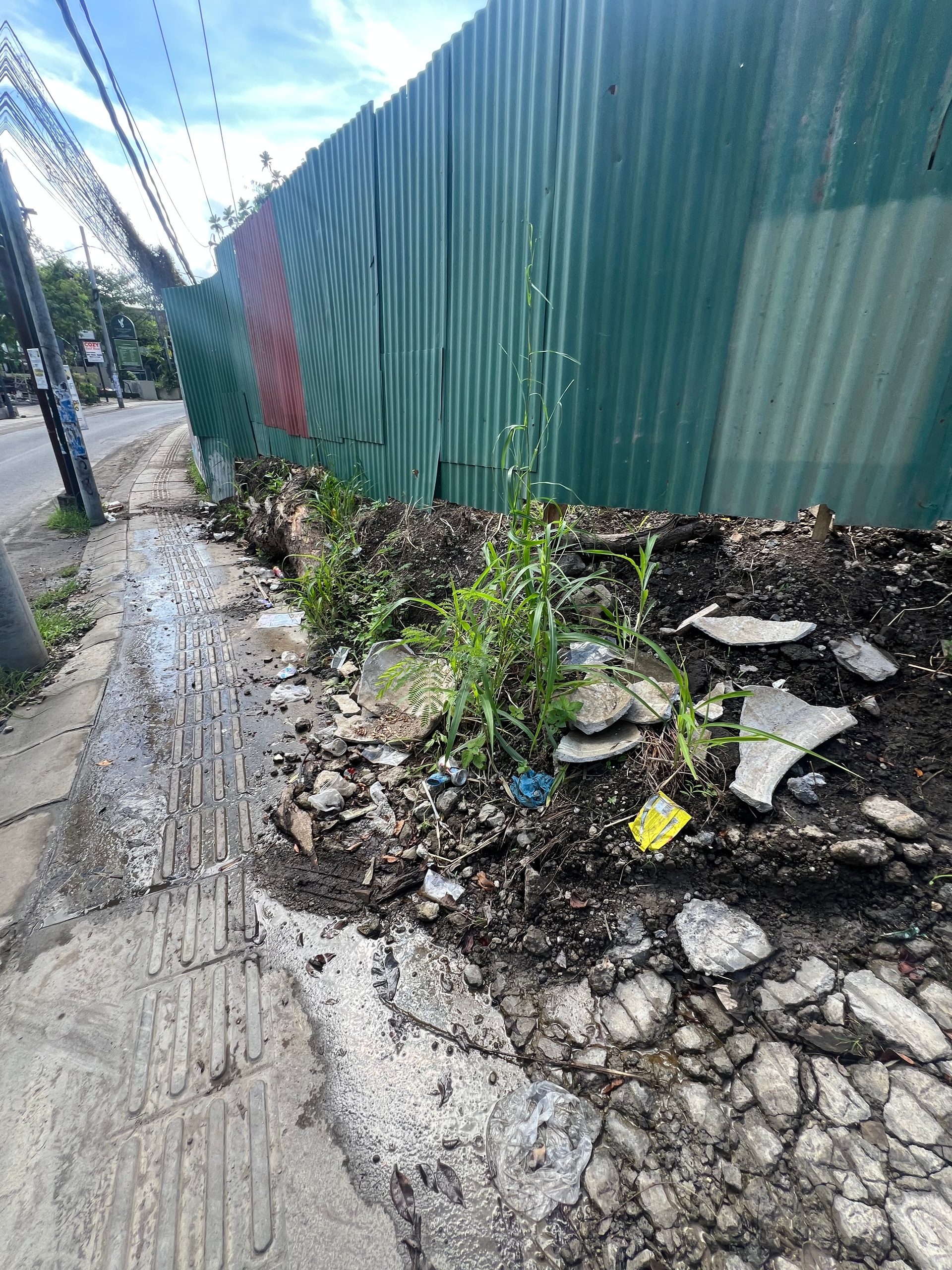
In Canguu, I was walking to get lunch and I saw lots of trash on the streets, on the sidewalks, and in the water way as well. This was the most pollution I have seen in any place I've been to so far.
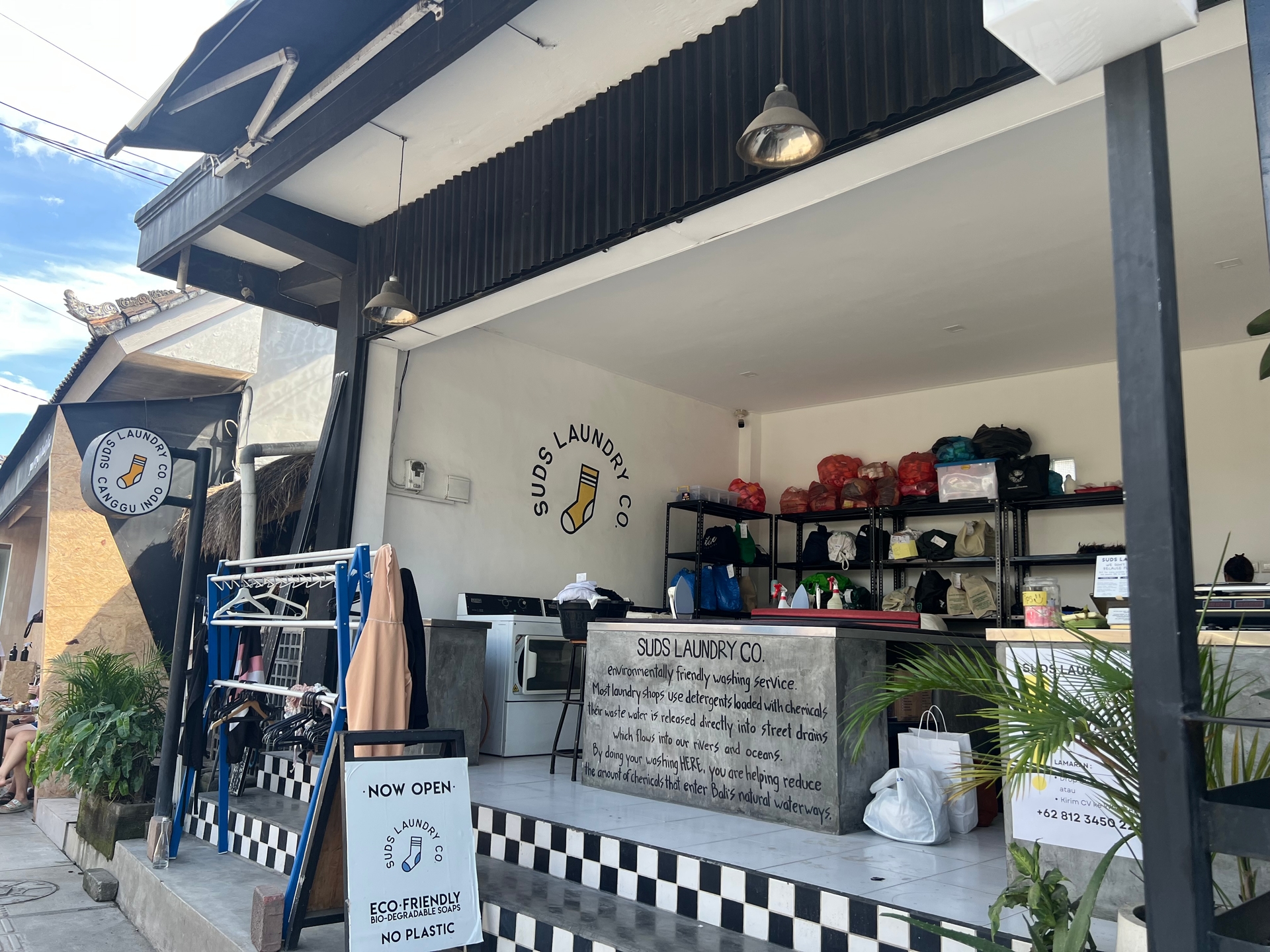
I needed to do my laundry, so I found a laundry mat that was close to me and it turns out to be eco friendly, I need to investigate more on how it is eco-friendly, they were busy so I didn't have time to interview them.
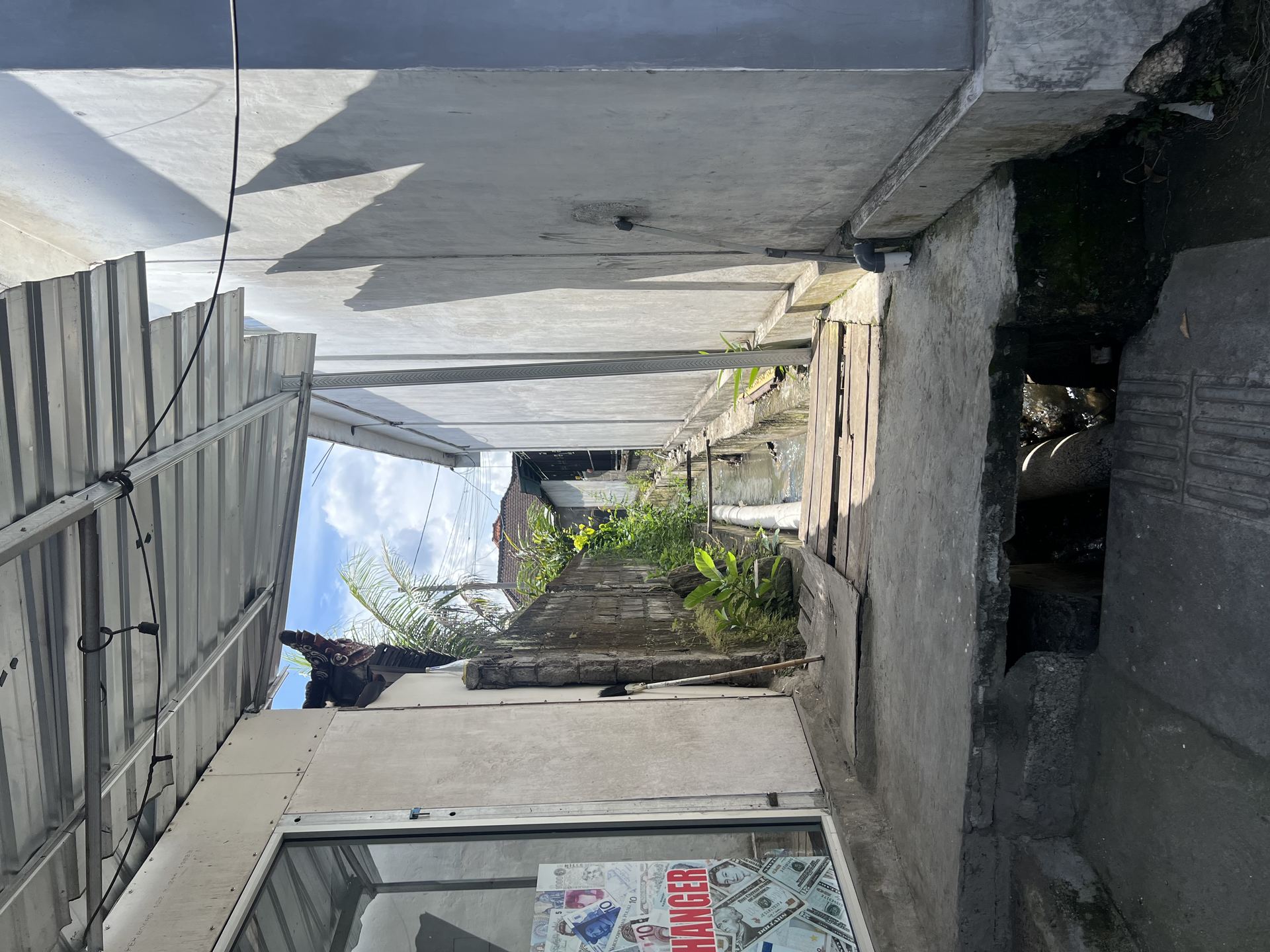
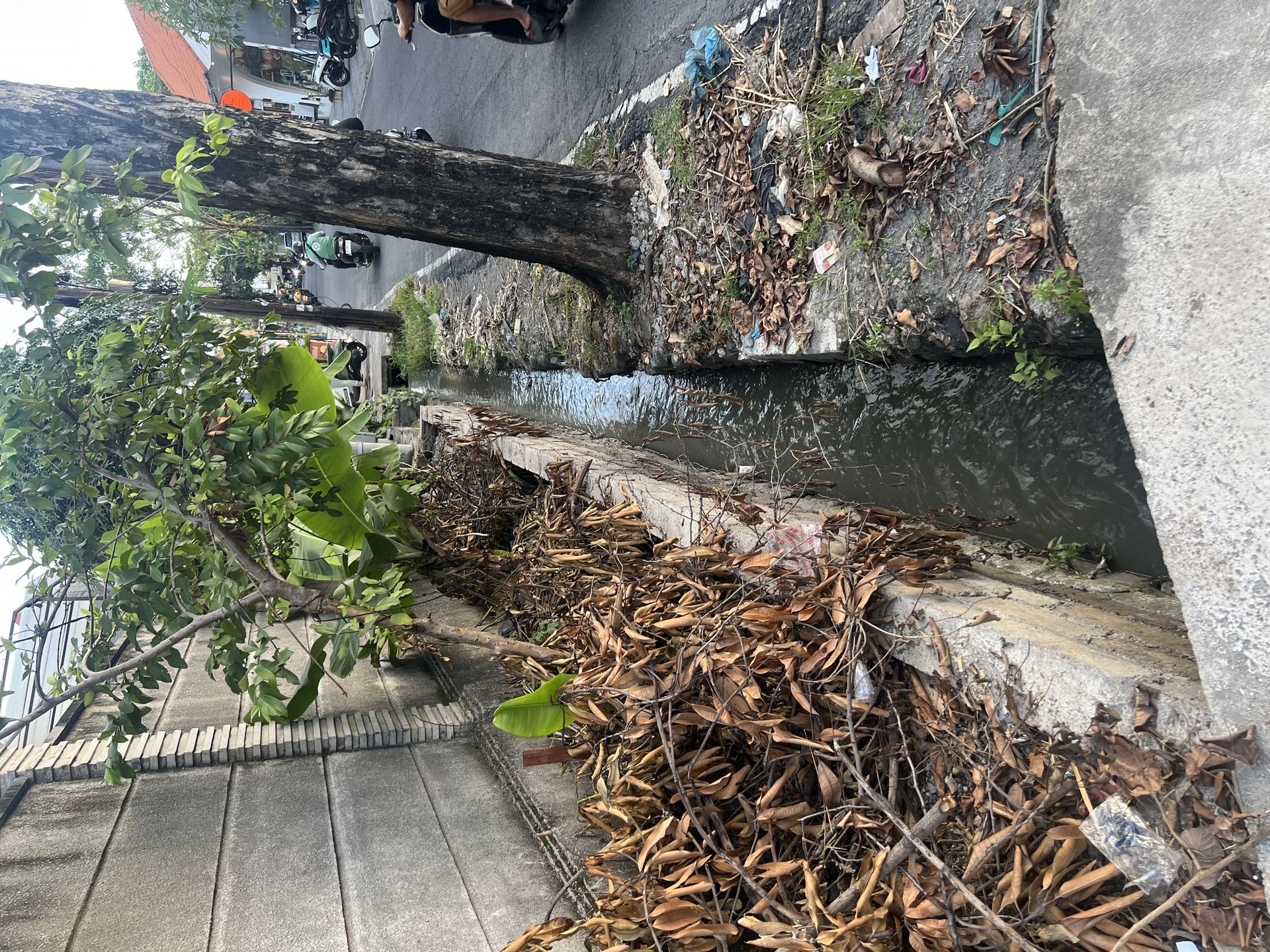
They have open urban drainage canals all around Indonesia, or at least Canggu. This explains the litter in the water bodies, I feel that this isn't the best idea, but I do have to take into account that Indonesia has less economics development compared to the states and LA.
I wanted to visit the closest store that was near my hostel, Alive Wholefoods, but it was sadly under construction during the time I was there.
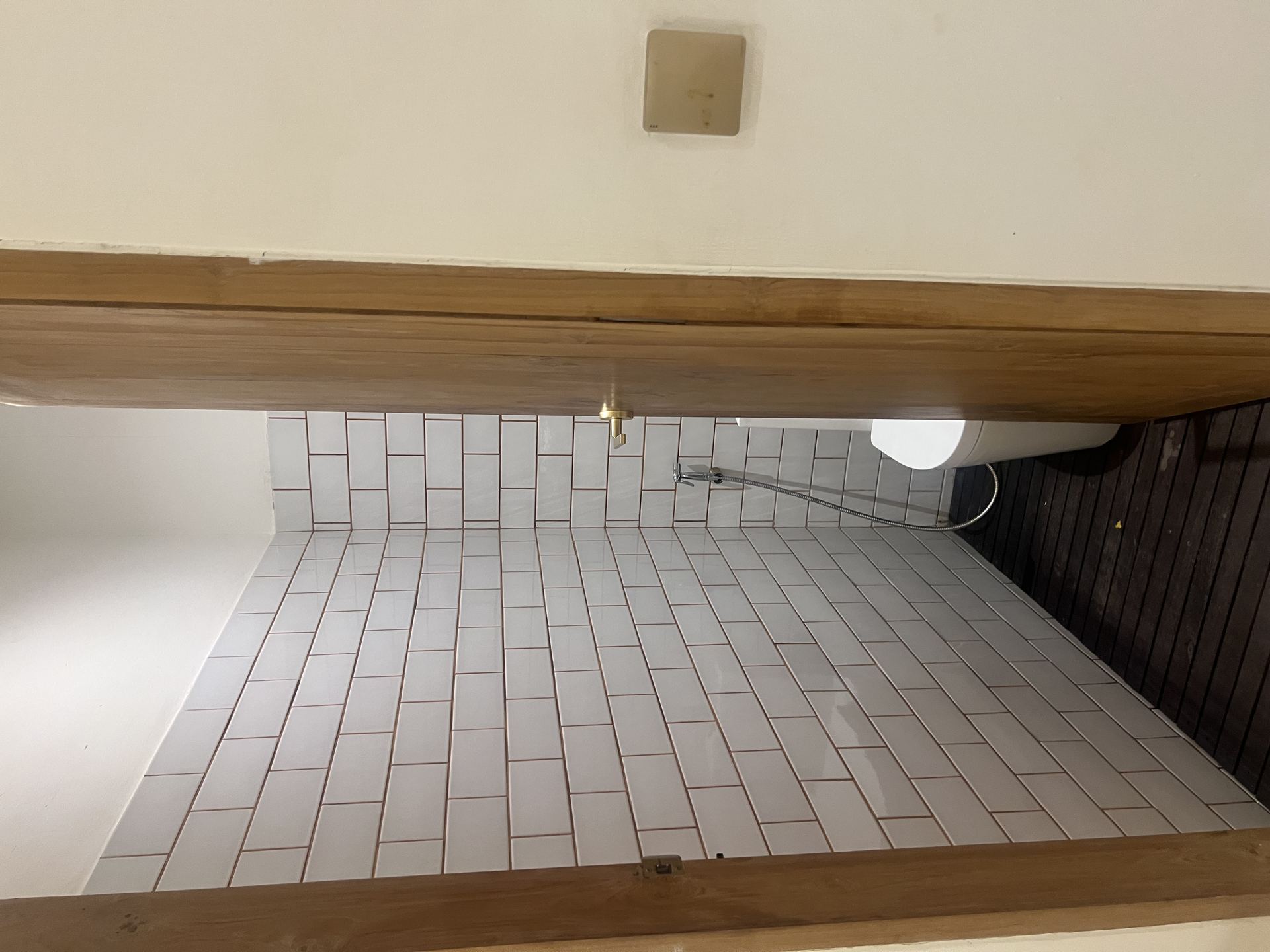
They had bidets in Indonesia as well, including my hostel but these were the hose bidets. I have yet to use one and was lowkey scared to use them. The use of bidets is very sustainable, I am glad that is normal here as I wish it was more normal in the states.
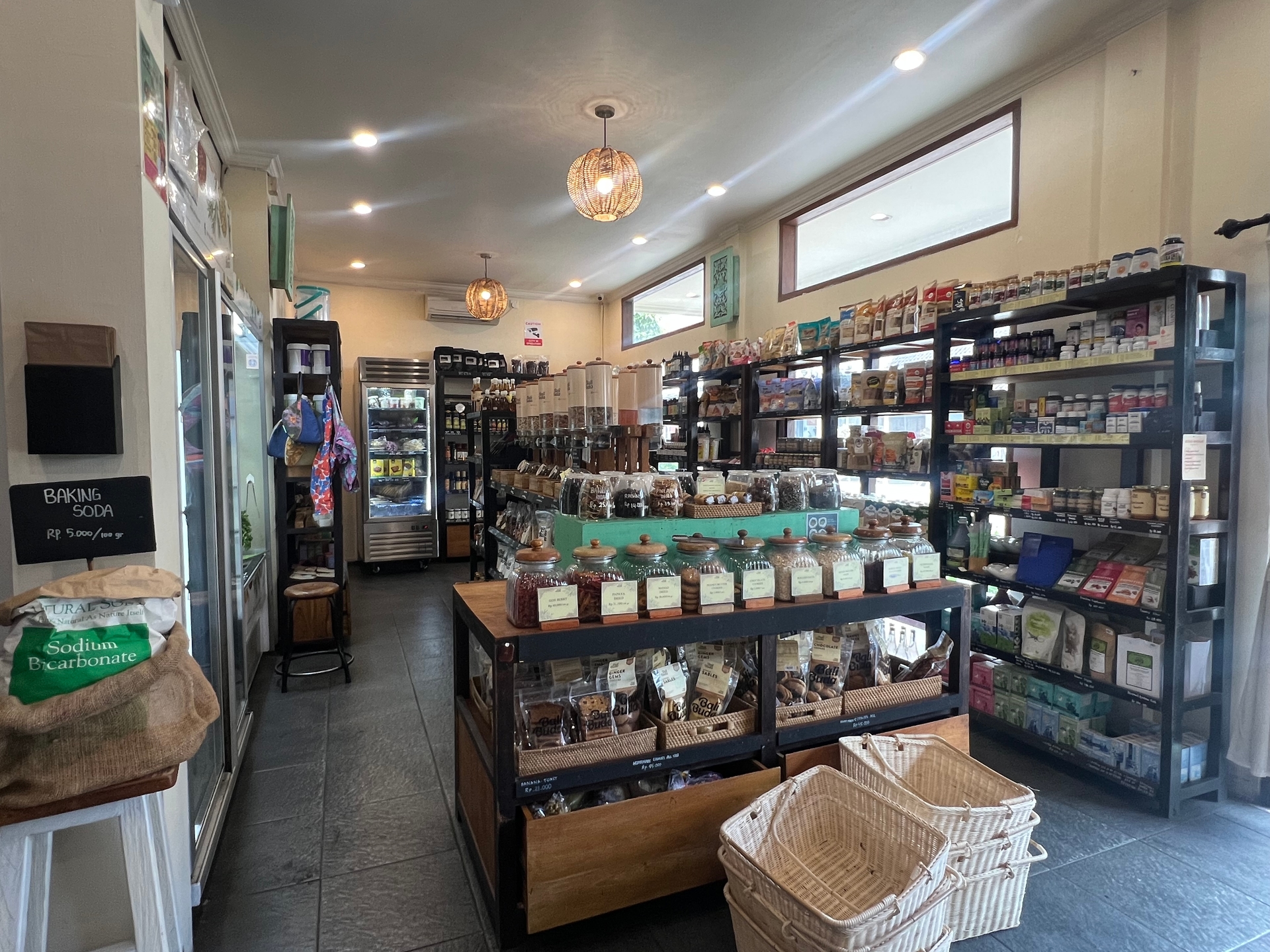
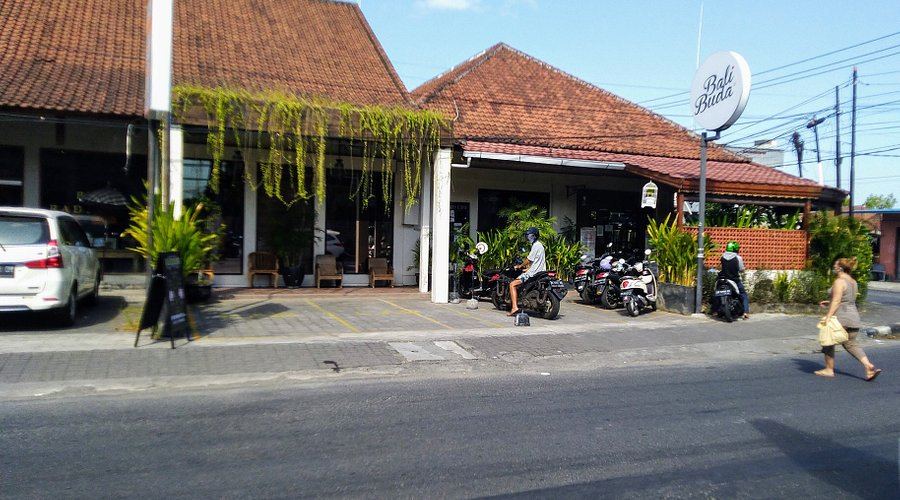
I visited Bali Buda, a chain of zero-waste stores around Indonesia. I honestly did not do extensive research on these places I visited due to time constraints with finals week, but it was also very cool to be happily surprised by things like culture differences.
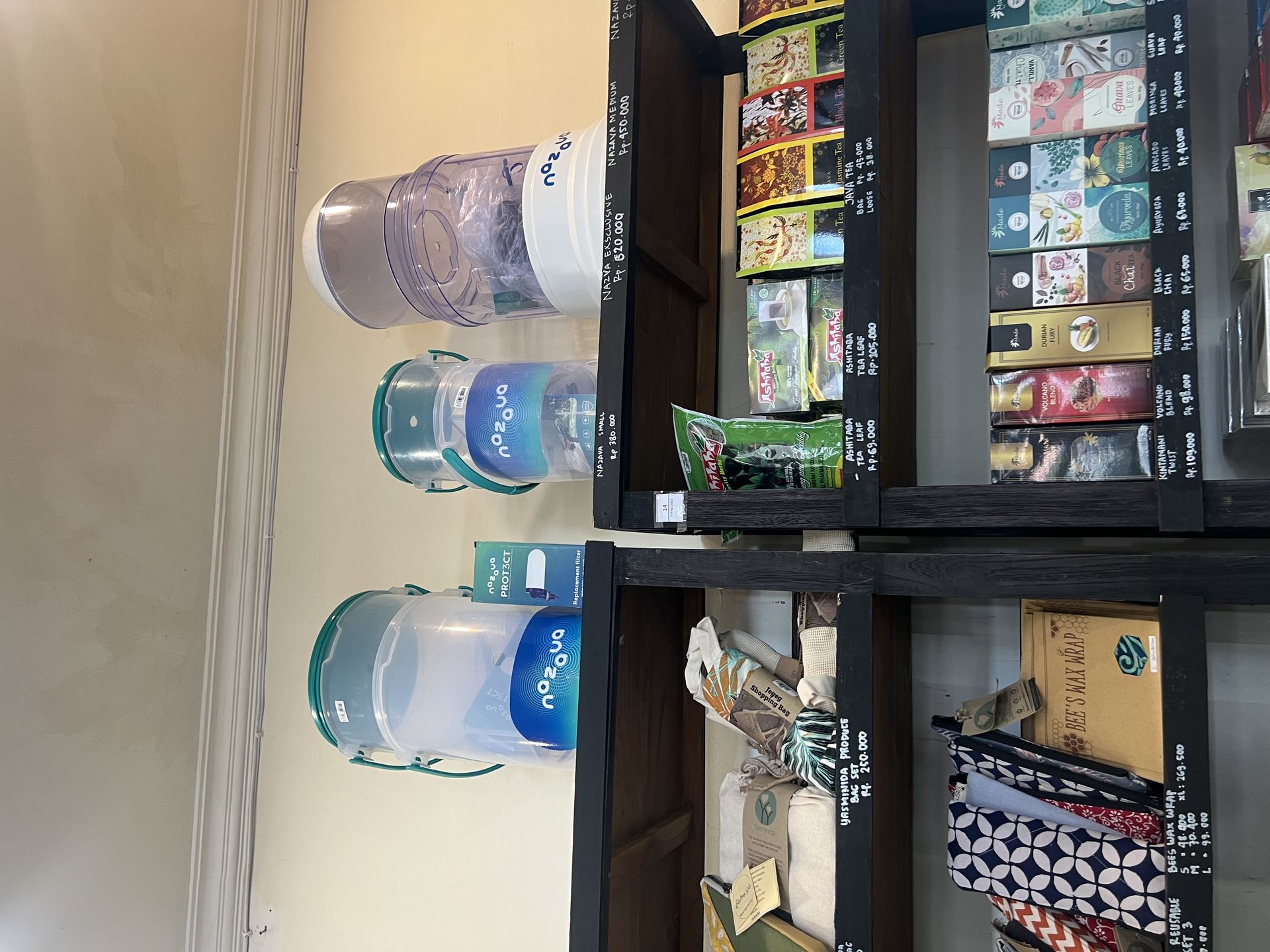
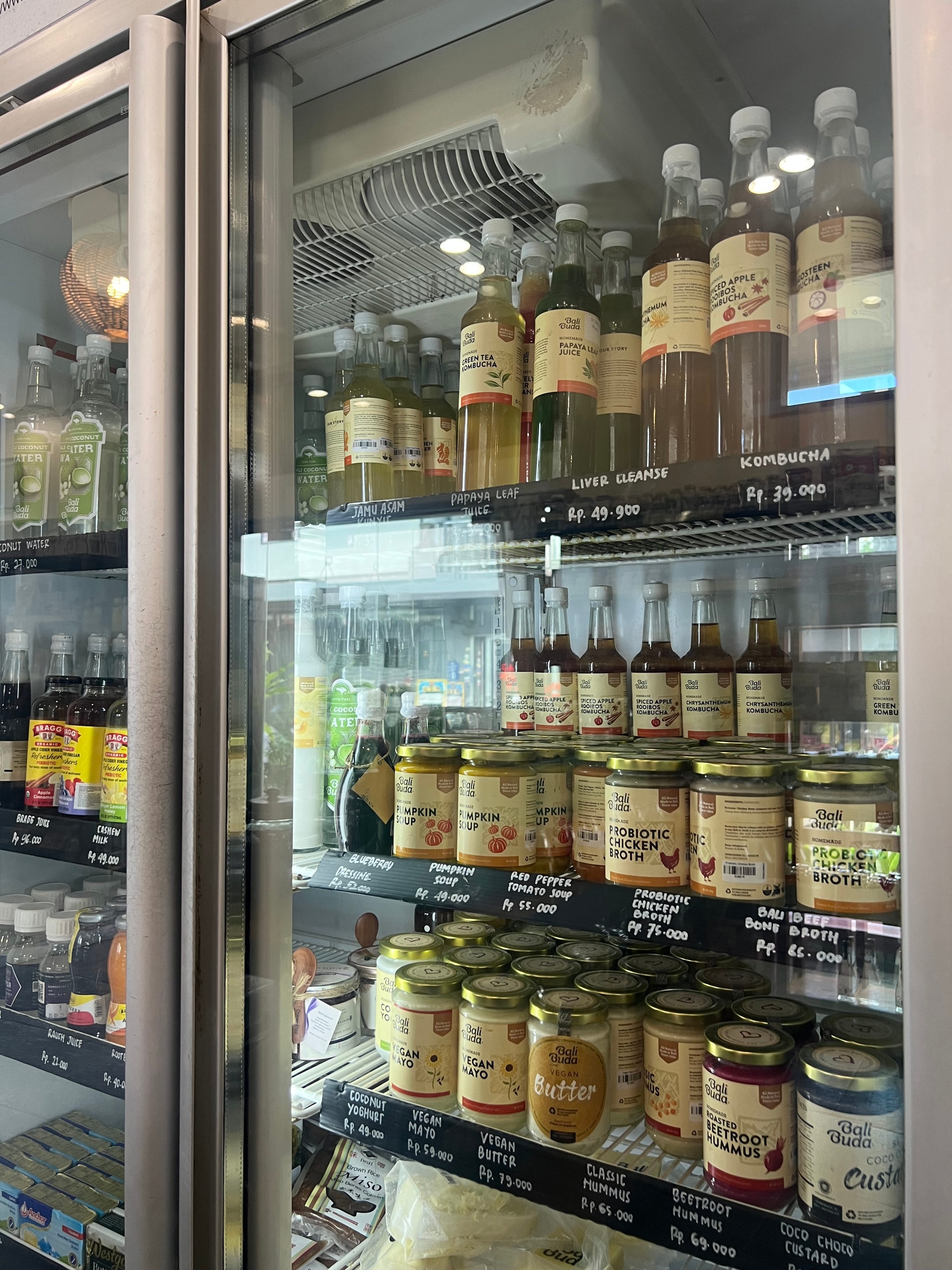
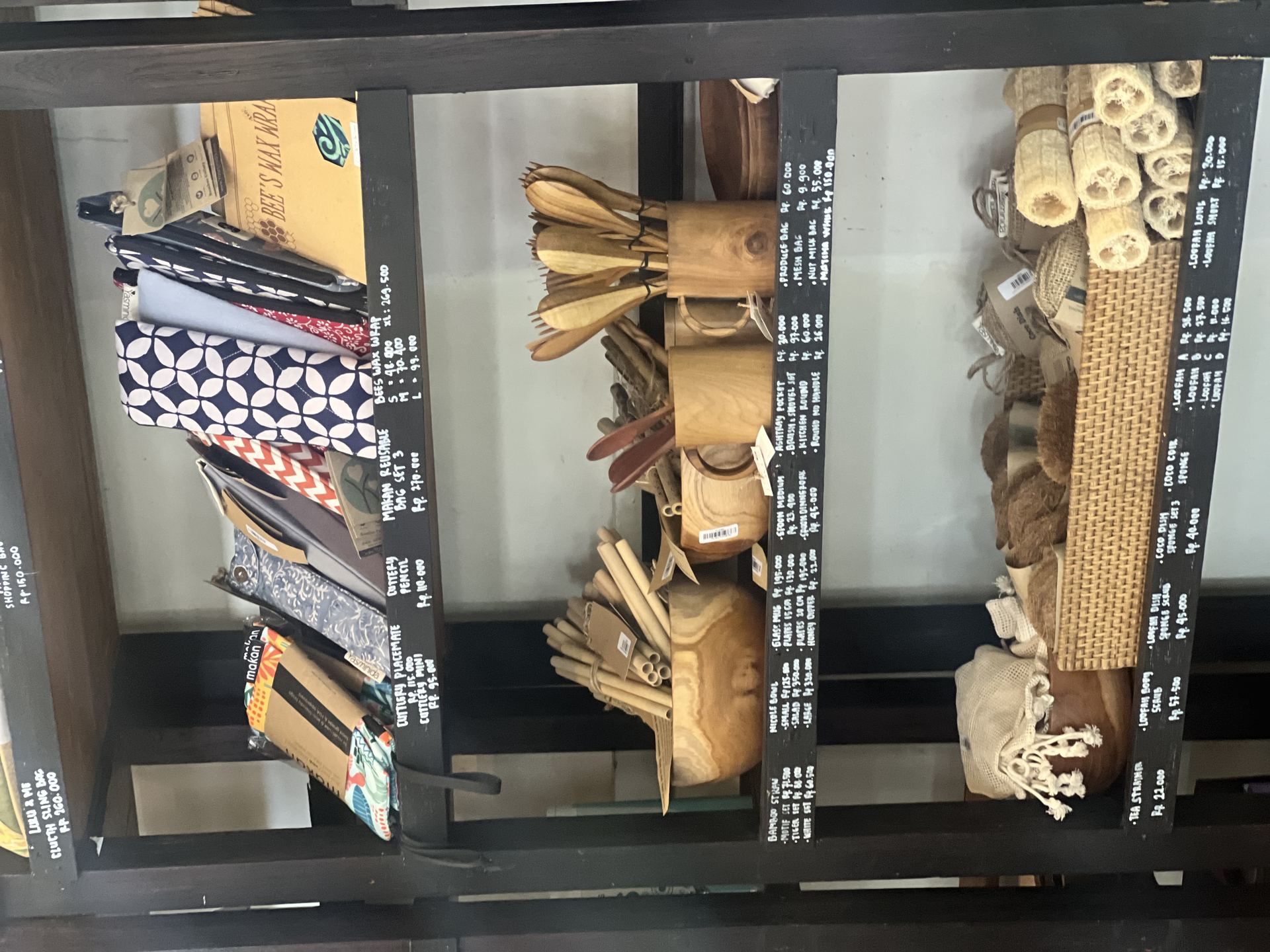
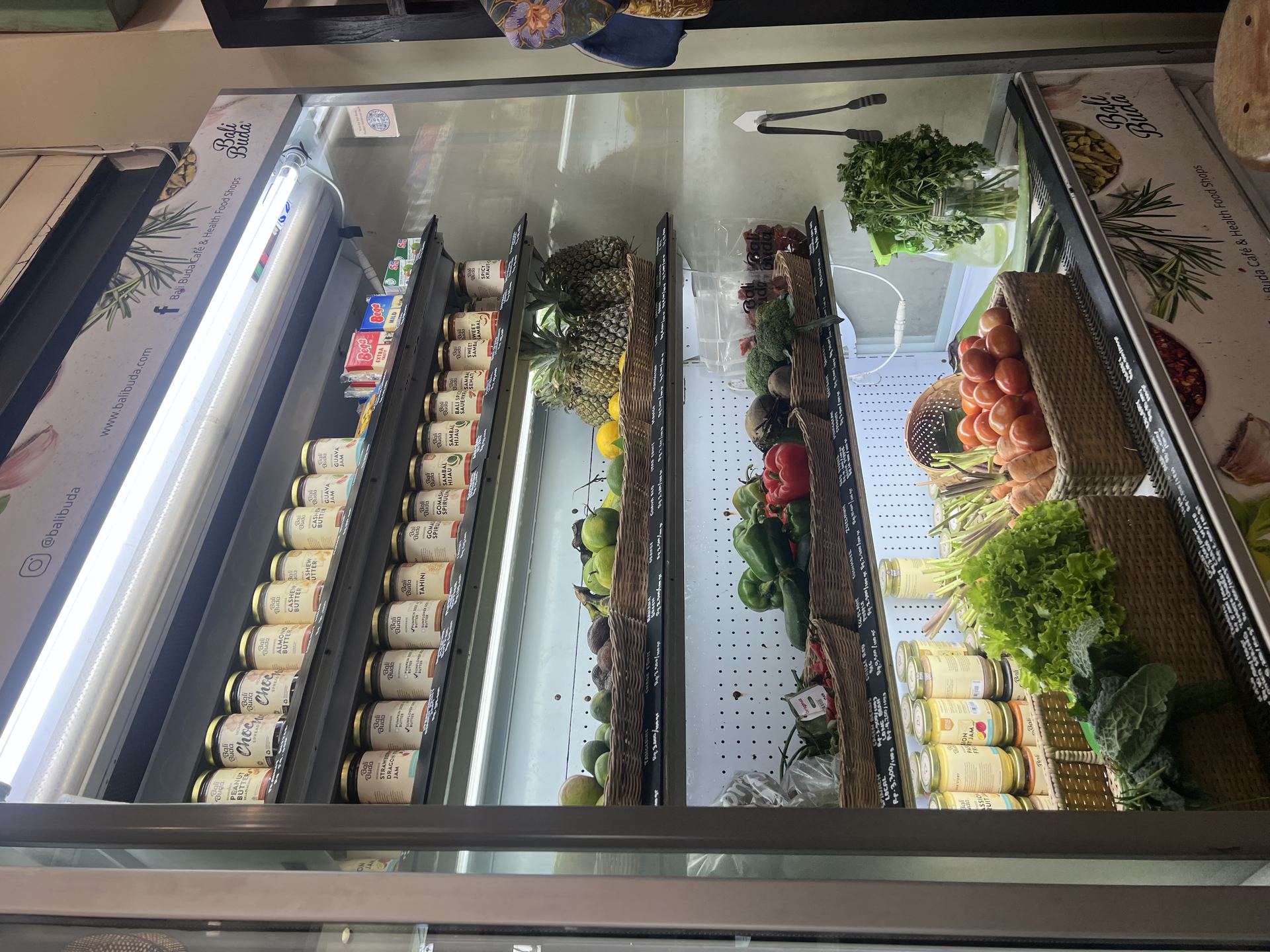
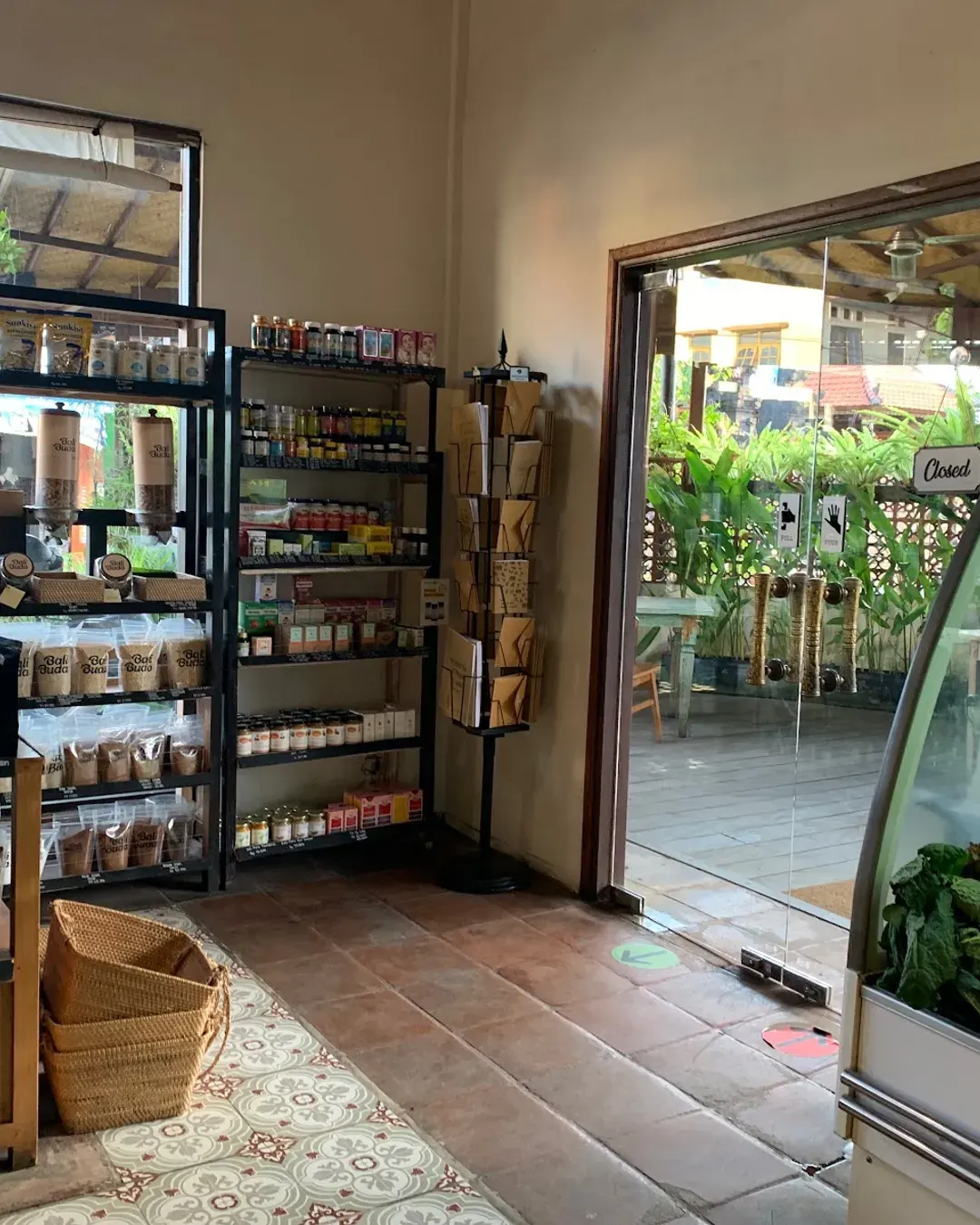
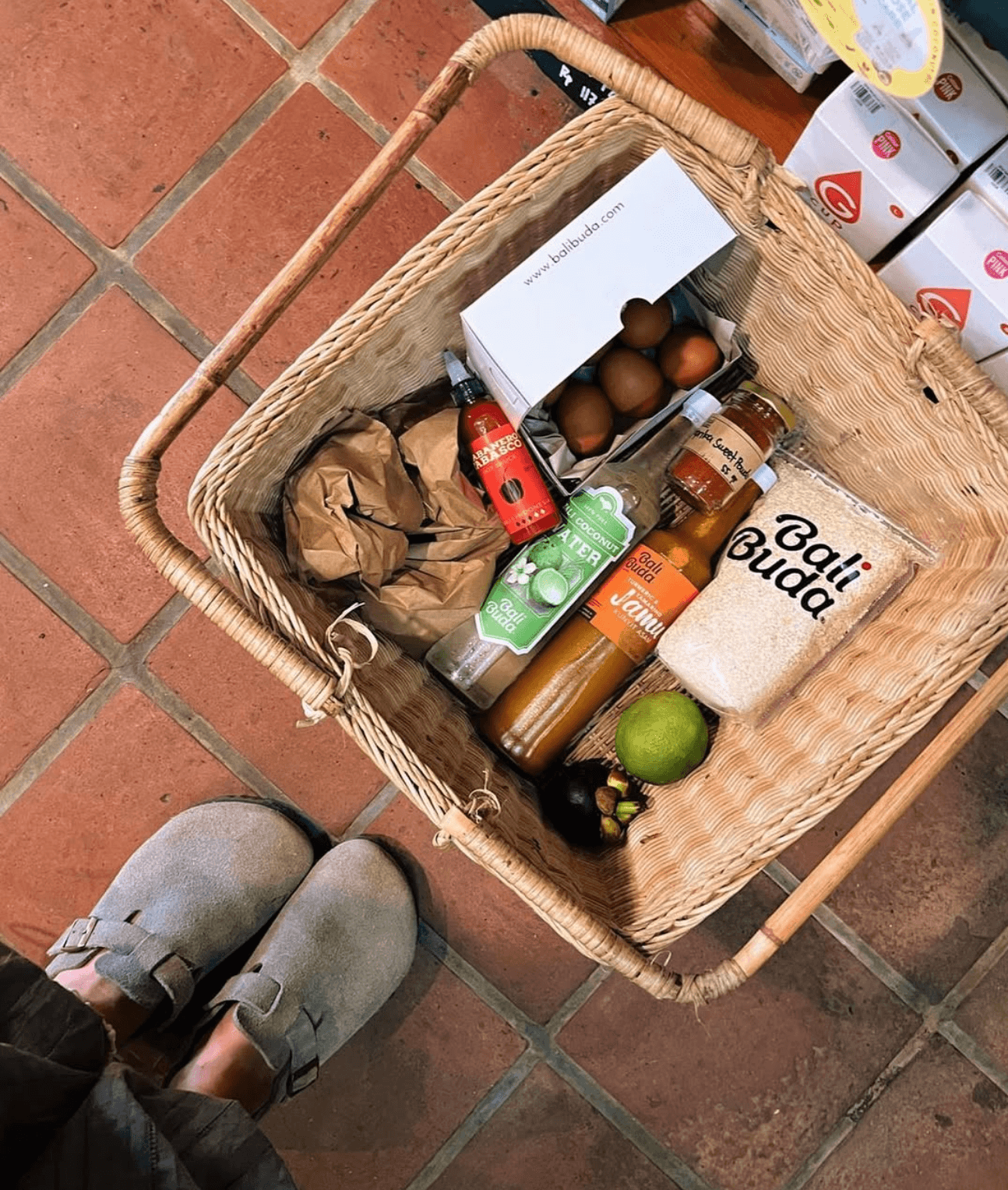
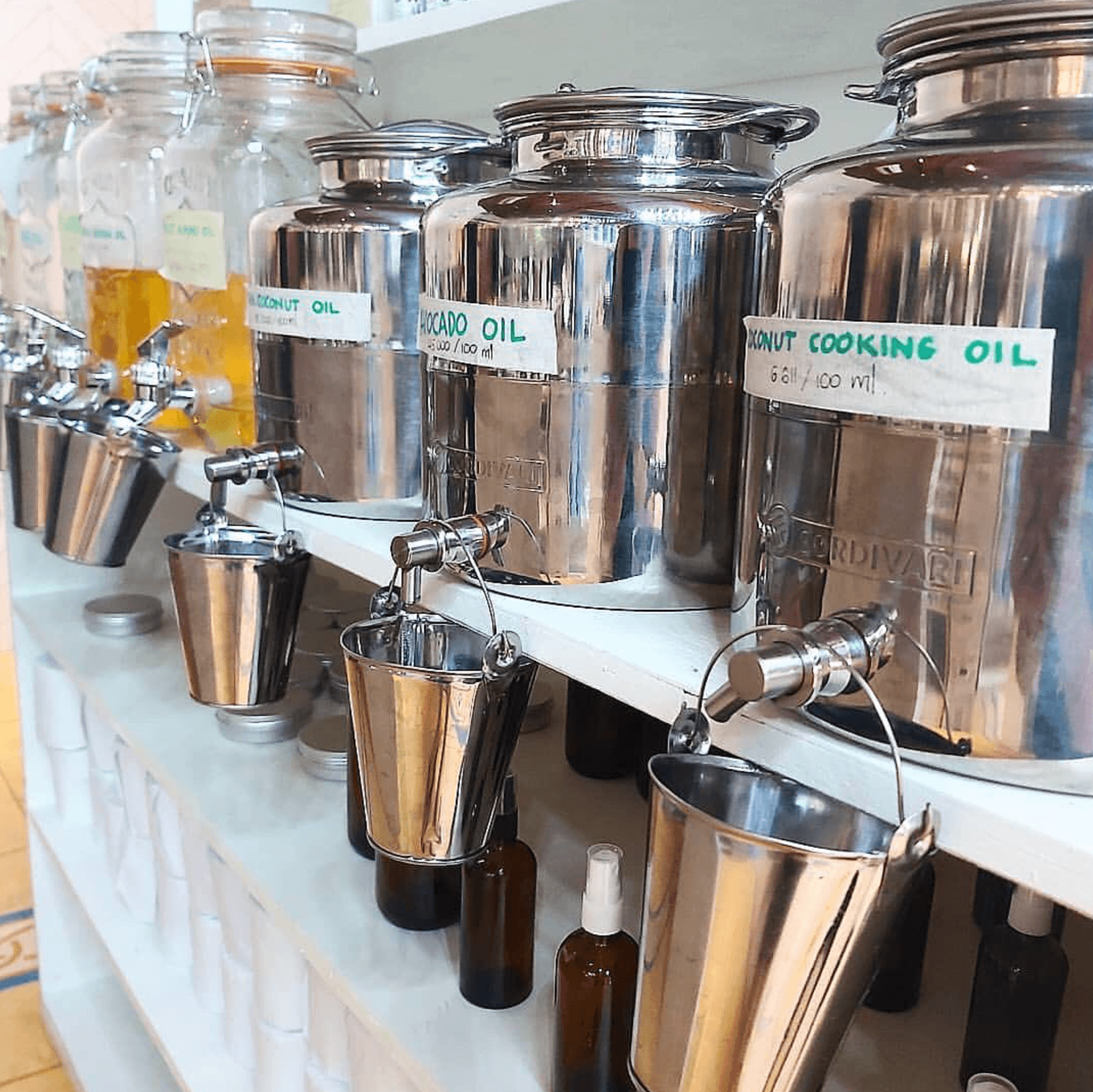
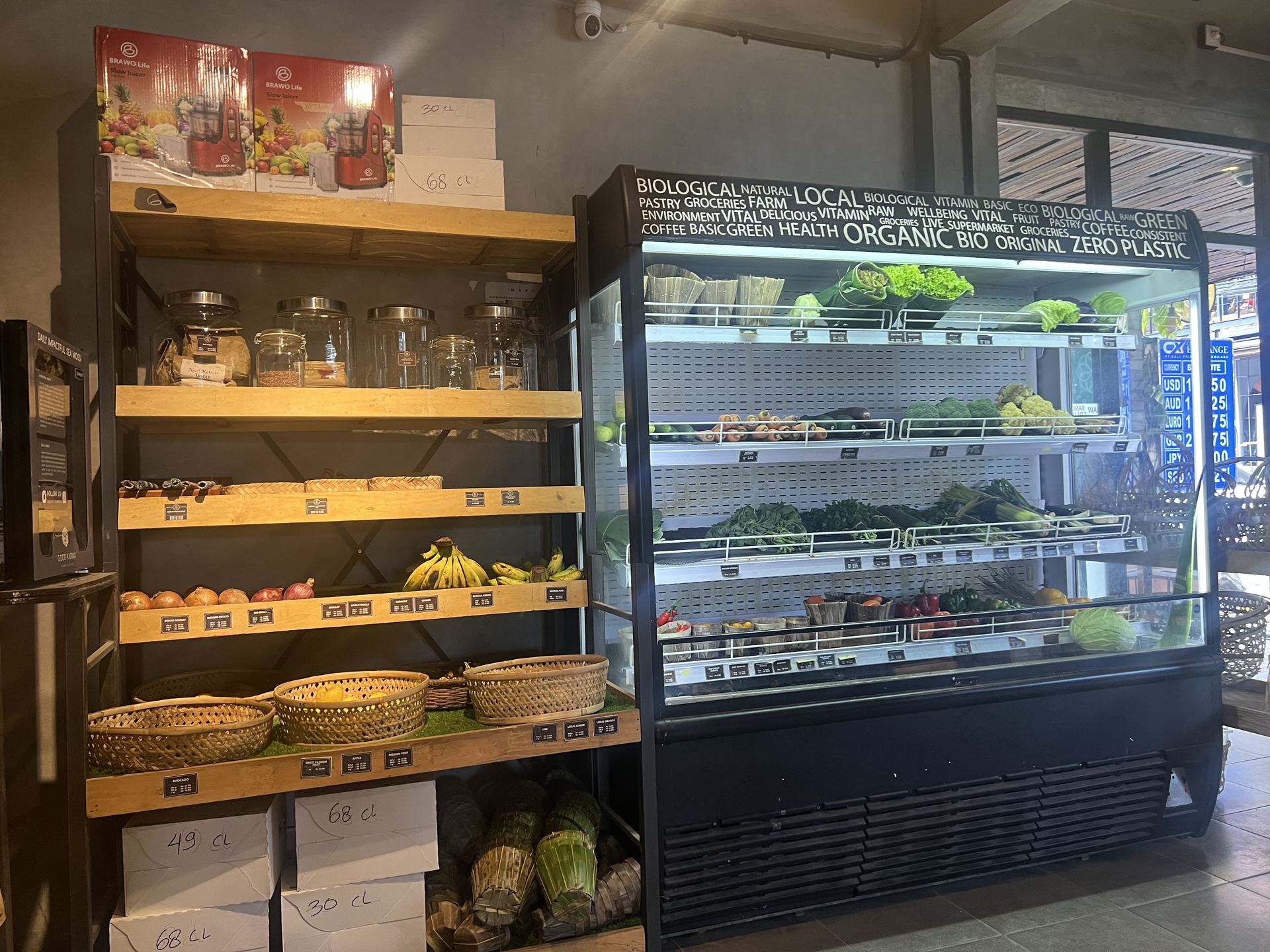
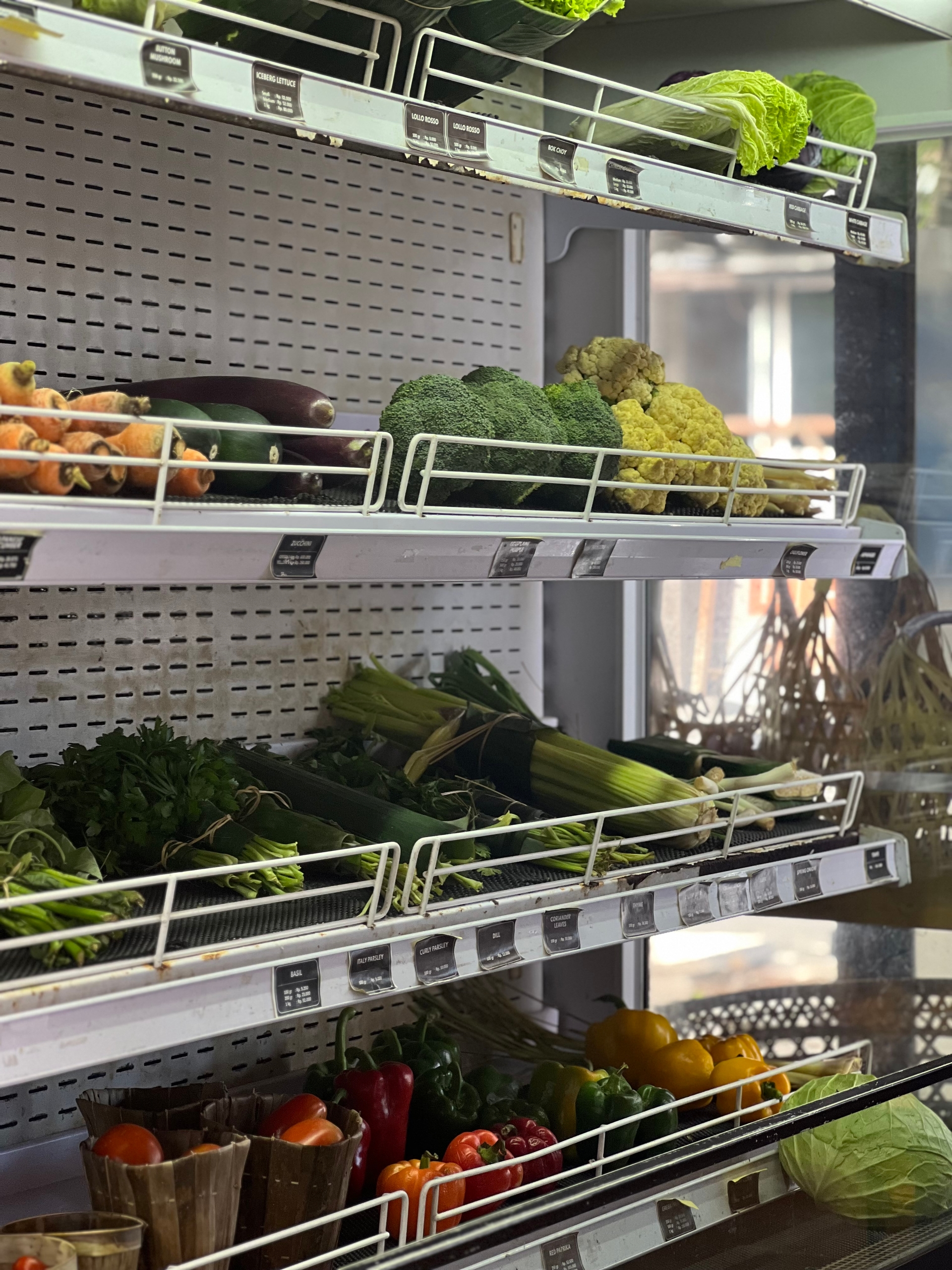
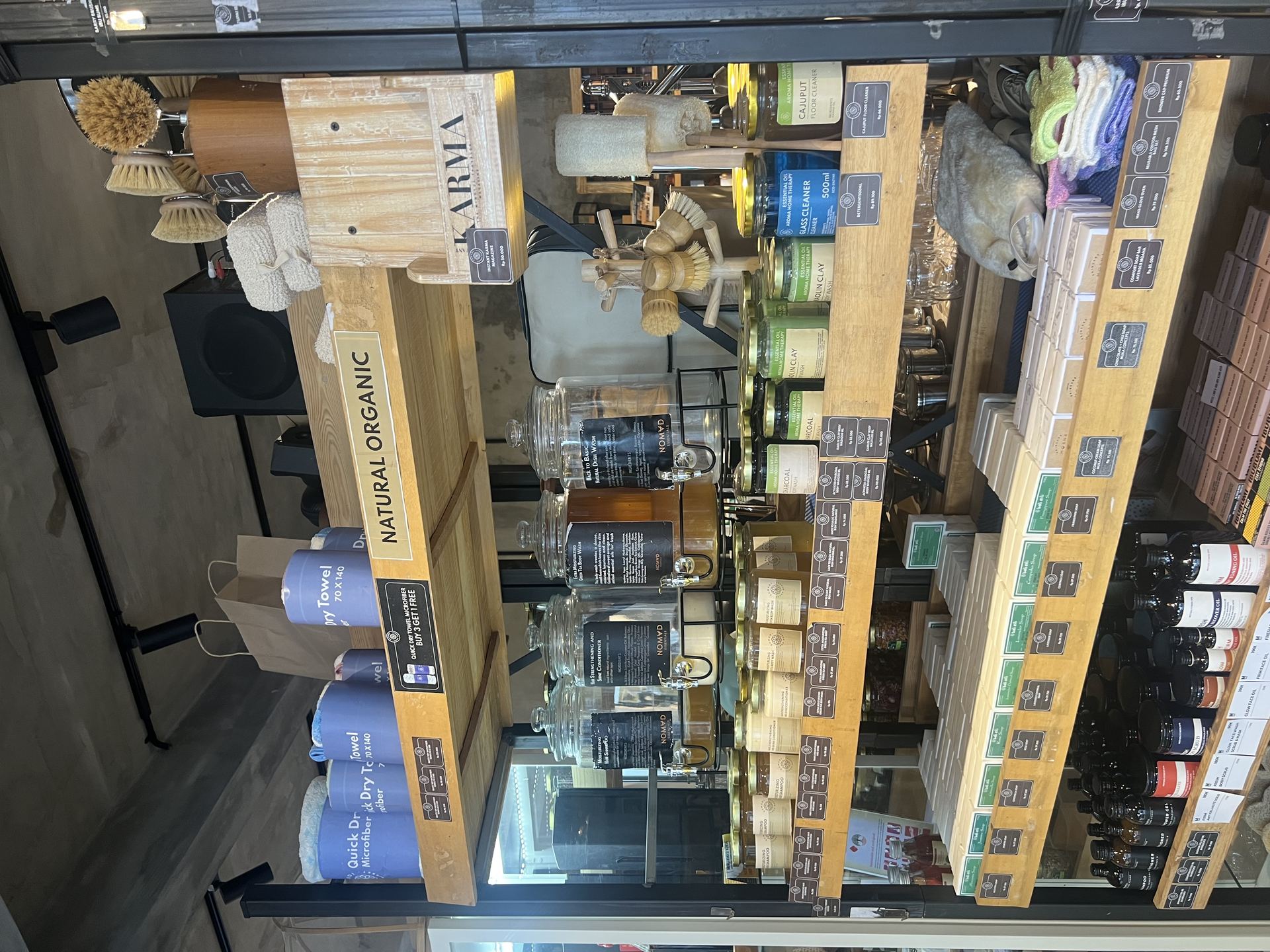
Bali Buda is a nice one stop shop, it includes dried goods like grains and legumes as well as fresh produce. Due to the poor water quality in Indonesia, they also sell water filters as drinking the water is not healthy. They also sold fermented drinks with their own branding as well as butters, chicken broths, vinegars, oils, drinks, pastries, baked goods, teas, reusable tableware, and other sustainable/zero-waste grocery store like items.
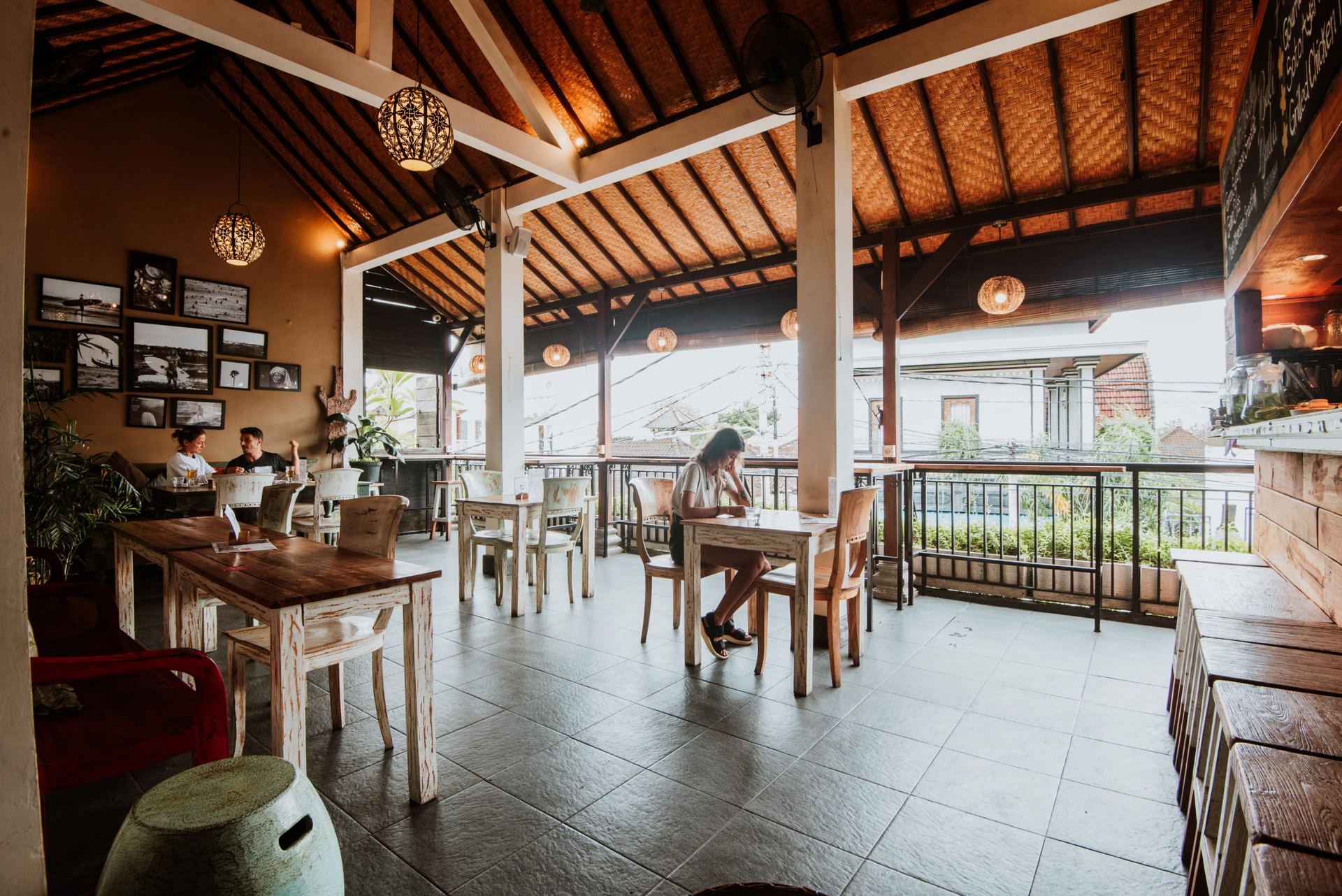
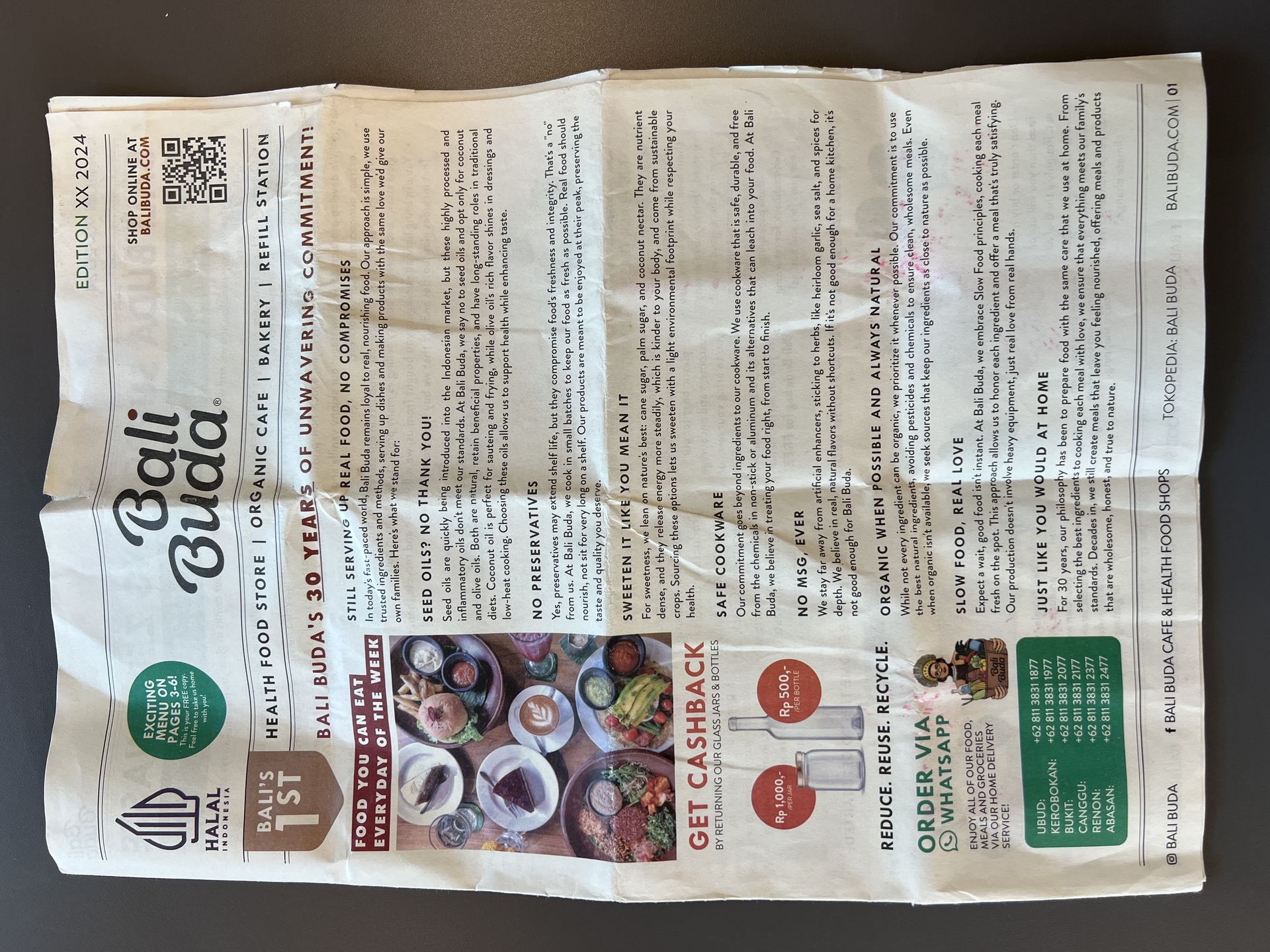
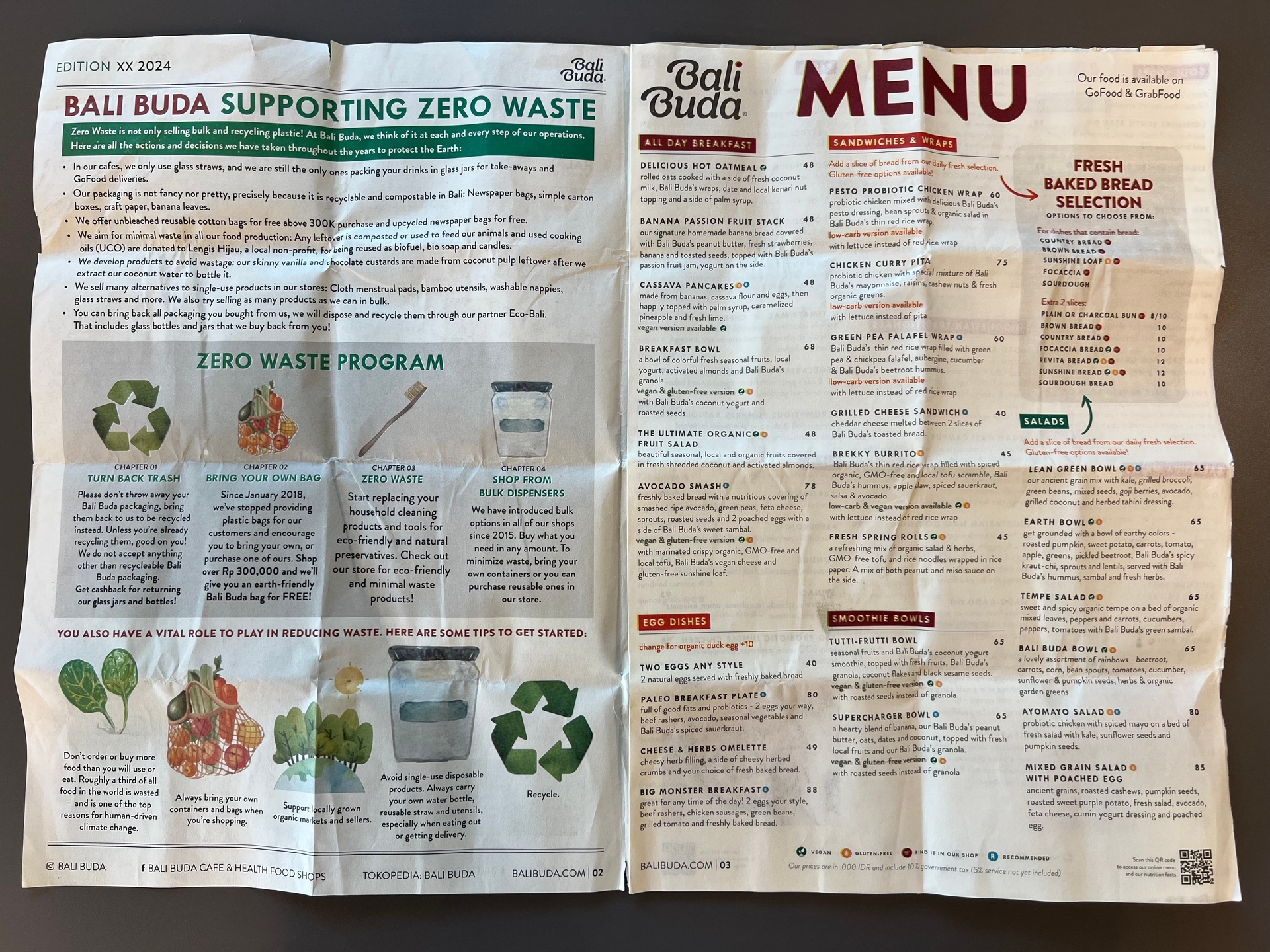
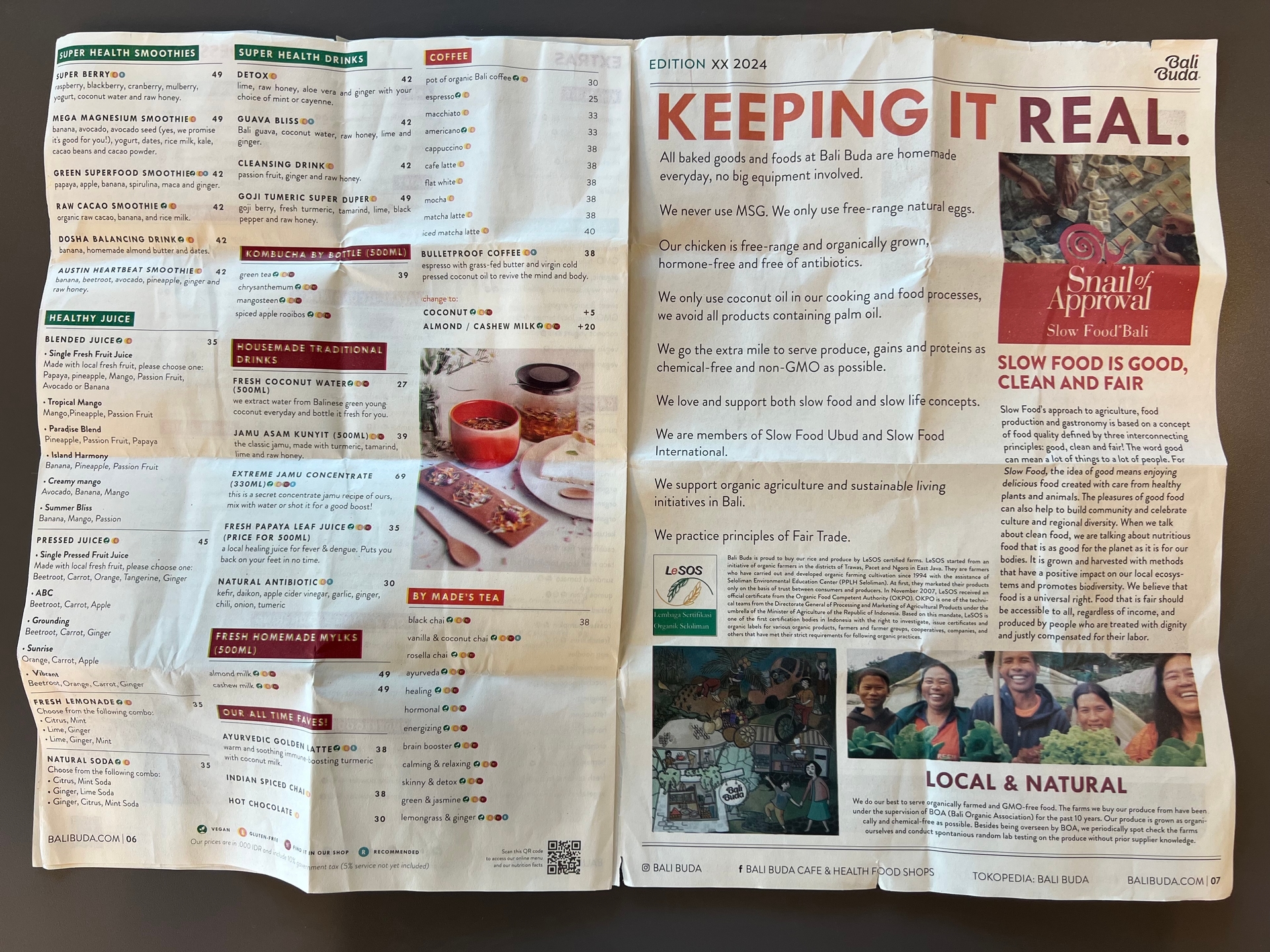
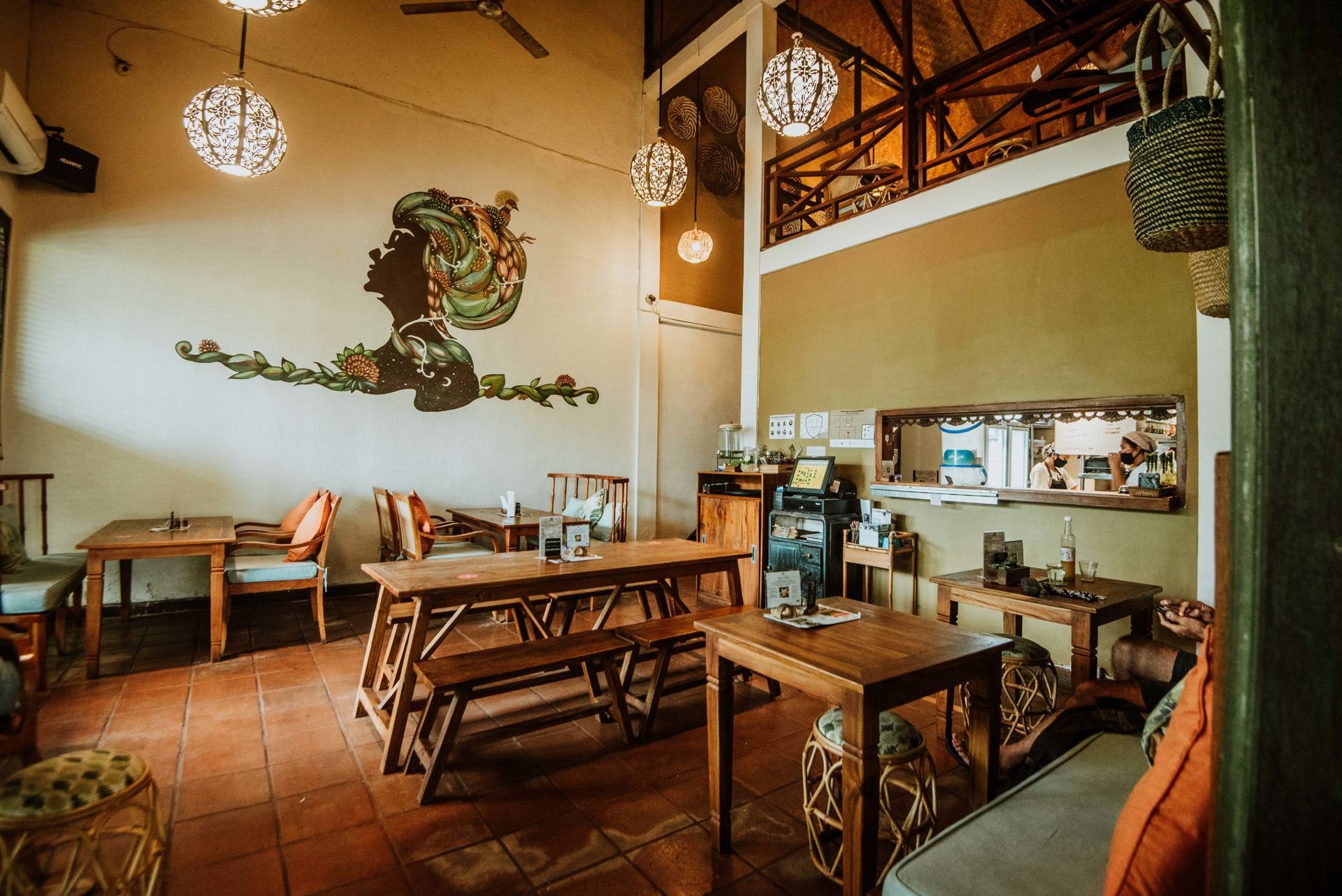
Each Bali Buda location also conveniently includes a restaurant/cafe. I sat down at a table in their cafe and a lovely store employee handed me a nifty newspaper which included information on the store and cafe as well as the menu for this location. One of its titles states: Bali's 1st: Health food store, organic cafe, bakery, and refill station. Again, this is one of my dream businesses to own, a one-stop shop for the good of the planet and peoples physical and mental health.
They market their restaurant as an organic cafe driven by the 'slow food' principle of healthy living. They state, "good food isn't instant." For ingredients, they don't use MSG, only use free-range natural eggs, free-range and organically grown chicken without hormones nor antibiotics, the sole use of coconut oil, and they "go the extra mile to serve produce, g[r]ains and proteins as chemical-free and non-GMO as possible." Bali Buda purchases its rice and produce from LeSOS certified farms, who are certified by the Organic Food Competent Authority (OKPO) since November of 2007. "OKPO is one of the technical teams from the Directorate General of Processing and Marketing of Agricultural Products under the Minsiter of Agriculture of the Republic of Indonesia. LeSos is one of the first certification bodies of Indonesia with the right to investigate, issue certificates and organic labels for various organic products, farmers and farmer groups, cooperatives, companies, and others that have met their strict requirements for following organic practices.
"We do our best to serve organically farmed and GMO-free food. The farms we buy our produce from have been under the supervision of BOA (Bali Organic Association) for the past 10 years. Our produce is grown as organically and chemical-free as possible. Besides being overseen by BOA, we periodically spot check the farms ourselves and conduct spontaneous random lab testing on the produce without prior supplier knowledge." They also have an ad on the back of the paper for a responsible waste management service on the island of Bali called ecoBali. They state that they provide waste collection and recycling to suit school's, home's, or business's needs, provide easy home composting systems, and offer eco-friendly products to support one's zero waste lifestyles.
This paper also includes an ad for a return program that Bali Buda does, like most zero-waste stores, which is a container return for cash back or points. I assume they also sanitize said bottles and reuse them to pack their in-house goods.
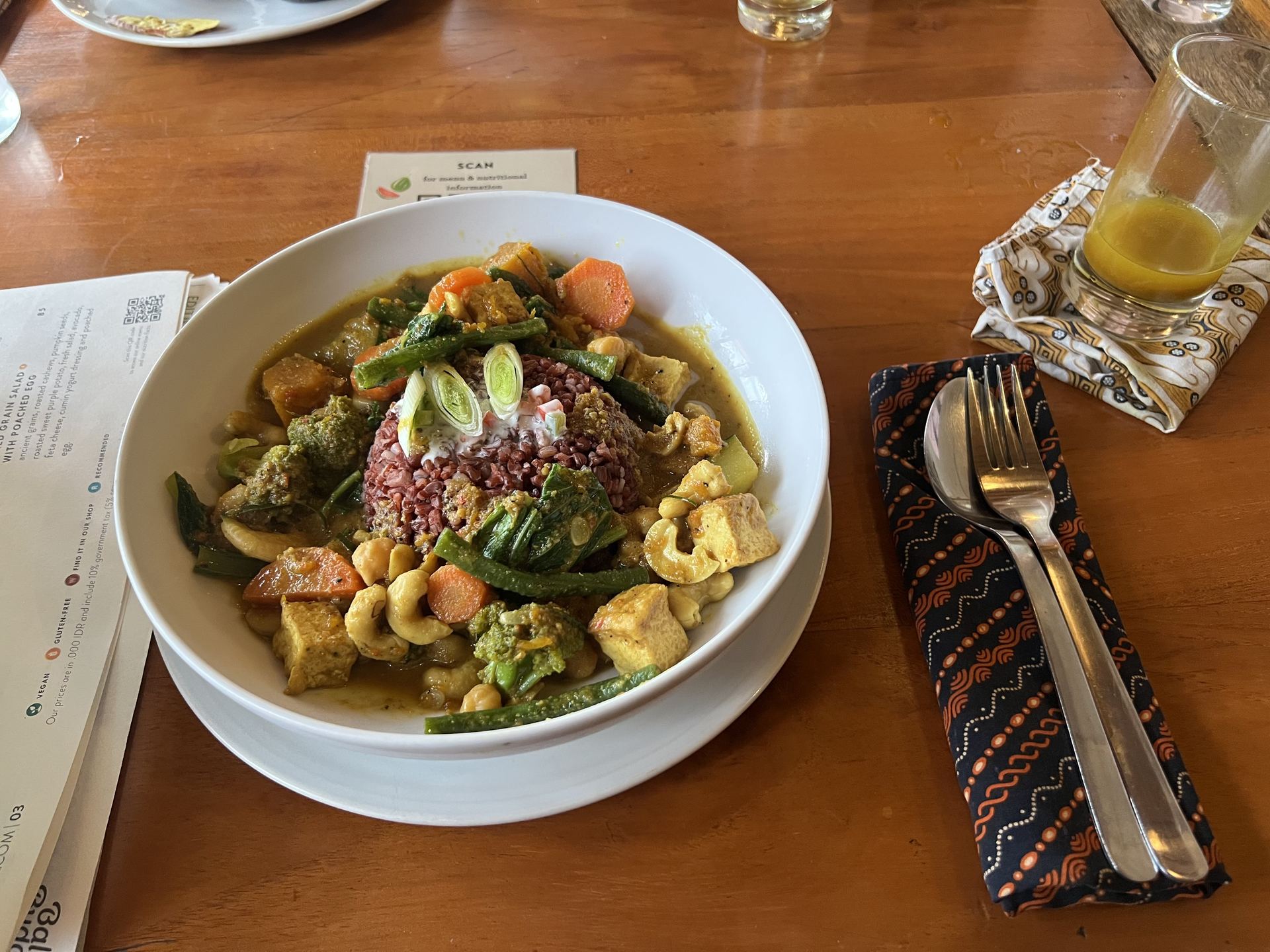
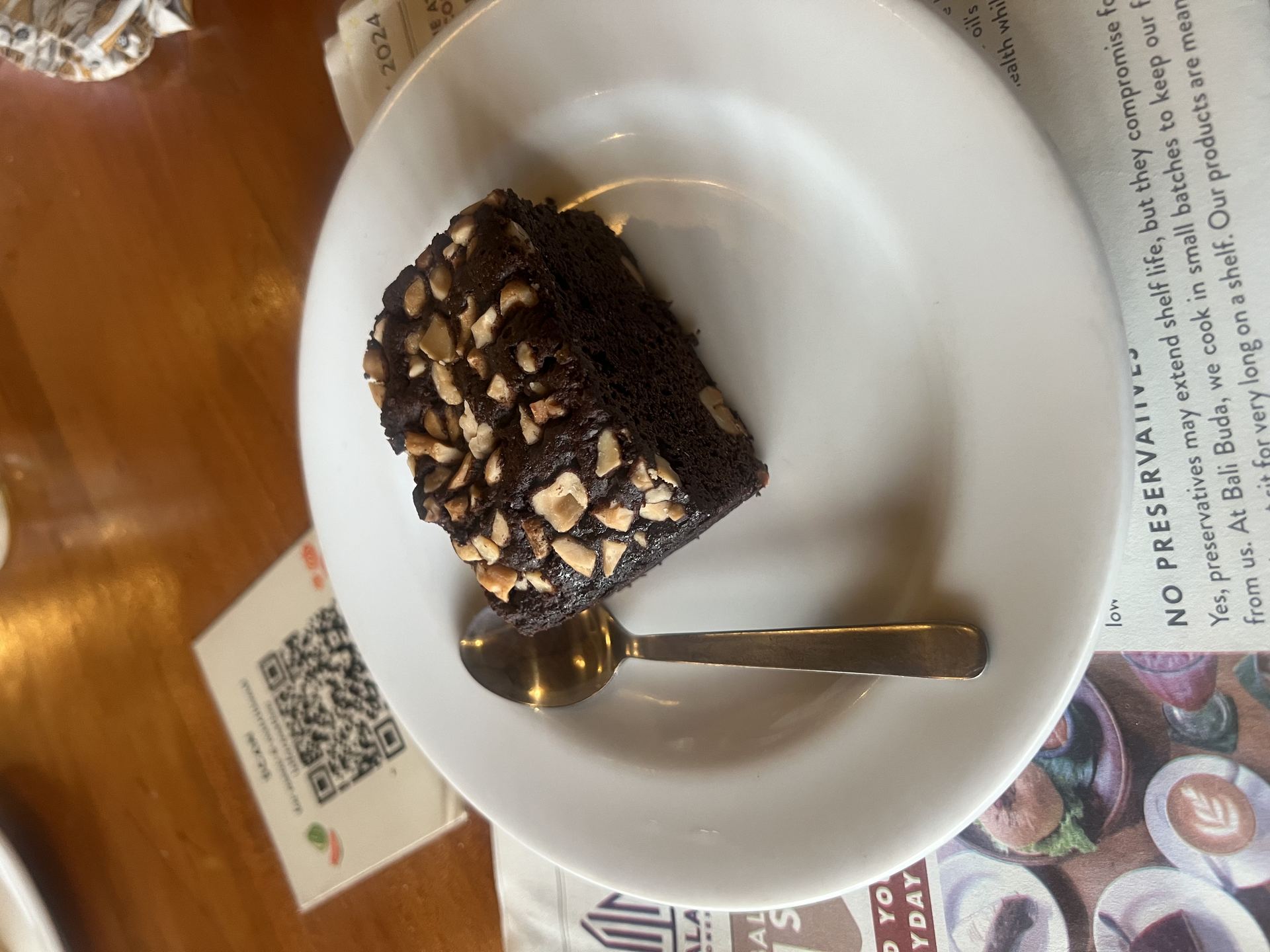
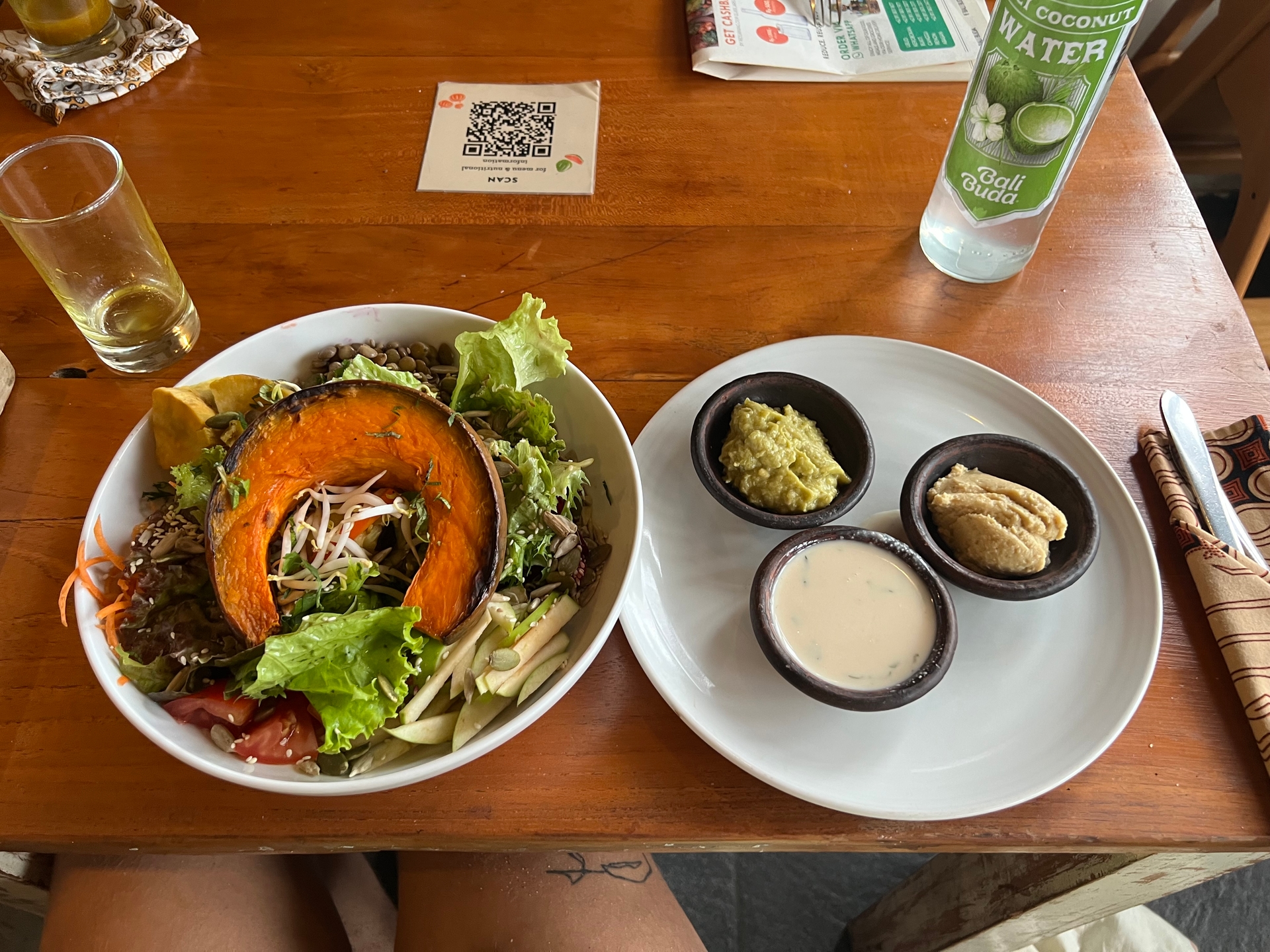
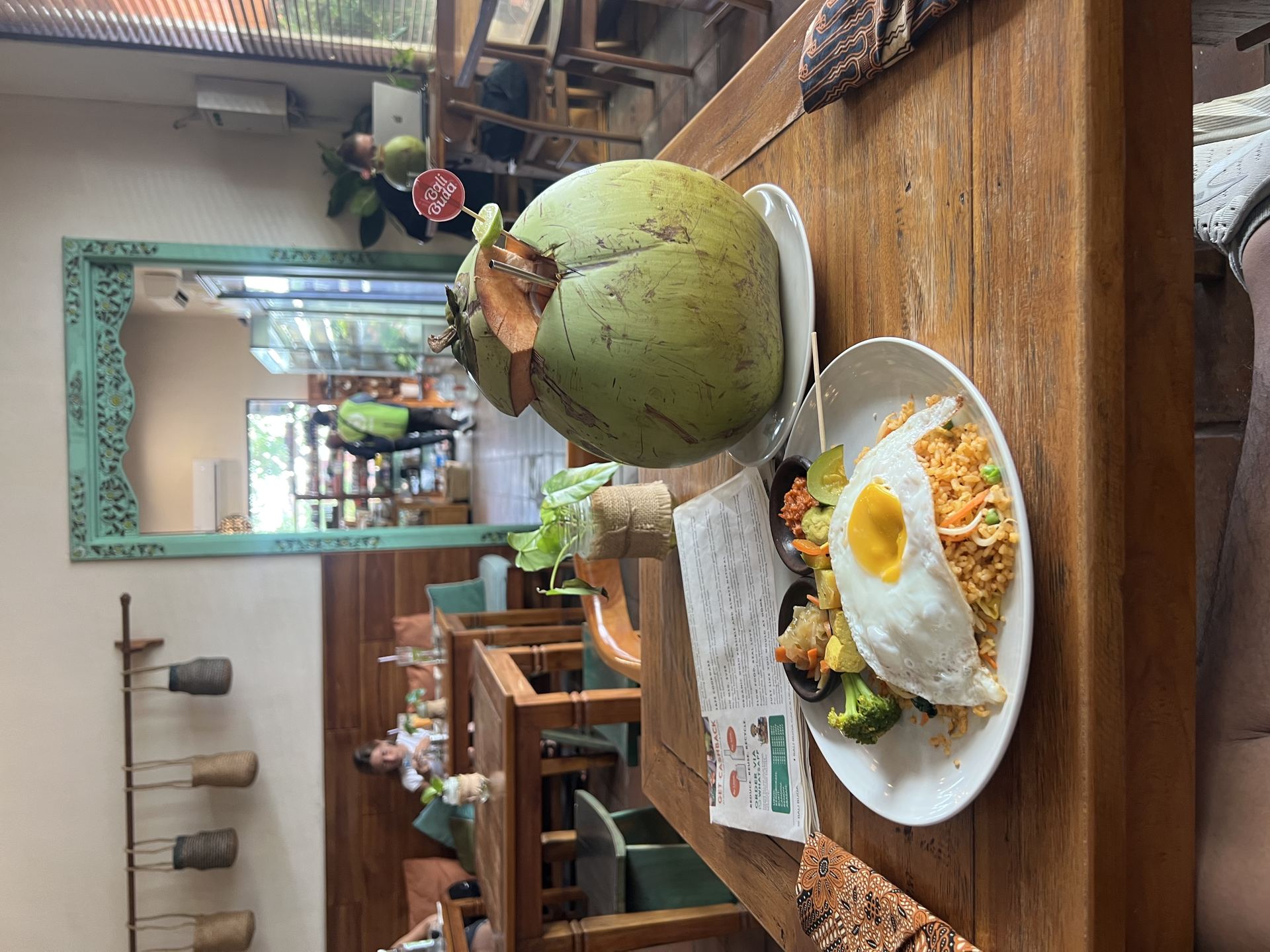
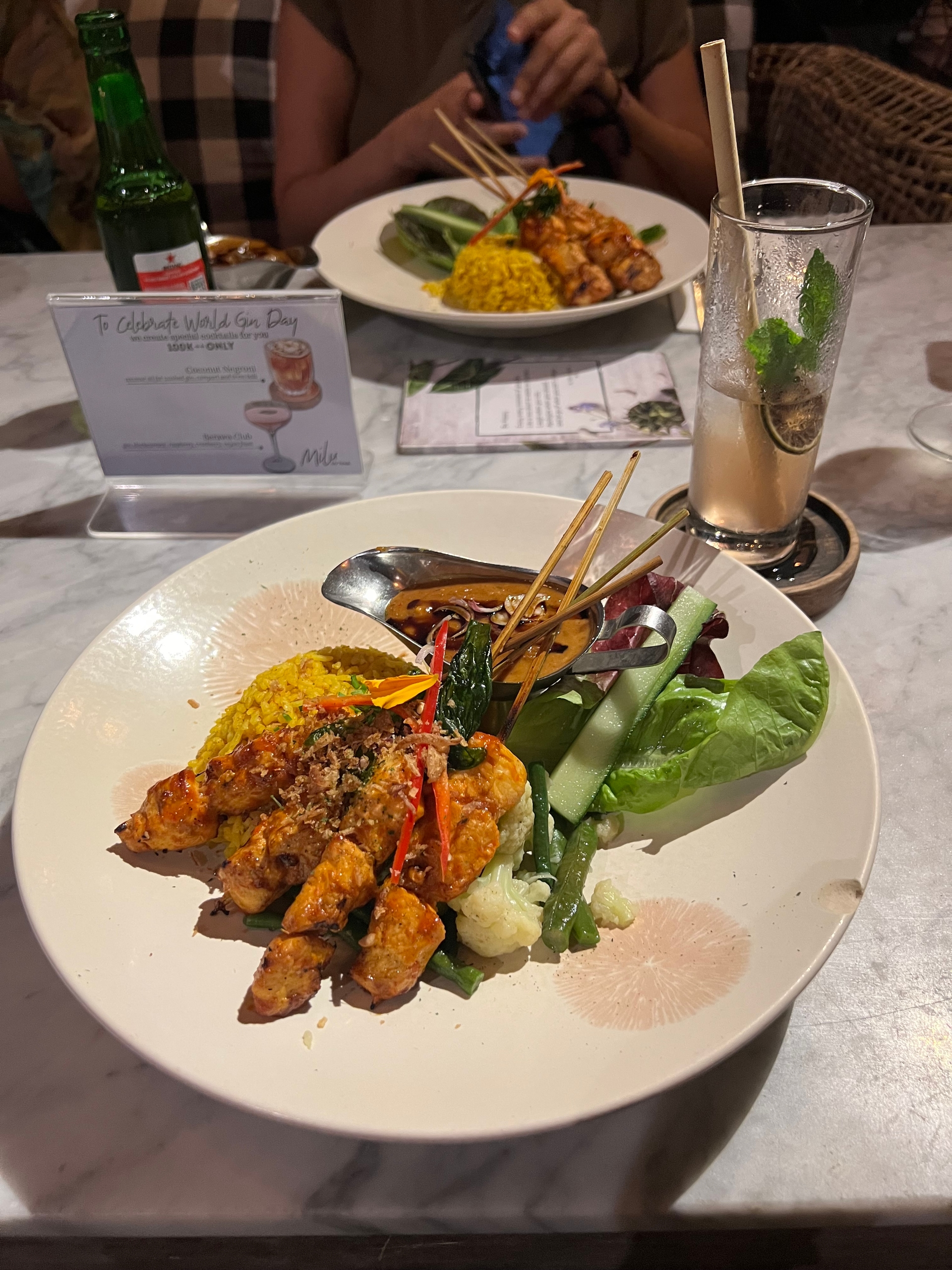
I ordered lunch here along with some new friends that I met through the Hostel World app, and it was pretty good food! It was well flavored, nutrient dense, and made me feel good eating it and in the environment of the cafe. I included pictures of their food as well because one of them brought it up jokingly and we went along with it. They also liked their food and said it made them feel healthy.
I have had constant shoulder pain for around two years now and had seen a massage place on my walk from my hostel to Bali Buda so I figured I can get one hear as it is $100 cheaper than in Claremont so we decided to get some and walked to Beach House Massage by Tonic.
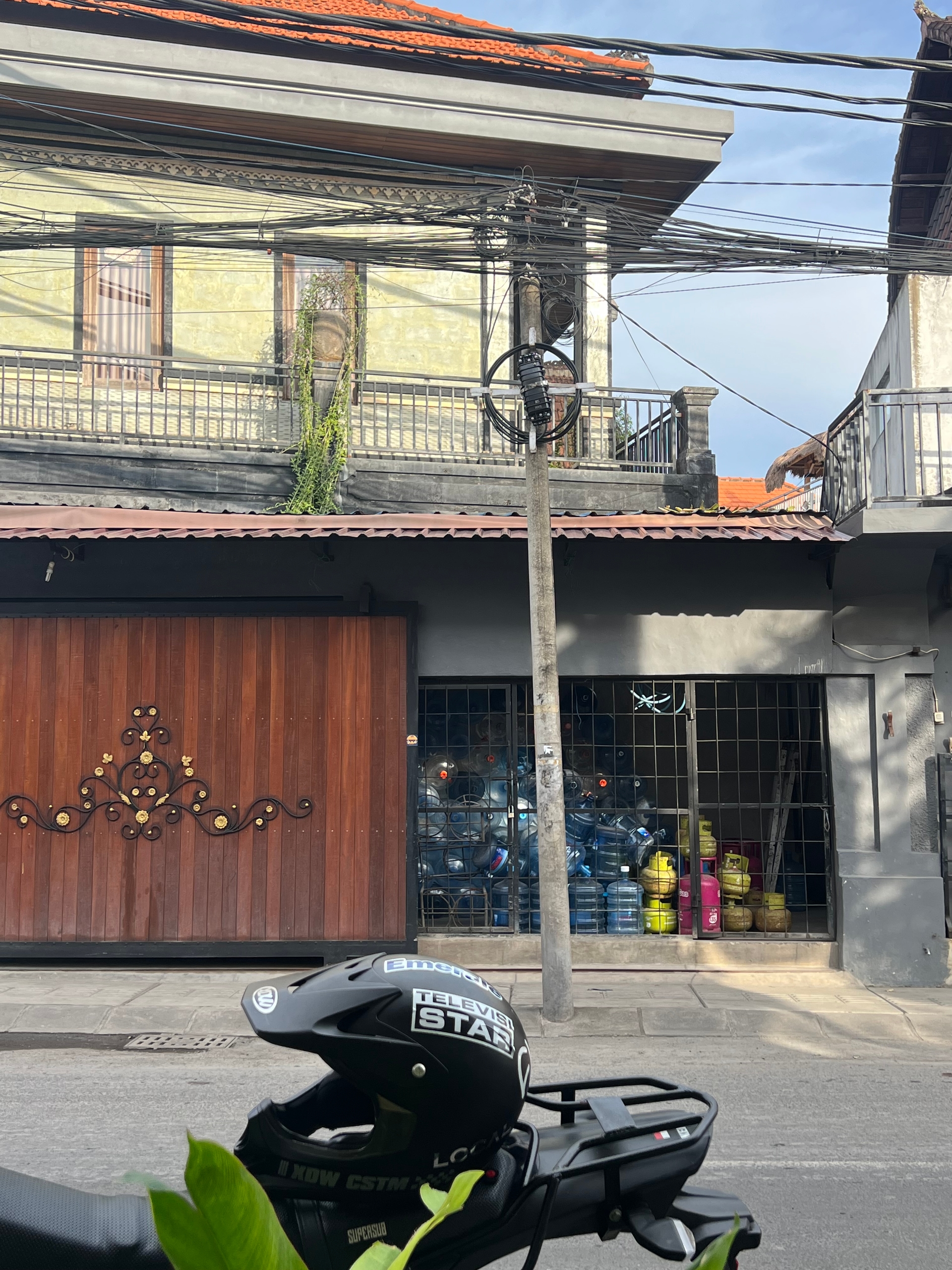
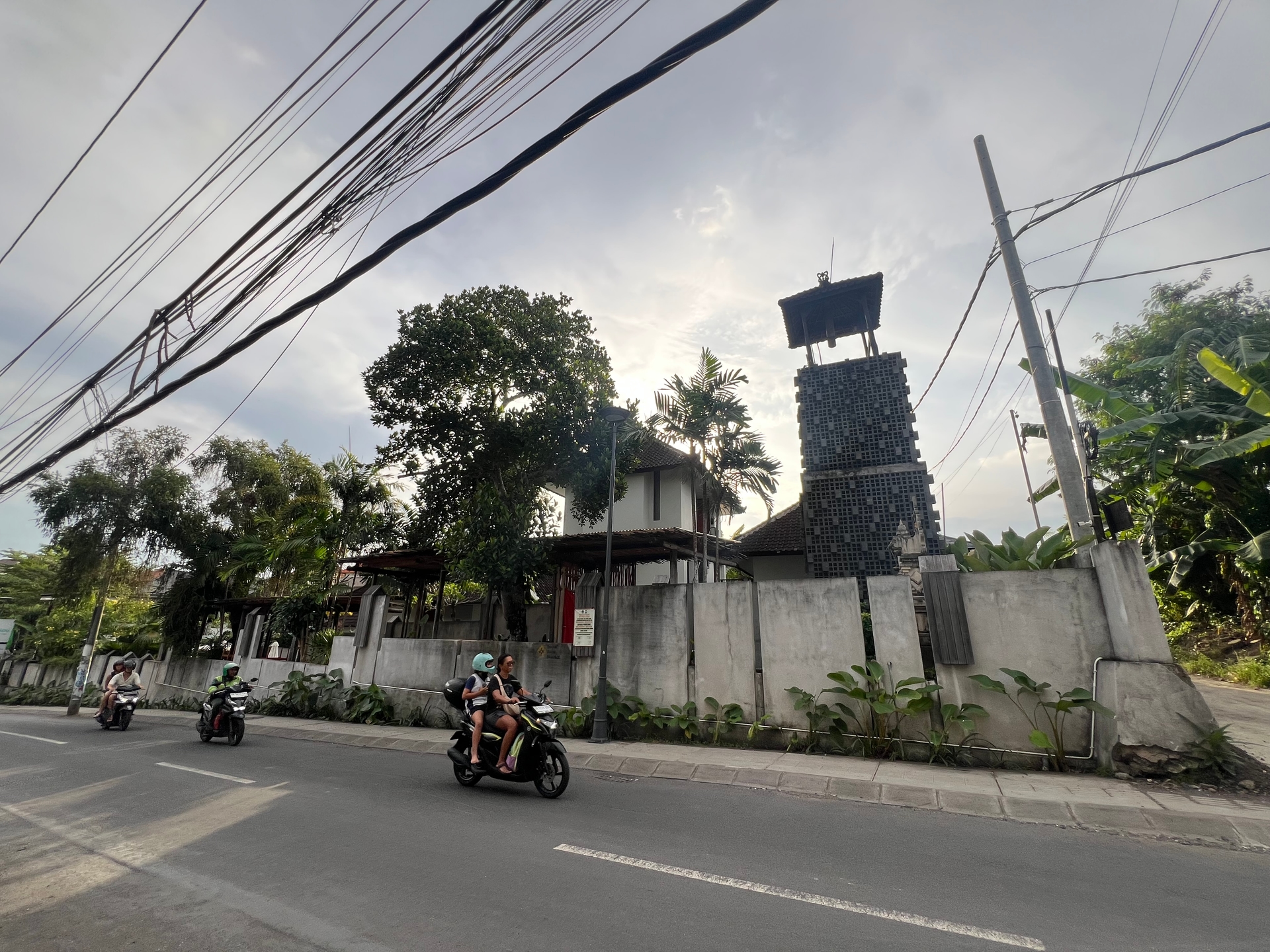
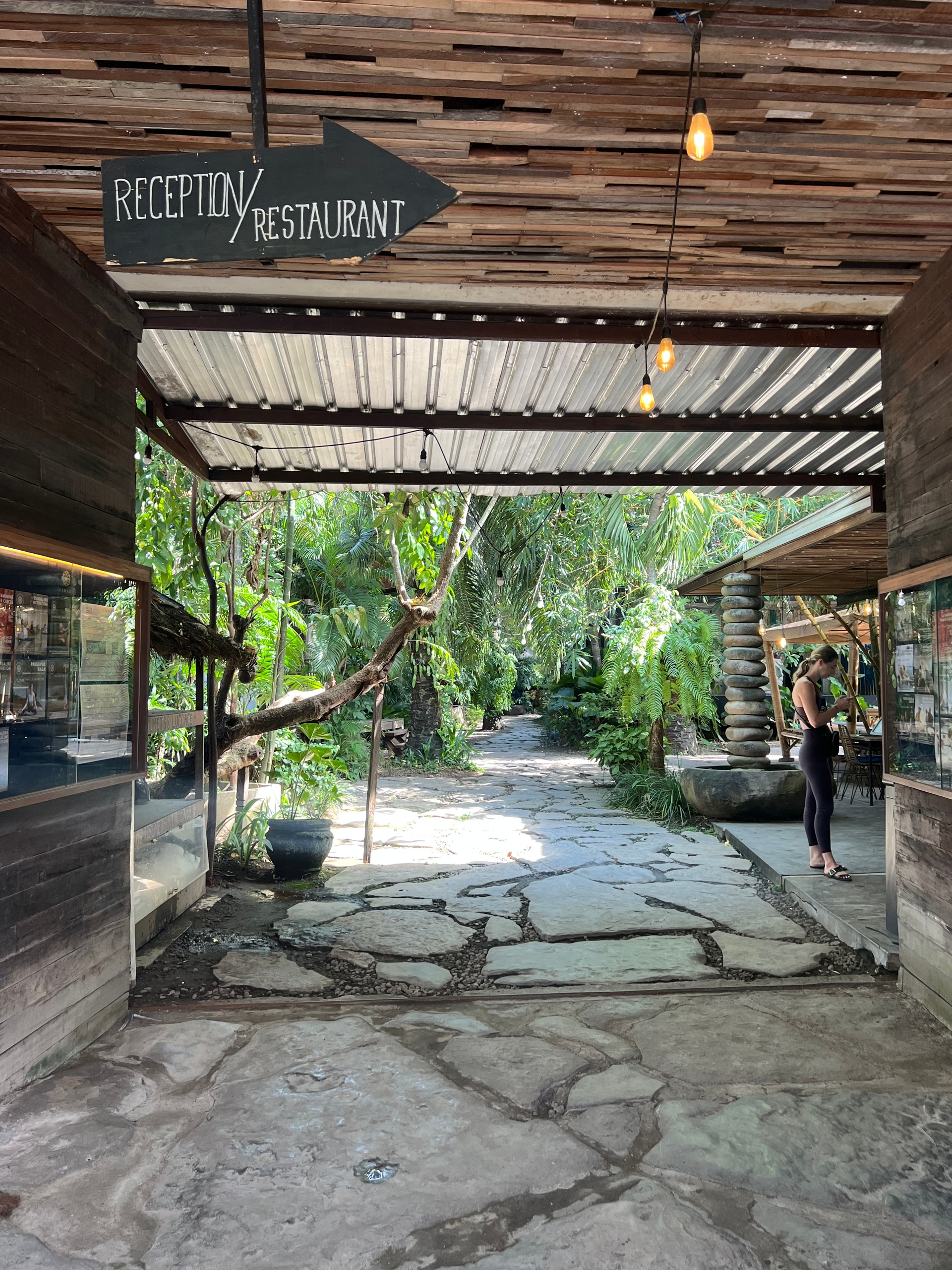
On our way there, we saw the typical Canggu street view, lots of plants everywhere, lots of walls surrounding villas, hostels, hotels, and the such, as well as two street roads with sidewalks and no in ground gutters, there are also lots of power lines atop the roads.
I came across a building that had a metal wall fence that housed empty water jug and propane tanks. I wonder if these supplies are more for locals, businesses, tourists, or other and how the water and propane/energy consumption of the Island works due to a lack of clean drinking water and developed infrastructure.
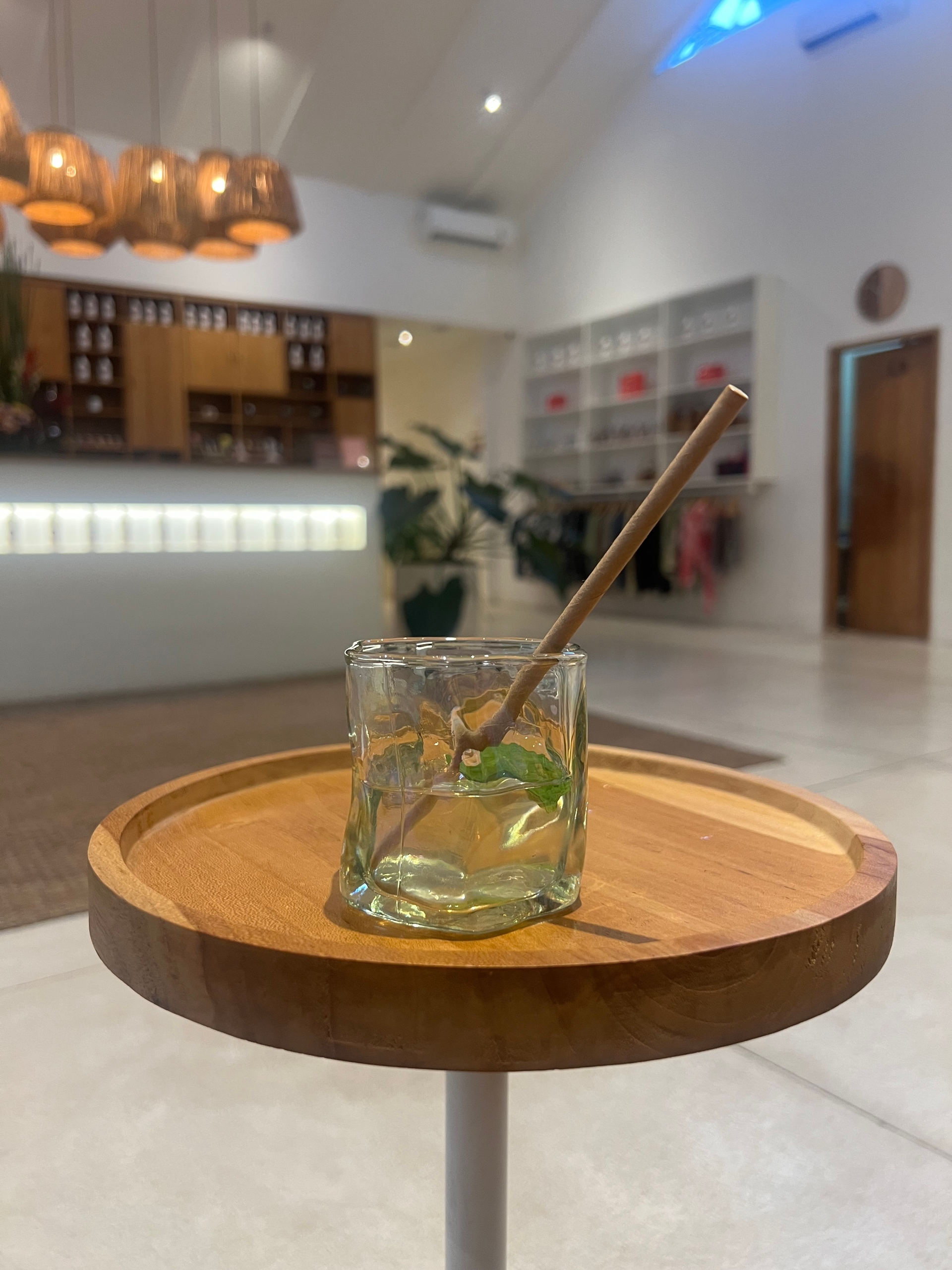
When I got to the massage place, they gave me some sort of infused water in a glass cup paired with a paper straw. I like that they are using glass, which again to tie back to financial accessibility, this might just be due to the fact that glass or ceramic (reusable) items are often viewed as more fancy than their plastic or paper counterparts. The paper straw is a nice touch as even SG, a top leader in sustainability still uses plastic straws.
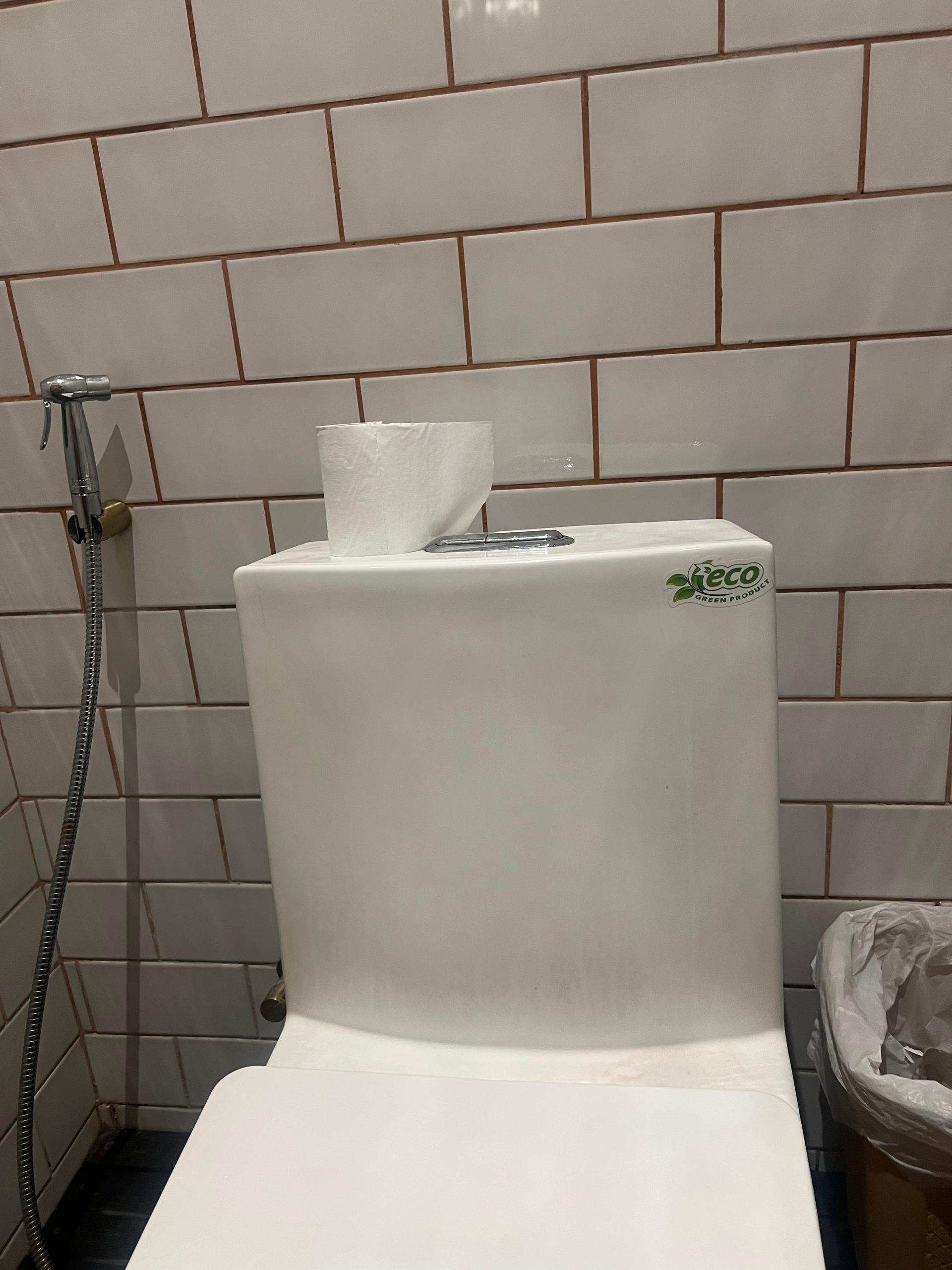
At the massage place, I used their bathroom and their toilet had a sticker that read 'eco green products', I am curious as to whether most locals and businesses use toilets that use less water per flush or if this is just a fancy item for top income people or businesses.
The bathroom stalls each had a light switch per toilet room, this seems like a sustainable choice, I don't know if that was by accident or design, but it seems to be a good way to reduce energy consumption as only the in-use stalls need light.
The toilets were also all equipped with hose bidets, a nice thing to use, and a sustainable way for bum hygiene in the reduction of toilet paper.
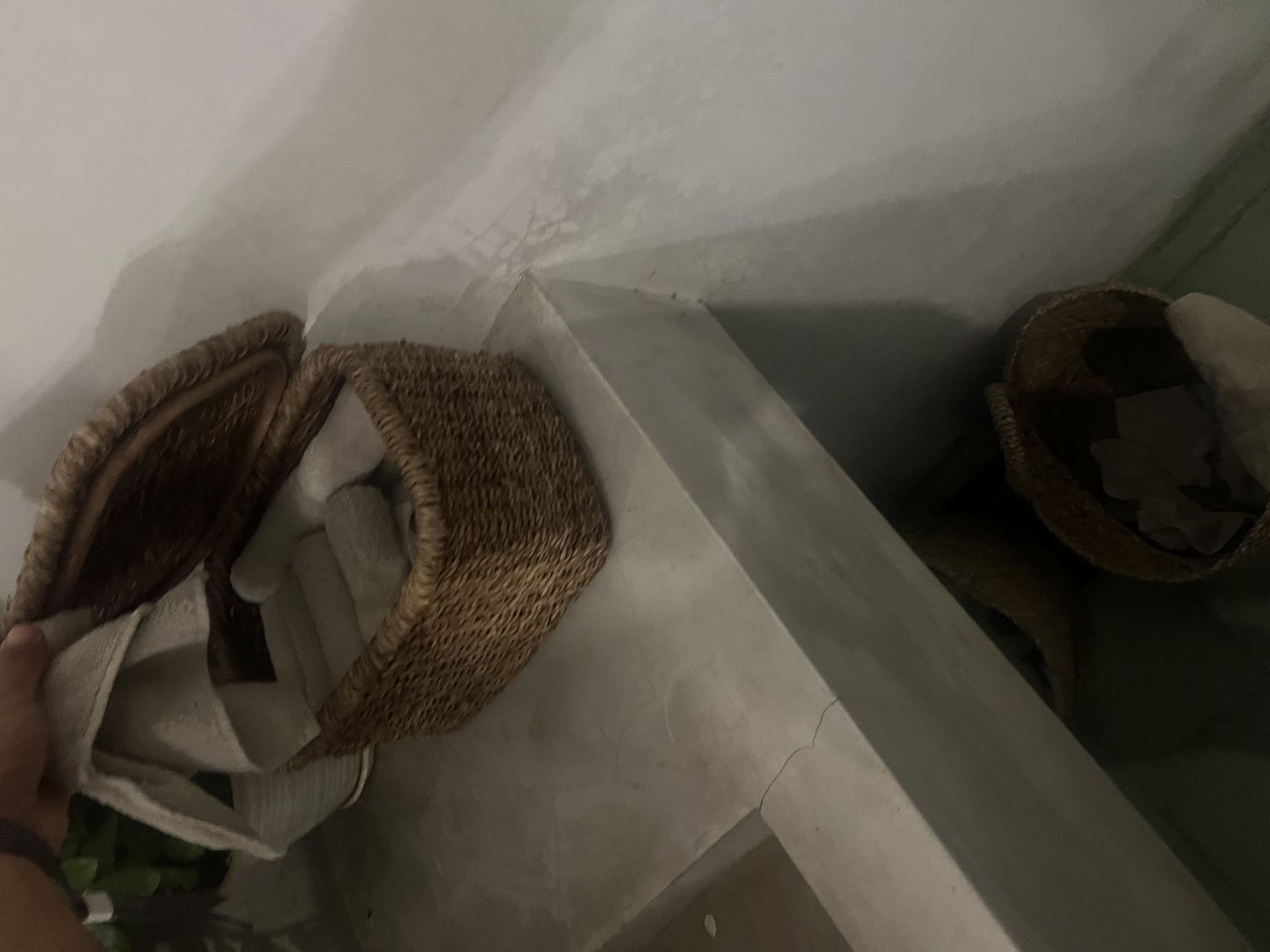
After our massages, it was already dinner time so we went to a place called Pali. I used the restroom here as well and their sinks only had reusable hand drying towels to dry one's hands, how cool! I would not expect this from a tourist area in a non-very fancy restaurant. They had a little basket full of clean towels and a basket on the floor for soiled towels, this system should be used everywhere!
The next day, I visited one of the other Bali Buda locations as I had scheduled an interview with the lead manager of Bali Buda, Mr. Arda. We made our meeting spot at Bali Buda Kerobokan, located not far from their Canggu location. This location offered pretty much the exact same things as their Canggu location, which is a good thing as they offer a lot of essentials and food items for sustainable daily living. Below are notes from our interview:
In the cafe, he pointed out that all the flower jars as reused, they were jam and drink jars prior to their use as flower vases.
He states that online sales are hard
like packaging, and plastic bags
With Grab or Gojeck, some of the top leaders in transport and food delivery, Bali Buda offers local delivery to their customers.
Allowing acess to organic foods in around 15 to 20 minutes
again, here we see the concept of 'slow food', some customers claim that this wait time is way too long for food, while other value the time that it takes to create real food and not just fast food that has been reheated in, say two minutes. I can see where this might a an issue for some, especially those with fast paced jobs like in the states where fast food is consumed by half of the people who choose to eat away from home. In Bali, there isn't really any fast food, all of it is either pre cooked and kept warm in restaurants, or is cooked to order, this is most likely due to the types of people in the area: locals, who most likely eat at home or from the place they are working at if it is a food service location, or tourists(including foreigners who moved here like digital nomads...) who have lots more buying power in Bali compared to their home locations where fast food back home is most likely on par, or more expensive than a nice meal at a restaurant here in Bali.
They have 6 locations across the island!
This says a lot for the demand for sustainability in Bali, again primarily caused by tourists/foreigners. But, most sustainable demand is good demand in my book.
Most Indonesians don't know about sustainability or healthy living, and even if they did, they wouldn't be able to afford such lifestyles in the current state of their economy/society.
He states that sustainable shopping like at their stores, is around 2x more expensive than regular shopping here in Canggu.
He says that the ratio of native Indonesian locals to foreigners/tourists is around 1:3.
I asked him he has noticed if foreigners take a toll on the environment and culture of Indonesia, and he says of course they do.
He shared that due to Indonesias primary religion, Hinduism, no one can build higher than the coconut trees on the Island. This is something I haven't heard before, but it is a very cool thing to realize once I stepped back outside. I wonder if this is better or worse in regards to sustainability, as for one, this requires less resources as most buildings will only be around 2-4 stories, however, this most likely just means that urban sprawl will require much more land as there aren't any boundaries due to religion to spread outwards and not just up. I asked him if he knew why this rule is in place and he said that its maybe because the island would sink if the built too big.
He stated that tourism shifted from another part of Bali to Canggu, I forgot to ask which part.
Since stepping foot in Bali, I have noticed an abundance of furniture shops. I reckon these are to furnish all the new villas and businesses/accommodations that foreigners and tourists are residing and using.
I asked Mr. Arda if he thinks that these pieces are built here in Bali or imported from elsewhere. He said they are probably from China, I would have thought that they were from Bali as labor is cheap here as well, but maybe resources aren't as abundant or labor, systems, and or resources are just cheaper in China if this is true.
Eco-Bali is the organization overlooking zero waste in Bali
not a government entity
He said that the government also has programs like this but they are hardly as good
I pointed out my observation that waste bins for homes are tiny, he responded that waste management people don't come often enough, and people don't have space to place bigger or more bins due to space constraints as the island is small and crowded.
States that in Indonesia it is very hard to buy land or a home.
temporary housing is easier to find, I assume he means renting
now the island is so full
foreigners leasing homes
locals loosing area
Bali's average income per capita is around 80-150 USD, while housing for the average joe costs around 200 USD, so practically no one can afford housing nor the ability to purchase their own home or land.
Bali Buda (BB) selectively chooses its suppliers
There are a lot more people shopping zero waste, maybe because more and more people are becoming aware of their role and responsibility in regards to the environment. They could also be realizing that healthy living is actually good for them, no surprise I say.
He states that the government has been helping more over the years in sustainability, because if not, the island will sink. I am getting a signal here that maybe Mr. Arda and possibly other locals might fear the island sinking and this could be a driving factor for their view on how they act in their daily lives. This is a good and bad thing, good as it encourages them to make more sustainable decisions, and bad because we have gotten to this point where we fear for our lives.
He says that the Island produces more than 100 tons of trash per day, and thats a lot to handle!
landfill/incineration
Northern Bali is where there are less tourists and more agriculture.
Most farmers sustain traditional farming practices as they realized that these methods care for the land itself and they know the value of the land.
I asked if he could tell me more about the owners of BB
They are an older female American, who moved to Indonesia around 35 years ago!
Bali Buda has been around for more than 30 years now!
She's now going to give the business to her daughter
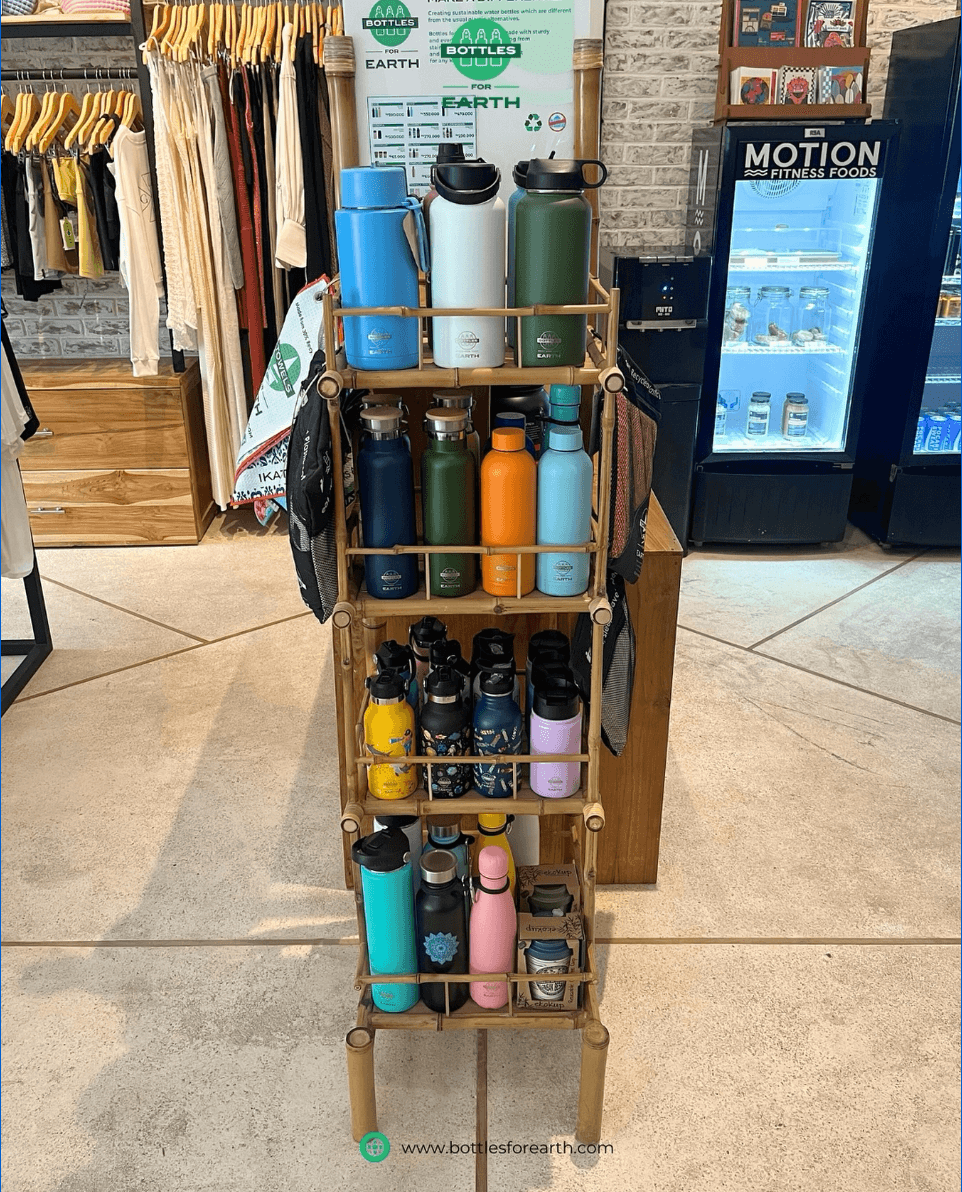
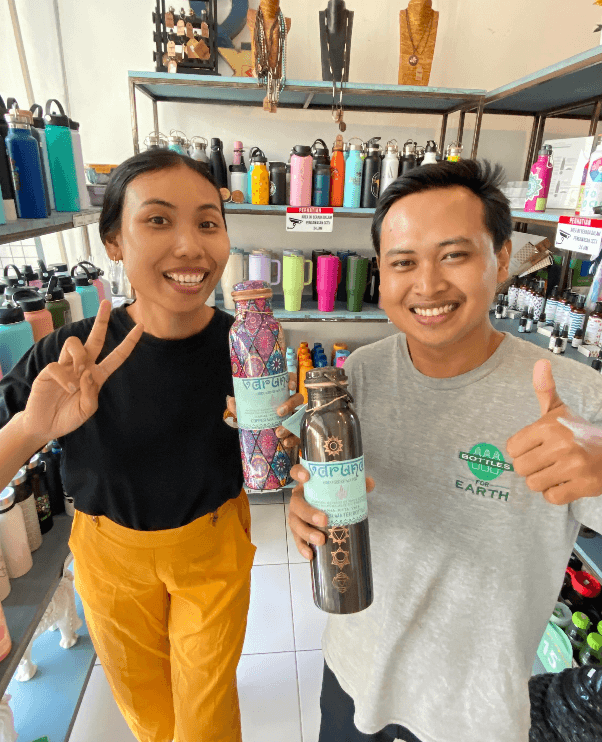
It wasn't lunch time yet, so I decided to walk to another zero-waste store that was conveniently located across from BB Kerobokan, but on my way, I saw this little shop called Bottles for Earth, the name drew me in and I went in. They sell reusable water and drink bottles, cups, and mugs as well as beach towels and some misc. decor/ home goods. I explained who I was and why I was here and if I could interview the owner. He was thankfully there, and agreed to an interview but was shy about his english, one of his employees translated for him and I asked some questions.
Bottles for Earth (BfE) started in 2010
They primarily sell metal bottles as they saw the use of so many plastic disposable bottles on the island and wanted to mitigate that.
He said that they collaborate with zero waste stores and terra water bottles
Most Indonesian people use plastic water bottles! This is makes sense due to the water quality but seems crazy to me as everyone needs to drink water, and there are a lot of people on the island, this must equate to excess of water bottle waste.
He says that some people don't like reusable water bottles as they think they are too heavy and plastic water bottles are convenient and cheap. This is also a very valid answer as the economic level of income here is low and life must be tough compared to how things are in the states for the average American.
They have sold more than one million metal water bottles! That is an insane number of units sold, at least to me on a micro level!
to gyms, schools, businesses, and kids
Businesses buy more while locals not as much as they are more money conscious
He started BfE because of his love for Bali and his observations on how plastic bottle pollution was heavily affecting Bali and her beauty.
States that protesting and protesting won't do much of anything
Mayamar outlawed single use plastic bags but plastic bottles haven't yet been
however, government officials are forbidden to use plastic bottles, that a cool rule! We should all be forbidden to use them, but community leaders like them do make much more of an impact to their followers compared to the average joe.
States that business isn't that hard, people are more aware of reusable bottles and their disposable counterparts harm on the environment. There are also more refill stations than there were in the past.
He says that even festivals have refill stations now, he says that this is also good for security reasons as now people can bring empty bottles and event goers can fill them up for free inside instead of brining liquids into the event.
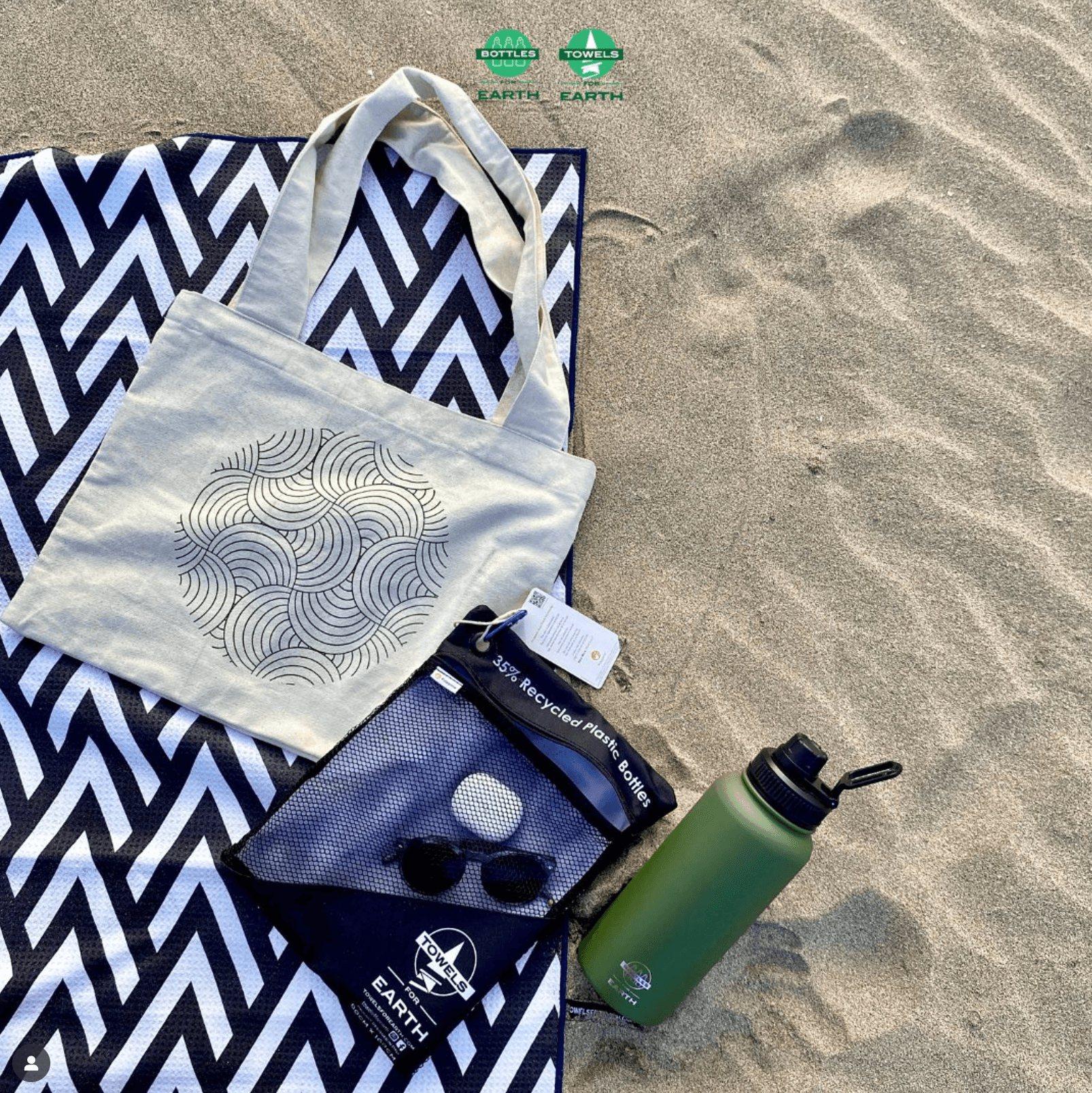
Now, they even sell beach towels.
These are 35% made with recycled plastic bottles, what a full circle moment. They branded these Towels for Earth.
In terms of the nicknacks, decor, and home goods that they also had in their shop, this included things like coasters and incense holders made from recycled bamboo chopsticks, thats really cool, I had yet to hear chopsticks being recycled until now, and they certainly should be!
The owners name is Don Boocho, his spelling was hard to read, this is what I can gather from his name that I asked him to write in my journal as I was trouble hearing the letters through his accent.
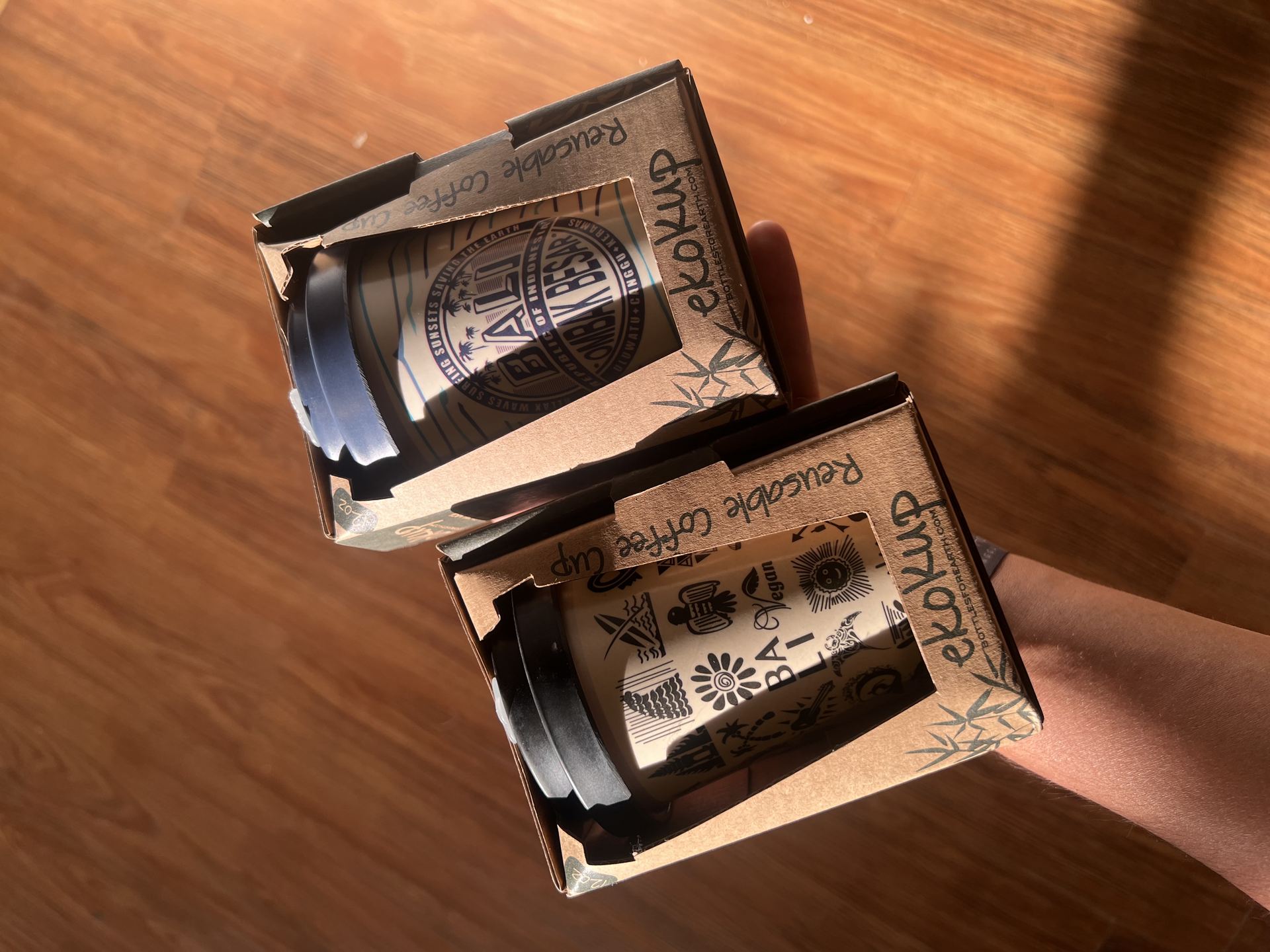
At the end of my interview, I thanked them a lot for their time and they gifted me two of their reusable hot drink cups, that is made with sustainable materials and silicone for the lid and sleeve. That was a lovely moment.
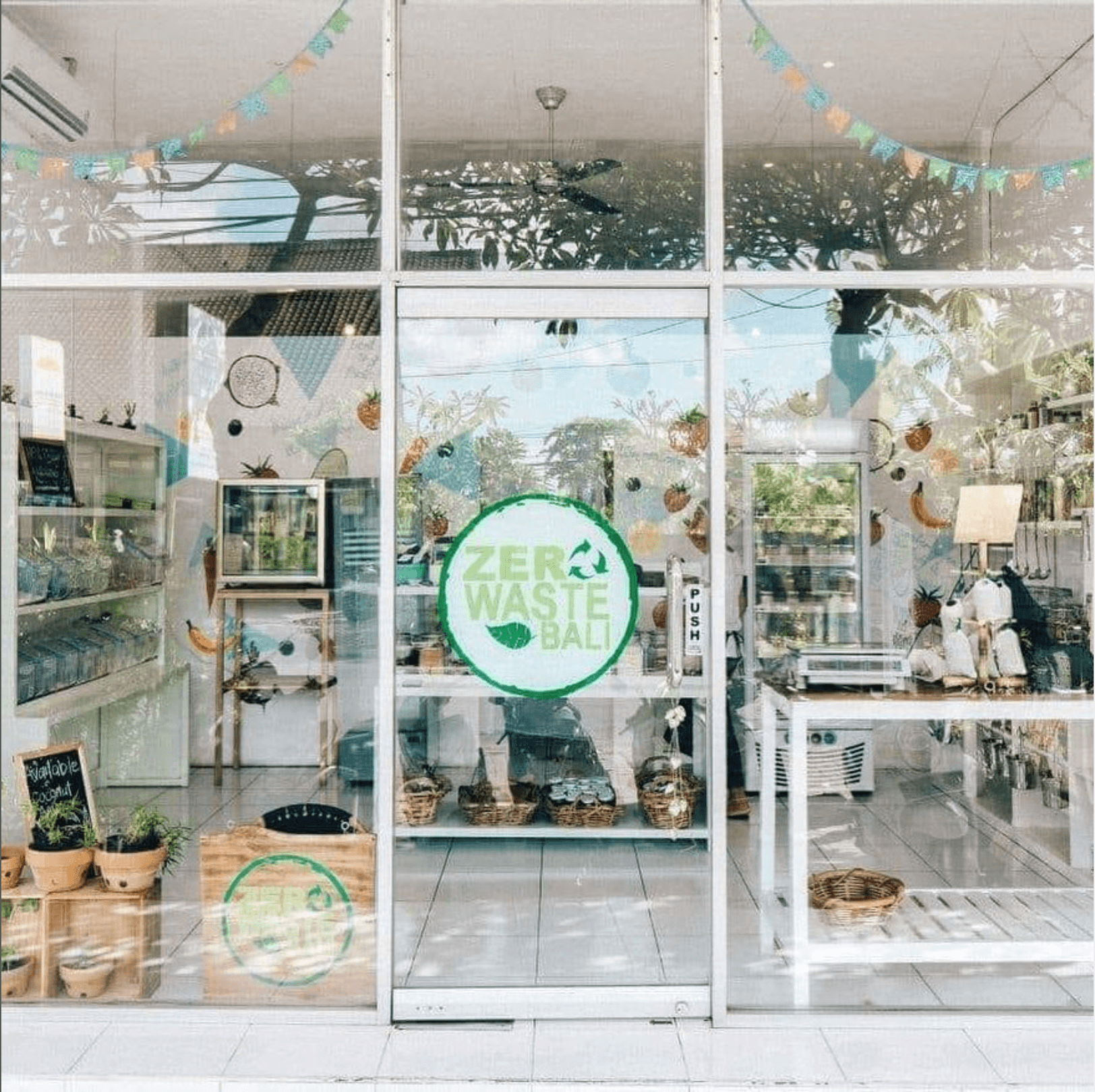
I then made my way to the actual ZW store that was across from Bali Buda, The Green Market. Here, I talked to an employee who has been working there for many many years and he agreed to an interview as the owner wasn't there and I had to leave the country soon.
The Green Market was formerly Zero Waste Bali. They rebranded because people thought that they were a waste management service, how funny.
Their goal is to eliminate or reduce plastic single use waste on the island
Zero waste isn't real, he states. Only less waste. We need to figure out how to reduce the waste we produce and how to responsibly manage it. I have also heard this first from the owner of ZW Kyoto.
The store, has been opened for 7 years now!
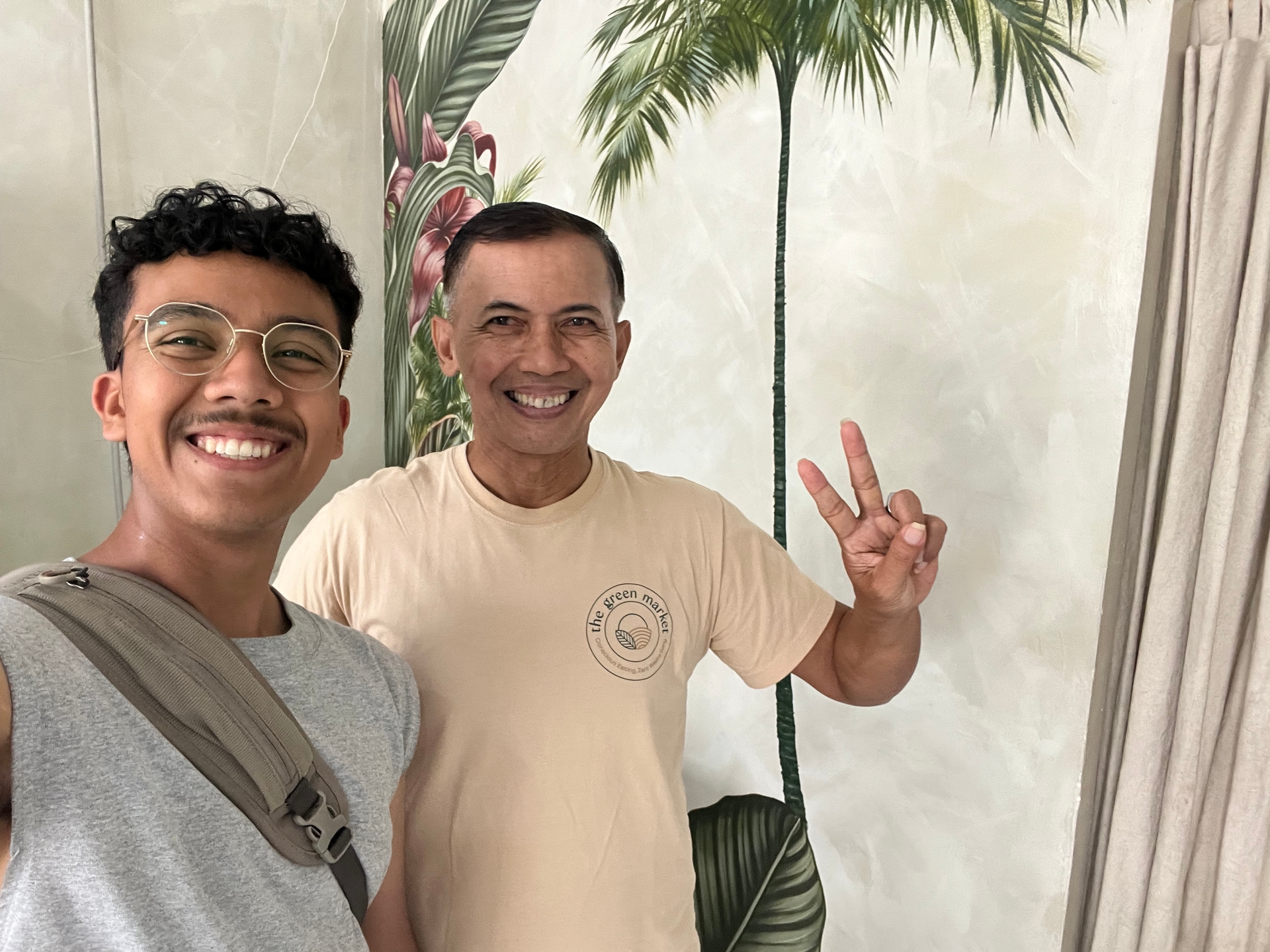
Tommy Sutarso, the store manager I interviewed has been with them for 6 and a half years! I was delighted to have the opportunity to talk to him as he had lots of knowledge on the business. Tommy was a joy to talk with, he was eloquent and had a British accent and a very bubbly personality.
He is in fact of Indonesian ethnicity though and he is gay, he says that the culture here is supportive of him.
The former owner, a woman, I don't remeber/forgot to write/forgot to ask her ethnicity, started the business when she went snorkeling in Bali and saw plastics all around her. She took this as a wake-up call to tackle the plastics problem. She sold it to a Brazilian.
I asked Tommy about all the scooter usage on the Island as there are so many of them, just like Shanghai and Hangzhou!
we can't avoid scooter emissions
ZW is more expensive of course, but they have been educating people and offering their resources and products for more sustainable living.
The packaging from their suppliers has been hard, because the suppliers want it their way.
The Green Collective has been invited to give talks about managing waste in their communities and other parts of the world, this is very cool as well! Education is key for anything and especially for things that everyday people maybe be 'blind' to.
He says that 90% of their customers are westerners, which I assume means foreigners, this also makes sense due to economic barriers and a higher level of education or world view on pollution, and the current lack of sustainability.
He states that slowly, Indonesian women are starting to use more sustainable products. I'm assuming he pointed out the women because women, traditionally, do most of the shopping, cleaning, and cooking for a household so they are the purchasers of most consumer goods.
Education is strongly needed because if the average person sees most people using plastics, why wont they also use plastics if they see that their lives are either staying the same or improving, which plastics do of course do as well. I'd like to analyze the estimated short term and long term effects of plastic usage for the Anthropocene.
He states that their business collaborates with a composting company to compost their unusable goods.
I asked him about composting for locals and he says that locals also compost and feed their scraps to their animals. I asked if most households have animals to give their scraps too, and he said that yes, most of them have dogs, cats, cows, pigs, monkeys, and lambs. This is very different to most American households who only have the dog(s). This seems like. A very sustainable system if you have a 'living' home composter so to speak, also known as a loving cow or pig. This is how things must have been done in the old days.
"Sustainability is about commitment, commitment to what you believe in." Tommy says.
We can't stand by ourselves, governments, shareholders, NGO's, and individual people, we must sit down together, but sooner than later we will have progress.
He believes that the government must have sustainability programs in school from K-Uni. This way, its easier to instill good principles into people, instead of leaving sustainability as an after thought.
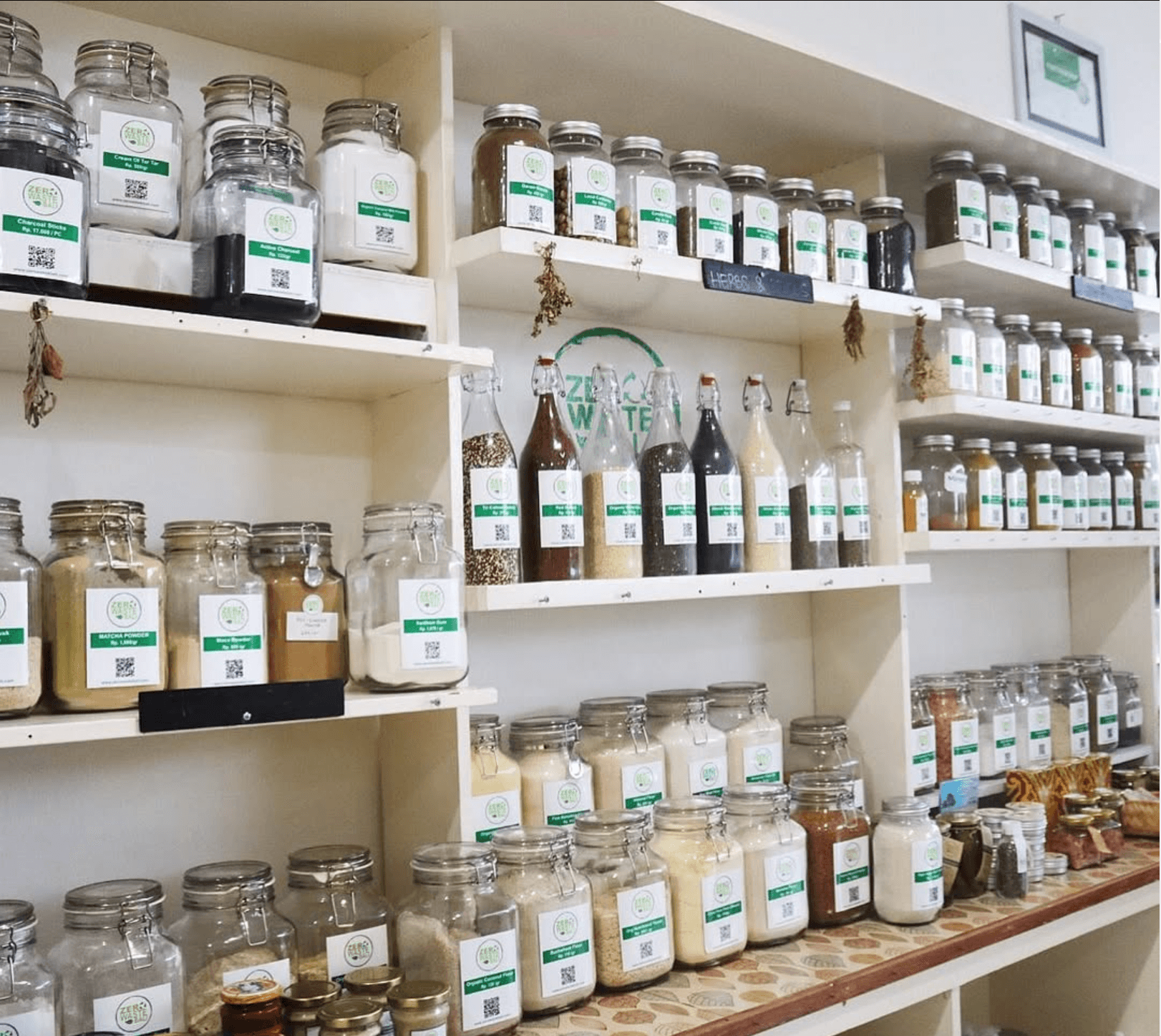
The Green Market houses similar products to BB, with the exception of the cafe/restaurant or bakery. They do seem to have less products compared to BB, this is also most likely because BB has been around for longer and has grown to many locations.
It was a nice little shop, it tried to give more of a minimalist aesthetic feel to it I believe.
I then had lunch at Bali Buda Kerobokan, which was good once again.
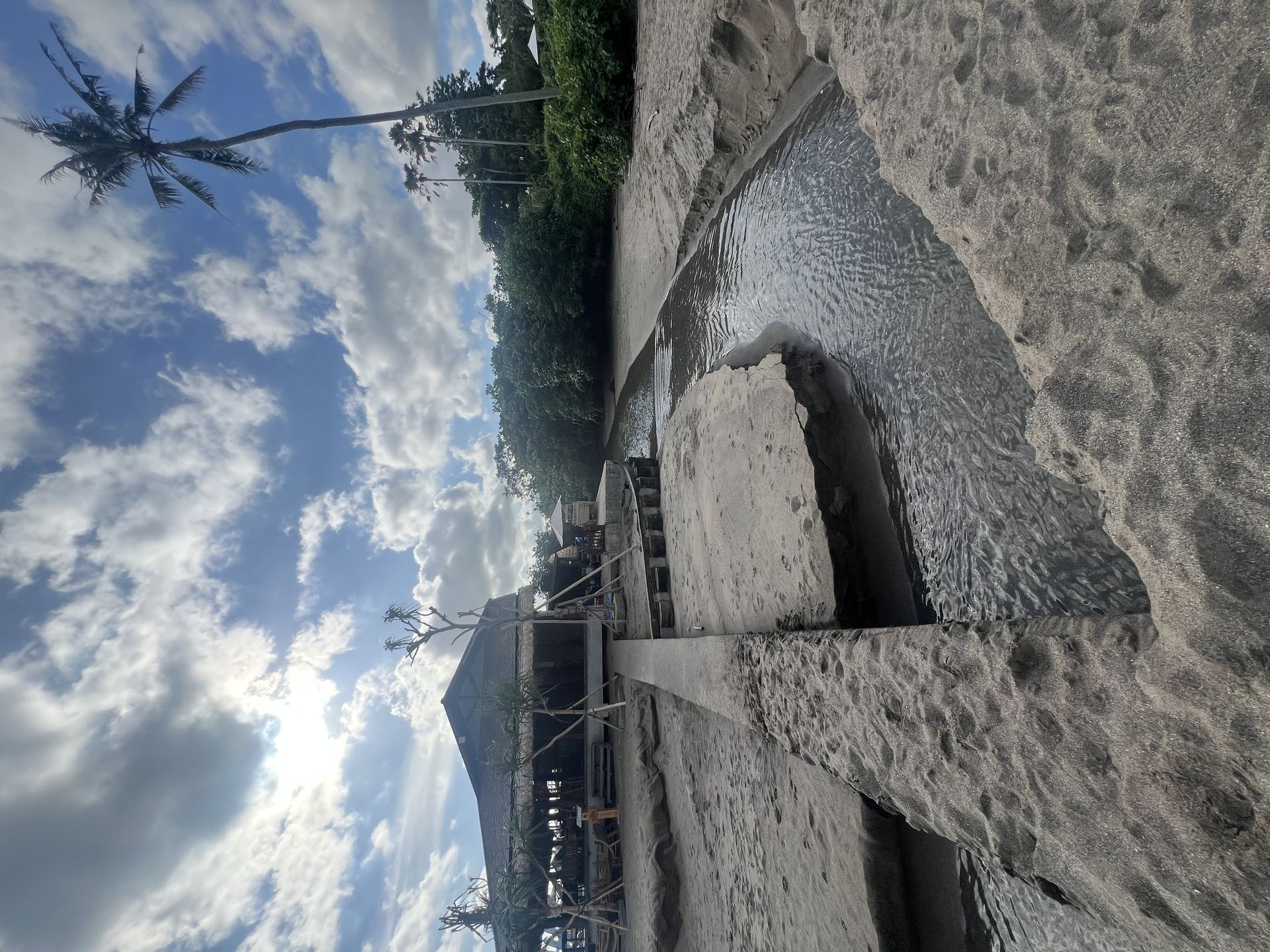
I met up with friends at a restaurant near the beach and on my walk too there, I saw another drainage canal channel that had plastic littler surrounding it. The first though that comes to mind is that there should be a screen that covers the channels and canals so that plastics and rubbish can't go in there, block the water flow, and carry things into the ocean. I'd like to research if this has been tried and if it has worked.
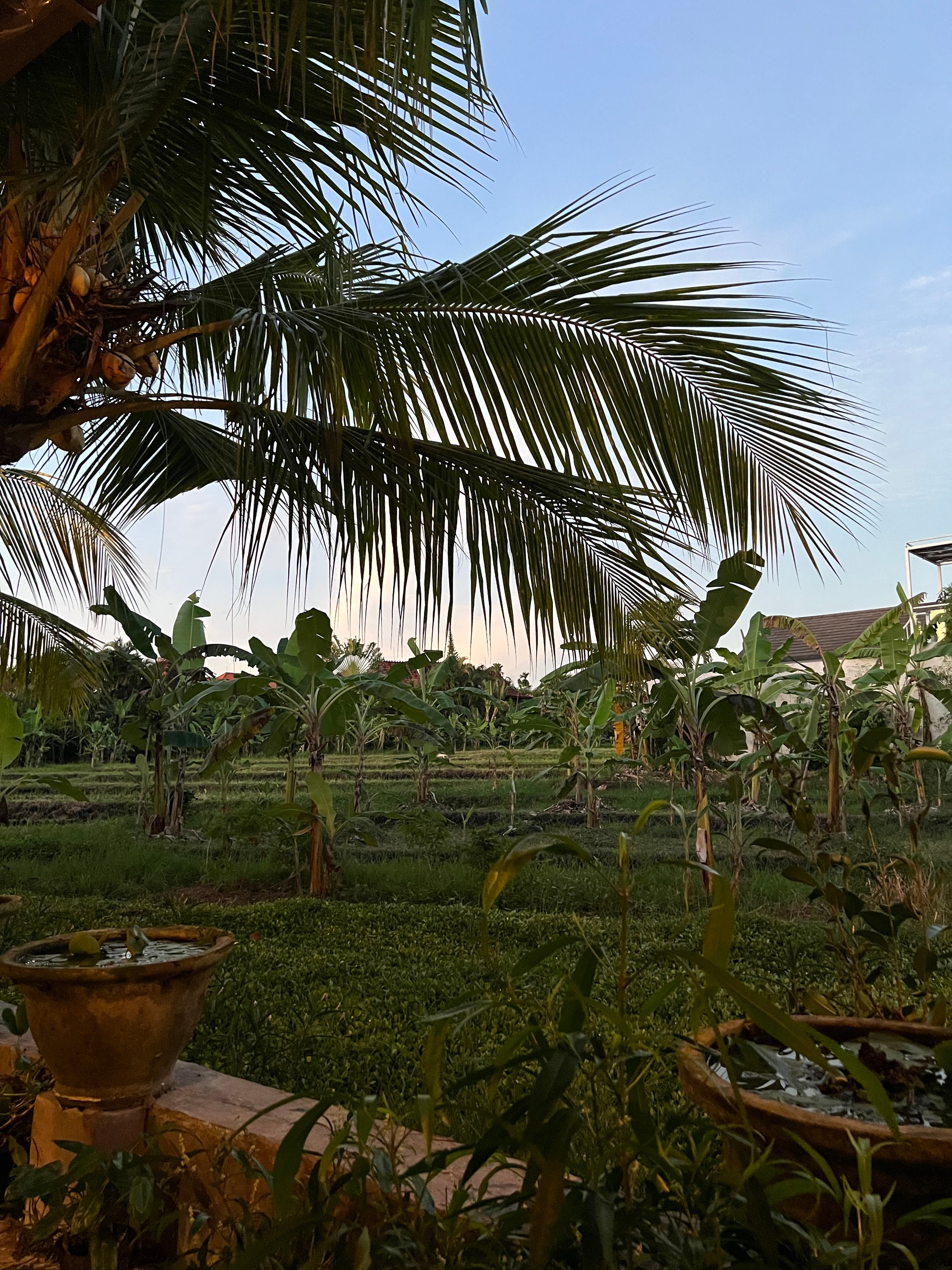
We went to Milu by Nook, a nice restaurant that had a lovely view of some rice patties. I wonder if most farmers stick to traditional, non-chemical practices or if they've had to turn to chemicals for their crops as the majority of people do. I have only been eating at nice restaurants as I don't want to get Bali Belly and end up hospitalized, thankfully the prices are cheap due to the USD conversion rate so it wasn't bad monetarily. This place gave paper straws!
The next morning, I made my way to the last closest sustainable/ ZW store that was near my hostel, SΛMΛDI Super Market Canggu.
On my way over, I passed by the closest urban drainage canal near my hostel again and this time it had more plastics and debris than before, I wonder if these are new or if they are just pilling up until something happens.
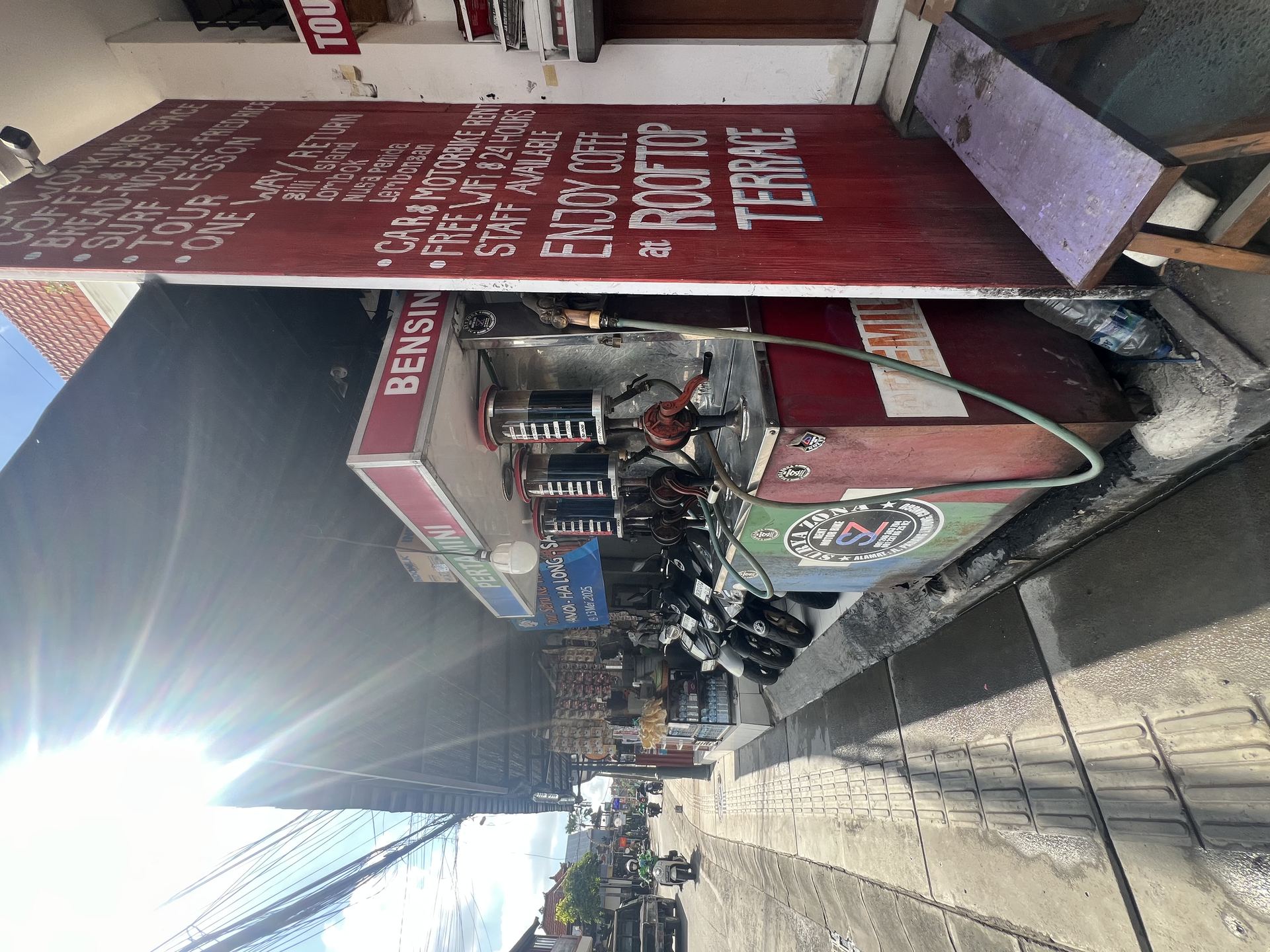
I also took a picture to capture the petrol 'stations' that are all around Canggu, these little colorful stands with glass containers full of blue petrol with hoses that fill up scooters. Theses are found in lots of little random shops, I believe that due to the scarcity of land in Canggu, there are not petrol stations like in the states such as 7 Eleven, Arco, Shell or the others. I also saw one small shop have plastic water bottles full of petrol, that is also very sad to see, imagine the people who have to fill these up, without the proper equipment to handle this substance and the lack of PPE that there must be as well. I fear for their health with all the chemicals that they must inhale and absorb through their skin as they sell their product like this.
This place was very cool, it was a large place with multiple sections to the business. There was a grocery store, a fitness/jewelry/gift shop, a cafe, a bar/restaurant, and a yoga studio; a fitness wonderland, it just needs a gym and it would have everything a health guru needs. I walked around the place(s) for a bit and saw that they had a restorative yoga class in 20 minutes, I booked it! I love yoga, I like that there is both restorative forms, and some that I start shaking and sweating immediately from. I have my flight soon and have to leave Canggu in around an hour, so I only stayed in the class for around 20 minutes. It was a nice class, I wish that I could have stayed for a longer one but any time for yoga is a good time. I met some people at the class but sadly couldn't talk to them afterwards as I ran out of there to catch my flight, I would have loved to ask them about their travels or life here in Bali with 'slow living' and their experience with waste on the island.
I waited for a bit before my class and went to seek out the owner to interview them for my project. I found the manager and sat with him for an interview. The store manager that was present was Mr. Farzi, a young Indonesian man. Here are notes from our interview:
Samadi uses less plastics than a regular grocery store
No stickers on items
I relate to this as at my ZW pop-up booth we also have no stickers, and that has been hard sometimes as when I leave to use the restroom or eat, my sister has to ask me the names of everything when she's checking out a customer to look them up on our POS.
The owners of the store are Mr. Jack and his partners, they are all from Holland.
Mr. Farzi says that the owners want to minimize plastic usage in the world.
Here at the store, everything is organic
they get suppliers who all have organic certifications
difficult during rainy seasons
prices are higher, but the quality is better
customers know about the benefits of organic foods for planet and body and want to bea healthier
He states that foreign customers account for around 80% of the customers in the shop, while the other 20% is made up by hotels and villas. I just noticed that he didn't say anything about locals, so I reckon that that number is very low.
Their cafe also houses gluten free breads and gelatos, I gathered that gelato is popular around here as I have seen many gelato shops around town.
The owners of Samadi only have Indonesian foods in their cafe and restaurant as they want to introduce Indonesian cuisine to foreigners, and not just the ultra healthy diets or what is deemed the healthiest worldwide of food as they are in fact in Bali and not online.
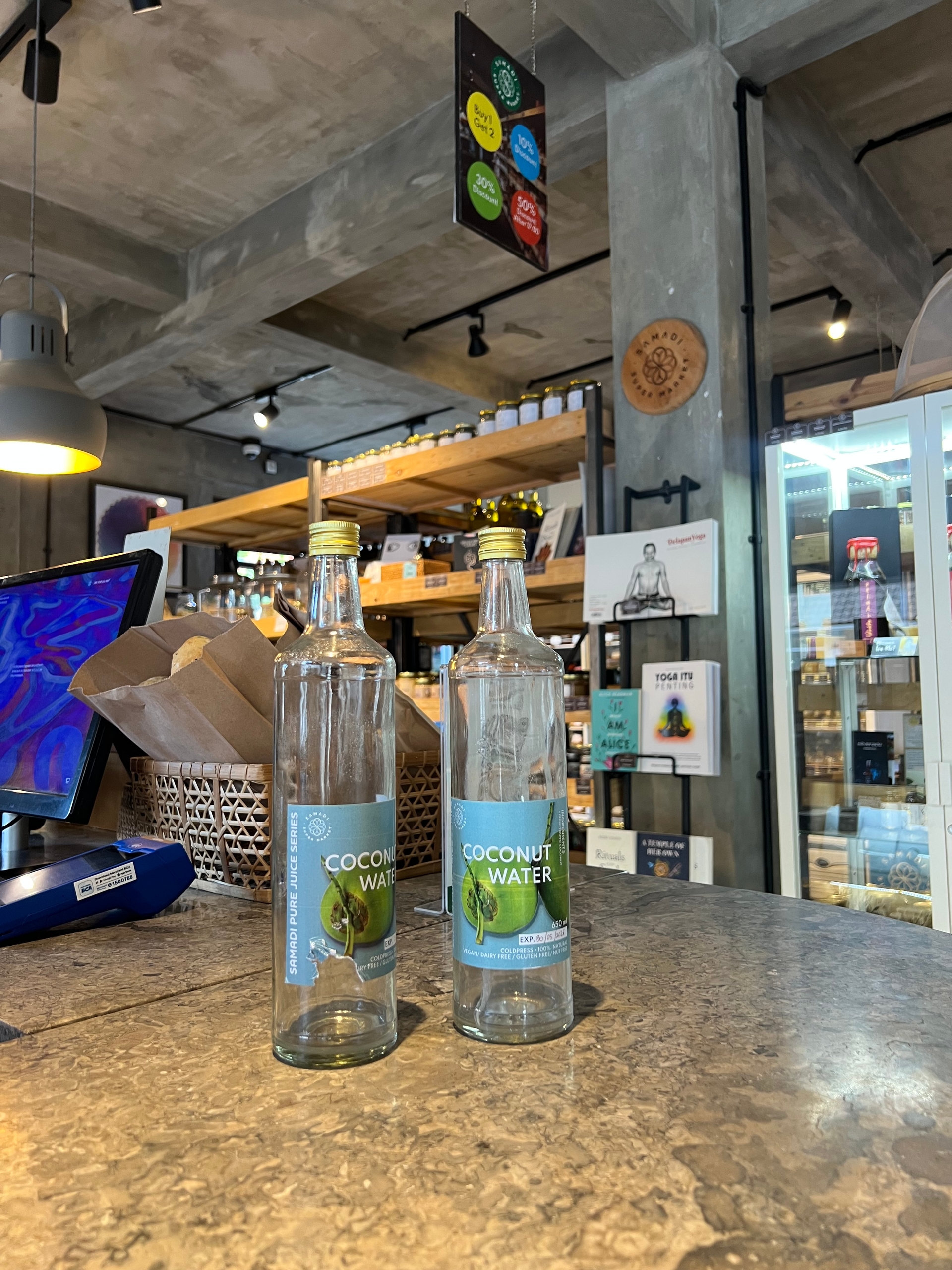
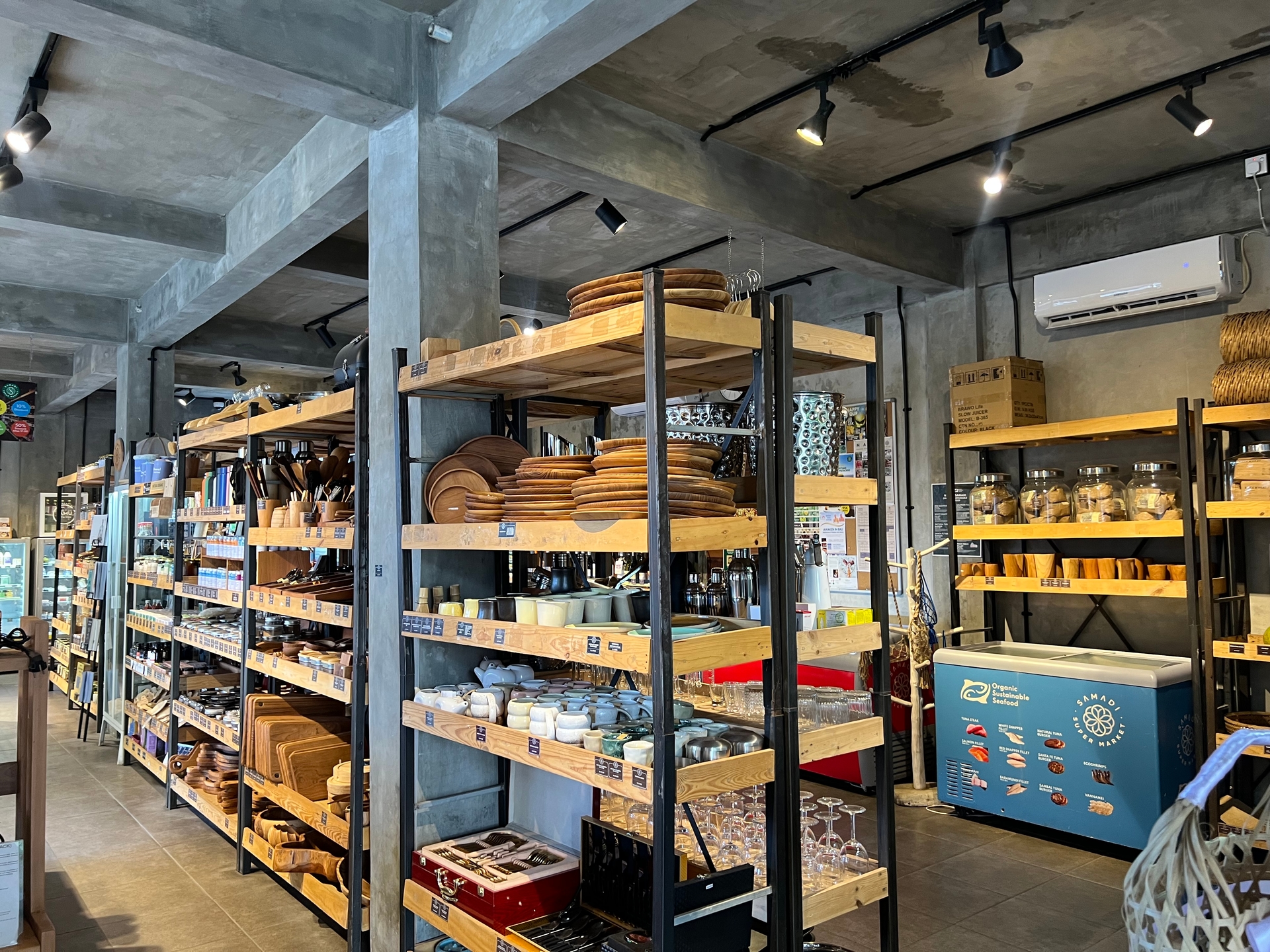
The shop was very pleasant to the eye, it was stocked a lot more than The Green Market but lacked the true ZW bulk isles, bins, and canisters. They did however have a bring back program for their glass bottles. I assume that people frequent the coconut water and healthy drink mixes, so the shop just reuses the bottles in a circular system. This supermarket had all that Bali Buda had in their store and possibly more, this felt the 'bougiest' of them all, followed by Bali Buda, then The Green Market in terms of aesthetics, variety of products, and overall vibes.
Other notes:
As I was walking through the streets of Canggu, for the most part I didn't notice much rubbish on the sidewalks or streets, however common occurrence that I saw was tiny pieces of random materials that be paper, plastics, organics...
When I first noticed loads of them was in the urban drainage canal nearest my hostel, this one was pretty big, measuring around 7 ft wide. Here, I don't really know if there was a screen down there blocking the debris from getting through the other side of the street through, what I imagine is a pipe that runs below the street, or if theres just a lot of debris on the actual pipe blocking more debris from flowing through the pipe. I do know that there is an organization that cleans up locations like these with lots of waste debris of plastics and other and they have to do it a couple times a day per location as they just keep filling and filling up. How sad is that, and these aren't government paid organizations or laborers, most as from non-profits or volunteers who feel the need to act in order to protect their homes.
I wonder how effective the open sewer/drainage systems that most of the parts in Asia that I have been to are. Seeing how distinct they can be such as Kyoto's clean ones compared to Canggu's polluted ones.
The water issue here is also a large concern as people must be using loads of water bottles per day in order to drink and even brush their teeth, clean their face, and possibly bathe in. I honestly did everything but bathed in my filtered water that I filtered through my Grayl water bottle that I filled up with drinking water from the water machine in my hostel. In a new environment with the not so rare risk of sickness, I took it as better safe than sorry, and so did most of the tourists I met here did.
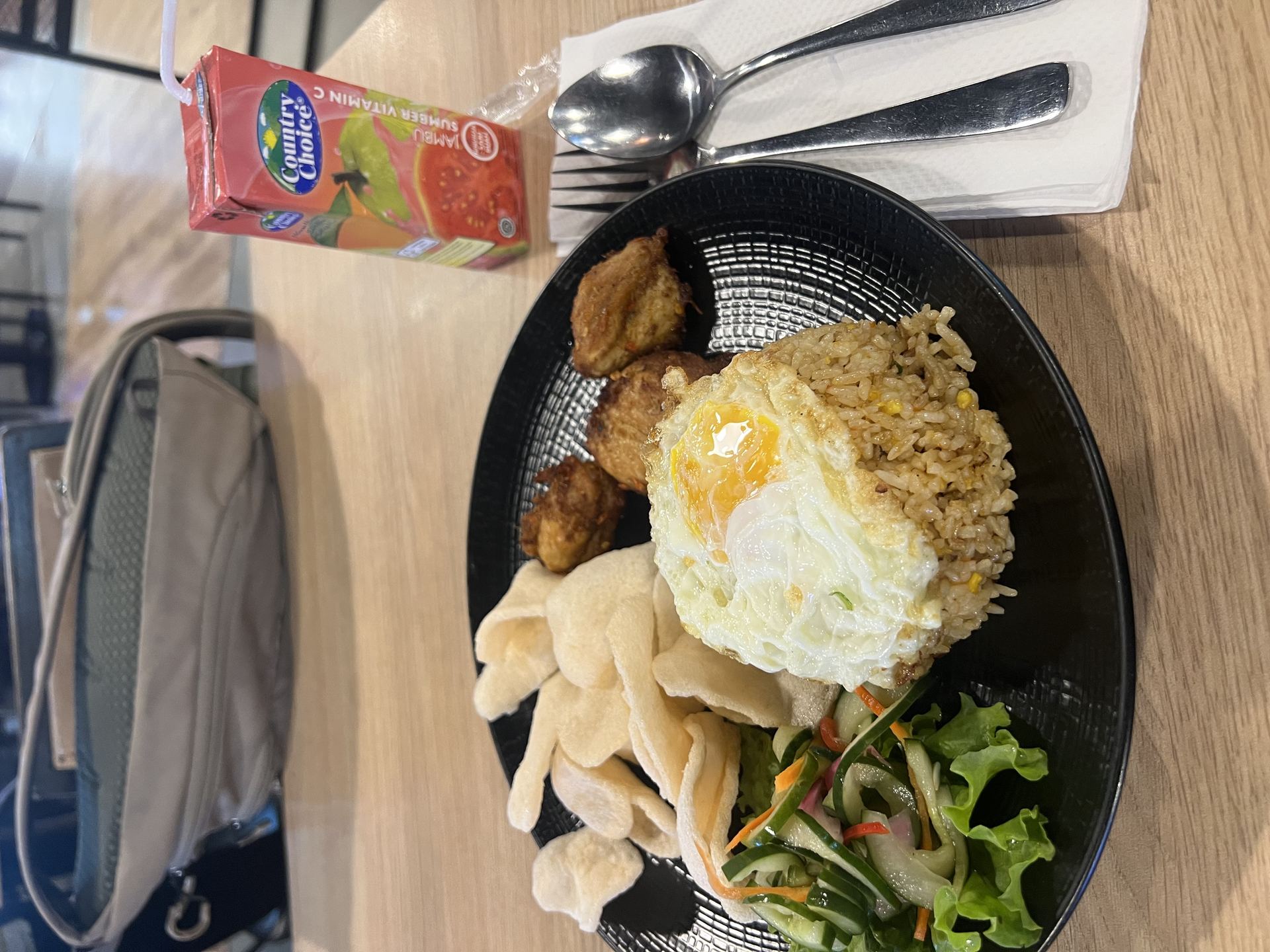
In the Gusti Ngurah Rai International Airport, or Bali airport as I call it, I had a traditional meal lunch in their food court, for a drink I ordered a juice box as they didn't have anything in a reusable container. For cutlery, there was thankfully metal cutlery which was a nice surprise, and they gave my meal to me on a reusable ceramic plate. I think most airport food from the airports that I have been to have all served their meals in disposable to-go ware. Mind you, this was the cheapest place besides a refrigerated sandwich for food in the airport so not bad.
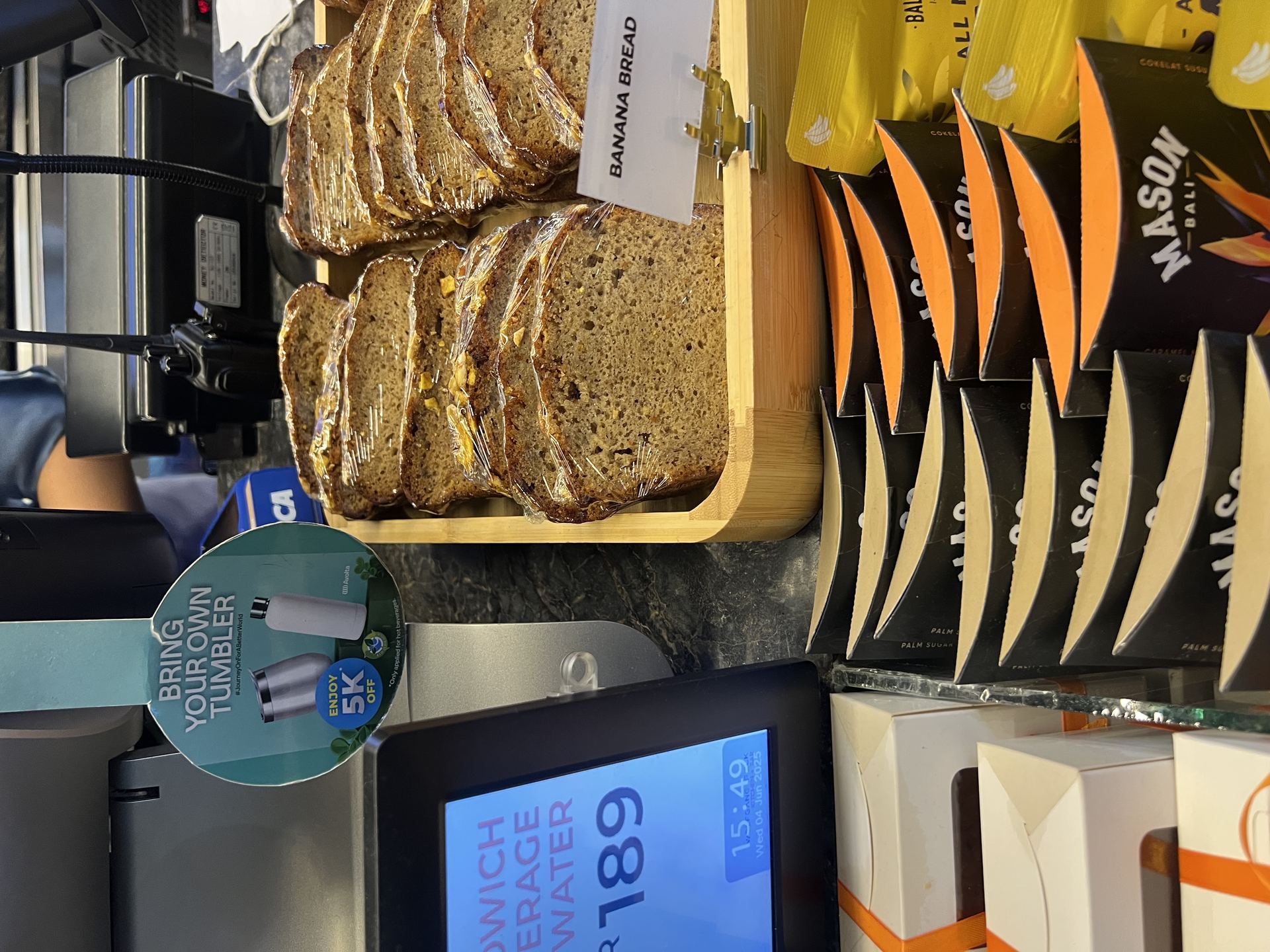
ordered an ice cream for dessert from Wolfgang Puck Kitchen + Bar after my lunch in the airport food court and I saw this little sign on their POS that read: Bring your own tumbler, #JourneyOnForABetterWorld, 5K off!, Only for hot drinks. This is a cool little incentive for customers, however it's funny to me as this place is located in an airport not the downtown of a city where customers will frequent and know the place very well. However, I do imagine that lots of people travel to Bali for vacation and maybe they come more often that I think, or possibly this could be catering towards airport employees or flight attendants and pilots. It is a cool initiative nonetheless as all sustainability wins are great wins. 5K Indonesian Rupiah is equivalent to around $0.30 USD.
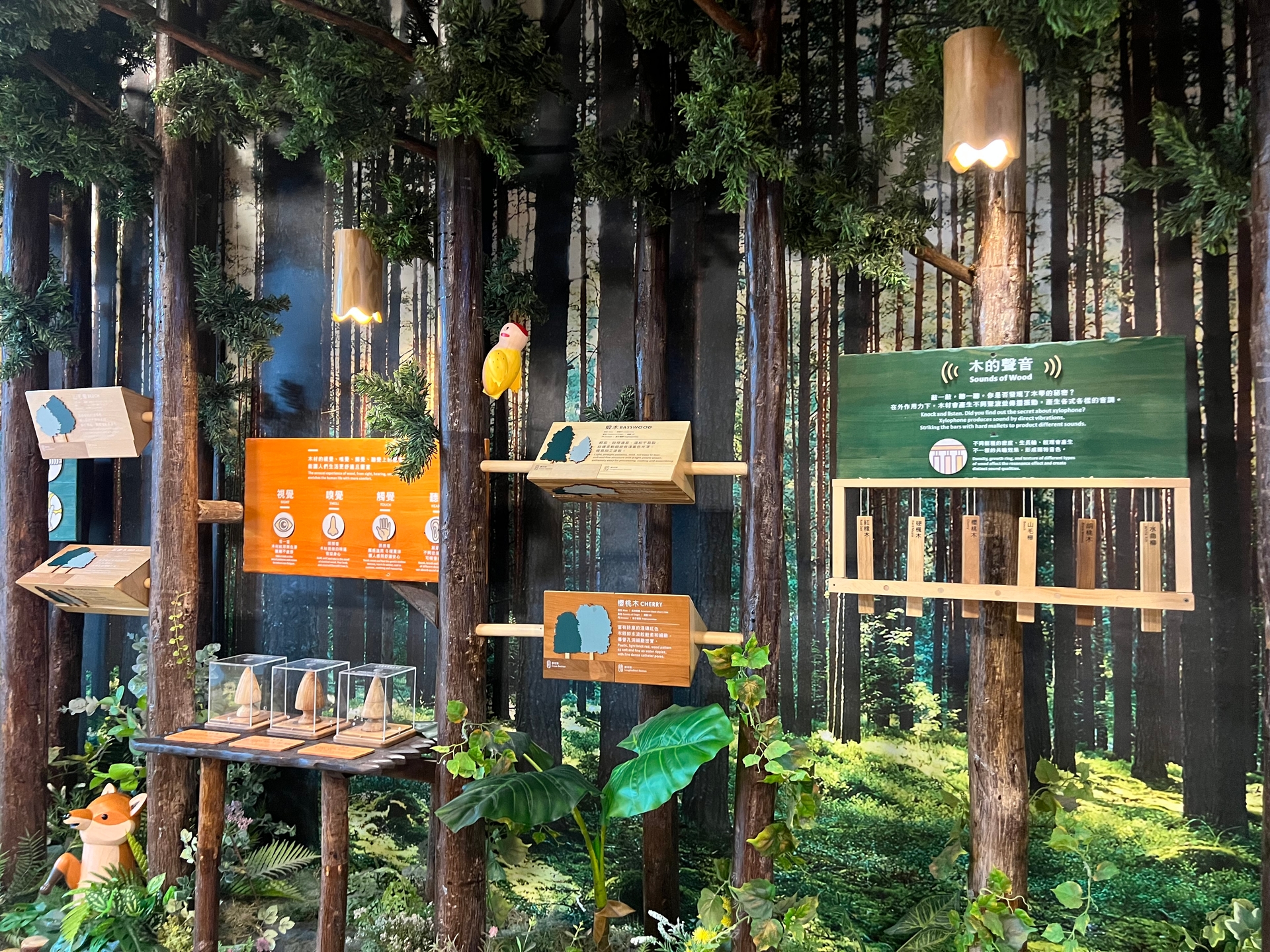
I landed at the Taoyuan International Airport for my transfer flight to Seattle-Tacoma International Airport and as I was walking to my gate, I noticed that all the gates were themed. The themes ranged from Hello Kitty, to Taiwans national parks, surrounding islands, and my gate's The Wooderful Land. Coincidentally, my gates was nature and forest themed. It featured wooden stumps, slabs, and logs as chairs and benches under a canopy of trees. The back most wall of the gate featured educating interactive learning experiences for kids and everywhere who wanted to know more about different types of trees, woods, wood crafts, woodland ecosystem services and more that forest provide.
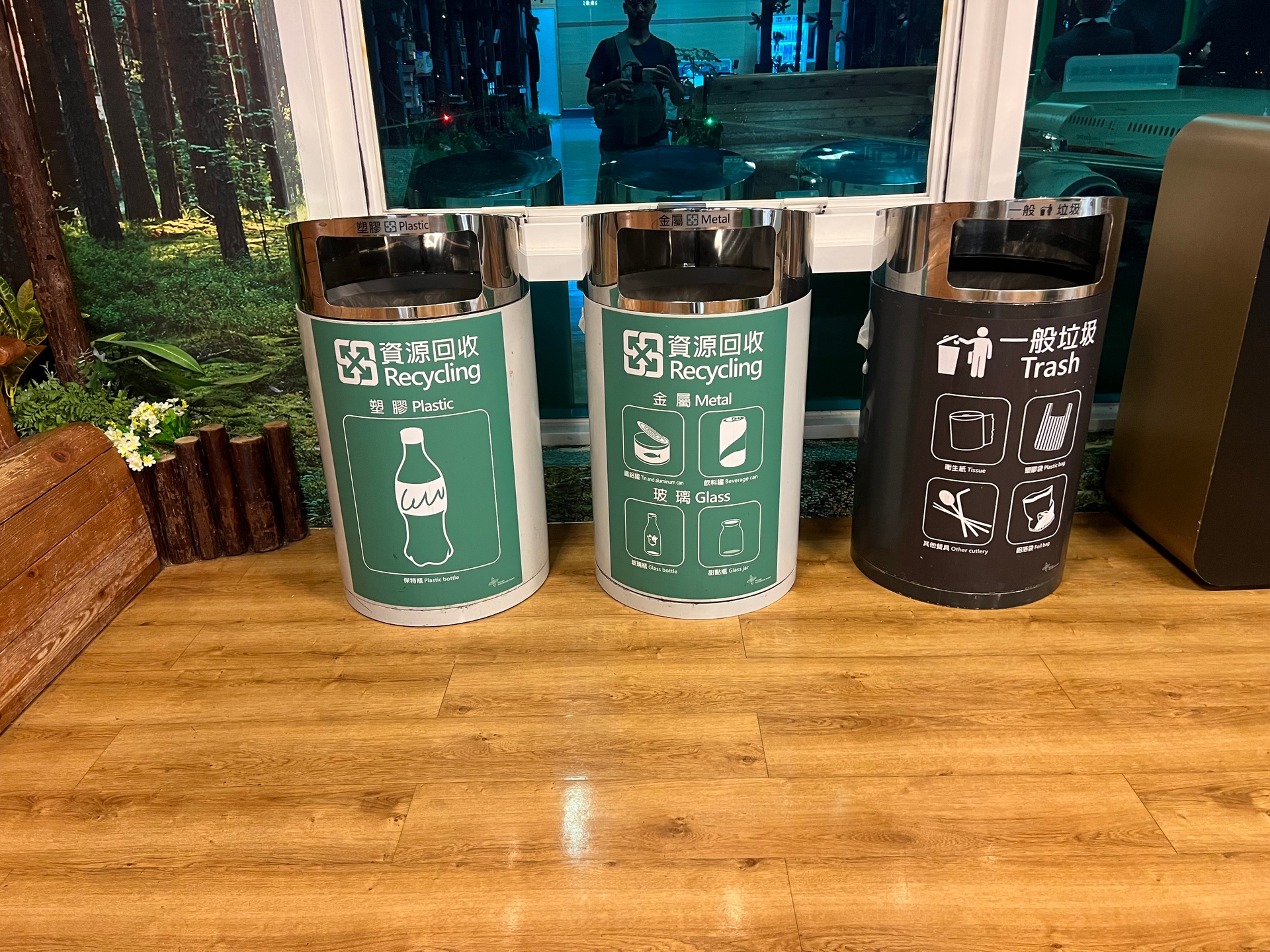
At this airport, their waste bins included one for plastics, one for metals, and one for everything else. This is the first time i've seen this system, but it looks efficient and cool. Now I wonder if burning or composting organic waste is best.
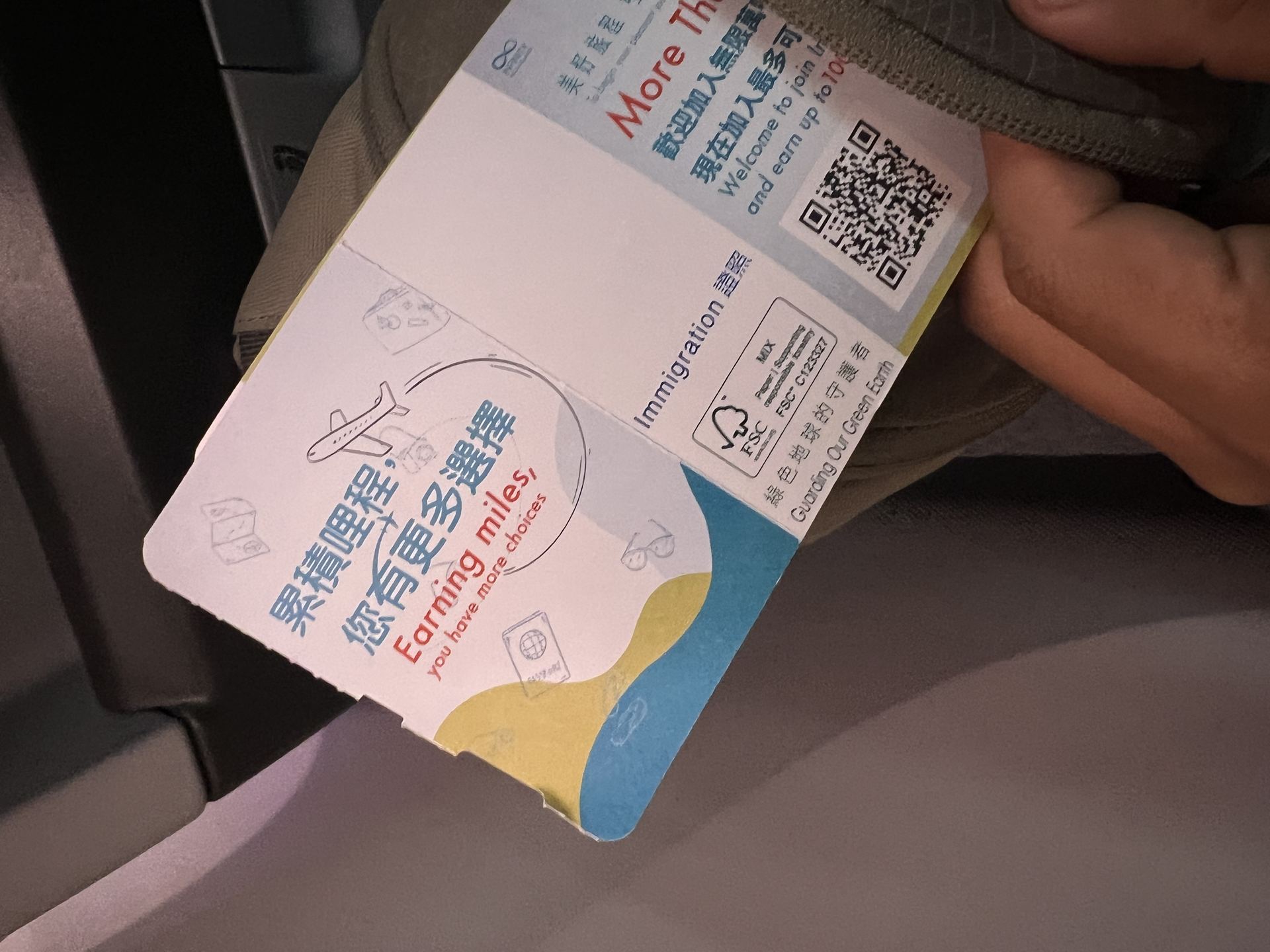
My EVA Airways ticket had an FSC certified logo on it, supporting responsible forestry, I'm curious if all my tickets had this, I recycled or threw them away to not carry unnecessary things with me.
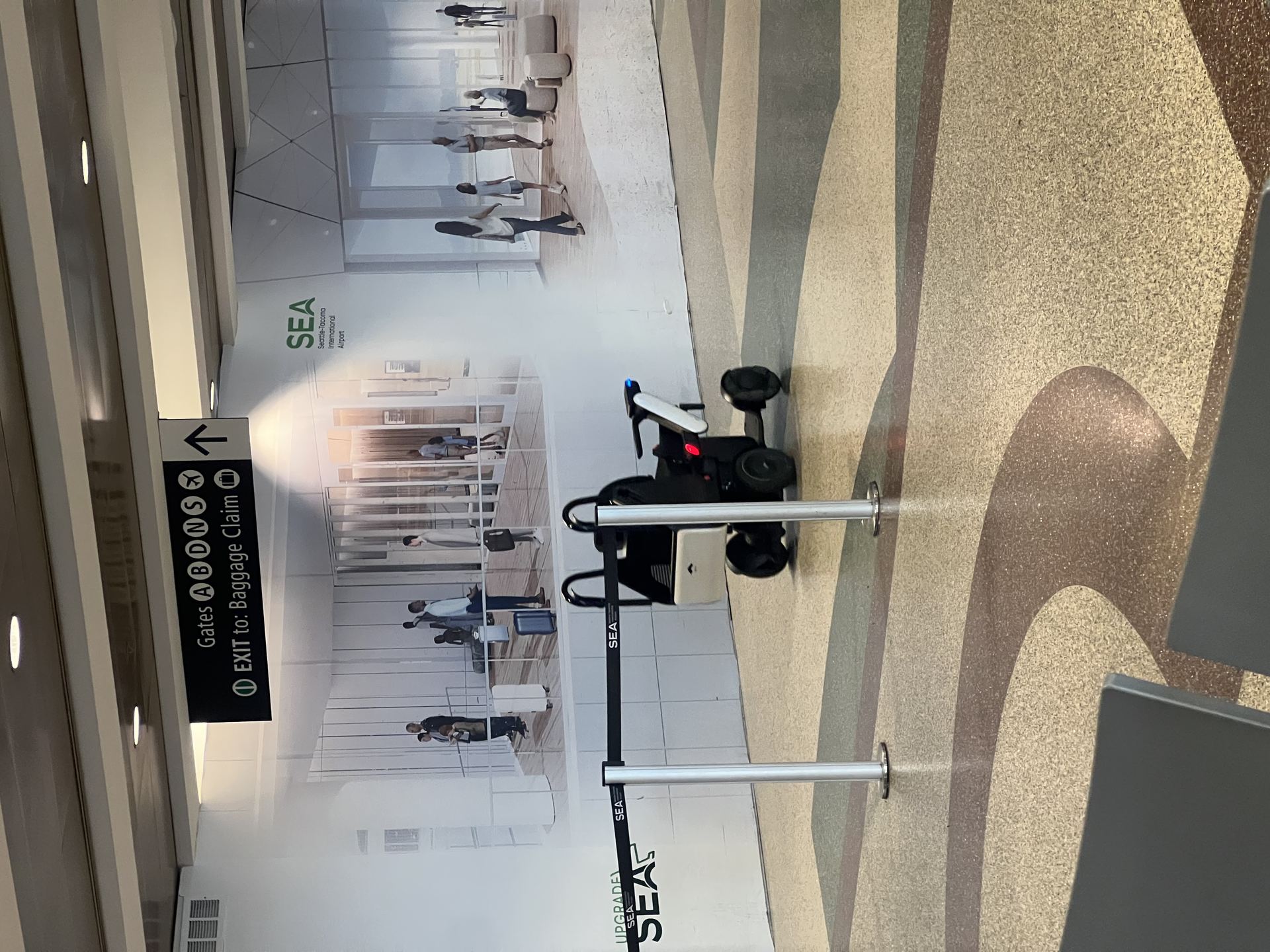
At the Seattle-Tacoma International Airport, I saw a robot wheelchair, rolling itself through the airport, that was a first. This seems efficient, cool, and smart.
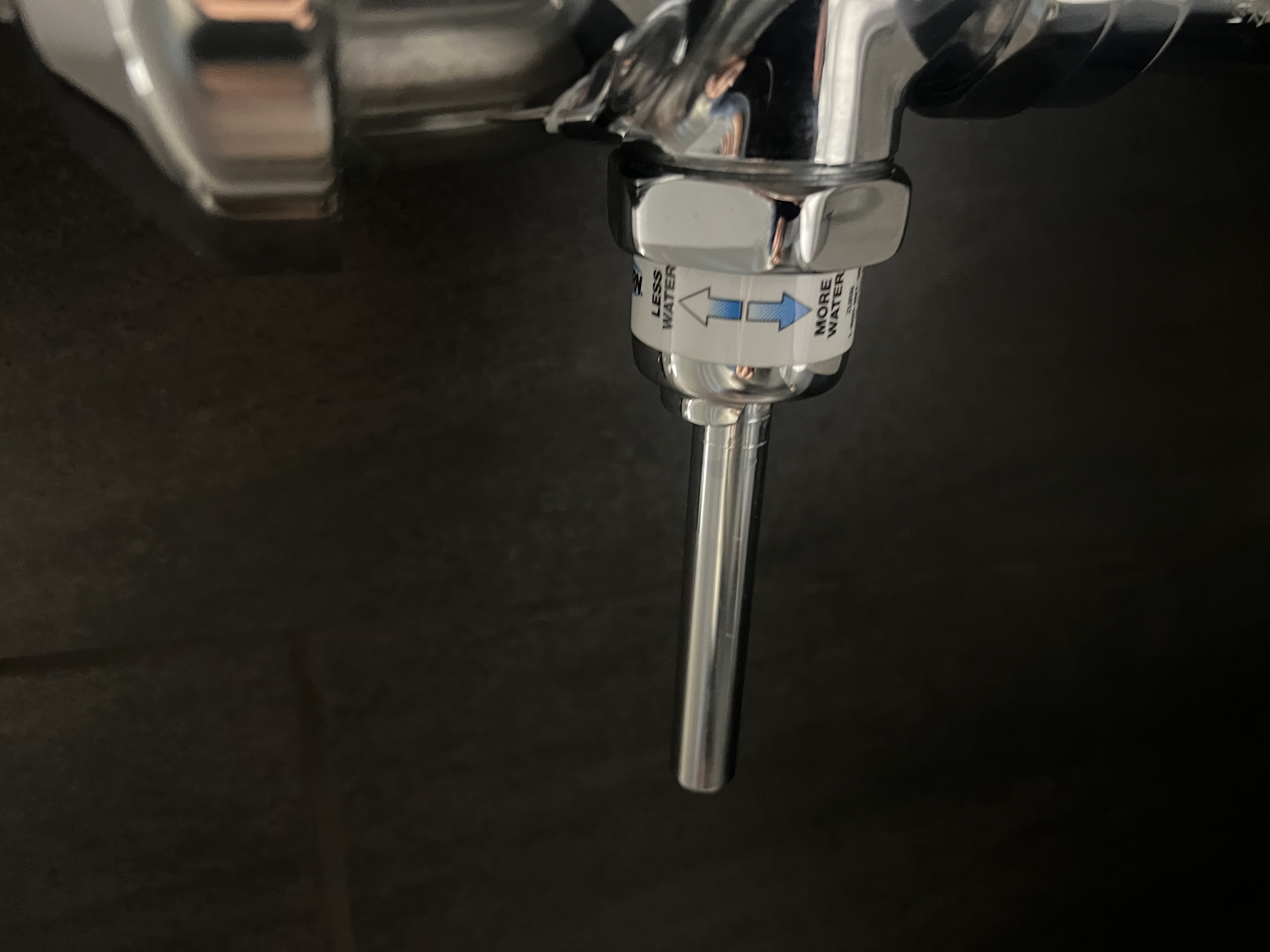
At this airport there was also the use of dual-flush toilet handles, up for less water usage(liquid waste) and down for more water(solid waste), such toilet handles should be used everywhere as well as I've seen some toilets use so much water per flush its insane.
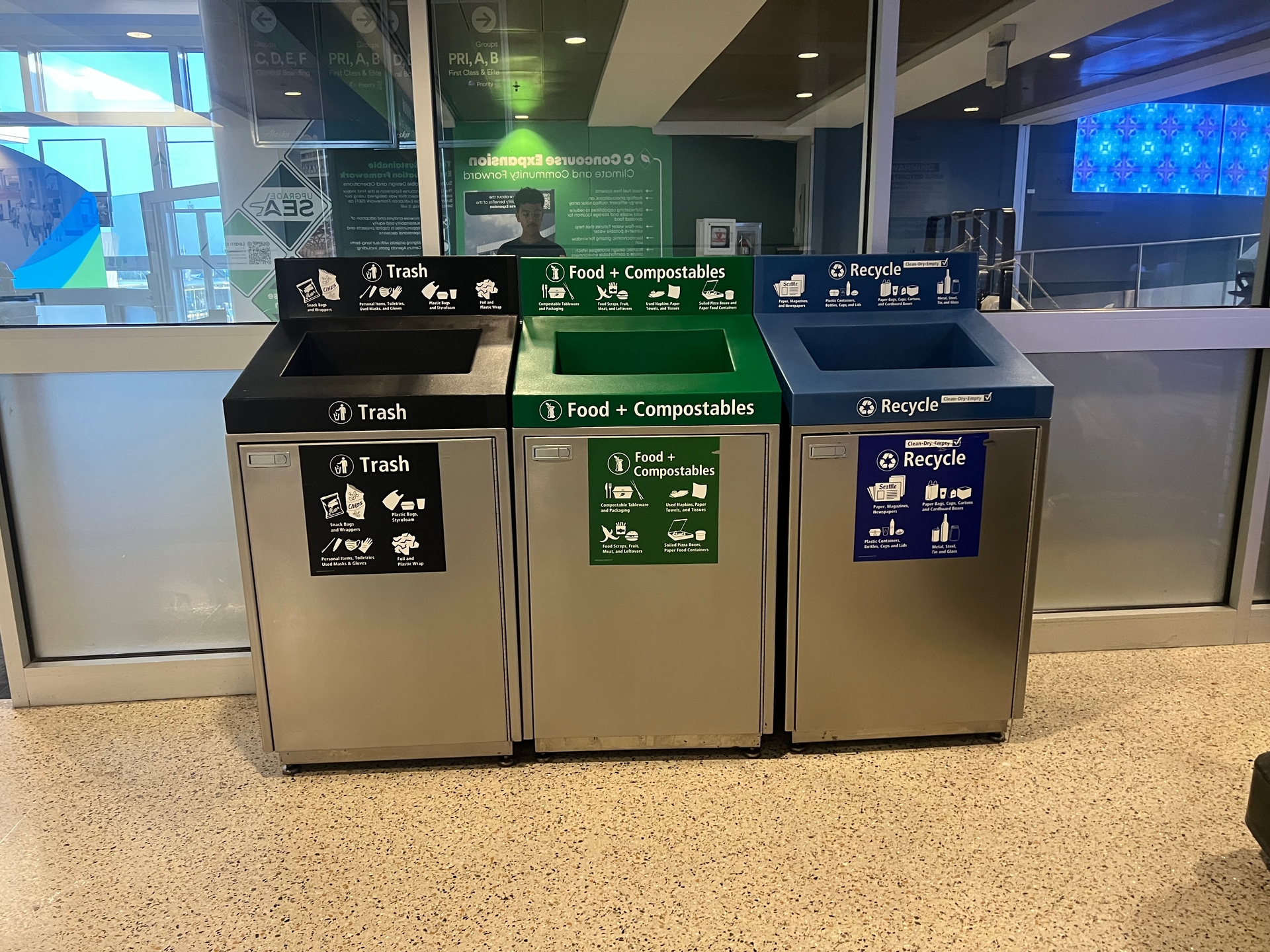
This airport's waste bins consisted of Trash, Food + Compostables, and Recycle. This is the system that seems most familiar to me as it adheres to more 'American' waste management practices, however specialized sorting of recyclables such as into plastics, paper, and metals might benefit the recycling system more than just recyclables. In American society, I think if people were given these many 'options' they would simply not care and throw it in the trash, or the any of the open bins. I hope this is not the case but I have seen way to many people simply not care for the proper disposal of their waste.
Look into:
Sungaiwatch river cleaning and making of recycled products
Indosole Bali recycled sandals
Ubud's 'green' culture