Discover The Philosophy That Shaped Revolutions
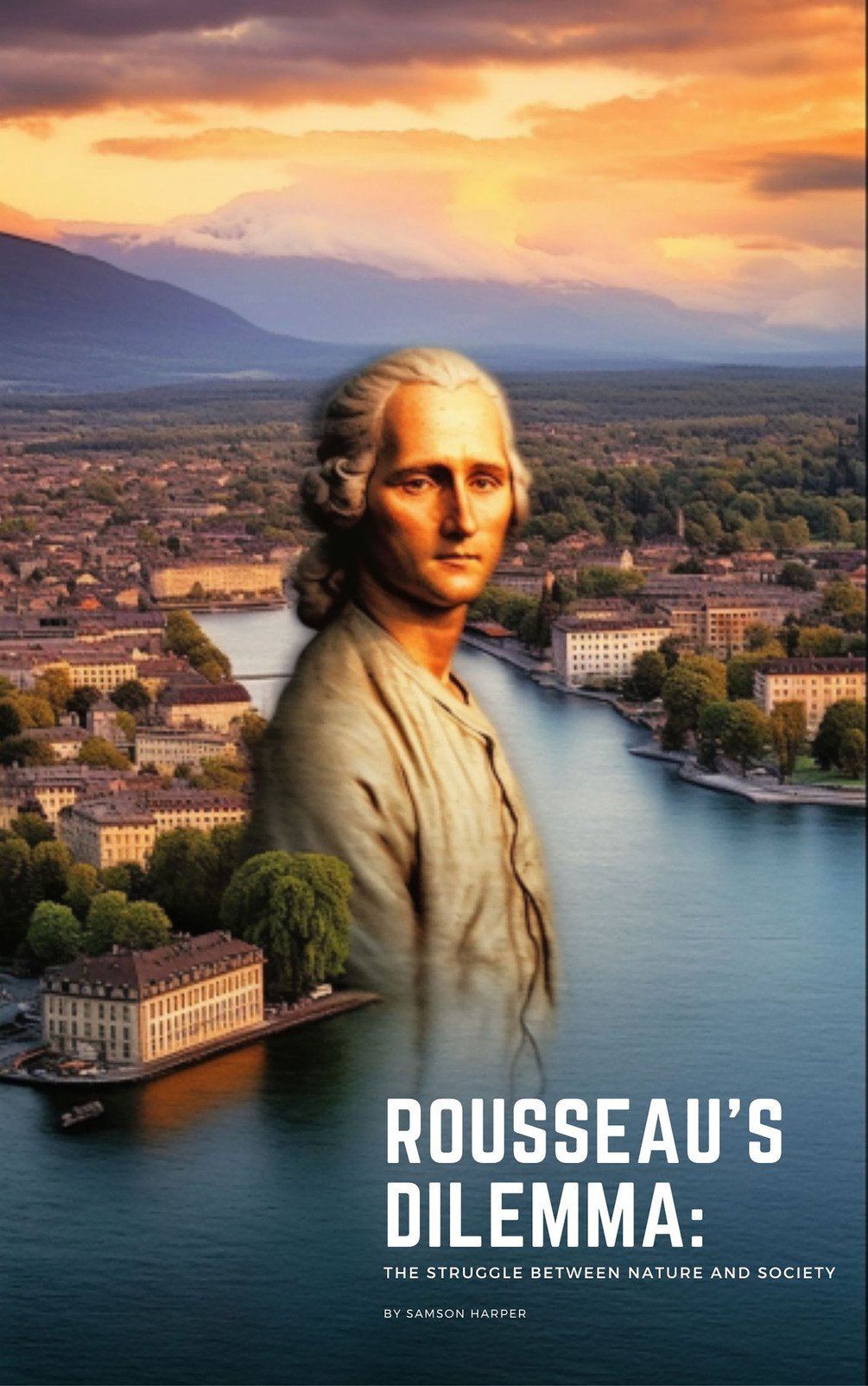
Dive into 'Rousseau's Dilemma: The Struggle Between Nature and Society' by Samson Harper to uncover the life, works, and enduring influence of Jean-Jacques Rousseau.

📚Introduction to Rousseau's Dilemma
Welcome to the journey of exploring one of the most influential thinkers in history – Jean-Jacques Rousseau. In 'Rousseau's Dilemma: The Struggle Between Nature and Society,' author Samson Harper delves into the complexities of Rousseau's thoughts, his life, and the lasting impact he's made on philosophy and society. This book offers a thorough analysis of Rousseau’s formative years, his intellectual journey, and how his personal experiences shaped his profound ideas on education, politics, religion, and relationships. As you navigate through this splash page, you'll gain insights into how Rousseau’s philosophy inspired the French Revolution and initiated debates that continue to resonate in contemporary discourse. Don't miss the opportunity to grasp the depth of Rousseau's ideas and their relevance in today's world. Explore, learn, and reflect with 'Rousseau's Dilemma: The Struggle Between Nature and Society.'
💡The Relevance of Rousseau's Ideas Today
📖Exploring the Life and Philosophy of Jean-Jacques Rousseau
Jean-Jacques Rousseau stands as a colossal figure in the annals of philosophy, profoundly influencing the intellectual landscape of his time and beyond. 'Rousseau's Dilemma: The Struggle Between Nature and Society' traces the arc of Rousseau's life, from his humble beginnings to his ascent into intellectual eminence. The book critically examines Rousseau’s seminal works such as Émile, The Social Contract, and Confessions, unraveling the intricate relationship between his personal experiences and his philosophic doctrines. Rousseau’s philosophy posits a fundamental tension between the innate goodness of humanity and the corrupting influence of society. This contention is explored through various facets of his thought—his educational theories advocate for natural development of children, while his political views promote direct democracy as a means to realize authentic human freedom. The book also integrates Rousseau’s religious musings, which argue for a return to simple, unmediated faith, and scrutinizes his tumultuous relationships, both personal and professional, that colored his worldviews. This in-depth exploration invites readers to appreciate the nuances of Rousseau's enduring contribution to modern intellectual discourse and the shaping of societal ideals.
🌍The Lasting Impact of Rousseau's Philosophy
Jean-Jacques Rousseau's ideas reverberated throughout history, sparking revolutions and stimulating debates that continue today. His fervent belief in the inherent goodness of humanity and his critique of societal institutions laid the philosophical foundation for the French Revolution, advocating for liberty, equality, and fraternity. 'Rousseau's Dilemma: The Struggle Between Nature and Society' delves into his impactful ideas that challenged existing political and educational norms, positioning him as a harbinger of modern democratic thought. Rousseau's work prompted a re-evaluation of human nature and governance, influencing subsequent intellectual movements and thinkers. As readers delve deeper into this book, they gain an appreciation for Rousseau's radical vision and its significant role in shaping modern political and social landscapes. The book presents Rousseau not merely as a historical figure, but as a thinker whose ideas remain profoundly relevant, encouraging readers to reflect on concepts of freedom, community, and personal authenticity in today's context.

🛒Learn More and Purchase
🔎Why Read Rousseau Today?
Why should we engage with the philosophical musings of Jean-Jacques Rousseau in today's fast-paced world? 'Rousseau's Dilemma: The Struggle Between Nature and Society' posits that Rousseau’s insights are timeless, providing a powerful lens through which to examine modern issues. His critique of societal constructs and emphasis on authentic human connection resonate profoundly in our technology-driven era. Given the contemporary challenges of environmental degradation, social inequality, and the erosion of personal freedoms, Rousseau’s advocacy for a return to nature, egalitarian principles, and direct democracy is strikingly pertinent. This book encourages readers to reflect on Rousseau's belief that personal and societal well-being are intrinsically linked to the natural world—a concept that underpins current environmental movements. Additionally, Rousseau's educational theories prioritize the holistic development of individuals, offering valuable perspectives in the ongoing debates about educational reform. By revisiting Rousseau's thought, readers are invited to consider how his 18th-century philosophies can inform and inspire solutions to 21st-century dilemmas, reaffirming the enduring relevance of his ideas.
🌀Conclusion and Reflection
In conclusion, 'Rousseau's Dilemma: The Struggle Between Nature and Society' provides a comprehensive exploration of Jean-Jacques Rousseau's contributions to philosophy and society. A meticulous analysis of his life and works allows readers to grasp the profound implications of his ideas on education, politics, and human interaction. As you immerse yourself in this book, you'll gain a deeper understanding of the timeless debates Rousseau initiated, his influence on revolutionary thought, and the pertinence of his philosophy in addressing modern challenges. Reflecting on Rousseau’s notions of innate human goodness, the corruptive influence of societal institutions, and the pursuit of authentic human freedom, readers are encouraged to engage thoughtfully with our world. Embrace this opportunity to explore Rousseau's enduring legacy and consider how his visionary insights can inspire contemporary discourse and action.