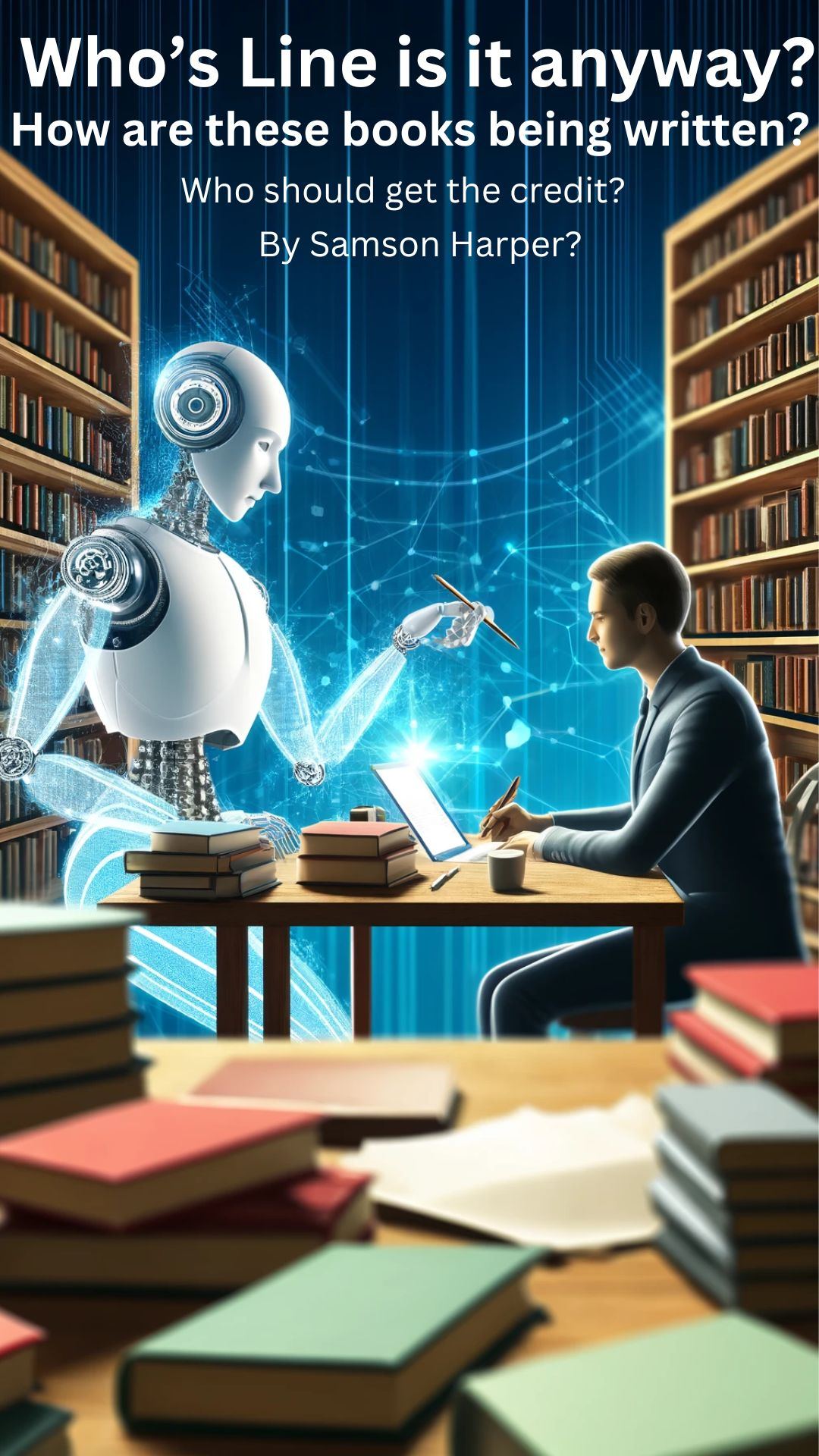

Who's Line is it anyway?
How are these books being written? Who should get the credit?
🧩Authorship and AI: A Collaborative Endeavor
As the debate on AI's role in creative writing gains momentum, Samson Harper's "Who's Line is it Anyway? How are These Books Being Written? Who Should Get Credit?" offers a ground-breaking perspective. Harper's main thesis revolves around viewing AI not as a replacement but as a powerful tool that complements human creativity. By embracing this synergy, Harper highlights how AI can augment an author's capabilities, enabling them to push the boundaries of traditional writing.
He outlines several key points that deepen the understanding of this collaboration:
Outline Creation: Human authors, like Harper, meticulously draft detailed outlines that serve as the narrative framework for AI to follow. These outlines embed intricate details, plot elements, and emotional tempos that are crucial for compelling storytelling.
AI Content Generation: Using advanced algorithms, AI generates content based on the provided outlines. This phase leverages machine learning and natural language processing to produce text that aligns with human instructions, yet lacks the innate human touch.
Human Editing: The generated content undergoes rigorous editing by human authors. This step is vital for imbuing the text with nuance, emotional depth, and a consistent voice. Authors ensure the text flows logically and resonates with readers.
Research-Driven: Harper underscores the importance of in-depth research that authors conduct to inform AI-generated content. This research ensures that the final output is not only accurate but also rich in context, making it both informative and engaging.
Ethical Considerations: The book also deals with the ethical implications of AI-assisted writing. Harper argues for transparent acknowledgment of the human-AI collaboration and advocates for a new framework for attributing credit in such works.
Through these elements, Harper paints a comprehensive picture of how AI and human creativity can coexist symbiotically. He challenges readers to rethink traditional authorship, emphasizing that the future of literature may well be defined by this innovative partnership between man and machine.
📚Introduction to AI-assisted Writing and Authorship
In the ever-evolving landscape of literature, the intersection of technology and creativity presents new challenges and opportunities for authors. Samson Harper's latest book, "Who's Line is it Anyway? How are These Books Being Written? Who Should Get Credit?," dives into the riveting world of AI-assisted writing. With over 130 books to his name, Harper is a pioneer in exploring how artificial intelligence can work alongside human ingenuity to produce groundbreaking literary works. This page serves as a comprehensive guide to Harper's insights, discussing the impact of AI on authorship and the nuanced processes involved in creating AI-generated content.
Visitors to this page will find an in-depth analysis of Harper's methods, from the initial stages of conceptualizing a book to the meticulous collaboration between man and machine. This exploration challenges traditional notions of what it means to be an author in the digital age and provides a transparent view of the innovative tactics that are redefining literature. Whether you're a writer, a technology enthusiast, or simply curious about the future of books, this page promises to enlighten and inspire. So, join us as we delve into the captivating narrative of AI and human creativity, and discover who truly deserves credit for these revolutionary works.
🤖The Complex World of AI-assisted Writing
AI-assisted writing represents a revolutionary fusion of technology and creativity, but it brings forth profound questions about authorship and originality. Samson Harper, in "Who's Line is it Anyway? How are These Books Being Written? Who Should Get Credit?," delves into the intricacies of this phenomenon. One of the main arguments is the balance and interplay between human ingenuity and artificial intelligence. While AI can generate text using predefined algorithms and data inputs, the human author's role is indispensable in providing direction, context, and subjective refinements.
Harper outlines the journey from the initial idea to the final product, where the human mind crafts an insightful and intriguing outline that AI follows. The AI then generates content based on this outline, filled with rich context and details that require meticulous editing and rearranging by the author. This multifaceted process highlights that AI acts as an assistant, enhancing human creativity rather than replacing it. Critics argue that AI-generated texts lack genuine emotion and originality, but Harper contends that it's the human touch—through editing and contextual adjustments—that truly breathes life into these works.
The book goes further to explain the substantial research involved before an outline is even drafted. Harper spends considerable time understanding subjects deeply, which ensures the AI's output is not only accurate but also engaging and informative. This intricate dance between human and machine challenges traditional views of authorship, pushing us to reconsider who gets credit for these innovative, collaborative creations.
📝Human Creativity Enhanced by AI
Samson Harper's exploration into AI-assisted writing extends to the essential crafting of context-rich outlines that serve as the backbone for the content generated by AI. One of the foremost arguments he presents is that the creative spark and the intricate details that define great literature emanate from human thought and understanding. AI, despite its advanced capabilities, lacks the intuitive grasp of nuance, emotion, and cultural context that human authors possess.
Harper describes how his personal involvement doesn't end with creating an outline; it continues through iterative processes of refinement. Post-AI content generation, human intervention is crucial for editing, rearranging, and injecting a unique voice into the text. This step ensures the narrative is coherent, compelling, and retains the essence of human experience. The AI augments Harper's productivity but never overshadows the vital human element that makes each book distinctive and insightful.
He also emphasizes the role of extensive research in the pre-writing phase. Harper’s deep dive into different subjects ensures that the AI’s generated content is not only contextually accurate but also rich in depth and perspective. This elaborate method underscores that while AI can produce volumes of text, it is the human intellect and creativity that mold these texts into meaningful, engaging literary works. Harper's book invites readers to appreciate this nuanced collaboration, challenging them to view AI as a tool that magnifies, rather than diminishes, the author's creative prowess.