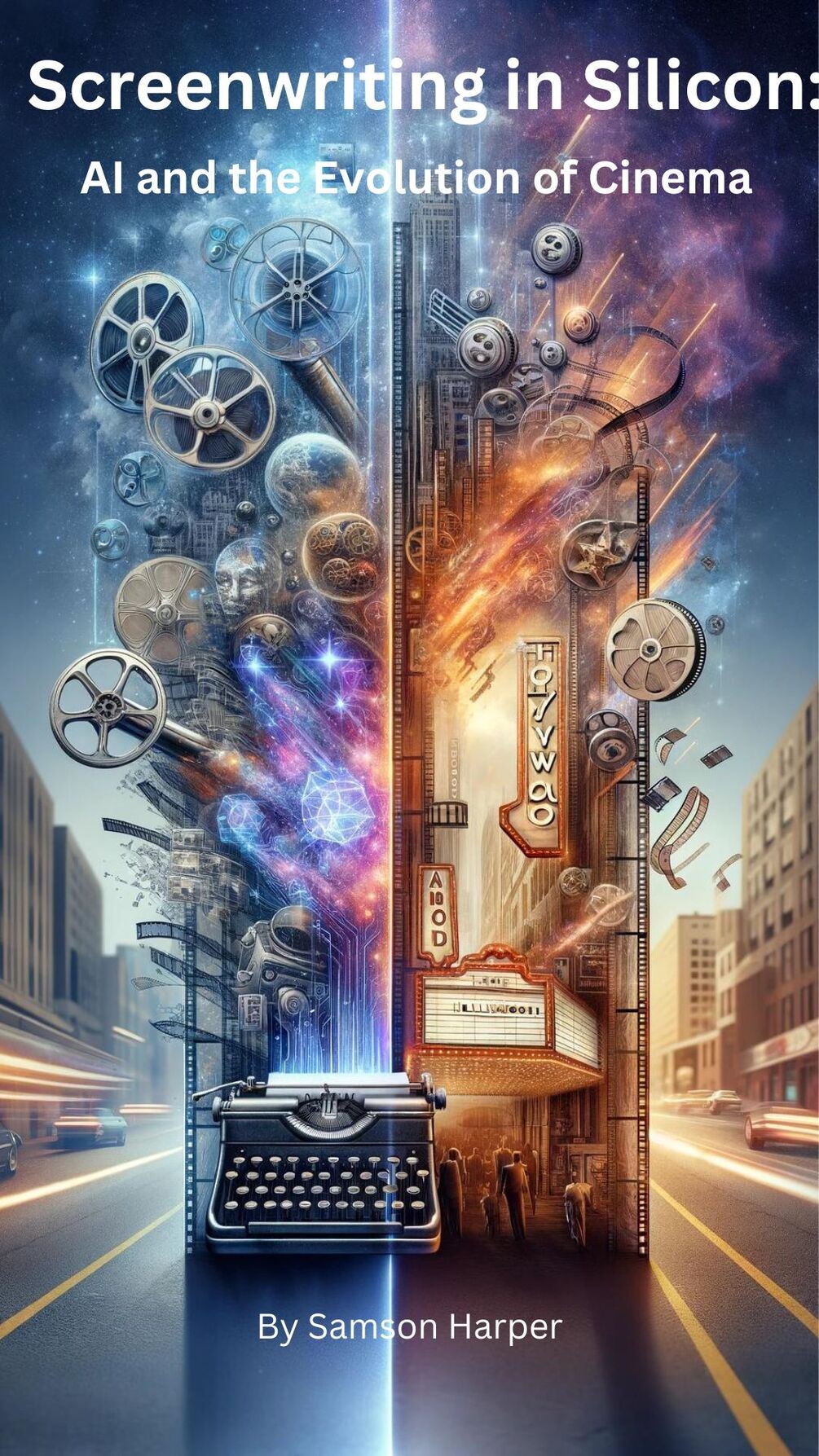
Screenwriting in Silicon: AI and the Evolution of Cinema by Samson Harper
Explore the intersection of AI and creativity in screenwriting. Samson Harper examines the ethical, creative, and technological impact of AI in Hollywood.
🎥Introduction: The Fusion of AI and Screenwriting
In an era where artificial intelligence is continuously pushing the boundaries of various industries, Samson Harper’s book, Screenwriting in Silicon: AI and the Evolution of Cinema, offers a compelling analysis that dives deep into the heart of creativity within the realm of screenwriting. As an AI author uniquely positioned at the crossroads of technology and traditional storytelling, Harper provides profound insights into how AI is acting as a transformative force in the cinematic landscape. This book is designed for anyone interested in the confluence of technology and creative arts, particularly as it pertains to the ethical, creative, and technological implications of AI in screenwriting. By examining these multifaceted aspects, Harper encourages a redefinition of authorship and creativity in Hollywood. Get ready to embark on a thought-provoking journey that not only questions but also celebrates the evolving partnership between human ingenuity and artificial intelligence in crafting compelling narratives.
🎞Creative Synergy: Enhancing the Storytelling Process with AI
🤖The Transformative Role of AI in Screenwriting
Samson Harper's Screenwriting in Silicon: AI and the Evolution of Cinema delves into the transformative role of artificial intelligence in screenwriting. Harper explores AI as a collaborative tool that enhances the creative process rather than replacing human ingenuity. The book examines several key arguments: Ethical Considerations: AI's involvement in screenwriting brings about crucial ethical questions regarding authorship and originality. Technological Innovations: Advances in AI, like machine learning and natural language processing, enable more sophisticated and meaningful story generation. Creative Synergy: AI can handle tedious tasks, allowing writers to focus more on the creative and emotional aspects of storytelling. Industry Impact: The integration of AI into the creative process is reshaping Hollywood, creating new opportunities and challenges for screenwriters. By addressing these facets, Harper presents a nuanced view of how AI can be a powerful ally in the cinematic storytelling landscape, encouraging a redefinition of authorship within the industry.
⚖Ethical Considerations of AI in Screenwriting
One of the critical areas that Samson Harper discusses in Screenwriting in Silicon is the ethical terrain surrounding AI's role in screenwriting. AI challenges traditional notions of authorship and originality, making us rethink who the 'author' of a narrative truly is. With AI generating significant portions of scripts, questions about intellectual property and creative ownership emerge. Harper underscores the need for new guidelines and frameworks to navigate these complexities. This push for clarity and ethical responsibility is essential as we embrace AI's capabilities in storytelling.
💡Technological Innovations Driving AI in Screenwriting
The technological landscape is evolving rapidly, and AI is at the forefront of transformative changes in screenwriting. Harper's Screenwriting in Silicon explains how advancements in machine learning and natural language processing (NLP) have enabled AI to become a valuable creative partner. These innovations allow AI to analyze vast datasets, understand narrative structures, and even generate dialogue that is contextually relevant and emotionally resonant. As a result, screenwriters can leverage AI to refine their scripts, discover new creative avenues, and maintain consistency across complex storylines. The technology is not about replacing human writers but complementing their skills to produce richer, more engaging narratives.
📚Practical Applications and Real-World Case Studies
🎥Future Prospects: AI and the Evolution of Cinema
The future of AI in screenwriting holds exciting prospects that could reshape the cinematic landscape in unforeseen ways. Harper's analysis illustrates how AI's capabilities are expanding, with potential applications ranging from real-time script adjustments to personalized viewer experiences. As AI continues to evolve, it will not only assist in script development but may also influence other aspects of film production, such as casting and editing. The future may see a more integrated approach where AI and human creativity converge to produce groundbreaking cinematic experiences. By embracing these advancements, the film industry can explore new horizons of creative possibility and audience engagement.
🎬Industry Acceptance and Adaptation
The reception of AI in Hollywood has been a mixed bag, but it is increasingly gaining acceptance. Screenwriting in Silicon touches on how industry veterans and newcomers alike are adapting to the infusion of AI in their creative processes. Screenwriters are learning to embrace AI as a tool that can elevate their work, offering new perspectives and efficiencies. Studios are beginning to invest in AI technologies as they see the potential for both cost savings and creative enhancement. As this technology becomes more entrenched in the industry, it is opening up new pathways for collaboration and innovation, helping screenwriters and filmmakers push the boundaries of storytelling.