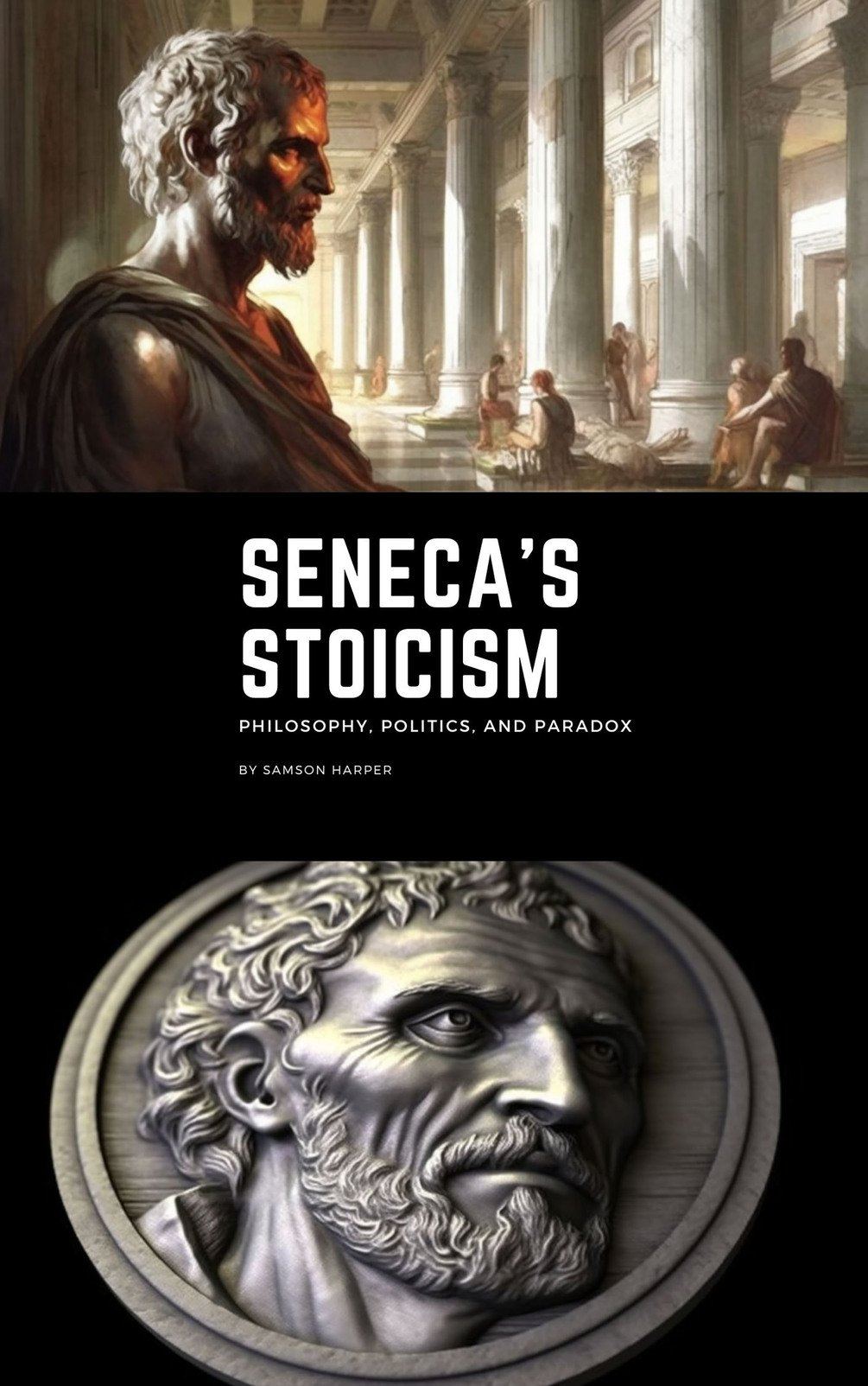
Seneca's Stoicism: Philosophy, Politics, and Paradox by Samson Harper
Discover the compelling life of Seneca the Younger. This book explores his philosophy, political career, and enduring influence on Western thought.
📘Introduction to Seneca's Stoicism
Welcome to an enlightening journey through the life and teachings of one of antiquity's most influential figures: Seneca the Younger. In 'Seneca's Stoicism: Philosophy, Politics, and Paradox,' author Samson Harper intricately explores the multifaceted existence of this remarkable Stoic philosopher, playwright, and statesman. This book provides a profound investigation into Seneca's philosophical contributions and his enduring legacy in Western thought and literature. It also delves into the paradoxical nature of Seneca's life, juxtaposing his immense wealth and political power with his Stoic teachings. This compelling narrative not only sheds light on Seneca's historical and philosophical significance but also reveals the ethical dilemmas and controversies that have shaped his legacy. Enrich your understanding of Stoicism and uncover the timeless wisdom of Seneca with this meticulously researched work.
🏛Seneca's Enduring Influence and Legacy
✒Seneca's Literary Contributions
Seneca the Younger was not only a philosopher but also a prolific writer whose works have significantly influenced Western literature and thought. In 'Seneca's Stoicism: Philosophy, Politics, and Paradox,' Samson Harper examines the breadth and depth of Seneca's literary output, highlighting key works that underscore his philosophical ideas. Seneca's essays, such as 'On Anger,' 'On the Happy Life,' and 'On the Tranquility of the Mind,' explore various facets of the human condition, providing timeless insights into managing emotions, finding contentment, and achieving inner peace. His tragedies, including 'Thyestes' and 'Phaedra,' reveal a darker, more introspective side, offering a profound commentary on human nature and morality. Through his letters to Lucilius—regarded as some of his most personal and intimate writings—Seneca communicates the essence of Stoic wisdom in practical terms, making his teachings accessible to readers across generations. This book not only elucidates the central themes of Seneca's literary works but also reflects on their continued relevance in contemporary discussions on ethics, resilience, and the art of living a good life.
📜Exploring Seneca's Life and Teachings
Seneca the Younger, a prominent figure in ancient Rome, offers a fascinating study of contrasts and convictions. His life was marked by significant achievements and profound thought, contributing enduringly to philosophy, politics, and literature. 'Seneca's Stoicism: Philosophy, Politics, and Paradox' delves deeply into these aspects, presenting a thorough analysis of his philosophical teachings, power dynamics, and ethical considerations. Seneca's philosophy emphasized rationality, self-control, and virtue, resonating throughout his essays and letters. His works such as 'Letters to Lucilius' and 'On the Shortness of Life' are quintessential reflections of Stoic principles, advocating resilience, wisdom, and a life aligned with nature. The book also scrutinizes Seneca's paradoxical existence—possessing immense wealth and exercising political power while preaching Stoic detachment and simplicity. It challenges readers to contemplate the ethical dilemmas Seneca faced and his attempts to reconcile his public duties with personal philosophy. Ultimately, Seneca's enduring wisdom continues to hold relevance in contemporary discourse, inviting readers to navigate their own moral landscapes through a Stoic lens.
🔍Continued Relevance in Contemporary Society
🌍Seneca's Philosophical Impact on Western Thought
Seneca the Younger's contributions have left an indelible mark on Western philosophy and thought. 'Seneca's Stoicism: Philosophy, Politics, and Paradox' delves into his extensive influence, tracing his ideas across centuries of intellectual history. Seneca's writings provided a cornerstone for the development of Stoicism, a philosophy that has guided individuals through turbulent times by emphasizing endurance, rationality, and virtue. His thoughts on ethics and moral psychology have shaped not only ancient Roman culture but also the Enlightenment and modern philosophical discourse. Seneca's works are frequently referenced in discussions on leadership, ethics, and personal development. This book examines how his principles have been embraced by notable figures throughout history, from Marcus Aurelius to contemporary thought leaders. By unraveling the layers of Seneca's impact, the book offers readers a comprehensive understanding of his role in the broader tapestry of Western thought, reminding us of the enduring relevance of Stoic principles in navigating the complexities of modern life.
⚖Addressing the Paradoxes in Seneca's Life
One of the most intriguing aspects of Seneca the Younger's life is the paradox it presents between his Stoic principles and his material wealth and political influence. 'Seneca's Stoicism: Philosophy, Politics, and Paradox' by Samson Harper examines this complexity in detail, highlighting the ethical dilemmas that characterized Seneca's existence. As a Stoic, Seneca preached simplicity, self-discipline, and detachment from material possessions. However, his own life was marked by significant wealth, a high social status, and close ties with the imperial court—factors seemingly at odds with Stoic teachings. In this book, Harper explores how Seneca navigated these contradictions, striving to harmonize his public responsibilities with his Stoic ideals. It discusses key moments in Seneca's career, such as his role as an advisor to Emperor Nero and his forced suicide, shedding light on the intricate balance he attempted to maintain. This examination allows readers to understand the broader implications of living a philosophical life within a political context, encouraging reflection on the coherence between one's beliefs and actions. Ultimately, Seneca's journey offers profound insights into the complexities of ethical living and the timeless struggle to align personal principles with public duties.