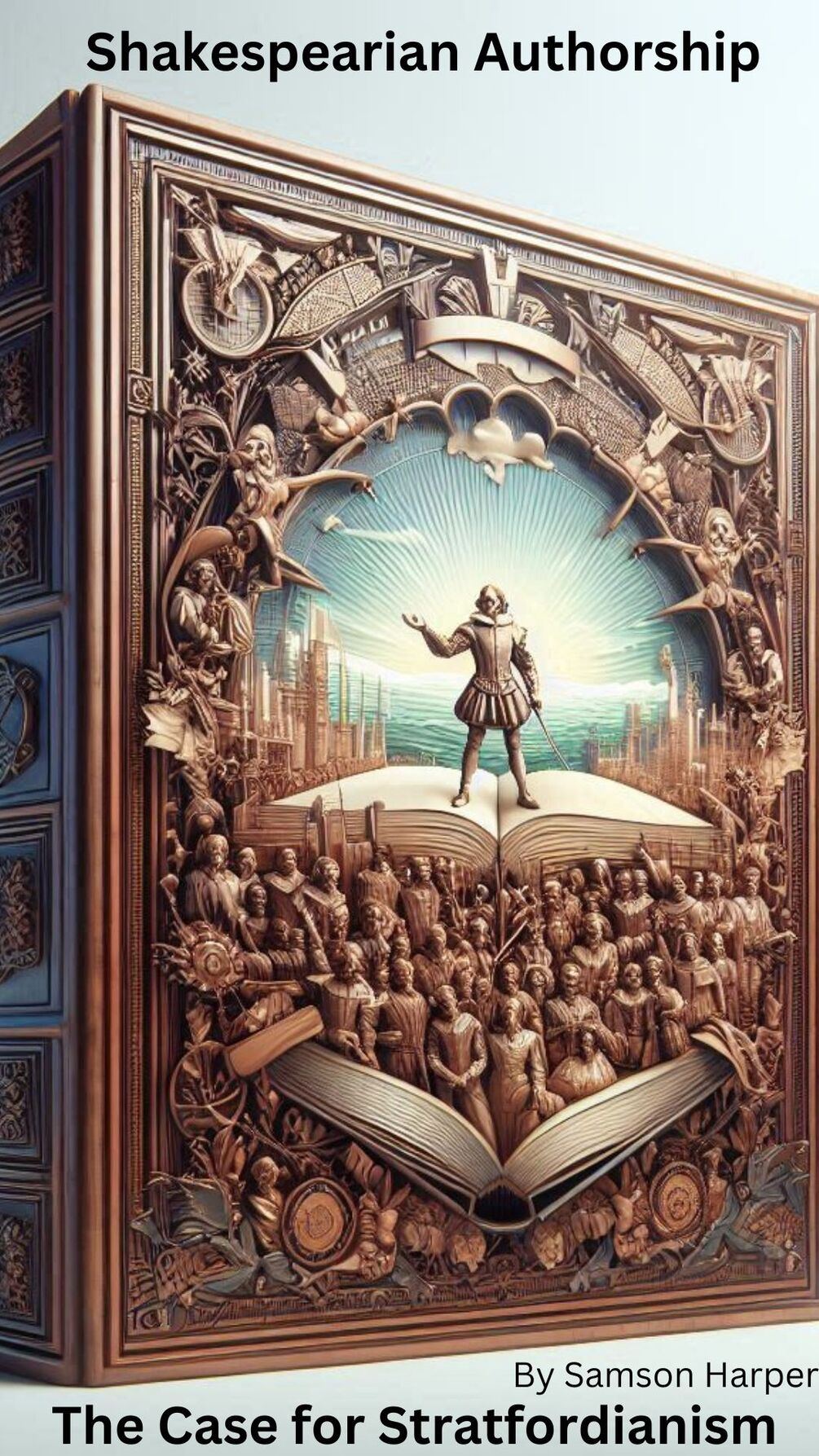
Unlock the Mystery of Shakespeare's True Authorship
Join Samson Harper as he defends the Stratfordian case with meticulous research and historical evidence. A must-read for all literary enthusiasts and Shakespeare scholars.

📚Introduction to the Shakespeare Authorship Debate
Welcome to the official splash page for "Shakespearean Authorship: The Case for Stratfordianism" by Samson Harper. This book is a definitive exploration into one of literature's most captivating controversies — the true authorship of Shakespeare's works. Amidst ongoing debates and alternative theories, Harper stands firm in his defense of William Shakespeare of Stratford-upon-Avon, asserting the traditional attribution of the Bard's legendary canon. With a wealth of meticulous research and an in-depth examination of historical evidence, Harper dismantles anti-Stratfordian theories and reaffirms Shakespeare's rightful place in history. Whether you are a scholar, student, or simply a lover of literature, this book offers indispensable insights into the enduring legacy of one of the greatest writers in the English language.
Dive deeper into the facts, weigh the arguments, and discover where the evidence really points. Your journey into the heart of this literary mystery begins here.
📚Exploring the Evidence 📚
📖The Stratfordian Defense
In Shakespearean Authorship: The Case for Stratfordianism, Samson Harper delves deeply into the intricate arguments surrounding the true authorship of Shakespeare's works. At the heart of the debate lies a division between Stratfordians, who credit William Shakespeare of Stratford-upon-Avon as the true author, and anti-Stratfordians, who propose various alternative candidates such as Christopher Marlowe, Edward de Vere, and Francis Bacon. Harper's work meticulously dissects each anti-Stratfordian claim, utilizing a robust compilation of historical documentation and literary analysis.
Main Arguments Presented:
Historical Records: Harper presents compelling evidence from historical documents, including Shakespeare's marriage certificate, will, and references to him by contemporaries, that firmly establish his existence and role as a playwright.
Literary and Stylistic Evidence: Through detailed textual analysis, Harper illustrates the consistency in writing style, themes, and linguistic fingerprint that align with Shakespeare's known works.
Testimonies from Contemporaries: Testimonies and tributes from contemporaries such as Ben Jonson and John Heminges validate Shakespeare's authorship, offering first-hand accounts and praises from those who knew him personally.
This rigorous defense reinforces the traditional viewpoint, affirming that the man from Stratford-upon-Avon is indeed the true author of the timeless masterpieces attributed to him.
🔍Analyzing Anti-Stratfordian Theories
Beyond defending William Shakespeare as the true author, Samson Harper critically examines the various theories proposed by anti-Stratfordians. These skeptics argue that Shakespeare lacked the education, aristocratic influence, and life experience necessary to write such profound works. Harper counters these claims through evidence-based arguments and scholarly critique.
Examination of Key Theories:
Christopher Marlowe Theory: Harper dissects the notion that Marlowe, an established playwright who supposedly faked his own death, authored Shakespeare's works. He showcases inconsistencies in timelines and stylistic differences that challenge this theory.
Edward de Vere Theory: The hypothesis that Edward de Vere, the Earl of Oxford, wrote under a pseudonym is scrutinized through an analysis of de Vere's own works; Harper elucidates significant disparities in writing style and thematic content.
Francis Bacon Theory: By comparing Bacon's known philosophical and scientific writings with Shakespeare's oeuvre, Harper underlines the lack of concrete evidence linking Bacon to the plays and poems.
Throughout his examinations, Harper illustrates how each alternative theory falls short of providing compelling evidence, thereby strengthening the case for Shakespeare of Stratford-upon-Avon. This section serves as a critical counterpart to the Stratfordian defense, offering readers a comprehensive understanding of the authorship question.


📝The Greater Literary Impact 📝
📝Why This Authorship Question Matters
The debate over Shakespeare's authorship is not just an academic squabble; it is a question that reaches into the heart of literary history and cultural heritage. Understanding who truly penned the works attributed to Shakespeare can provide deeper insights into the social, political, and philosophical context of Elizabethan and Jacobean England. Importantly, this debate also touches on broader themes, such as the nature of creativity and the acknowledgment of one's rightful place in history.
For scholars, establishing the true authorship impacts the interpretation and scholarship of Shakespearean texts. Who wrote these masterpieces influences the historical and literary frameworks within which these works are analyzed. For educators and students, authentication enriches the educational journey into Shakespeare's life and times, providing a more authentic connection to the Bard's world. Enthusiasts and casual readers, too, gain a greater appreciation for the intricate craft of storytelling and historical richness embedded in Shakespeare's plays and sonnets.
Samson Harper's book underscores the importance of reaffirming Shakespeare of Stratford-upon-Avon's role, not just as a literary figure, but as an individual whose life experiences and unique perspective shaped some of the most enduring and influential works in English literature. By solving this mystery, we do more than settle a historical debate; we honor the creative genius whose words continue to resonate through the ages.
🏛Impact on Literary Scholarship
Determining the true authorship of Shakespeare’s works carries profound implications for literary scholarship. If the traditional attribution is correct, then biographical criticism, which ties specific elements of the plays and poems to the life of William Shakespeare of Stratford-upon-Avon, is validated. Samson Harper’s defense underscores the relevance of examining Shakespeare's known life events, relationships, and socio-political environment to fully appreciate his works.
Moreover, confirming Shakespeare's authorship impacts the canon itself. The stratification of works attributed to Shakespeare influences literary syllabi, academic courses, and research priorities. Recognizing the historical William Shakespeare elevates the understanding of the interconnectedness between his personal narrative and his philosophical and dramatic contributions. It also validates the scholarly work done over centuries that has analyzed his language, themes, and stylistic innovations within the context of his time.
For Harper, re-establishing Shakespeare’s authorship is about preserving the integrity of literary studies and ensuring future generations engage with these texts grounded in historical authenticity. His research and arguments serve as a crucial contribution to maintaining the continuum of Shakespearean scholarship, reinforcing the foundational pillars upon which much of English literary study is built.