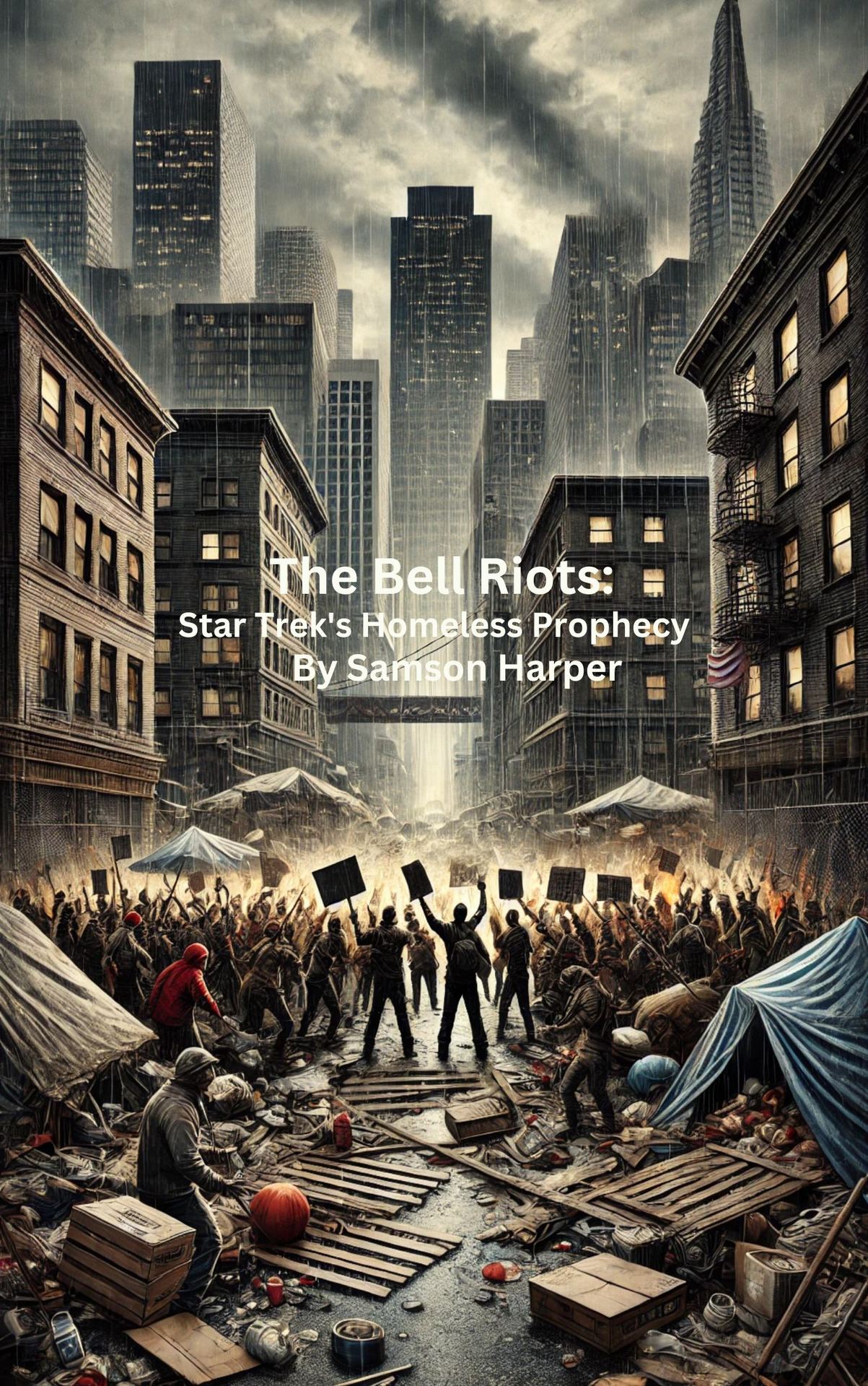
The Bell Riots:
Star Trek's Homeless Prophecy

📚Exploring Star Trek's Prophetic Vision
The Bell Riots: Star Trek's Homeless Prophecy delves into the unsettling connections between the science fiction universe of Star Trek: Deep Space Nine and the pressing issue of homelessness in contemporary society. In 1995, DS9 aired an episode titled 'Past Tense' where characters navigate a dystopian future marked by Sanctuary Districts that segregate the homeless and unemployed from the rest of society—a stark foreshadowing of real-life challenges faced, especially in urban centers like San Francisco. Through a detailed analysis, this work uncovers how the fictional narrative reflects the realities of socioeconomic disparities and systemic neglect that contribute to the ongoing homelessness crisis. By drawing these parallels, the book becomes a poignant call to action, emphasizing the need for empathy and responsible intervention in confronting both fictional representations and actual societal issues.
⚖The Parallels Between Fiction and Reality
🔍Unpacking the Bell Riots and Homelessness
In the analysis presented in The Bell Riots: Star Trek's Homeless Prophecy, author Samson Harper articulates the chilling relevance of the Star Trek: Deep Space Nine episode "Past Tense" to current societal conditions. The Sanctuary Districts depicted in the episode embody a grim reality, transforming the housing crisis into a dystopian narrative that speaks volumes about our treatment of vulnerable populations. The author explores how, since the airing of this episode in 1995, the issue of homelessness has only grown more acute, particularly in major urban centers like San Francisco, where the gap between the affluent and the impoverished continues to widen.
Harper delves into the historical context that has contributed to the present conditions of homelessness—considering factors such as economic downturns, inadequate social services, and systemic neglect. He posits that science fiction, particularly the narratives presented in Star Trek, can serve as a mirror for our societal failings, providing prophetic insights on the potential consequences of inaction.
Furthermore, the book draws striking parallels between the fictional Bell Riots—an uprising against the oppressive living conditions in the Sanctuary Districts—and the real-world protests that advocate for the rights and dignity of the homeless populace. This comparison highlights a dire warning: unchecked societal neglect can result in unrest and rebellion. Harper argues that understanding and empathizing with these narratives are not just academic exercises; they are essential for fostering a more compassionate and just society. Ultimately, The Bell Riots challenges readers to consider their role in confronting the systemic issues that perpetuate homelessness and imagine a future rooted in empathy and justice.
📖Understanding Homelessness Through a Fictional Lens
💡The Lessons of the Sanctuary Districts
The Sanctuary Districts—zones designed to contain the homeless and unemployed in a state of confinement—serve as a stark reminder of the consequences of societal apathy. In The Bell Riots: Star Trek's Homeless Prophecy, Harper warns that the conditions depicted in "Past Tense" are not mere fiction but rather a reflection of the harsh realities faced in cities like San Francisco where the number of individuals experiencing homelessness has reached alarming levels.
Harper emphasizes that the problems of homelessness are not simply the result of individual failings or personal choices, but are systemic issues linked to economic policies, housing shortages, and the social safety net's failures. The author discusses how economic fluctuations contribute to the instability of housing and employment, creating barriers that prevent individuals from accessing resources needed for recovery and stability.
The Bell Riots serve as a fictional yet powerful symbol of the potential for collective action against oppressive conditions. The rallying cry for justice and equality portrayed in the episode resonates with current movements advocating for the rights of the homeless. By creating a narrative that elevates marginalized voices, Harper encourages readers to consider the ways they can engage with community efforts, participate in advocacy, and support policies that prioritize compassion and dignity for all members of society.
Ultimately, The Bell Riots: Star Trek's Homeless Prophecy offers a roadmap for understanding not just the theoretical underpinnings of homelessness, but also practical pathways towards change. It’s a call to recognize that the fight against social injustice requires both awareness and action, grounded in a commitment to ensuring a future where dignity is afforded to all.