_auto_x2.jpg&w=96&q=100)
The Eternal Recurrence: Perspectives on Time, Existence & Meaning
Discover 'The Eternal Recurrence' by Samson Harper. Delve into Nietzsche's concept, explore philosophical traditions, and find new interpretations on time and existence.
🌀Delving into Diverse Philosophical Traditions
At the heart of "The Eternal Recurrence" lies an intricate analysis of Friedrich Nietzsche’s concept of eternal recurrence, which proposes that the universe and our existence within it are perpetually recurring. This profound notion finds resonance and contrast across a spectrum of philosophical traditions. The book meticulously explores ancient Greek philosophies like Stoicism and Epicureanism, revealing how these paradigms grapple with the cyclical nature of existence and human agency. Moving forward, the text engages with existentialist perspectives, particularly the works of Albert Camus, who juxtaposes absurdity and the relentless human search for meaning through the myth of Sisyphus. The examination extends to Eastern philosophies, where Buddhist and Hindu viewpoints bring different nuances to the debate on temporal recurrence and spiritual liberation. Furthermore, it includes a deep dive into Taoism's unique understanding of natural cycles and harmony with time. Overall, the book presents a sophisticated comparative analysis, showcasing both the convergences and divergences among these diverse schools of thought, probing into the moral dimensions and existential queries that arise from the notion of eternal recurrence.
📚Explore The Eternal Recurrence
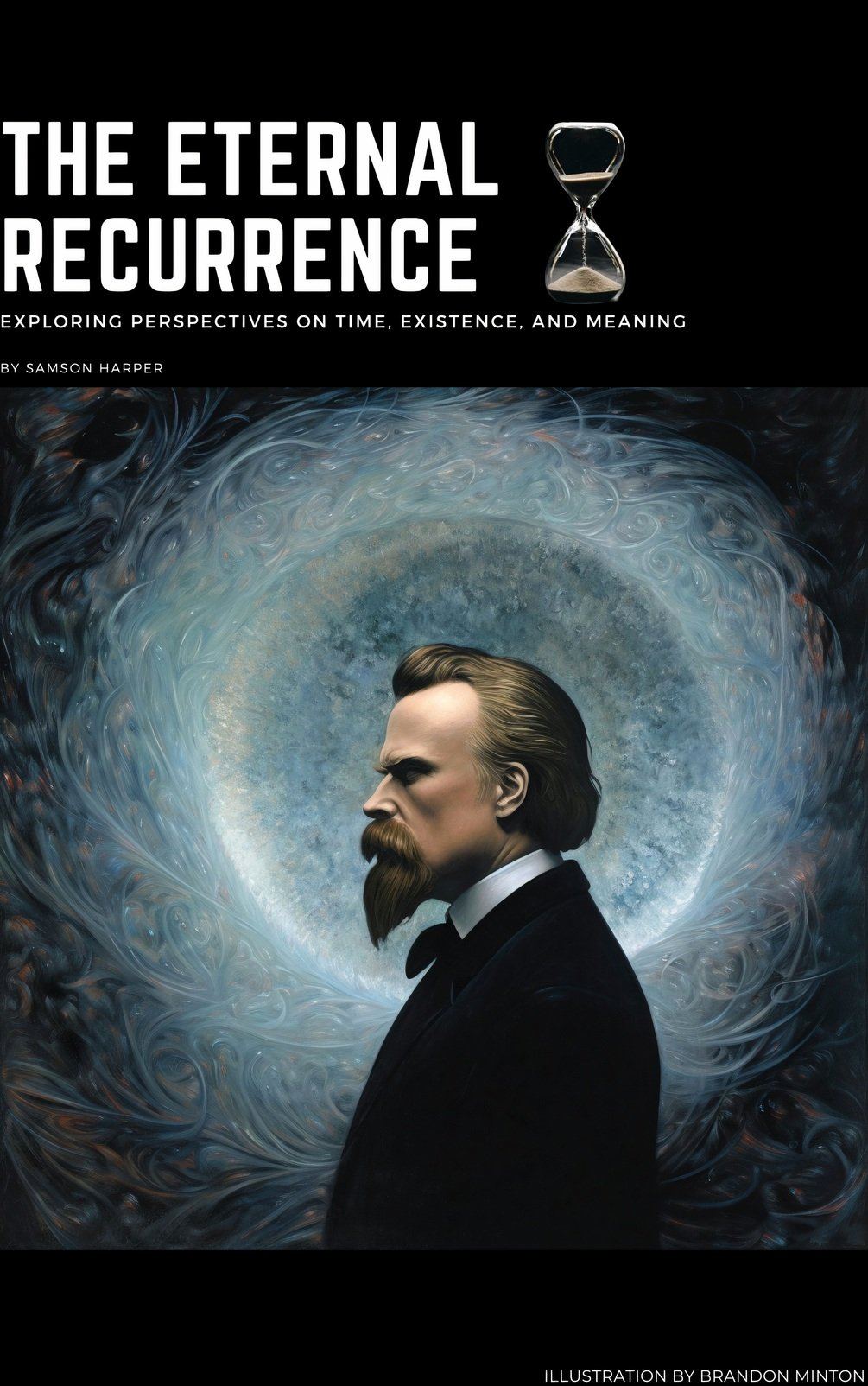
Welcome to an exploration of "The Eternal Recurrence: Exploring Perspectives on Time, Existence, and Meaning," the latest thought-provoking book by Samson Harper. This comprehensive work dives deep into the fascinating concept of eternal recurrence, introduced by Friedrich Nietzsche, and examines its extensive implications across various philosophical traditions, including ancient Greek philosophies like Stoicism and Epicureanism, existentialism, and Eastern philosophies such as Buddhism, Hinduism, and Taoism. The book also delves into modern thought, engaging with Albert Camus' concept of Sisyphus and providing comparative analyses to highlight the similarities and differences in these diverse viewpoints. By exploring moral implications, individual agency, and the pursuit of meaning, this book serves as a cornerstone for those interested in the depth of philosophical exploration. Join us in unraveling the layers of time, existence, and the ultimate search for meaning.
🔎Modern Philosophy and Existentialism
💡Impact on Modern Thought and Existentialist Thinkers
The implications of Nietzsche's eternal recurrence extend beyond ancient and classical philosophies, deeply influencing modern thought and existentialist thinkers. "The Eternal Recurrence" delves into the transformative impact on philosophers like Jean-Paul Sartre and Martin Heidegger, examining how the concept challenges notions of individual freedom, choice, and authenticity. It discusses Sartre's existentialist framework where human beings are condemned to be free, forced to constantly create their essence through actions. Heidegger's contemplation on being and time is also scrutinized, highlighting the layer of existential anxiety introduced by the eternal recurrence. The book further explores alternative interpretations and counterarguments, presenting a balanced view of how Nietzsche’s idea has been received and critiqued in contemporary philosophy. Through this exploration, readers gain insight into the continuing relevance and adaptation of ancient philosophical ideas in modern existential queries.
🔍Modern Philosophy
The nuances of eternal recurrence have not only pervaded ancient and Eastern philosophies but have also left a significant mark on modern philosophical thought. The book explores how the notion of perpetual recurrence has been instrumental in shaping the philosophies of key 20th-century thinkers, particularly within the existentialist tradition. This section dives into Jean-Paul Sartre’s concepts of radical freedom and the responsibility it entails, showing how eternal recurrence forces a confrontation with the self and the weight of one's choices. Martin Heidegger's reflections on 'being' and 'time' bring another dimension, as he engages with existential dread and the authenticity of existence under the shadow of eternal recurrence. Additionally, contemporary critiques and re-interpretations are presented, providing a broad spectrum of views that illuminate the relevance of Nietzsche’s profound idea in today's philosophical discourse.