Unlock the Intricacies of Aquinas' Thought
Explore Thomas Aquinas' profound philosophy on God, essence, and existence. Get your digital copy now!

📘Introduction
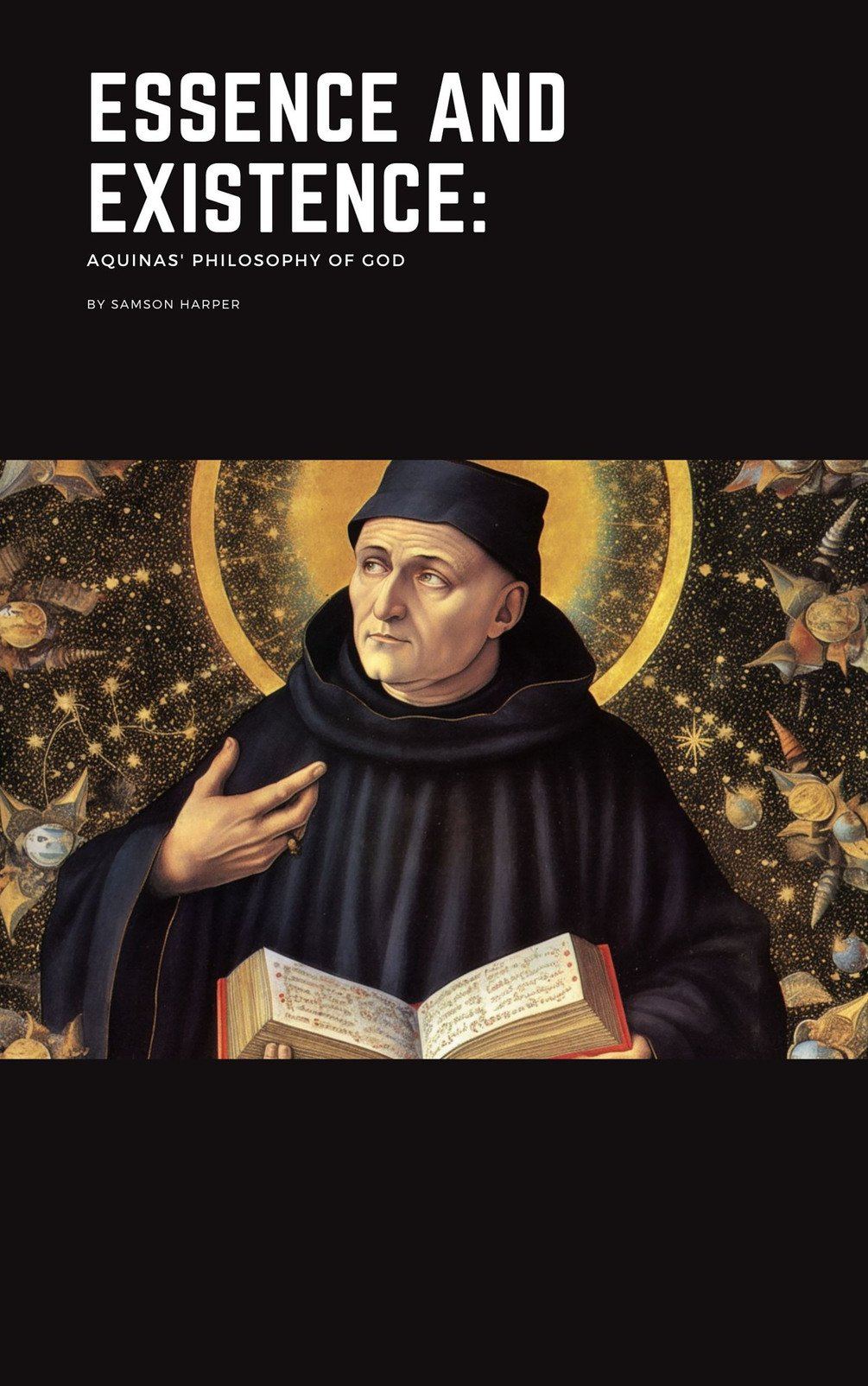
Welcome to an in-depth exploration of Thomas Aquinas, one of the most influential philosophers and theologians in Western history. This page is dedicated to 'Essence and Existence: Aquinas' Philosophy of God' by Samson Harper, a comprehensive study that delves into Aquinas' life, teachings, and the lasting impact of his ideas. Here, you'll find a detailed summary of the book's key themes, including natural law, essence, mind, and the modern relevance of Aquinas' philosophies. Whether you're a seasoned scholar or new to Aquinas' work, this resource offers valuable insights into his profound contributions to philosophy and theology.
📚Exploring Aquinas' Core Philosophies
🏛Legacy and Impact
Thomas Aquinas' lasting influence is evident across multiple domains of thought. 'Essence and Existence: Aquinas' Philosophy of God' provides an insightful exploration into how his philosophical and theological ideas resonate even in contemporary discussions. One significant aspect is his moral theology, where Aquinas' principles continue to inform modern ethical debates and legal frameworks. His work introduced a systematic approach to ethics that integrates reason and divine revelation, offering a unique lens through which to evaluate moral issues. Furthermore, Aquinas' impact extends to his contributions to metaphysics and epistemology. His Five Ways of proving God's existence remain foundational in theistic philosophy, and his nuanced understanding of being and essence still influences metaphysical inquiries today. The book illustrates Aquinas' relevance by connecting his medieval concepts to modern issues such as the nature of consciousness and the ethical considerations of artificial intelligence. The text also delves into the critiques and controversies surrounding Aquinas' work, presenting a balanced view that acknowledges both the strengths and limitations of his ideas. By examining the dialogues between Aquinas and subsequent thinkers, readers gain a deeper appreciation for the dynamic and evolving nature of philosophical discourse. Ultimately, the book affirms Aquinas' place as a pivotal figure whose ideas continue to shape intellectual landscapes across centuries.
💡Aquinas' Core Philosophies
Thomas Aquinas is a cornerstone in Western philosophy and theology, particularly known for integrating Aristotelian philosophy with Christian doctrine. 'Essence and Existence: Aquinas' Philosophy of God' meticulously unpacks Aquinas' ideas, making complex concepts accessible. One of the book's standout discussions is Aquinas' distinction between essence and existence, articulating how existence actualizes the essence of a being. This separation underpins much of his theological work and has implications for understanding God as the 'necessary being' – a being whose essence is existence itself. Another fascinating topic covered is Aquinas' natural law theory. Here, Aquinas posits that moral principles are derived from human nature and purpose, which are part of the divine plan. This perspective not only informs ethical behavior but also provides a foundation for legal systems rooted in a moral order. Additionally, Aquinas' views on mind and knowledge are examined, highlighting his belief in the compatibility of faith and reason. The book takes readers through his epistemology, emphasizing the role of intellectual virtues and the mind's ability to grasp universal truths. By exploring these themes, the text illustrates Aquinas' enduring impact on both religious and secular thought.
🌟Modern Relevance of Aquinas' Thought
🌐Modern Relevance of Aquinas' Thought
In 'Essence and Existence: Aquinas' Philosophy of God,' Samson Harper illuminates how Aquinas' ideas transcend medieval contexts and offer valuable insights for contemporary issues. Aquinas' philosophy of God, for example, provides a framework for engaging with modern theistic and atheistic debates, presenting arguments that are still discussed in today's philosophical circles. Aquinas' natural law theory also retains its significance, especially in discussions on human rights and ethical governance. By arguing that moral laws are etched into the very fabric of human nature and aligned with divine purpose, Aquinas provides a robust foundation for universal human rights that can address today's complex social and moral challenges. Additionally, the text connects Aquinas' views on essence and existence to current metaphysical debates. His assertion that a being's essence is distinct from its existence critiques modern existentialist and nihilist perspectives, enriching discussions about meaning and purpose in life. Aquinas' insights into mind and knowledge also resonate with today’s advances in cognitive science and artificial intelligence. His belief in the complementarity of faith and reason encourages a holistic approach to understanding consciousness and cognition, challenging purely materialistic interpretations of the mind. By articulating these modern connections, the book underscores Aquinas' enduring relevance, demonstrating that his philosophical and theological contributions continue to offer profound and practical wisdom for addressing today's intellectual and ethical dilemmas.