

Muscle Cube
Building Muscle Memory for Competitive Rubik's Cube Solvers
🤨Motivation
I'm Shiv, a final-year CS Graduate student at Georgia Tech. I am also very passionate about Speed Cubing, which is a competitive sport where participants solve a popular puzzle called Rubik’s Cube in the lowest possible time. Typically to professionally compete in a Rubik’s Cube competition, you need to have an average solve time under 30 seconds. A large part of preparing for these competitions is to learn as many Rubik’s Cube algorithms as possible and build muscle memory for it. I will teach people the algorithms needed to compete professionally. My target audience is anyone who wants to learn or already knows how to solve a Rubik’s cube and wishes to competitively play.
💬How to Speed-Cube?
Basics of Cubing
The solution to any scrambled Rubik’s cube has these three stages (in order):
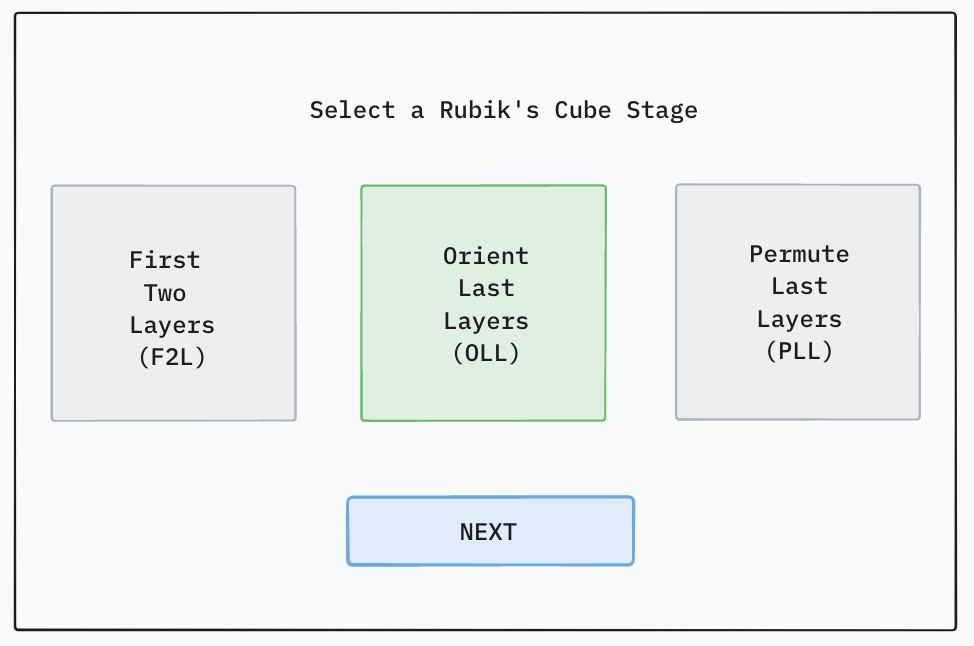
First Two Layers (aka F2L): Algorithms to solve first 2 layers of the Rubik’s Cube
Orient Last Layer (aka OLL): Algorithms for orienting the edges of the last layer of the Rubik’s Cube
Permute Last Layer (aka PLL): Algorithms to permute the corners of the last layer of the Rubik’s Cube
The learning outcome will be that the user of my tool will be able to at least learn one algorithm for each of the above three stages (F2L, OLL, PLL)
How do we build Muscle Memory?
When a professional Speed-Cuber is training, their setup usually involves a Rubik’s Cube and a timer (on their laptop). Since this is a standard and a widely accepted approach, the learning outcomes will be realized via a web-app which can be easily accessed through a laptop.
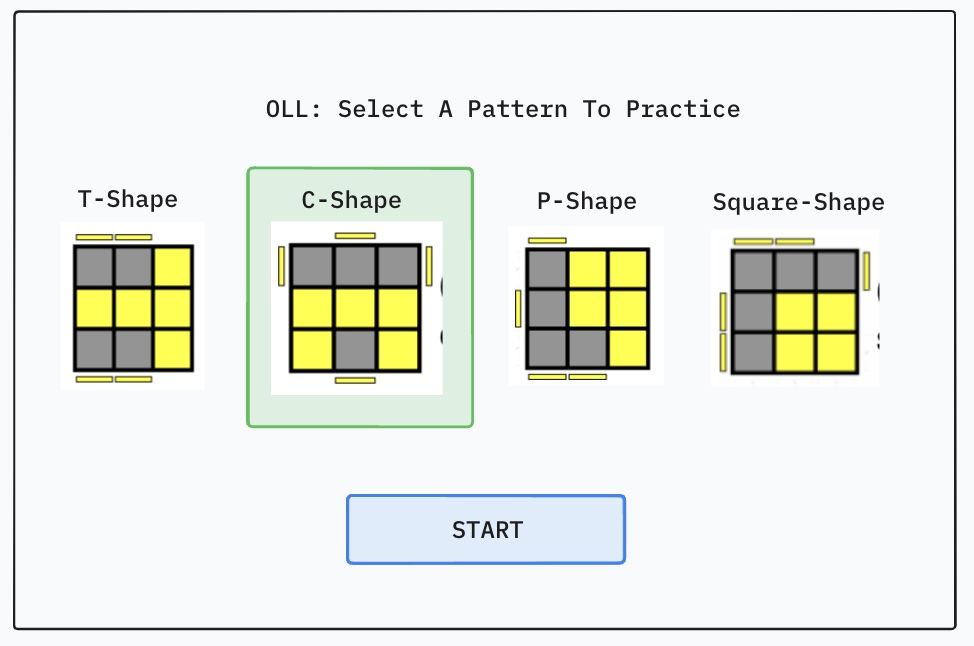
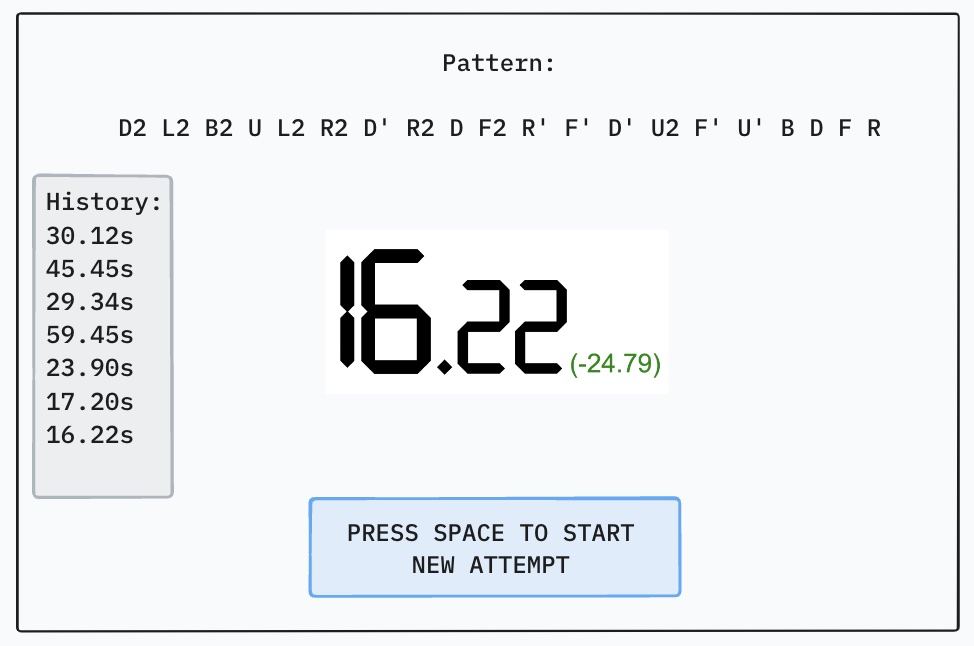
To teach this topic I propose a tool which allows the user to select one of the three Rubik’s Cube stages. Next, for each stage, the user will have an option to practice one of the cube-patterns. Finally, my tool will produce random Rubik’s cube scrambles that will generate that pattern that the user wants to practice and commit to their muscle-memory (and measure their solve time).
Early Prototyping
Figma Iterations
💪Introducing Muscle Cube
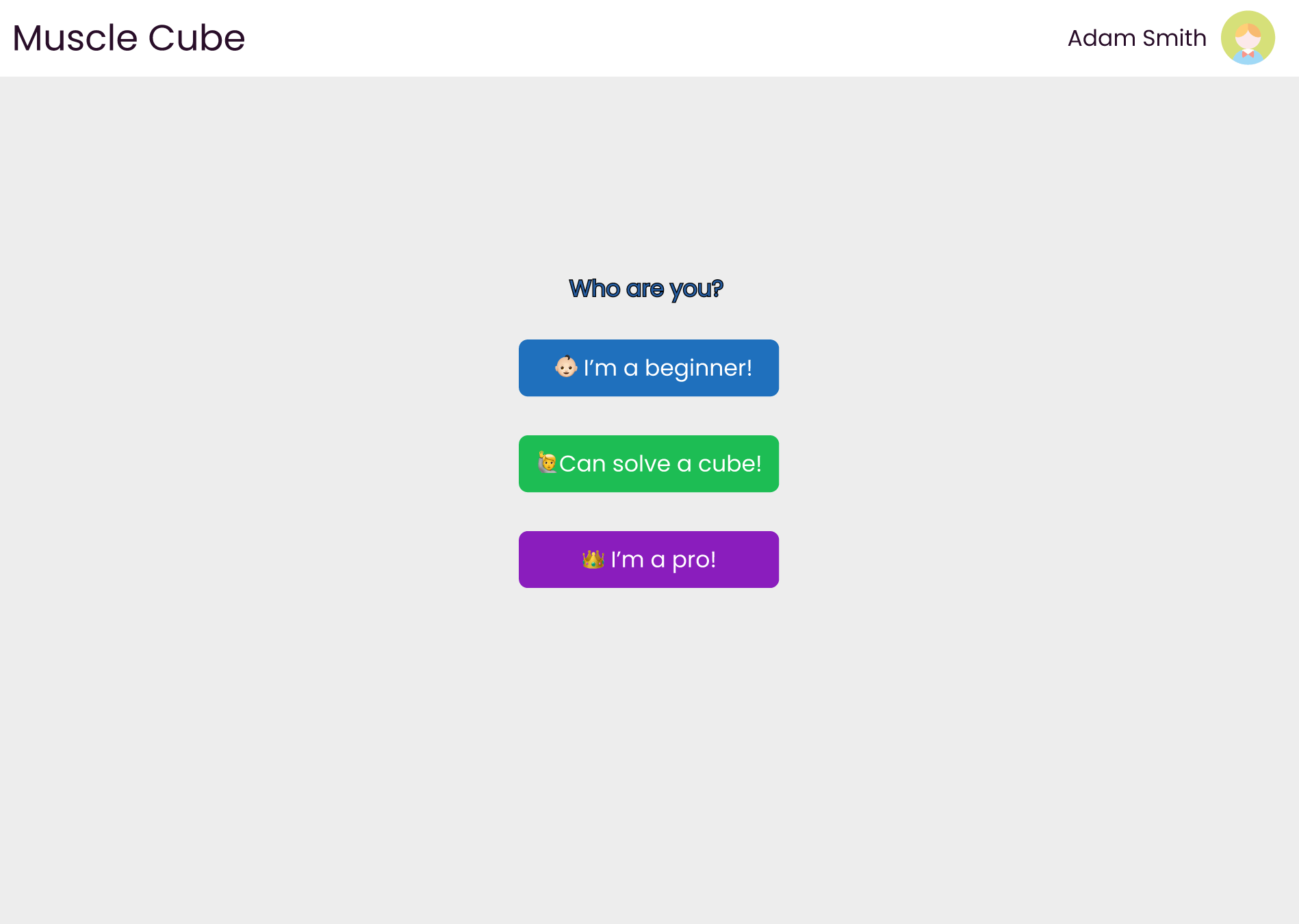
The Muscle Cube's Home-Page aims to keep things minimal and take the users directly to their practice sessions. We target three demographics:
Beginner to Rubik's Cube
The hobbyist Rubik's Cube solver
Professional Speed-Cuber
Continue to see the app evolution for each demographic
The Beginner and the Hobbyist

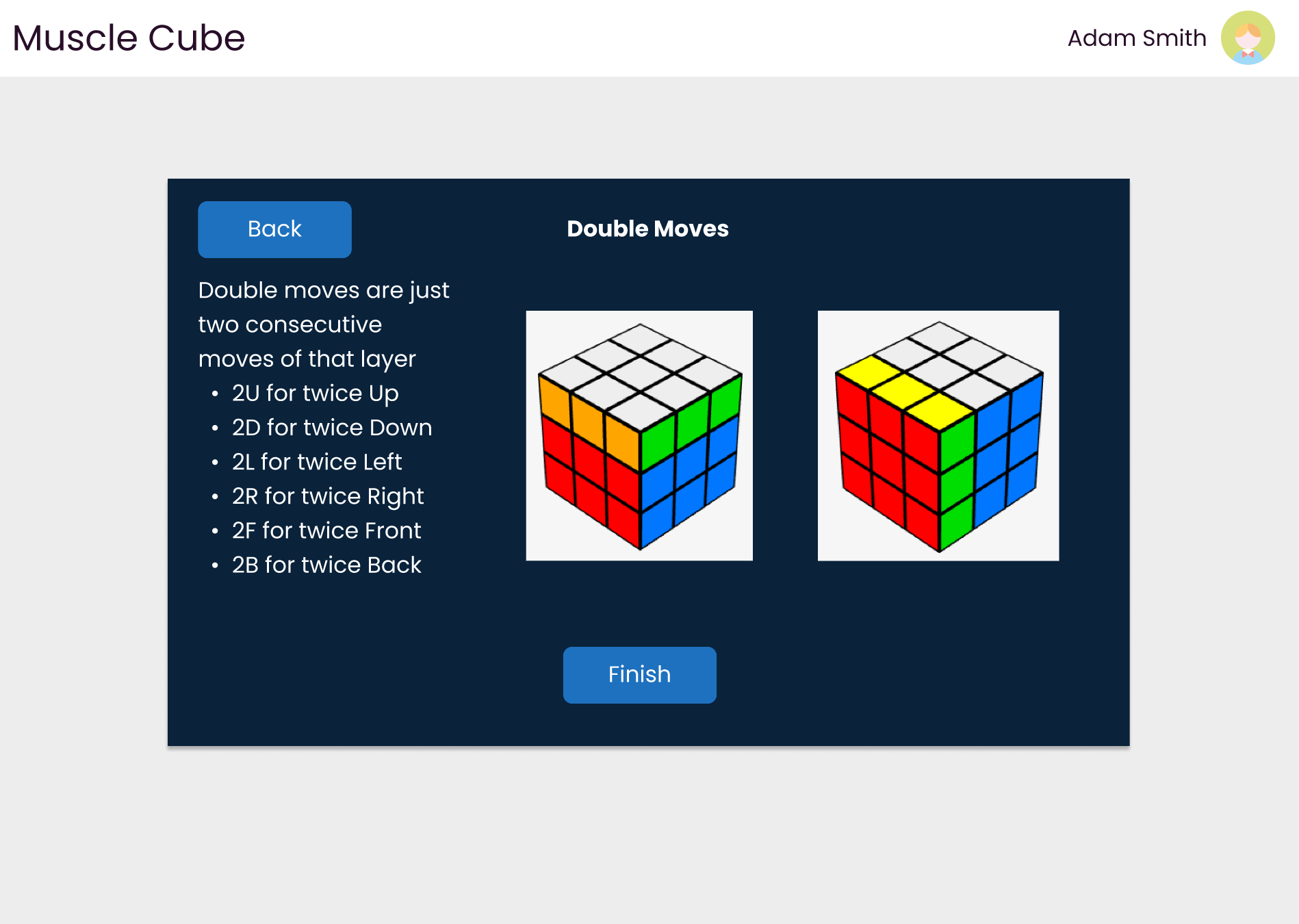
What Went into Prototype 1
Early user tests revealed that the beginner user doesn’t know how to interpret the symbols. For example, when they see “D2” or “F’”, they do not know that it corresponds to “rotate the down-layer twice” and “rotate the front layer in anti-clockwise fashion” respectively. They want a gentler introduction to the notation.
Hence, the design includes an intro section for the beginners to familiarize themselves with the common Rubik's Cube notations!
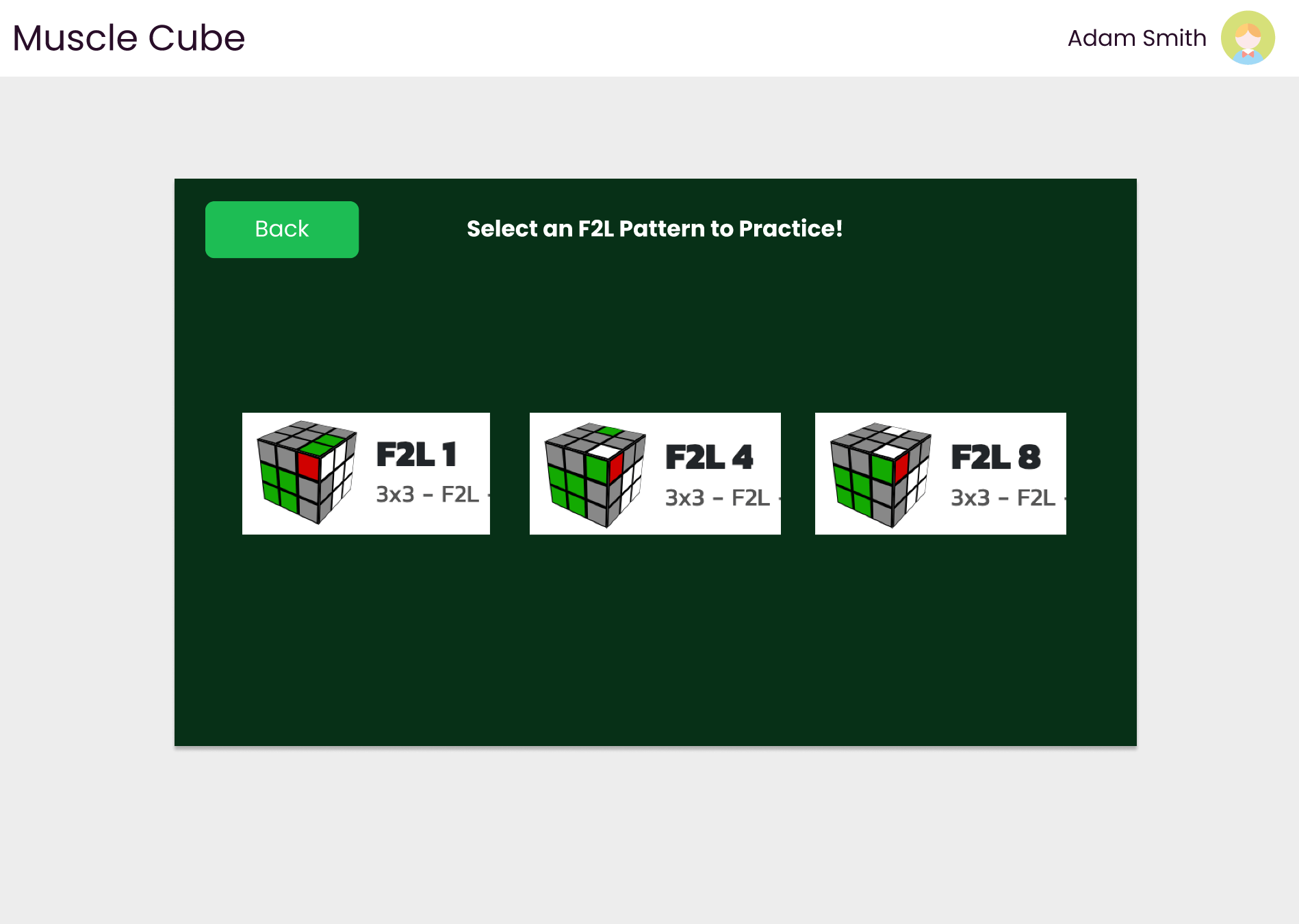
User Feedback for Prototype 1
The beginner found the notations of the Rubik’s Cube a little hard to understand. He mentioned that it would help if an animated gif shows the rotations of the cube are clockwise or anti-clockwise from the layer’s perspective.
They also mentioned that for a complete beginner there should be some description that explains what F2L, OLL and PLL does.
A pro-user also suggested we implement a quiz to ensure user has understood the notations well!


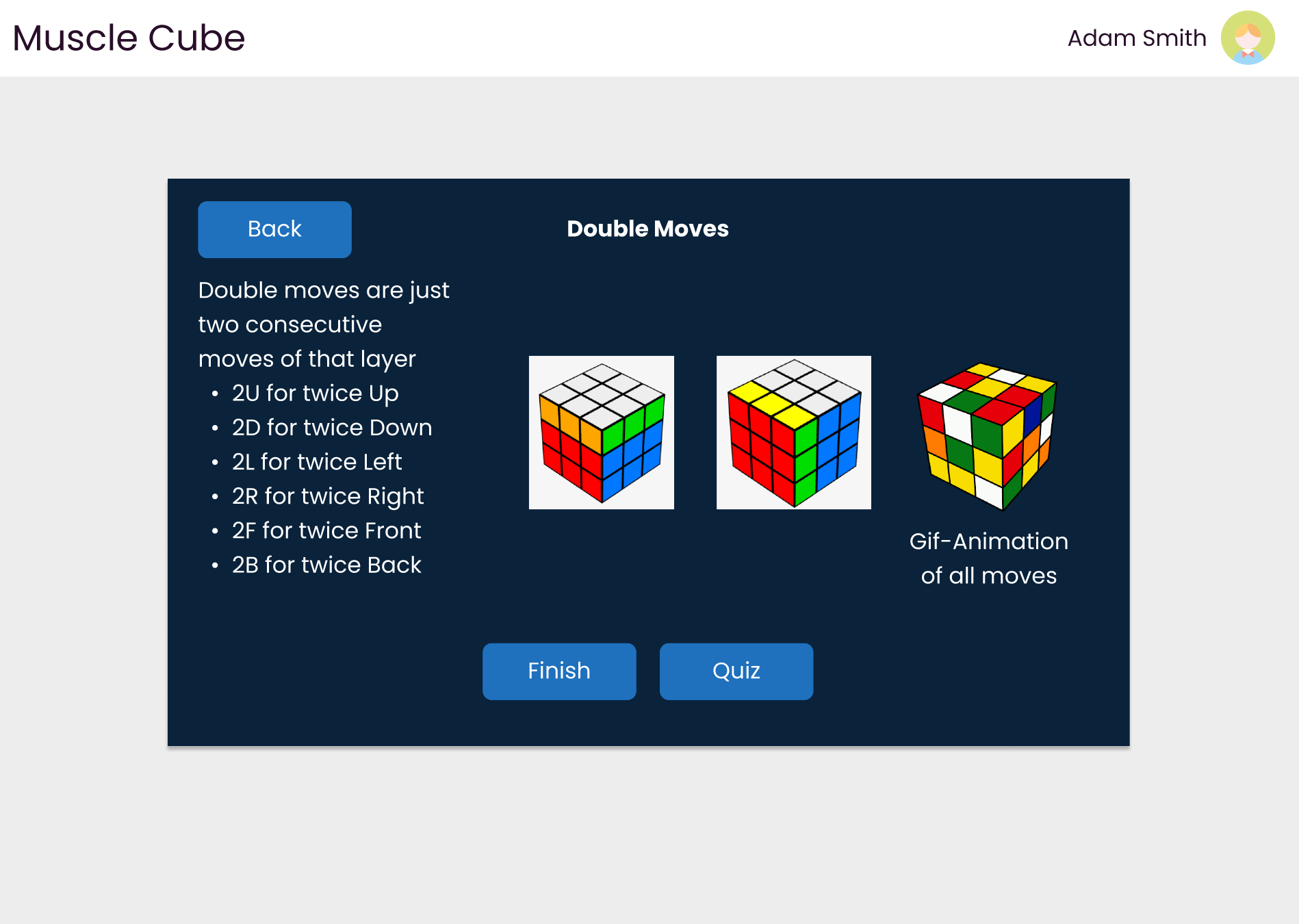
The Pro
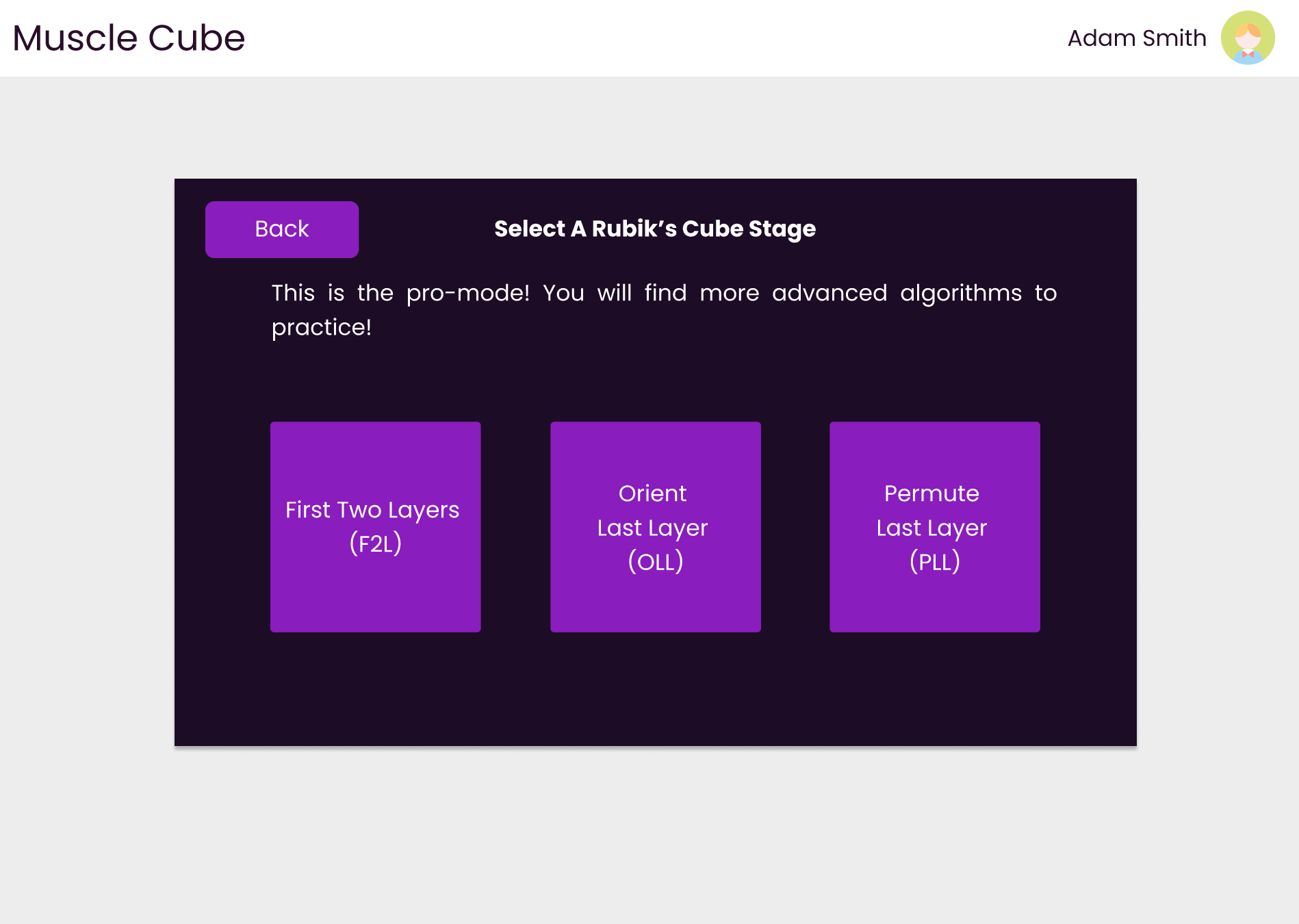

What Went into Prototype 1
The user liked the breakdown of the web-app into three systematic stages. The user highlighted the importance of designing the web-app without needing the use of the mouse. (Speed-Cubers only rely on the spacebar key to record time and pick up the cube as soon as they key is pressed)
The user liked the timetable shown on the left-hand. The user also asked for a time-comparison with other pro-players on the left hand side table. This will allow them to measure how much more they need to improve to beat the competition.
Feedback for Prototype 1
The pro-user found the app very easy and intuitive to use. Their familiarity with Rubik’s Cube notations allowed them to skim-past most screens. The pro-user also validated the leaderboard.
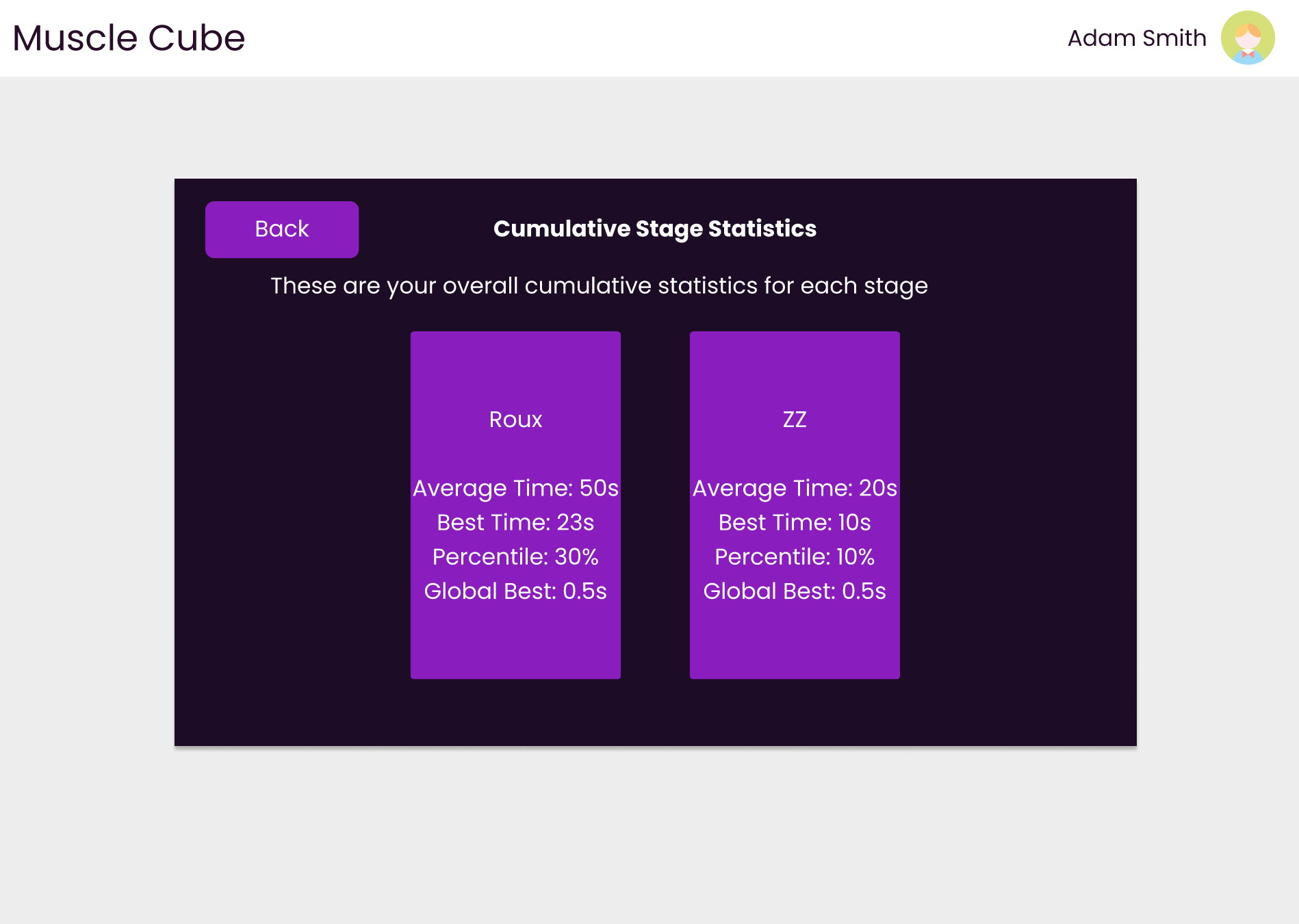
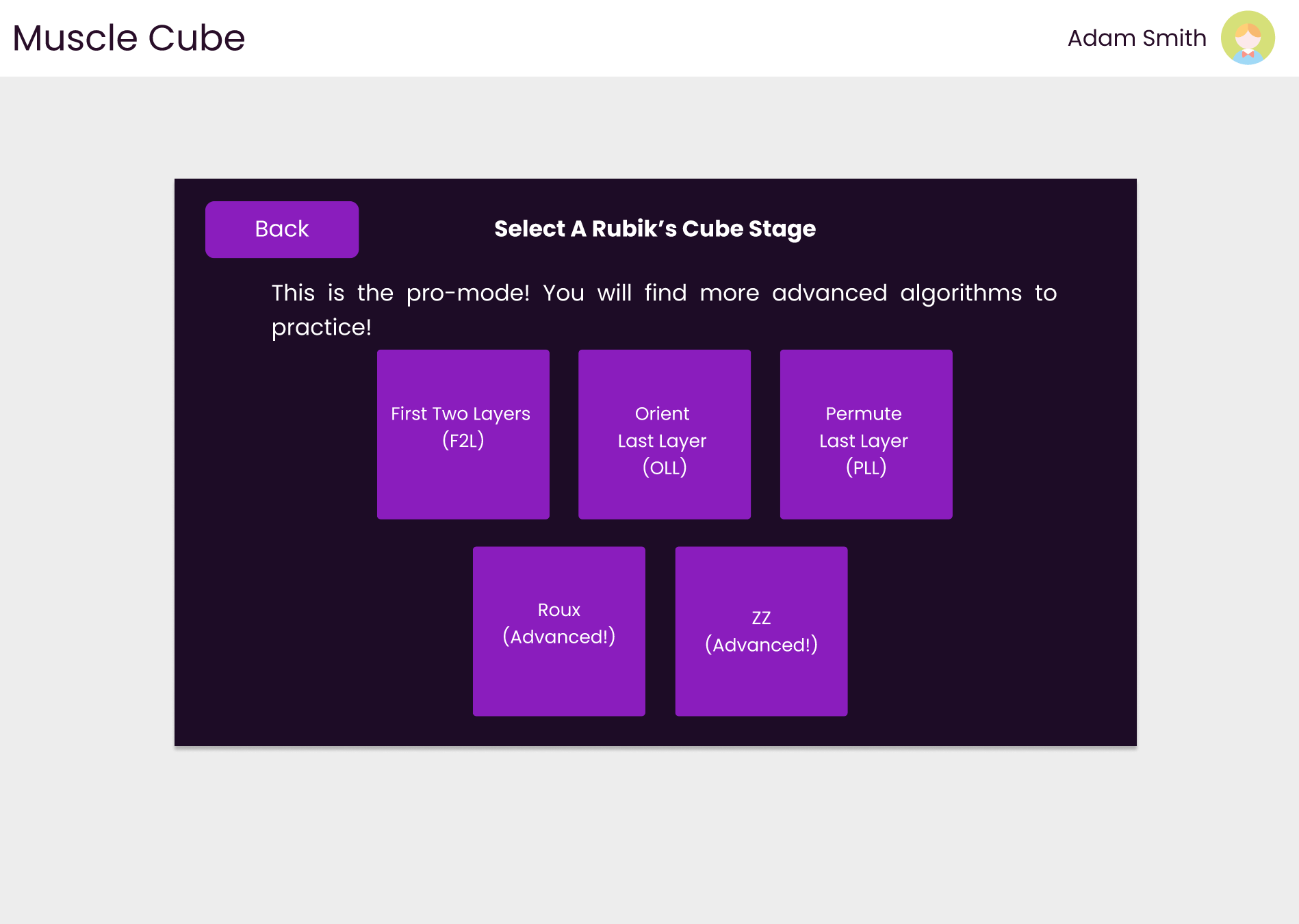
They also wish to see Roux and ZZ methods in the pro-section since these are something that speed-cubers often use. They also suggested that we add match-the-pairs quiz on cube notations for beginners.
😁Test it out!
Follow the Figma Prototype Link to Test it out:

